
Find the right electric fireplace for your New Kent County home.
No gas line, no chimney, no venting—just plug-in warmth and ambiance for homes across New Kent, Quinton, Providence Forge, and Lanexa. Get matched with a trusted local dealer.
Every Project Starts From One of These Five Situations
Simple, flexible heat for a mild Virginia climate.
New Kent County sits in climate zone 4A, with a Piedmont/Tidewater winter that's noticeably milder than the Appalachian or Midwest cold—nothing like the deep-freeze conditions you'd see in a place like Burlington, VT or Duluth, MN. With a population of under 800 in a mostly rural, dispersed county between Richmond and Williamsburg, most homes here don't need a whole-house wood or gas system to stay comfortable. That's exactly the setup where electric fireplaces shine: supplemental warmth in a den, a bonus room, or a primary bedroom without the cost and complexity of running new gas lines or venting through a roofline.
Electric units also fit well into New Kent County's mix of older farmhouses, newer subdivisions near I-64, and manufactured homes—because installation doesn't require masonry work, chimney inspections, or a building permit review tied to combustion appliances. A qualified local electrician or hearth dealer can typically have a unit wired and running on a dedicated circuit in a single visit, which matters in a county where oak, hickory, and maple firewood is plentiful but not every household wants to manage a wood-burning setup or wait on propane delivery for a gas conversion.
Three steps. No salesperson until you're ready.
Tell us about your project
Your zip code, your situation, and the fuel you're leaning toward—or let the answers point you to one.
See what's actually available
The brands dealers within 100 miles genuinely carry—real options, never a catalog mirage.
Get your dealer & Project Guide
A trusted local dealer, plus the free Project Guide & Parts List that names every component of the job.
Frequently Asked Questions
How much does an electric fireplace installation cost in New Kent County?
Most electric fireplace installations in New Kent County run between $400 and $1,200. Plug-in units that simply need an existing standard outlet sit at the low end. Built-in models that require a dedicated 20-amp or 240-volt circuit, in-wall framing, or relocation of an outlet run higher, especially if an electrician needs to run new wire through an older farmhouse's plaster or a slab-on-grade addition. Because there's no combustion, no chimney, and no gas line involved, electric installs are consistently the least expensive fireplace option available to New Kent homeowners.
Do I need a permit to install an electric fireplace in New Kent County?
In most cases, no separate fireplace permit is required since electric units don't involve combustion, venting, or gas piping—the categories that typically trigger New Kent County building department review. If the installation requires new electrical circuitry (common for built-in or wall-mounted units drawing significant amperage), the electrical work itself may need a standard electrical permit, which a licensed electrician handles as part of the job. Always confirm specifics with New Kent County's building and zoning office before work begins, particularly for new construction or additions.
Will an electric fireplace actually heat a room, or is it just for looks?
Most electric fireplaces sold today include a real heating element—typically a fan-forced or infrared heater rated around 1,500 watts, enough to comfortably heat a single room of 400 to 1,000 square feet depending on insulation and ceiling height. Given New Kent County's zone 4A winters, where overnight lows are cold but rarely brutal, a well-sized electric unit can genuinely serve as the primary heat source for a den, sunroom, or bedroom rather than purely decorative supplemental warmth. Units also let you run the flame visual without the heater engaged, which is useful for mild fall and spring evenings.
What's the difference between an electric fireplace, insert, and stove?
An electric fireplace is typically a built-in or wall-mounted unit designed to look like a traditional framed fireplace. An electric insert is sized to slide into an existing masonry or wood-burning fireplace opening, letting a New Kent homeowner with an old, unused wood fireplace convert it to clean electric heat without touching the chimney structure. An electric stove is a freestanding cabinet-style unit that mimics a wood stove's look and can sit anywhere near an outlet. For the county's older homes with existing fireplace openings that are no longer used for wood burning, an insert is usually the simplest upgrade.
Can an electric fireplace replace my wood-burning fireplace?
Yes, and it's a common project for New Kent County homeowners with an existing masonry fireplace they no longer want to maintain—whether because of chimney repair costs, creosote buildup, or simply wanting to skip hauling and stacking oak or hickory firewood. An electric insert fits into the existing opening, and depending on the model, no chimney work or venting modification is required at all. The tradeoff is heat output: electric inserts top out around 5,000-6,000 BTU of supplemental heat, well below what a wood stove or gas insert can produce, so it works best as a secondary heat source rather than a full furnace replacement.
Does New Kent County's electric utility support running a fireplace regularly?
Most of New Kent County is served by Dominion Energy or the Central Virginia Electric Cooperative depending on location, and both grids comfortably support the modest draw of a residential electric fireplace—typically 1,500 watts on a standard 15 or 20-amp circuit, similar to a space heater or hair dryer. Running one for several hours a day during winter evenings adds a noticeable but manageable amount to a monthly bill; ask your electrician or dealer to help estimate the added cost based on local electricity rates and your specific unit's wattage.
Are electric fireplaces safe for homes with kids or pets?
Electric fireplaces are generally considered the safest fireplace option for households with young children or pets, since there's no open flame, no hot glass surface on most models, and no risk of carbon monoxide since there's no combustion at all. Many units marketed for family homes include cool-touch exteriors and LED flame effects that produce zero real heat when switched to ambiance-only mode. For New Kent County families weighing wood, gas, and electric side by side, this safety profile is often the deciding factor for units placed in playrooms, bedrooms, or basements.
How long does an electric fireplace last, and what maintenance does it need?
A quality electric fireplace typically lasts 10 to 15 years with minimal maintenance—mostly periodic dusting of the vents and an occasional LED or bulb replacement on older models. Unlike wood or gas units, there's no annual chimney sweep, no gas line inspection, and no creosote to manage, which appeals to New Kent County homeowners who want fireplace ambiance without an ongoing service commitment. If the heater fan starts making noise or the unit stops producing heat, it's usually a straightforward component swap rather than a full replacement.
Electric vs. wood—which is right for my New Kent County home?
Wood offers real heat output, works during power outages (a genuine consideration in a rural county where storm-related outages happen), and taps into the local abundance of oak, hickory, and maple firewood. Electric offers instant on-off operation, zero maintenance, no chimney or venting requirements, and the lowest installation cost of any fireplace fuel—but it depends entirely on grid power, so it won't help during an outage. For New Kent County homes where a den or bedroom just needs supplemental warmth and easy operation, electric is usually the practical choice. For homes wanting backup heat capability during winter storms, wood remains the more resilient option.
Can I put a TV above my fireplace?
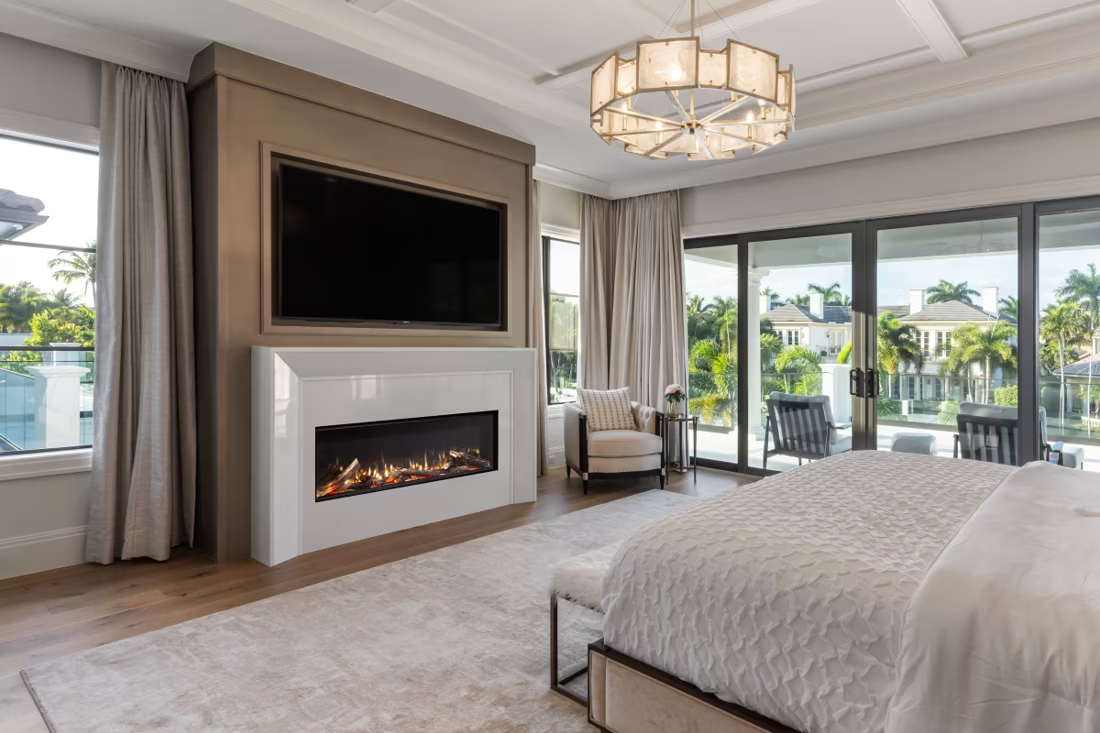
Yes—with an asterisk. Fireplaces are hot and TVs don't like heat. Either put a mantel between them to deflect rising warmth, or choose a fireplace with heat-management technology that creates a cool zone on the wall above—the wall stays around 125 degrees, barely warm, while the room still gets full heat. If you like clean lines and don't want a mantel, heat management is the answer.
Do electric fireplaces actually produce heat?
Yes—most put out around 4,800–5,000 BTUs from a standard outlet, which comfortably warms a bedroom, office, or den as a comfort-zone heater. What they won't do is carry a whole house the way wood, gas, or pellet can. Think of electric as ambiance-first with honest supplemental heat: flames on with no heat in July, flames plus warmth in January.
Can I install a fireplace myself?
If you're putting a fire in your house on purpose, it's best to work with an expert. Unless you're genuinely experienced in framing, gas line, vent pipe, and the national code on clearances to combustibles, have a professional do it—and ideally the same company that sells you the fireplace, so warranty, service, and liability all live under one roof.
Can a fireplace actually lower my heating bill?
Yes—by creating a comfort zone. A furnace heats every square foot of the house just to warm the one room you're in; a gas fireplace on low burns roughly a sixth of the gas a typical furnace does. Set the furnace around 55–60 degrees as a baseline, then heat the rooms your family actually uses. Families who heat this way commonly save $20–$60 a month.
Stove and Fireplace Dealers in New Kent County
Listings include WhyFire partner dealers, dealers we have verified as authorized for the brands we recommend, and established local businesses that carry hearth products. Every listing shows which one it is. The ones marked Preferred run on WhyFire's software, so they can show you real pricing and book your appointment right here. No manufacturer pays for placement. How we verify dealers →
Phillips Energy,Inc - Providence Forge
Old Town Stove & Hearth
Studley Stove And Hearth
Get your New Kent County electric fireplace project mapped out.
Tell us about your space and we'll match you with a trusted local dealer, plus a free Project Guide & Parts List with the exact unit, wiring needs, and installation plan for your New Kent County home.
Find Your Fireplace →