
Add electric heat to your Nelson County home without breaking into a chimney.
From farmhouses along the Rockfish Valley to cabins near Wintergreen, electric fireplaces and stoves plug into an existing circuit and heat a room the same day—no masonry, no vent pipe, no burn permit. Find the right unit and connect with a trusted local dealer.
Every Project Starts From One of These Five Situations
No chimney, no venting, no problem.
Nelson County is home to just over 4,400 people spread across roughly 470 square miles of Blue Ridge foothills, from the Rockfish and Piney River valleys up to Wintergreen Resort near 3,500 feet. Winters here are moderate by national standards—average lows around 23°F, about 4,850 heating degree days a year, squarely in climate zone 4A—but the housing stock is a mix that matters: pre-war farmhouses around Lovingston with no working chimney, newer construction in Nellysford without a fireplace at all, and vacation cabins near the parkway that only need heat a few weekends a month. Electric fireplaces and stoves fit all three, because they don't need a flue, a hearth pad, or a permit to burn.
Most of Nelson County is served by Central Virginia Electric Cooperative rather than a large investor-owned utility, and CVEC's rural mountain lines do go down in ice storms and after falling limbs—which is worth knowing before you lean on an electric fireplace as your only backup heat plan. For daily supplemental warmth in a bedroom, sunroom, or a farmhouse room that the woodstove doesn't reach, electric is hard to beat: plug it in, set the thermostat, done. But in a county where oak, hickory, and maple are abundant and Forest Service cutting permits through George Washington & Jefferson National Forest run $20 a cord, plenty of Nelson County homeowners still keep a wood stove or insert going for the nights the power doesn't.
Three steps. No salesperson until you're ready.
Tell us about your project
Your zip code, your situation, and the fuel you're leaning toward—or let the answers point you to one.
See what's actually available
The brands dealers within 100 miles genuinely carry—real options, never a catalog mirage.
Get your dealer & Project Guide
A trusted local dealer, plus the free Project Guide & Parts List that names every component of the job.
Frequently Asked Questions
How much does it cost to install an electric fireplace in Nelson County?
Plug-in electric inserts and freestanding stoves that use a standard 120-volt outlet run $300 to $900 installed, since there's no wiring, venting, or hearth work involved beyond mounting the unit. Built-in linear electric fireplaces—the kind framed into a wall or media center—typically run $1,200 to $2,500 once you factor in a dedicated 120- or 240-volt circuit, which most Nelson County homes need an electrician to run. Local dealers will walk your panel and wall framing before quoting a firm number, since older farmhouses around Lovingston sometimes need a panel upgrade to add the circuit.
Do electric fireplaces need a chimney or venting?
No—this is the main reason electric works so well in Nelson County's older housing stock. There's no flue, no combustion byproducts, and no clearance-to-combustibles rules the way there are for wood or gas. That means an electric insert can go into a bedroom, a converted porch, or a farmhouse fireplace opening that lost its chimney liner decades ago, without any structural work. It's also the only fuel option for the growing number of newer homes in Nellysford and around Wintergreen that were built without a fireplace or chimney at all.
Will an electric fireplace keep working during a power outage?
No—and this matters more in Nelson County than in a lot of places. Central Virginia Electric Cooperative serves most of the county over rural mountain lines that go down during ice storms and after trees come down on the Blue Ridge Parkway side of the ridge, sometimes for a day or more. An electric fireplace is genuinely useful heat on a normal winter evening, but it goes dark the moment the grid does. If backup heat during an outage matters to your household, plenty of local homeowners pair an electric unit for daily convenience with a wood stove burning local oak or hickory for the nights CVEC can't keep up.
Do I need a permit to install an electric fireplace in Nelson County?
A simple plug-in electric insert or stove generally doesn't require a permit—it's treated like any other appliance you plug into an outlet. A built-in electric fireplace wired into a new dedicated circuit does typically need an electrical permit through the Nelson County building department, since it involves new wiring rather than just an outlet. Most local dealers coordinate the licensed electrician and the permit as part of the installation, so it's rarely something you have to manage yourself.
What size electric fireplace do I need for my room?
Electric fireplaces are sized by wattage rather than BTU, and most full-size units top out around 4,600 to 5,000 watts—enough to comfortably heat a 400 to 1,000 square foot room depending on ceiling height and how drafty the space is. For a single bedroom or den in a Nelson County farmhouse, a smaller 1,500-watt insert is usually plenty. For an open living area or a larger addition, look at the higher-wattage linear models, and confirm your electrical panel has room for the added circuit before you commit to a model.
What's the best type of electric fireplace for a Nelson County farmhouse versus a mountain cabin?
For an older farmhouse around Lovingston or the Rockfish Valley with an existing masonry fireplace opening but no working flue, an electric log insert or electric fireplace insert is usually the right fit—it slides into the opening you already have and keeps the mantel and surround intact. For a cabin or newer build near Wintergreen without an existing fireplace, a built-in linear electric fireplace framed into a wall, or a freestanding electric stove that mimics a wood stove's footprint, tends to work better since there's no opening to work around. A local dealer can walk through both options against your actual room.
Electric vs. wood—which makes more sense for my Nelson County home?
Wood remains genuinely practical here—oak, hickory, and maple are the common local species, Forest Service cutting permits through George Washington & Jefferson National Forest run about $20 a cord during the May-through-October season, and a wood stove keeps working when CVEC's rural lines don't. Electric wins on convenience: no wood handling, no ash, no chimney maintenance, and instant on-off heat for a room that doesn't need a full-time fire. Many Nelson County households end up with both—wood for the living room and cold-weather backup, electric in a bedroom, office, or addition where running a flue isn't practical.
Electric vs. pellet stove—which is right for my home?
Both need electricity to run, so neither is a true backup option during a CVEC outage—pellet stoves need power for the auger and blower just like an electric unit needs power for its heater. Where they differ is heat output and ambiance: a pellet stove burning brands like Energex, Hamer, or Greene Team pellet fuel can genuinely heat a mid-size room as primary or serious supplemental heat, while most electric fireplaces are better suited to a single room or as a heat boost alongside central HVAC. If you want real flame-like ambiance without any fuel storage or hopper to fill, electric is simpler. If you want more heat output and don't mind keeping a pellet supply on hand, pellet is worth a look.
How much does it cost to run an electric fireplace in Nelson County?
Most full-size electric fireplaces draw around 1,500 watts on the heat setting. Running one for several hours an evening at Central Virginia Electric Cooperative's residential rate typically adds somewhere in the range of $15 to $30 a month to a winter power bill, depending on how often it's used and the specific unit's efficiency. That's noticeably cheaper to operate day-to-day than most people expect, which is part of why electric works well as supplemental heat in a room the main heat source doesn't quite reach.
Can I put a TV above my fireplace?
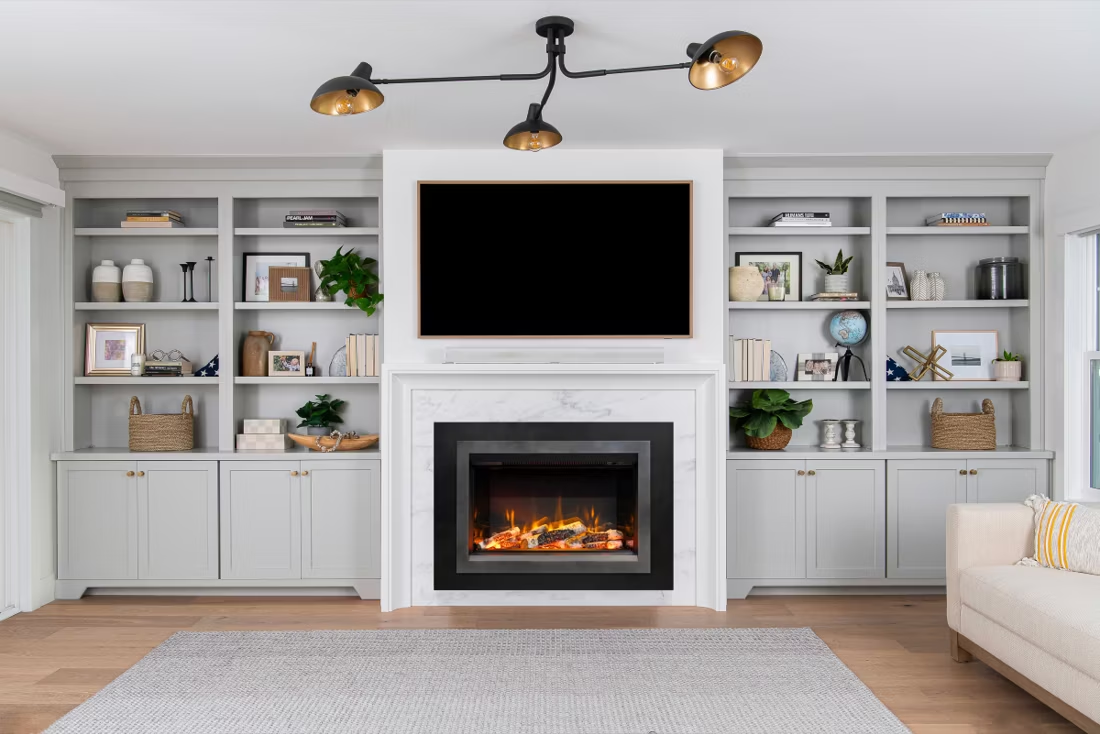
Yes—with an asterisk. Fireplaces are hot and TVs don't like heat. Either put a mantel between them to deflect rising warmth, or choose a fireplace with heat-management technology that creates a cool zone on the wall above—the wall stays around 125 degrees, barely warm, while the room still gets full heat. If you like clean lines and don't want a mantel, heat management is the answer.
Do electric fireplaces actually produce heat?
Yes—most put out around 4,800–5,000 BTUs from a standard outlet, which comfortably warms a bedroom, office, or den as a comfort-zone heater. What they won't do is carry a whole house the way wood, gas, or pellet can. Think of electric as ambiance-first with honest supplemental heat: flames on with no heat in July, flames plus warmth in January.
What is an in-home preview and do I need one?
It's a visit where a hearth professional measures your space, confirms the model you picked actually works in your home, and walks the specs—framing, gas line, venting, finish work—before anything is ordered. Some details you just can't know until you see the house. Never make a down payment without one; it's the single most-skipped step that burns buyers.
Can a fireplace actually lower my heating bill?
Yes—by creating a comfort zone. A furnace heats every square foot of the house just to warm the one room you're in; a gas fireplace on low burns roughly a sixth of the gas a typical furnace does. Set the furnace around 55–60 degrees as a baseline, then heat the rooms your family actually uses. Families who heat this way commonly save $20–$60 a month.
Stove and Fireplace Dealers in Nelson County
Listings include WhyFire partner dealers, dealers we have verified as authorized for the brands we recommend, and established local businesses that carry hearth products. Every listing shows which one it is. The ones marked Preferred run on WhyFire's software, so they can show you real pricing and book your appointment right here. No manufacturer pays for placement. How we verify dealers →
Valley Filter & Maintenance
Clines Heating And Cooling
Holtzman Propane
Find your electric fireplace in Nelson County.
Tell us a bit about your home and we'll match you with the right electric fireplace, insert, or stove—and hand you a free Project Guide & Parts List with your recommended local dealer.
Find Your Fireplace →