
Real heat, zero venting, for Mecklenburg County homes.
From lakefront cottages on Buggs Island Lake and Lake Gaston to condos and homes in Clarksville, South Hill, and Boydton, electric fireplaces bring instant warmth with no chimney, no gas line, and no wood to haul. Find the right unit and connect with a trusted local dealer.
Every Project Starts From One of These Five Situations
Instant heat without the vent, the wood, or the mess.
Mecklenburg County sits along the North Carolina border in Southside Virginia, anchored by the Buggs Island Lake (John H. Kerr Reservoir) and Lake Gaston shorelines that draw retirees, weekenders, and second-home owners to cottages and newer builds around Clarksville, Chase City, South Hill, and the county seat of Boydton. Winters here are genuinely mild—a climate zone of 4A, average lows near 29°F, and a fairly short, mild heating season, closer to Tidewater Virginia than the ridge-and-valley counties to the west. Wood heat still has a real presence, with plenty of local oak, hickory, and maple fed into stoves each winter, but a large share of the county's housing stock—lake cabins with no masonry chimney, manufactured homes, condos, and rental cottages—simply isn't set up for a wood or gas appliance.
That's the gap electric fireplaces fill. A wall-mount or insert unit runs off standard household power or a dedicated circuit, needs no flue and no combustion air, and can be installed by a licensed electrician in a fraction of the time a masonry or gas project takes. That matters in a county where many homeowners are only at the property on weekends or during the warmer months—nobody wants to worry about creosote buildup or an unused gas line in a cottage that sits empty from October to March. Mecklenburg Electric Cooperative serves much of the county's rural and lakefront territory, and local dealers who work these lake communities know which units handle the older wiring in a 1970s cabin near Chase City versus what a new build on Lake Gaston can support without an electrical upgrade.
Three steps. No salesperson until you're ready.
Tell us about your project
Your zip code, your situation, and the fuel you're leaning toward—or let the answers point you to one.
See what's actually available
The brands dealers within 100 miles genuinely carry—real options, never a catalog mirage.
Get your dealer & Project Guide
A trusted local dealer, plus the free Project Guide & Parts List that names every component of the job.
Frequently Asked Questions
How much does an electric fireplace installation cost in Mecklenburg County?
Most electric fireplace projects in Mecklenburg County run somewhere between $300 and $2,500. A plug-in wall-mount or mantel unit on the low end can be hung and plugged into an existing outlet in an afternoon. A built-in linear insert or a unit that needs its own dedicated 20-amp circuit—common in older lake cottages around Clarksville and Chase City with limited panel capacity—runs higher once an electrician is involved. There's no chimney, flue liner, or gas line to budget for, which is the biggest cost difference versus a wood or gas project in the same home.
Do I need a permit to install an electric fireplace in Mecklenburg County?
In most cases, no. A plug-in electric fireplace that uses an existing standard outlet typically doesn't require a permit. If your unit needs a new dedicated circuit—which is common with larger built-in models—the electrical work itself may need a permit through the Mecklenburg County Building Inspections Department in Boydton, pulled by your licensed electrician as part of the job. This is a far lighter lift than the building and venting permits required for wood stoves or gas fireplaces in the county.
What size electric fireplace do I need for my lake cabin or home?
Most electric fireplace heaters are rated around 1,500 watts and are designed to comfortably supplement heat in a single room of roughly 400 to 1,000 square feet, depending on ceiling height and insulation. Many of the older cabins along Buggs Island Lake and Lake Gaston have compact main living areas, so a mid-size wall-mount or insert is often plenty. Newer, larger builds around South Hill or Clarksville may want a larger linear unit, but keep in mind electric fireplaces are built for zone heating and ambiance, not for carrying the whole house—a local dealer can look at your floor plan and tell you honestly what a given unit will and won't do.
Will an electric fireplace work during a power outage?
No—this is worth being direct about. Electric fireplaces run entirely on household power, so if the power goes out, the fireplace goes out with it. Mecklenburg Electric Cooperative's rural lines around the lakes can go down during ice storms and summer thunderstorms, same as anywhere in Southside Virginia. If backup heat during an outage matters to you, a wood stove or a battery-backed gas unit is a better fit for that role, and plenty of local homes pair one of those with an electric fireplace used day-to-day for convenience and looks.
What's the difference between an electric insert, wall-mount, and freestanding electric stove?
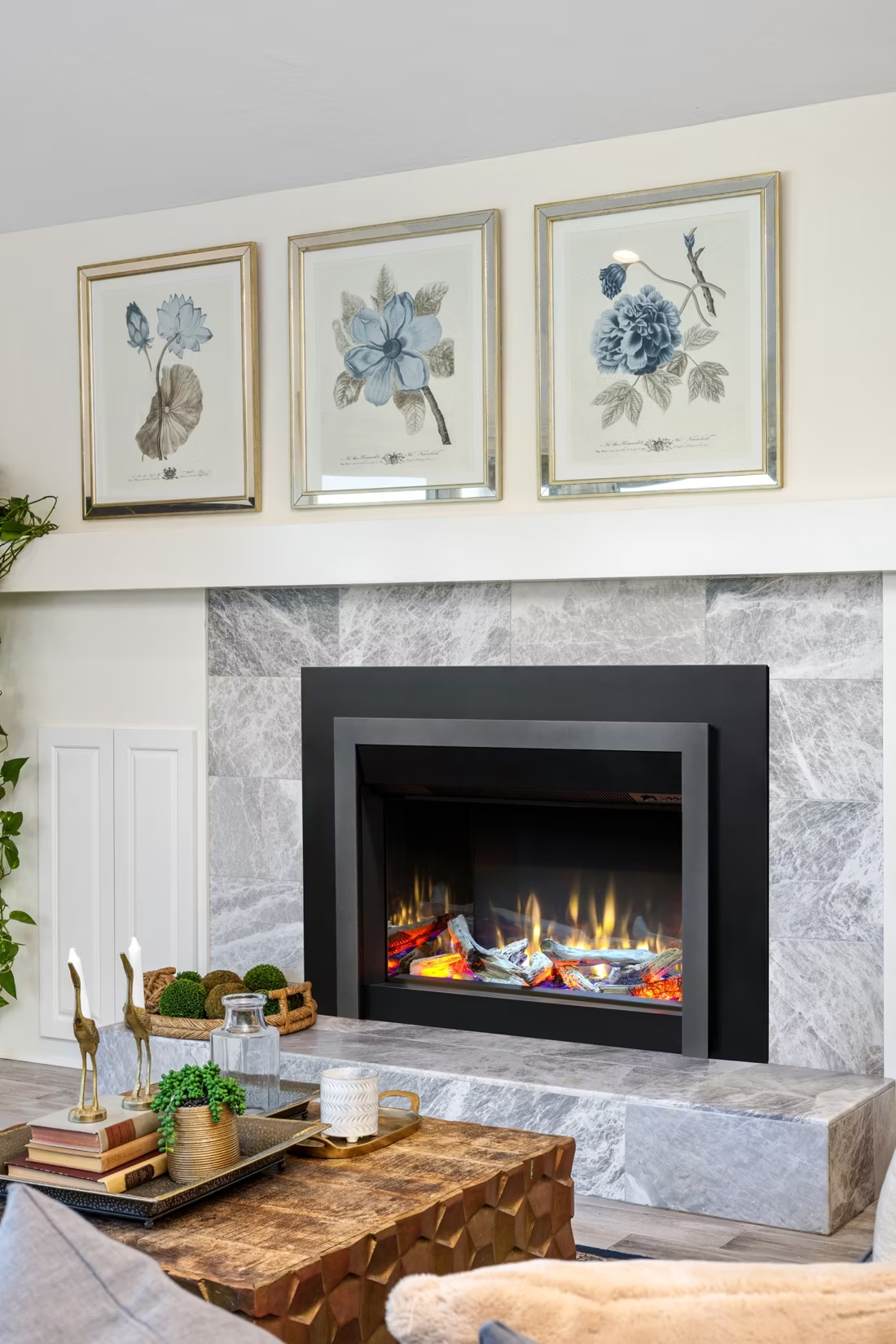
An electric insert drops into an existing masonry fireplace opening—a good option if you have an older farmhouse near Chase City with a fireplace you want to modernize without the wood mess. A wall-mount unit hangs on any interior wall like a large flat-screen TV, which is popular in newer lake homes and condos around Clarksville that were never built with a fireplace at all. A freestanding electric stove sits on the floor and looks more like a traditional wood stove, which some homeowners prefer for the look in a cabin setting. All three plug in or wire in without any venting requirement.
Electric vs. wood—which is right for my Mecklenburg County home?
Wood remains a strong choice here—local oak, hickory, and maple are widely available, wood heat doesn't depend on the grid, and it's the traditional choice for full-time residences that want a real backup heat source. Electric makes more sense for lake cottages and rental properties that sit empty for stretches of the year, homes without a chimney, and anyone who wants ambiance and supplemental warmth without hauling wood, cleaning ash, or scheduling a chimney sweep. Given the mild winters here—average lows near 29°F and a fairly short, mild heating season—plenty of Mecklenburg County homeowners use electric units as their everyday fireplace and keep wood heat in reserve for the coldest stretches.
Can an electric fireplace heat my whole house?
Generally, no. Electric fireplaces are built for zone heating—warming the room they're in, typically up to around 400 to 1,000 square feet—rather than replacing a central heating system. In Mecklenburg County's mixed-humid climate, most full-time homes rely on a central heat pump or furnace for whole-house heat and use the electric fireplace to take the edge off a specific living area, which also lets you turn down the thermostat elsewhere and save on the heat pump's runtime during shoulder-season evenings.
How much does it cost to run an electric fireplace?
A typical 1,500-watt electric fireplace costs roughly 15 to 25 cents an hour to run on heat mode, depending on your rate through Mecklenburg Electric Cooperative or your local provider—often less if you're just running the flame effect without the heater engaged. Running it a few hours a night in a lake home living room adds up to only a few dollars a week, which is part of why it's such a popular low-commitment option for seasonal properties around Lake Gaston and Buggs Island Lake where owners don't want to deal with propane deliveries or firewood stacking for a place they visit occasionally.
What's the best electric fireplace for a realistic flame?
Brands like Dimplex, Napoleon, and Touchstone build LED flame technology that's genuinely convincing from across a room, with adjustable flame color, brightness, and ember bed effects. For a lake cottage where you want the look and feel of a fire without any real flame risk near wood decks, boathouses, or dry summer brush along the shoreline, these units give you the ambiance of a fireplace with none of the fire-safety tradeoffs. A local dealer can show you the difference in person—the flame quality varies more between models than most people expect, and it's worth seeing before you buy.
Can I put a TV above my fireplace?
Yes—with an asterisk. Fireplaces are hot and TVs don't like heat. Either put a mantel between them to deflect rising warmth, or choose a fireplace with heat-management technology that creates a cool zone on the wall above—the wall stays around 125 degrees, barely warm, while the room still gets full heat. If you like clean lines and don't want a mantel, heat management is the answer.
Do electric fireplaces actually produce heat?
Yes—most put out around 4,800–5,000 BTUs from a standard outlet, which comfortably warms a bedroom, office, or den as a comfort-zone heater. What they won't do is carry a whole house the way wood, gas, or pellet can. Think of electric as ambiance-first with honest supplemental heat: flames on with no heat in July, flames plus warmth in January.
Can a fireplace actually lower my heating bill?
Yes—by creating a comfort zone. A furnace heats every square foot of the house just to warm the one room you're in; a gas fireplace on low burns roughly a sixth of the gas a typical furnace does. Set the furnace around 55–60 degrees as a baseline, then heat the rooms your family actually uses. Families who heat this way commonly save $20–$60 a month.
What is an in-home preview and do I need one?
It's a visit where a hearth professional measures your space, confirms the model you picked actually works in your home, and walks the specs—framing, gas line, venting, finish work—before anything is ordered. Some details you just can't know until you see the house. Never make a down payment without one; it's the single most-skipped step that burns buyers.
Stove and Fireplace Dealers in Mecklenburg County
Listings include WhyFire partner dealers, dealers we have verified as authorized for the brands we recommend, and established local businesses that carry hearth products. Every listing shows which one it is. The ones marked Preferred run on WhyFire's software, so they can show you real pricing and book your appointment right here. No manufacturer pays for placement. How we verify dealers →
Service Plus Propane
Area – Bracey, Va
Energy United Propane- Warrenton
Brass Shoppe & Fireplace Center
Aaa Gas Bowers & Burrows
Find your electric fireplace in Mecklenburg County.
Tell us a bit about your home or lake cabin and we'll match you with the right electric fireplace or insert—and connect you with a trusted local dealer who can install it correctly.
Find Your Fireplace →