
Gas Fireplace Warmth Built for McLean, Virginia Living.
From Tysons high-rises to the wooded lots along Chain Bridge Road, gas delivers clean, on-demand heat without the upkeep of a wood-burning hearth. Find the right fireplace or insert, and connect with a trusted local dealer.
Every Project Starts From One of These Five Situations
Convenience wins in Northern Virginia's mild winters.
McLean sits at just 316 feet in Fairfax County, in climate zone 4A with an average winter low of 26°F and a winter heating load that's just a fraction of what a place like Minneapolis logs, and mild enough that most homes here need supplemental heat, not a primary wood-burning setup. Wood stoves and pellet stoves are essentially absent from the McLean market for that reason. Gas, on the other hand, fits the way people actually live in this affluent, close-in Beltway suburb: instant, clean, low-maintenance heat that works whether you're in a 1960s Chesterbrook colonial or a Tysons high-rise condo.
Most of McLean is served by Washington Gas, and homes with existing gas service (furnace, range, or water heater) can usually add a fireplace or convert an old masonry hearth without much added infrastructure. In the more rural pockets toward Great Falls (zip 22067), propane tanks are more common. Either way, a gas insert or direct-vent fireplace gives you real flame and real heat at the flip of a switch—and unlike a wood-burning setup, it doesn't require firewood storage, ash cleanup, or chimney sweeping, which matters in a county where many lots are wooded but wood heat itself just isn't part of the local building culture.
Three steps. No salesperson until you're ready.
Tell us about your project
Your zip code, your situation, and the fuel you're leaning toward—or let the answers point you to one.
See what's actually available
The brands dealers within 100 miles genuinely carry—real options, never a catalog mirage.
Get your dealer & Project Guide
A trusted local dealer, plus the free Project Guide & Parts List that names every component of the job.
Frequently Asked Questions
How much does a gas fireplace installation cost in McLean?
Local dealers typically quote $5,000 to $12,500 for a gas fireplace or insert installation in McLean, with the spread driven by unit selection, venting complexity, and whether new gas line work is required. A direct-vent insert dropped into an existing masonry fireplace with gas already run to the chimney sits on the lower end. A full built-in unit for a Tysons-area remodel or new construction—with framing, venting, and a fresh gas line—lands in the middle to upper range. Fairfax County's higher labor and permitting costs relative to much of the state also factor in. A local retailer will give you a firm number after seeing the space.
Can I convert my existing wood fireplace to gas?
Yes, and it's the single most common gas project in McLean's older neighborhoods—Chesterbrook, Franklin Sherman, and the colonials off Old Dominion Drive were mostly built with traditional masonry wood fireplaces that see little actual wood use today. A gas insert typically installs into that existing firebox using the chimney as the vent path with a stainless liner, running $4,800 to $9,500 depending on the model and whether Washington Gas service already reaches the hearth. It keeps the original brick surround intact while trading occasional oak or hickory fires for heat you can turn on with a remote.
Do I need natural gas, or should I plan for propane?
Most of McLean, including the areas around Tysons and the McLean Hamlet neighborhoods, is served by Washington Gas, so if your home already has gas appliances, adding a fireplace is straightforward. In the more rural, larger-lot areas toward Great Falls (22067) and parts of unincorporated western Fairfax County, some homes rely on propane rather than piped gas. Nearly every gas fireplace on the market can be configured for either fuel—your installer sets the orifice and regulator to match—so the fuel type shouldn't limit which units you can consider.
Will my gas fireplace work if the power goes out?
Most units with an intermittent pilot ignition (IPI) system include a battery backup that keeps the fireplace operable when the power drops—which matters in McLean given how often summer storms and winter ice events knock out power along the tree-lined streets here. Valor fireplaces take a different approach: their pilot generates its own electricity through a thermocouple, so there's no battery to remember at all. Ask your local dealer which ignition system a given model uses before you decide.
What's the difference between a gas fireplace, gas insert, and gas stove?
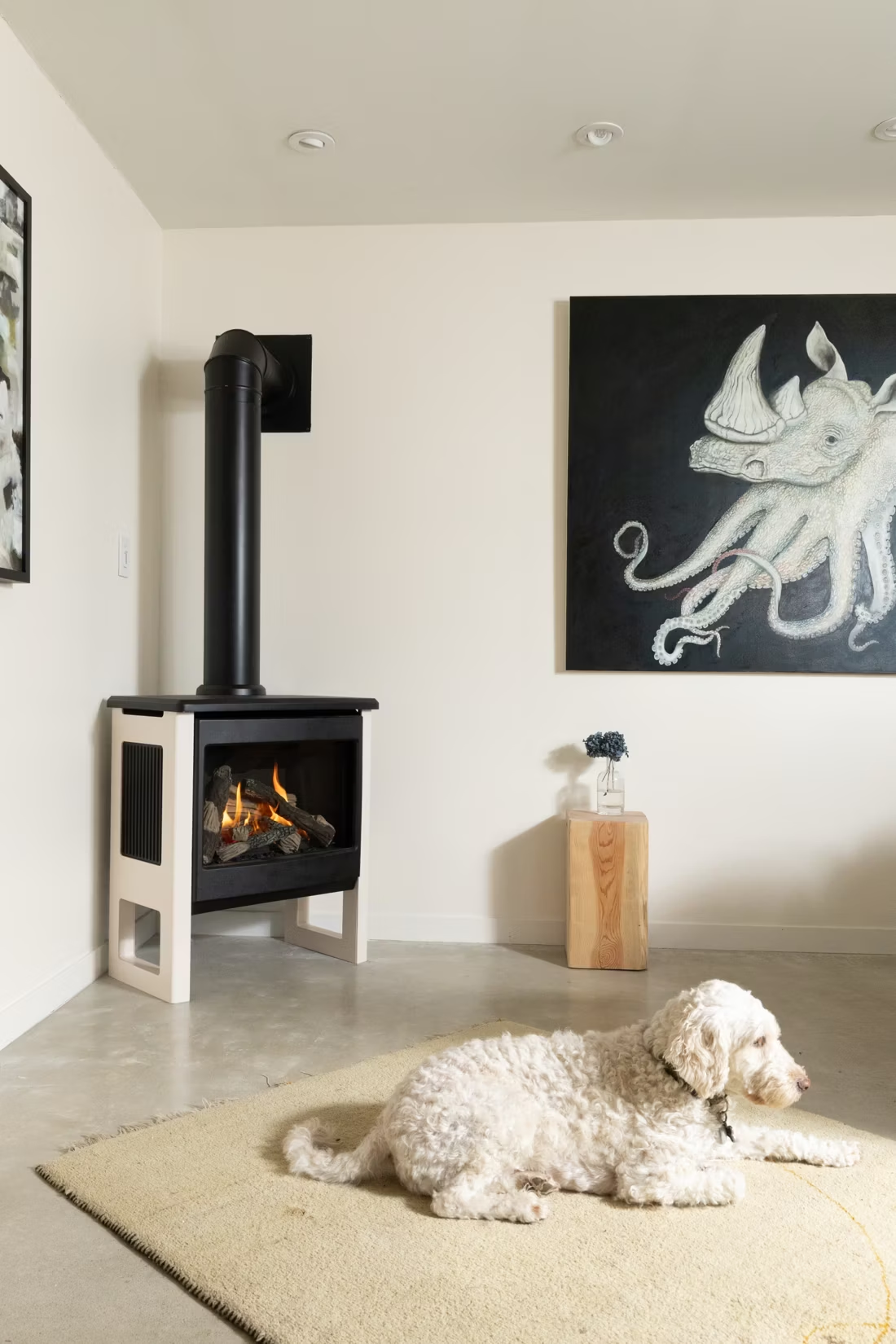
A gas fireplace is a fully built-in unit framed into a wall—the right call for new construction or a McLean remodel where you're starting from scratch. A gas insert drops into an existing masonry firebox, which describes a large share of McLean's older housing stock, and uses the existing chimney as its vent path. A gas stove is a freestanding cast-iron or steel unit that sits on the floor, which some owners choose for a sunroom or basement addition where there's no existing fireplace to work with. For most McLean homeowners upgrading an underused wood fireplace, an insert is the straightforward answer.
Do I need a permit to install a gas fireplace in McLean?
Yes. McLean is unincorporated, so permitting runs through the Fairfax County Department of Land Development Services, which requires both a building permit and a gas permit for new fireplace installations, with the gas line work performed by a licensed gas fitter. Most established hearth dealers in the area handle the permit filing and inspection scheduling as part of the installation, which is worth confirming up front if you're comparing quotes.
What's the difference between vented and vent-free gas fireplaces?
Vented (direct-vent) gas fireplaces pull combustion air from outside and exhaust it back outside through a sealed pipe—they're the standard, code-clean choice and the type most McLean dealers will steer you toward. Vent-free units burn directly into the room without external venting; they're legal in Virginia within strict room-size and ventilation rules, but several McLean subdivisions with active homeowners associations (Franklin Park, Salona Village, and others) have architectural review requirements around exterior venting and equipment that make direct-vent installs the simpler path anyway. If you're in an HOA community, check with them before finalizing a unit.
How often should my gas fireplace be serviced?
Plan on an annual inspection—a technician checks the burner, pilot assembly, gas connections, and venting, and cleans the glass and interior. It's a quick visit compared to wood-stove chimney sweeping, but it matters just as much for safety, especially on inserts installed into older McLean masonry chimneys. Local gas appliance service providers typically charge $150 to $250 for the annual visit.
Gas vs. wood vs. electric—which fits a McLean home?
Wood heat is largely a non-factor here: with a winter heating load that's just a fraction of what a place like Minneapolis logs, plus HOA rules in many newer McLean subdivisions, few homeowners rely on cordwood oak, hickory, or maple as real heat—existing masonry fireplaces mostly sit unused or get converted to gas. Gas is the dominant choice for both remodels and fireplace upgrades because it's clean, on-demand, and works with Washington Gas service already run to most homes. Electric fireplaces are a strong option too, especially in Tysons-area condos and high-rises where venting a gas unit isn't feasible—they install almost anywhere with no gas line or chimney needed, though they don't put out the same heat output as a vented gas insert on a genuinely cold night.
What does it take to replace an existing fireplace?
Fireplaces are like icebergs—bigger behind the wall than in front of it. Replacement means removing the surrounding tile or stone (the finish material laps onto the fireplace face), pulling the old unit, setting the new one in the same enclosure, and re-finishing the wall. A hearth professional can determine what's behind your wall without demolition during an in-home preview.
What's the difference between an insert and a zero-clearance fireplace?
An insert is a fireplace that slides into a pre-existing wood-burning fireplace—if you don't have one, there's nothing to insert it into. A zero-clearance fireplace is built into a framed wall, which makes it the answer for remodels and new construction. Simple test: existing masonry fireplace means insert; blank or framed wall means zero-clearance.
Does a fireplace add value to my home?
On average, a fireplace adds back to the home about the same amount you spent installing it. Add the monthly savings from heating the rooms you actually use instead of the whole house—often hundreds of dollars a year—and the value case is strong before you even count what a fire does for how your family uses the room.
What is an in-home preview and do I need one?
It's a visit where a hearth professional measures your space, confirms the model you picked actually works in your home, and walks the specs—framing, gas line, venting, finish work—before anything is ordered. Some details you just can't know until you see the house. Never make a down payment without one; it's the single most-skipped step that burns buyers.
Nearby Dealers
Hearth shops serving McLean and the surrounding area.
Find your gas fireplace in McLean.
Tell us a bit about your home and we'll match you with a trusted local McLean dealer and send over a free Project Guide & Parts List—the exact fireplace or insert, vent kit, and parts your project needs, no big-box guesswork.
Find Your Fireplace →