
Warmth without a chimney, right here in Lee County.
No venting, no cutting permit, no chimney sweep—just plug-in or hardwired heat for the manufactured homes, farmhouses, and hollows scattered across Lee County. Find the right unit and connect with a trusted local dealer.
Every Project Starts From One of These Five Situations
Instant heat for the hollows and hilltops of Lee County.
Lee County is Virginia's westernmost county, wedged between Cumberland Mountain and Powell Mountain near the Cumberland Gap, with just over 5,200 residents spread across Pennington Gap, Jonesville, St. Charles, Ewing, and a lot of unincorporated mountain land in between. At climate zone 4A with a solid winter heating season and winter lows averaging 23°F, the county sees a real heating season but nothing close to the extremes of a place like Duluth, MN—this is steady cold-weather country, not deep-freeze country. Oak, hickory, and maple cover the mountain slopes, and wood heat has long been the default here, but electric fireplaces have caught on fast, especially in the manufactured and modular homes that make up a large share of the county's housing stock.
Old Dominion Power serves electric accounts across Lee County, and that reliable grid connection is exactly what makes electric fireplaces practical here—no propane tank to manage, no wood to split and stack, no masonry chimney to maintain. A plug-in unit can go into a rental or a spare bedroom in an afternoon with zero permitting. A built-in or hardwired insert needs a licensed electrician to run a dedicated 240V circuit, which typically means a straightforward electrical permit through the Lee County Building Department. Either way, electric heat is a low-maintenance way to add ambiance and supplemental warmth to a single room without touching the structure of the house—a real advantage in a county where a lot of homes are manufactured or older and not set up for new venting.
Three steps. No salesperson until you're ready.
Tell us about your project
Your zip code, your situation, and the fuel you're leaning toward—or let the answers point you to one.
See what's actually available
The brands dealers within 100 miles genuinely carry—real options, never a catalog mirage.
Get your dealer & Project Guide
A trusted local dealer, plus the free Project Guide & Parts List that names every component of the job.
Frequently Asked Questions
How much does an electric fireplace installation cost in Lee County?
Plug-in electric fireplaces and inserts run from roughly $300 to $800 for the unit itself, with no real installation cost beyond finding a standard outlet—many homeowners in Pennington Gap and Jonesville handle this themselves. A hardwired built-in unit that needs a dedicated 240V circuit runs higher, typically $800 to $1,500 once you factor in the electrician's time to run wire and tie into the panel. Manufactured and modular homes, which are common throughout the county, sometimes need a bit of extra panel capacity checked before a hardwired unit goes in—a local electrician or hearth dealer can tell you quickly whether your panel supports it.
Do I need a permit to install an electric fireplace in Lee County?
A plug-in electric fireplace or insert generally doesn't require any permit—it's no different than plugging in a space heater. A hardwired built-in unit that needs a new dedicated circuit does typically require an electrical permit through the Lee County Building Department, since that work involves the home's wiring and panel. There's no cutting permit or chimney inspection to worry about either way, which is part of the appeal for homeowners who don't want to deal with the Forest Service permitting that comes with a wood-burning setup on Cumberland or Powell Mountain land.
Is an electric fireplace enough heat for a Lee County winter?
At 23°F average winter lows and a solid winter heating season, Lee County has a real but moderate heating season—not the kind of sub-zero stretch you'd get further north. Most electric fireplaces put out around 1,500 watts (roughly 5,000 BTU), which is plenty to warm a single living room or bedroom as supplemental heat, but it's not designed to be a whole-home primary heat source. Homes here that rely on wood stoves burning local oak or hickory, propane furnaces, or heat pumps for primary heat, and add an electric fireplace or insert for zone heating in the main living space, get the best of both—instant ambiance where you spend your evenings, without asking one appliance to carry the whole house.
Electric vs. wood—which makes more sense for my home in Lee County?
Wood remains the traditional choice here, and with oak, hickory, and maple covering the slopes of Cumberland and Powell Mountain, fuel is close at hand for a lot of rural households—plus wood keeps working during a power outage, which matters on a mountain road after an ice storm. Electric wins on convenience and on properties where wood simply isn't practical: rentals, manufactured homes where insurers often balk at wood stoves, secondary rooms, or households that want the look and warmth of a fire without hauling and stacking cordwood. A lot of Lee County homes end up with both—wood as the workhorse heat source, electric for the room where you actually want the glow without the mess.
Will an electric fireplace work in my manufactured or mobile home?
Yes, and it's one of the most common installations we see requests for in this part of southwest Virginia. Manufactured and modular homes make up a meaningful share of Lee County's housing, and electric fireplaces are often the easiest hearth upgrade available for them—no floor protection, no wall clearances to engineer, no roof penetration for venting, and none of the insurance friction that can come with a wood stove in a manufactured home. A slim wall-mount or a freestanding cabinet unit both work well; a local dealer can tell you which fits your floor plan and panel capacity.
What happens to my electric fireplace during a power outage?
It simply won't run—no power, no heat, no flame effect. That's worth planning around in Lee County, where mountain power lines along Cumberland Mountain and Powell Mountain can go down during winter ice storms, sometimes for a day or more. If backup heat during an outage matters to your household, an electric fireplace should be a supplement to, not a replacement for, a wood stove, propane heater, or generator-backed system—several local homeowners keep both for exactly that reason.
Where can I find a dealer to install an electric fireplace near me?
With just over 5,200 residents spread across Lee County, there isn't a big hearth showroom in every town—most homeowners in Pennington Gap, Jonesville, or Ewing end up working with a regional dealer based out of Kingsport, Bristol, Big Stone Gap, or Norton who covers the wider southwest Virginia and upper East Tennessee area. Find My Fireplace matches you with a trusted local or regional dealer who actually installs in your part of the county, rather than leaving you to guess which retailer will show up and do the electrical work correctly.
Electric insert, built-in, or freestanding stove—what's the difference?
An electric insert is sized to slide into an existing masonry fireplace opening, giving an old wood-burning fireplace a clean, plug-in or hardwired makeover without touching the chimney structure. A built-in electric fireplace is designed to be framed into a wall, common in new construction or remodels, and usually needs that dedicated 240V circuit. A freestanding electric stove sits on the floor like a traditional wood stove but just needs an outlet—often the simplest option for manufactured homes or rooms without an existing fireplace opening. For most Lee County homes with an old, rarely-used masonry fireplace, an insert is the straightforward upgrade.
How much maintenance does an electric fireplace need?
Very little compared to a wood stove or gas unit—there's no chimney to sweep, no gas line to inspect, and no creosote buildup to worry about. Basic upkeep is dusting the unit, occasionally wiping the glass front, and replacing the LED ember bed light eventually, which most models rate for tens of thousands of hours. That low-maintenance profile is a big part of why electric units are popular as secondary heat sources in Lee County households that already spend their weekends tending a wood stove and don't want a second appliance to maintain.
Can I put a TV above my fireplace?
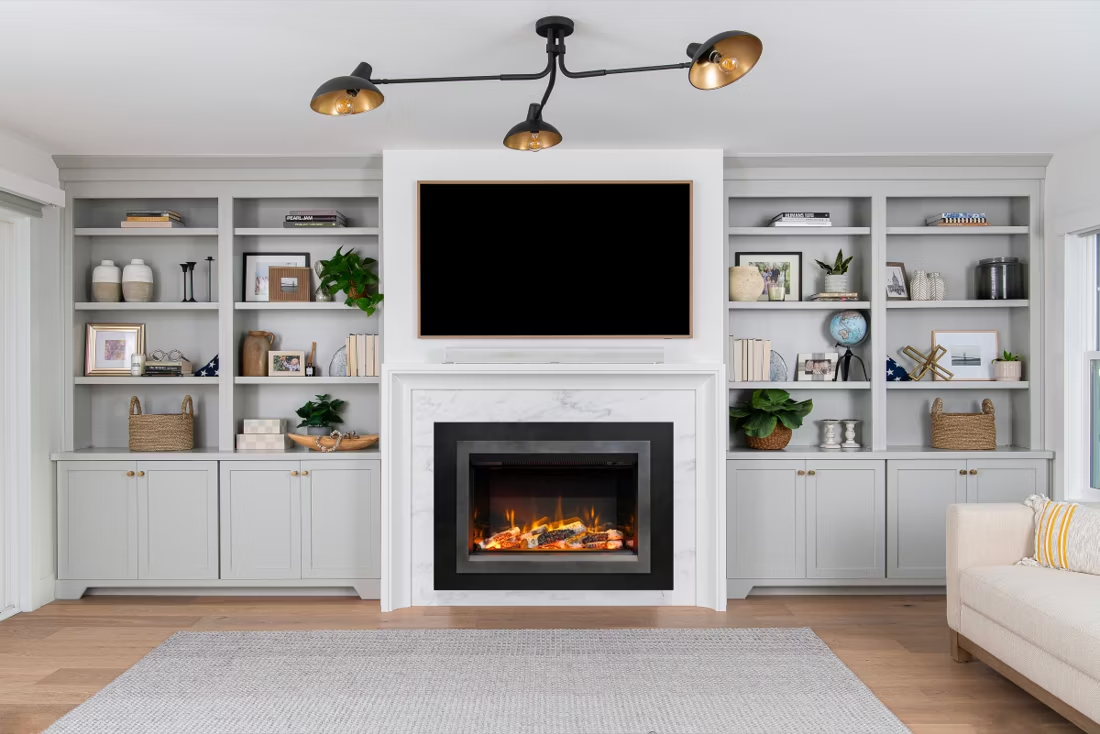
Yes—with an asterisk. Fireplaces are hot and TVs don't like heat. Either put a mantel between them to deflect rising warmth, or choose a fireplace with heat-management technology that creates a cool zone on the wall above—the wall stays around 125 degrees, barely warm, while the room still gets full heat. If you like clean lines and don't want a mantel, heat management is the answer.
Do electric fireplaces actually produce heat?
Yes—most put out around 4,800–5,000 BTUs from a standard outlet, which comfortably warms a bedroom, office, or den as a comfort-zone heater. What they won't do is carry a whole house the way wood, gas, or pellet can. Think of electric as ambiance-first with honest supplemental heat: flames on with no heat in July, flames plus warmth in January.
What is an in-home preview and do I need one?
It's a visit where a hearth professional measures your space, confirms the model you picked actually works in your home, and walks the specs—framing, gas line, venting, finish work—before anything is ordered. Some details you just can't know until you see the house. Never make a down payment without one; it's the single most-skipped step that burns buyers.
Does a fireplace add value to my home?
On average, a fireplace adds back to the home about the same amount you spent installing it. Add the monthly savings from heating the rooms you actually use instead of the whole house—often hundreds of dollars a year—and the value case is strong before you even count what a fire does for how your family uses the room.
Stove and Fireplace Dealers in Lee County
Listings include WhyFire partner dealers, dealers we have verified as authorized for the brands we recommend, and established local businesses that carry hearth products. Every listing shows which one it is. The ones marked Preferred run on WhyFire's software, so they can show you real pricing and book your appointment right here. No manufacturer pays for placement. How we verify dealers →
Lee Propane
Southwest Heating & Air
Myers Home Center
Find your electric fireplace in Lee County.
Tell us a bit about your home and we'll match you with the right electric fireplace, insert, or stove—plus a free Project Guide & Parts List with the exact parts for your project and a recommended local dealer to install it.'
Find Your Fireplace →