
Clean, Instant Warmth for King George County Winters.
From the farmland along Route 3 to the neighborhoods near Dahlgren, King George County homeowners are turning to gas for heat that starts with a switch, not a match. Find the right unit and get matched with a trusted local dealer.
Every Project Starts From One of These Five Situations
Convenient warmth for a county still catching up on gas lines.
King George County sits between the Rappahannock and Potomac rivers in Virginia's Northern Neck region, home to about 10,600 residents spread across farmland, waterfront lots, and the neighborhoods that have grown up around Naval Support Facility Dahlgren. Winters here are moderate by national standards—climate zone 4A, an average winter low around 26°F, and a winter heating load well short of the brutal cold seen in places like Bismarck or Burlington, VT. But the county still runs a real six-month heating season, and a lot of King George homes, from older farmhouses to newer subdivisions off Kings Highway, are adding gas fireplaces and inserts as a cleaner, easier alternative to hauling and stacking oak, hickory, and maple.
Piped natural gas infrastructure is limited across much of rural King George County, so propane is the fuel most homeowners actually install, delivered and stored in a tank on the property. Homes closer to denser pockets near King George Courthouse or newer development may have access to natural gas service, but propane remains the default for most of the county—and modern gas fireplaces run just as well on either. Either way, the payoff is the same: heat on demand without kindling, ash, or a chimney fire to worry about, plus the option to keep a room warm if the power goes out.
Three steps. No salesperson until you're ready.
Tell us about your project
Your zip code, your situation, and the fuel you're leaning toward—or let the answers point you to one.
See what's actually available
The brands dealers within 100 miles genuinely carry—real options, never a catalog mirage.
Get your dealer & Project Guide
A trusted local dealer, plus the free Project Guide & Parts List that names every component of the job.
Frequently Asked Questions
How much does a gas fireplace installation cost in King George County?
A typical gas fireplace or insert installation in King George County runs roughly $3,600 to $10,000, depending on the unit, whether you're converting an existing wood fireplace, and how much gas line work is involved. Because most of the county runs on propane rather than piped natural gas, a new propane tank or line run from an existing tank can add to the cost on properties that don't already have one in place. Homes near King George Courthouse or other pockets with natural gas access, and homes that already have a gas appliance like a water heater or range, tend to land on the lower end since the fuel supply is already there.
Can I convert my existing wood fireplace to gas?
Yes—it's one of the more common projects for older farmhouses and colonial-style homes throughout King George County. A gas insert typically drops into your existing masonry firebox, using a stainless liner run through your current chimney for venting, so you keep the look of the original fireplace while gaining real heat output and losing the wood handling. Since natural gas isn't available on most rural lots, this usually means running a line from a propane tank rather than tapping into a utility main—your installer can walk you through tank sizing if you don't already have one on the property.
Is natural gas or propane more common in King George County?
Propane is the more common fuel for most of King George County, since piped natural gas service doesn't extend through much of the rural and waterfront parts of the county. A smaller number of homes near King George Courthouse or newer developments may have natural gas access. Most gas fireplace models can be set up to run on either fuel—your installer just needs to fit the correct orifice and regulator for whichever supply you have, or is available, at your address.
Will my gas fireplace still work if the power goes out?
Most modern gas fireplaces will, with the right ignition system. Units with intermittent pilot ignition (IPI) run on a small battery backup that kicks in automatically when utility power drops, so the fireplace lights and operates normally off batteries. Valor's gas fireplaces go a step further—the pilot's thermocouple generates its own electricity, so there's no battery to remember at all. For King George County, where waterfront and rural properties can see longer outage recovery times after a storm off the rivers, that kind of built-in backup heat is worth asking about when you're comparing units.
What's the difference between a gas fireplace, gas insert, and gas stove?
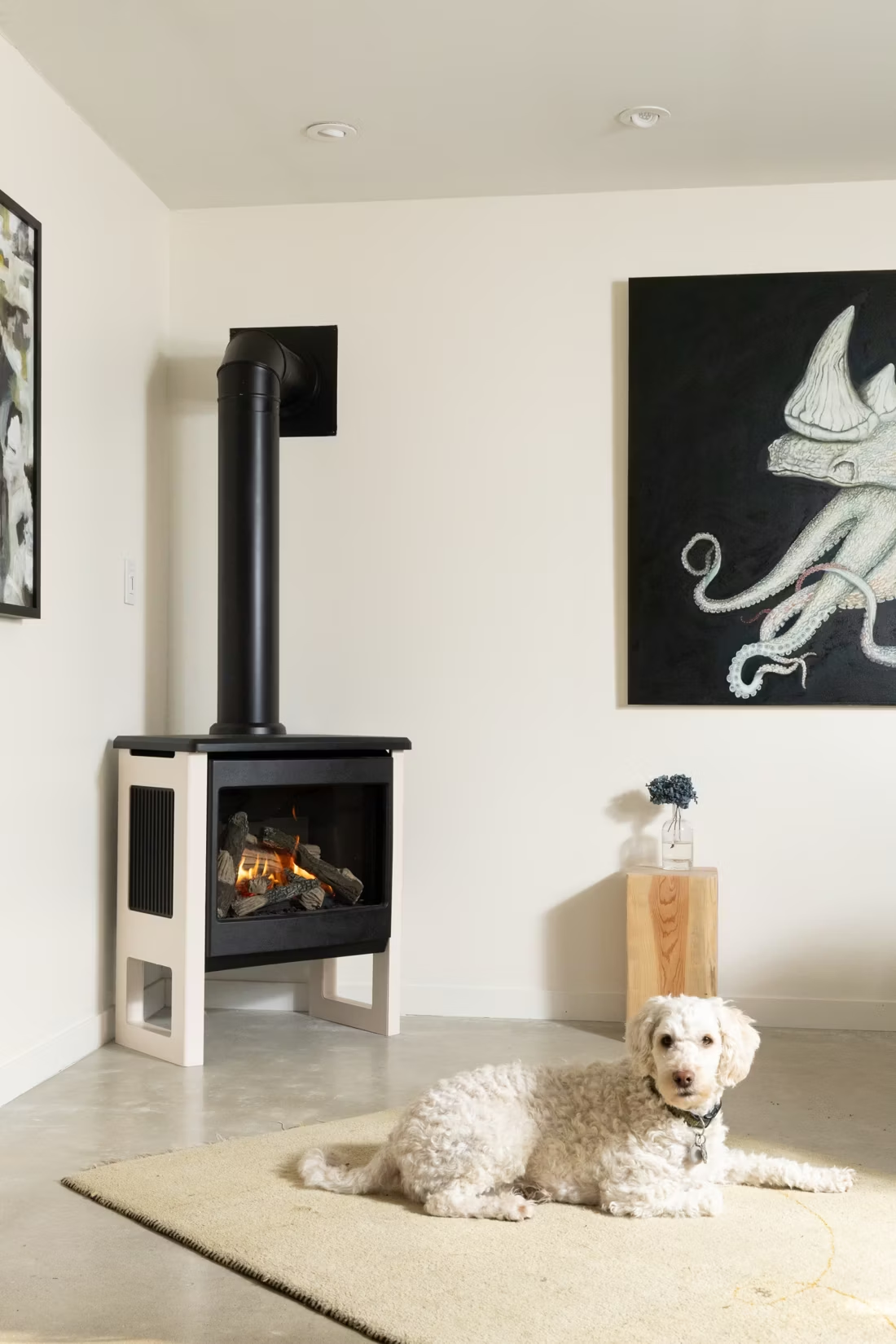
A gas fireplace is a fully framed-in unit, typically chosen for new construction or a remodel where there's no existing masonry firebox. A gas insert is built to slide into an existing wood fireplace, converting it to a sealed, high-efficiency gas unit that vents through the original chimney. A gas stove is a freestanding cabinet-style unit that sits on the floor, similar in footprint to a wood stove but running on gas. For the many older King George County homes with a working masonry fireplace already in place, an insert is usually the simplest upgrade; newer homes without an existing firebox are better suited to a built-in fireplace or a freestanding stove.
Do I need a permit to install a gas fireplace in King George County?
Yes—King George County requires a building permit for gas fireplace installations, along with a permit covering any new gas line or propane tank installation. Most local hearth dealers handle the permitting and inspection scheduling as part of the installation, which is one of the real advantages of working with a certified installer instead of a general handyman: the gas line, venting, and inspection all get coordinated together rather than left for the homeowner to manage separately.
Should I get a vented or vent-free gas fireplace?
Vented gas fireplaces (direct-vent or B-vent) pull combustion air from outside and exhaust the byproducts back outside through a sealed pipe—they're the cleaner, more universally recommended option and what most King George County installers put in first. Vent-free units burn without any exterior venting, releasing water vapor and small amounts of combustion byproducts directly into the room; they're legal in Virginia but come with strict room-size and ventilation requirements. For most homes in the county, a direct-vent unit is the simpler, safer call and delivers real heat output without any indoor air quality tradeoffs—worth discussing directly with a local dealer if you're weighing both.
How often does a gas fireplace need to be serviced?
Plan on an annual inspection, ideally before the first cold snap each fall. A technician checks the burner, pilot assembly, venting, and gas connections, and cleans the glass and interior—a much lighter lift than sweeping a wood chimney, but still important for safe operation. This matters even more for propane-fed units common across King George County, since a technician will also check the regulator and line connections at the tank as part of the service call. Expect to pay somewhere in the $150 to $250 range for a standard annual visit.
Gas vs. wood—which makes more sense for a King George County home?
Wood, split from local oak, hickory, or maple, still has a place in King George County—it works without power and gives off real radiant heat, which matters on a rural property that can lose electricity for a stretch after a storm. But gas wins on convenience: no stacking, no ash, no chimney fire risk, and heat that starts with a switch rather than kindling. Given that most of the county runs on propane rather than piped natural gas, the ongoing fuel cost gap between wood and gas is narrower here than in areas with cheap utility gas, which is part of why many King George homeowners end up choosing gas for daily comfort and keeping a wood stove or fireplace elsewhere on the property as backup.
What's the difference between an insert and a zero-clearance fireplace?
An insert is a fireplace that slides into a pre-existing wood-burning fireplace—if you don't have one, there's nothing to insert it into. A zero-clearance fireplace is built into a framed wall, which makes it the answer for remodels and new construction. Simple test: existing masonry fireplace means insert; blank or framed wall means zero-clearance.
Why is a fireplace insert so efficient?
An insert does two things: it seals the chimney completely, so you stop losing air you already paid to heat, and it radiates warmth into the room through the firebox and glass. Most add a heat-exchange fan that pulls cool room air underneath, wraps it around the hot firebox, and pushes it back out warm. Your home is more efficient before you've even lit the first fire.
What is an in-home preview and do I need one?
It's a visit where a hearth professional measures your space, confirms the model you picked actually works in your home, and walks the specs—framing, gas line, venting, finish work—before anything is ordered. Some details you just can't know until you see the house. Never make a down payment without one; it's the single most-skipped step that burns buyers.
Does a fireplace add value to my home?
On average, a fireplace adds back to the home about the same amount you spent installing it. Add the monthly savings from heating the rooms you actually use instead of the whole house—often hundreds of dollars a year—and the value case is strong before you even count what a fire does for how your family uses the room.
Stove and Fireplace Dealers in King George County
Listings include WhyFire partner dealers, dealers we have verified as authorized for the brands we recommend, and established local businesses that carry hearth products. Every listing shows which one it is. The ones marked Preferred run on WhyFire's software, so they can show you real pricing and book your appointment right here. No manufacturer pays for placement. How we verify dealers →
Gas Fireplace Service Of Stafford
Southern States Cooperative
Superior Fireplaces - La Plata
Glover Enterprises
Nova Fireplace And Stove
Hearth & Home Shoppe
Find your gas fireplace in King George County.
Tell us a bit about your home and fuel setup, and we'll match you with the right gas fireplace, insert, or stove—plus a free Project Guide & Parts List and a trusted local dealer to install it.
Find Your Fireplace →