
Instant Heat, No Chimney Required.
Hopewell's mild river-valley winters make electric fireplaces an easy, low-cost way to add real warmth and ambiance—no gas line, no cordwood, no venting.
Every Project Starts From One of These Five Situations
Electric heat fits Hopewell's mild winters.
Hopewell sits at just 47 feet of elevation where the James and Appomattox rivers meet, and its winters are genuinely mild by national standards—a 31°F average winter low and roughly 3,260 heating degree days a year. Compare that to a place like Burlington, VT, which logs nearly 7,500 HDD, and it's clear Hopewell homes don't need a wood-burning workhorse or a whole-house gas retrofit. What most homeowners here actually want is supplemental warmth for a chilly February evening, a fireplace-style focal point for a living room, or heat for a converted garage or sunroom that the central system doesn't quite reach.
That's exactly what an electric fireplace does well. There's no chimney to build, no gas line to run, and no cutting permit or wood species to worry about—plug-in units run on a standard outlet, and built-in or wall-mount models simply need a dedicated 120V or 240V circuit from a licensed electrician. Power comes from Virginia Electric & Power Co (Dominion Energy Virginia) at a residential rate around 14 cents per kWh, which keeps operating costs predictable whether you're running a unit in a historic City Point home or a newer build off Route 10.
Three steps. No salesperson until you're ready.
Tell us about your project
Your zip code, your situation, and the fuel you're leaning toward—or let the answers point you to one.
See what's actually available
The brands dealers within 100 miles genuinely carry—real options, never a catalog mirage.
Get your dealer & Project Guide
A trusted local dealer, plus the free Project Guide & Parts List that names every component of the job.
Frequently Asked Questions
How much does an electric fireplace installation cost in Hopewell?
Costs vary a lot by unit type. A freestanding or insert-style plug-in electric fireplace typically runs $200 to $800 for the unit itself, with no professional installation required beyond plugging it in. A built-in wall-mount or recessed electric fireplace that needs a dedicated circuit runs higher—usually $800 to $2,500 including the electrician's work to run new wiring, especially in older Hopewell homes near City Point or Crescent Hills where panel capacity can be limited. Framing or custom mantel surrounds add to that range.
Do I need a permit to install an electric fireplace in Hopewell?
A plug-in freestanding or mantel-style electric fireplace generally doesn't require a permit—it's no different from plugging in a space heater. If you're installing a built-in or wall-mount unit that requires a new dedicated circuit, that electrical work does need a permit through the City of Hopewell Building Department, and it should be pulled by a licensed electrician. Most local dealers who sell built-in electric units either handle the permitting themselves or coordinate directly with an electrician who will.
How much does it cost to run an electric fireplace in Hopewell?
At Dominion Energy Virginia's residential rate of about $0.1409 per kWh, a typical 1,500-watt electric fireplace heater costs roughly 21 cents per hour to run on full heat. Used a few hours a night as supplemental warmth in a living room—which is how most Hopewell homeowners use them, given the area's mild 31°F average winter low—that adds up to a modest addition to a monthly bill, especially compared to running central heat harder to cover the same room.
Electric vs. gas fireplace—which is right for my Hopewell home?
Both are solid options here since Hopewell has natural gas service available in much of the city. Gas fireplaces produce real, higher-output heat and can serve as a genuine backup heat source during a power outage. Electric fireplaces cost far less to install, don't need any gas line or venting, and can go virtually anywhere with an outlet—a bedroom, a converted sunroom, an apartment in a building where gas isn't an option. For most Hopewell homes, gas makes sense as a primary heat supplement in the main living area, while electric is the easier, cheaper choice for secondary rooms or rental properties.
Why don't more Hopewell homes use wood stoves?
Wood stoves are uncommon in Hopewell, and honestly, the climate doesn't call for them—with only about 3,260 heating degree days a year and winter lows that average in the low 30s, most homes simply don't need the heat output or the hassle of cordwood, chimney maintenance, and ash cleanup. There's plenty of oak, hickory, and maple in the surrounding Tidewater region, but that's more relevant to outdoor fire pits and regional firewood sales than home heating. Homeowners who want the look and feel of a real fire without committing to wood generally choose electric or gas instead.
What types of electric fireplaces are available for Hopewell homes?
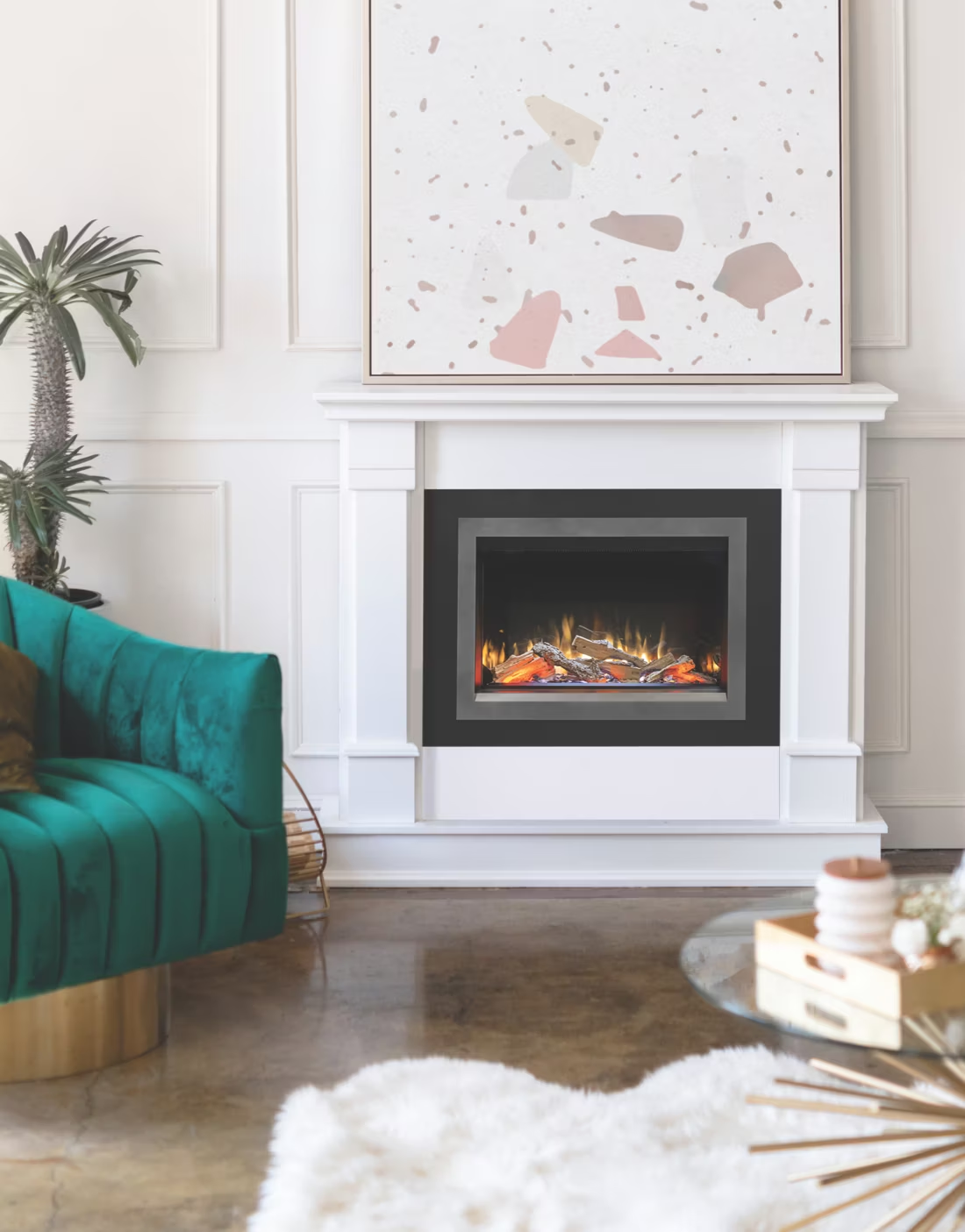
There are three main categories: freestanding electric stoves that plug in and can be moved room to room, mantel-style electric fireplaces that mimic a traditional fireplace look with a surround, and built-in wall-mount or recessed units that sit flush in a wall for a more custom, modern look. Insert-style units are also available for homeowners who want to convert an old, unused masonry fireplace into a working electric unit without touching the chimney. A local dealer can walk through which style fits your room and existing layout.
Can older Hopewell homes handle a built-in electric fireplace?
Usually, yes—but it depends on the home's electrical panel. Hopewell has a fair number of older houses, particularly around City Point and the historic downtown corridor, where panels may be at or near capacity. A built-in electric fireplace on a dedicated 20-amp or 240V circuit is a straightforward addition for most electricians, but it's worth having a local pro check panel capacity before committing to a higher-wattage built-in unit. Plug-in freestanding models sidestep this issue entirely since they use existing outlets.
Will an electric fireplace actually heat my room, or is it just for looks?
Most electric fireplaces sold today include a real heating element—typically 1,500 watts, which is enough to noticeably warm a 300 to 400 square foot room, roughly the size of a Hopewell living room or den. Given the area's mild winters, that's usually plenty for supplemental heat rather than needing a whole-home solution. If you just want the visual flame effect without the heat (useful in summer or a room that already runs warm), nearly every model lets you run the flame on its own with the heater switched off.
Why choose an electric fireplace over a regular space heater?
Both convert electricity to heat at essentially the same efficiency, so the running cost is comparable. The real difference is that an electric fireplace doubles as a permanent design feature—a mantel, a built-in surround, a realistic flame display—instead of a heater you store in a closet each spring. For a lot of Hopewell homeowners, that's the deciding factor: you get the ambiance and resale appeal of a fireplace with the low install cost and flexibility of a plug-in heater.
Can I put a TV above my fireplace?
Yes—with an asterisk. Fireplaces are hot and TVs don't like heat. Either put a mantel between them to deflect rising warmth, or choose a fireplace with heat-management technology that creates a cool zone on the wall above—the wall stays around 125 degrees, barely warm, while the room still gets full heat. If you like clean lines and don't want a mantel, heat management is the answer.
Do electric fireplaces actually produce heat?
Yes—most put out around 4,800–5,000 BTUs from a standard outlet, which comfortably warms a bedroom, office, or den as a comfort-zone heater. What they won't do is carry a whole house the way wood, gas, or pellet can. Think of electric as ambiance-first with honest supplemental heat: flames on with no heat in July, flames plus warmth in January.
What is an in-home preview and do I need one?
It's a visit where a hearth professional measures your space, confirms the model you picked actually works in your home, and walks the specs—framing, gas line, venting, finish work—before anything is ordered. Some details you just can't know until you see the house. Never make a down payment without one; it's the single most-skipped step that burns buyers.
Does a fireplace add value to my home?
On average, a fireplace adds back to the home about the same amount you spent installing it. Add the monthly savings from heating the rooms you actually use instead of the whole house—often hundreds of dollars a year—and the value case is strong before you even count what a fire does for how your family uses the room.
Electric Service in Hopewell
An electric fireplace's heater draws about 1,500 watts—pennies per hour at local rates.
Virginia Electric & Power Co
Find your electric fireplace in Hopewell.
Tell us a bit about your home and we'll put together a free Project Guide & Parts List, then match you with a trusted local Hopewell dealer who can get it installed right.
Find Your Fireplace →