
Find the right gas fireplace for your Hopewell home.
Steady, instant heat for a river city where winters are mild but real—natural gas through Columbia Gas of Virginia in town, propane for homes outside the line. Find the right unit and get matched with a trusted local dealer.
Every Project Starts From One of These Five Situations
Comfortable warmth for a river city with mild winters.
Hopewell sits where the Appomattox River meets the James, a city of roughly 23,000 built on the industrial boom that once earned it the nickname 'Wonder City.' Winters here run mild by national standards—an average low around 31°F and a winter heating load that's a fraction of what a place like Burlington, VT or Fargo, ND racks up in a normal winter. That means most Hopewell homes aren't fighting subzero nights; they're dealing with a long stretch of chilly-but-manageable weather from December through February where a gas fireplace does exactly what it's good at—instant, controllable heat in the rooms you actually live in, without the commitment of running a wood stove around the clock.
Natural gas service through Columbia Gas of Virginia covers most of the incorporated city, which makes a direct-vent gas fireplace or insert a straightforward add-on for homes that already have gas water heaters or ranges. Outside the service area—in outlying parts of the county and neighboring Prince George—propane fills the gap, and most gas fireplace models can be configured for either fuel. Hopewell has no significant winter air quality restrictions like the inversion-prone basins you'll find out West, so there's no burn-ban season to plan around—just a straightforward choice between a built-in fireplace, an insert into an older masonry hearth (common in the historic homes near City Point and downtown), or a freestanding gas stove.
Three steps. No salesperson until you're ready.
Tell us about your project
Your zip code, your situation, and the fuel you're leaning toward—or let the answers point you to one.
See what's actually available
The brands dealers within 100 miles genuinely carry—real options, never a catalog mirage.
Get your dealer & Project Guide
A trusted local dealer, plus the free Project Guide & Parts List that names every component of the job.
Frequently Asked Questions
How much does a gas fireplace installation cost in Hopewell?
A typical gas fireplace installation in Hopewell runs roughly $3,500 to $9,000, depending on the unit, the venting path, and whether new gas line work is required. A direct-vent insert going into an existing masonry fireplace—common in Hopewell's older City Point and downtown homes—with gas already run to the house sits toward the lower end. A new built-in fireplace for a remodel or an addition, especially one requiring a fresh gas line from the meter, lands higher. Homes needing a propane tank set instead of a Columbia Gas of Virginia hookup should budget toward the top of that range. A local dealer can give you a firm number after seeing the space.
Can I convert my existing wood fireplace to gas?
Yes, and it's a common upgrade in Hopewell's older housing stock, much of which still has the original masonry fireplace that once burned local oak or hickory. A gas insert slides into the existing firebox and vents up through the same chimney using a stainless liner, so you keep the look of the original fireplace while gaining push-button heat. Cost typically runs $3,500 to $8,000 depending on the insert and whether the home already has a gas line nearby. Homes already served by Columbia Gas of Virginia tend to land on the lower end; homes needing a propane setup or a longer line run cost more.
Do I need natural gas, or can I use propane?
Either works. Columbia Gas of Virginia serves most of the incorporated City of Hopewell, so if you already have gas appliances—a furnace, water heater, or range—adding a fireplace is usually a simple tie-in. Outside that service footprint, including some outlying and county-adjacent areas, propane is the standard fallback, either with a new tank installation or an existing one. Most fireplace models are field-configurable for either fuel; your installer sets the correct orifice and regulator for whichever gas you're running.
Will my gas fireplace work during a power outage?
Most modern gas fireplaces will, which matters in Hopewell given how often coastal storms and the tail end of tropical systems knock out power along the James and Appomattox corridor. Units with IPI (intermittent pilot ignition) include a battery backup that automatically kicks in when the power drops, so the fireplace lights and runs off batteries until utility power returns—just remember to keep fresh batteries in the unit. Valor fireplaces take it a step further: their pilot assembly generates its own electricity through the thermocouple, so there's no battery to remember at all. Worth asking your local dealer about when comparing units.
What's the difference between a gas fireplace, gas insert, and gas stove?
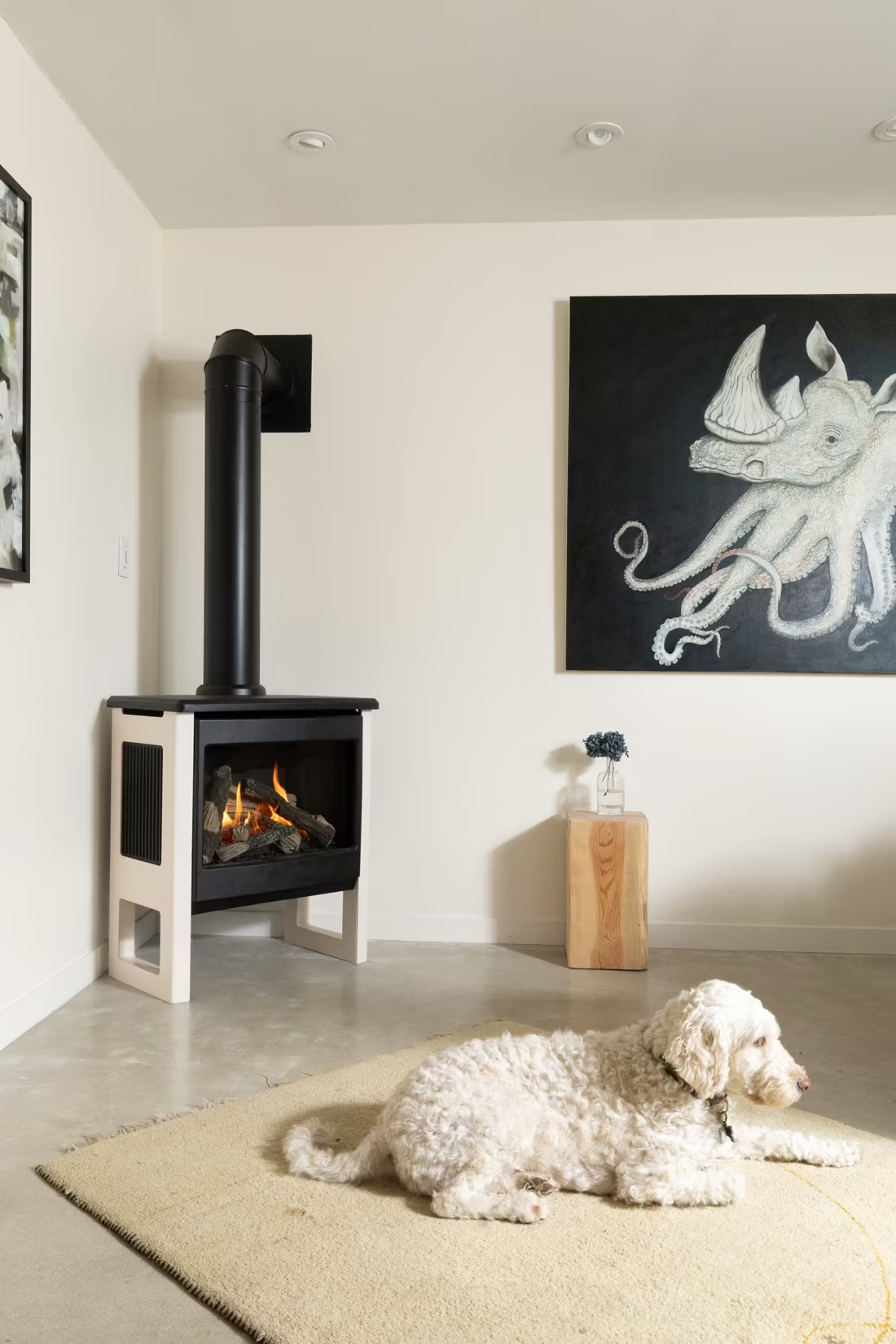
A gas fireplace is a fully built-in unit framed into a wall—the right call for new construction or a remodel without an existing fireplace. A gas insert drops into an existing masonry firebox, which fits a lot of Hopewell's older homes near downtown and City Point that already have a chimney but want to retire the open wood hearth. A gas stove is a freestanding unit that sits on the floor like a wood stove but runs on gas or propane, a good option for a room without any existing fireplace opening. For most Hopewell homeowners with an existing fireplace, the insert is the simplest and most cost-effective path.
Do I need a permit to install a gas fireplace in Hopewell?
Yes—the City of Hopewell requires a building permit and gas line permit for new gas fireplace installations, and the gas work itself has to be done by a licensed gas fitter. Most local hearth dealers handle the permitting and inspection scheduling as part of the install, so you're not coordinating separate trades yourself. This is one of the reasons to go with a certified installer rather than a handyman—the gas line, venting, and inspection sign-off all need to line up.
What's the difference between vented and vent-free gas fireplaces?
Vented (direct-vent or B-vent) gas fireplaces pull combustion air from outside and exhaust the byproducts back outside through a sealed pipe—they're the cleaner, safer option and code-compliant everywhere. Vent-free units burn directly into the room air without external venting; they're legal in Virginia but come with strict room-sizing rules and oxygen-depletion sensors, since combustion byproducts stay indoors. For Hopewell homes, direct-vent units are by far the most common recommendation—they deliver strong heat output and don't ask you to compromise on indoor air quality, which matters in a climate mild enough that windows stay closed less often than you'd think.
How often should my gas fireplace be serviced?
Plan on an annual inspection, ideally before the first cold snap in late fall. A technician checks the burner, pilot assembly, venting, and gas connections, and cleans the glass and interior—a much smaller job than sweeping a wood chimney, but just as important for safety. Local gas appliance service providers in the Hopewell area typically charge $150 to $250 for this visit.
Gas vs. wood—which makes more sense in Hopewell?
Wood is still burned around Hopewell—oak, hickory, and maple are all common regional firewood species, and there are no air quality restrictions here to discourage it the way there are in inversion-prone parts of the country. But with a fairly light winter heating load and winter lows averaging in the low 30s, most Hopewell homes don't need wood as a primary heat source the way a colder climate would. Gas gives you instant, thermostat-controlled warmth without stacking or hauling cordwood, which is why it's become the default choice for homeowners upgrading an old fireplace here. Wood still has a place for households that want backup heat during storm-related outages or simply prefer a real fire—plenty of Hopewell homes end up with one of each.
Is my gas fireplace wasting gas?
If it was installed more than 15 years ago, probably. Older gas fireplaces keep a standing pilot light burning all the time, and that little flame can cost a couple hundred dollars a year. Newer models use pilot-on-demand ignition—the pilot lights only when you use the fireplace and goes out when you turn it off.
Can I put a TV above my fireplace?
Yes—with an asterisk. Fireplaces are hot and TVs don't like heat. Either put a mantel between them to deflect rising warmth, or choose a fireplace with heat-management technology that creates a cool zone on the wall above—the wall stays around 125 degrees, barely warm, while the room still gets full heat. If you like clean lines and don't want a mantel, heat management is the answer.
Can I install a fireplace myself?
If you're putting a fire in your house on purpose, it's best to work with an expert. Unless you're genuinely experienced in framing, gas line, vent pipe, and the national code on clearances to combustibles, have a professional do it—and ideally the same company that sells you the fireplace, so warranty, service, and liability all live under one roof.
What is an in-home preview and do I need one?
It's a visit where a hearth professional measures your space, confirms the model you picked actually works in your home, and walks the specs—framing, gas line, venting, finish work—before anything is ordered. Some details you just can't know until you see the house. Never make a down payment without one; it's the single most-skipped step that burns buyers.
Stove and Fireplace Dealers in Hopewell County
Listings include WhyFire partner dealers, dealers we have verified as authorized for the brands we recommend, and established local businesses that carry hearth products. Every listing shows which one it is. The ones marked Preferred run on WhyFire's software, so they can show you real pricing and book your appointment right here. No manufacturer pays for placement. How we verify dealers →
Fireplace Innovations - Chester Location
Phillips Energy,Inc - Providence Forge
Hearth And Patio Shoppe
Find your gas fireplace in Hopewell.
Tell us about your home and we'll match you with the right gas fireplace, insert, or stove—plus a free Project Guide & Parts List with the exact vent kit and parts your local dealer will need for the install.
Find Your Fireplace →