
Find your electric fireplace in Henry County.
No chimney, no gas line, no venting—just plug-in warmth for Henry County living rooms and dens. Find the right unit and connect with a trusted local dealer.
Every Project Starts From One of These Five Situations
Simple heat for a moderate climate.
Henry County sits in climate zone 4A with an average winter low around 24 degrees and a winter heating load—noticeably milder than the harder-freezing winters of places like Duluth or Fargo, but still cold enough that supplemental heat in a den, bonus room, or finished basement gets real use from November through March. That's a climate profile where electric fireplaces make a lot of sense: homeowners around Martinsville, Collinsville, and Ridgeway aren't fighting sub-zero nights, so a unit that adds zone heat and ambiance to one room often does the job without needing whole-home wood or gas capacity.
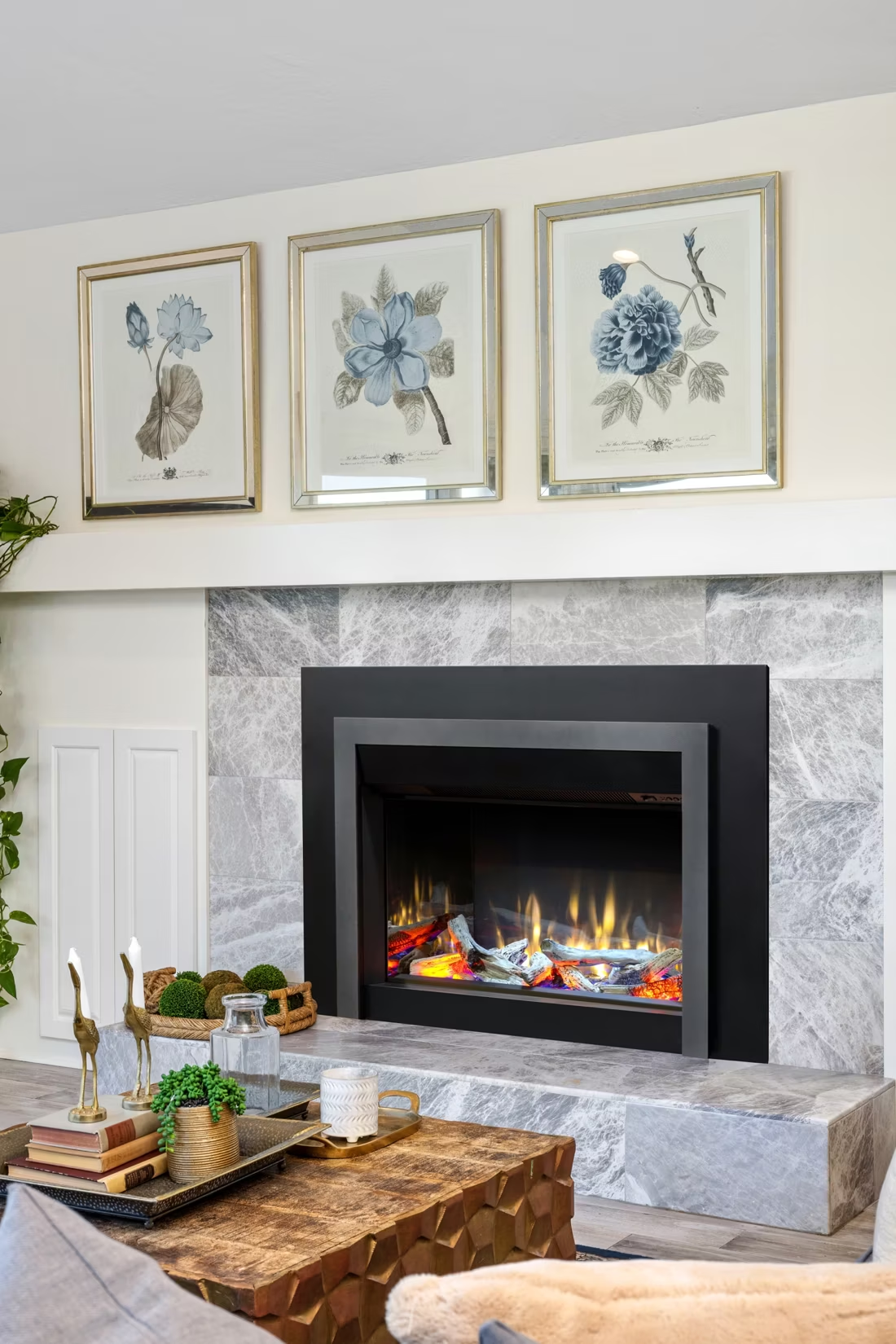
Electric inserts and freestanding units also solve a practical problem in a lot of Henry County's older housing stock: not every home has a chimney or an existing gas line, and running one isn't always worth the cost for a single room. An electric insert can go into an existing masonry fireplace opening, or a freestanding electric stove can sit anywhere near an outlet—no permit for the appliance itself, no combustion byproducts, and it plugs in the same day it's installed. For homeowners who already burn oak, hickory, or maple in a primary wood stove elsewhere in the house, electric is a common second unit for a bedroom, sunroom, or rental unit where running a flue isn't practical.
Three steps. No salesperson until you're ready.
Tell us about your project
Your zip code, your situation, and the fuel you're leaning toward—or let the answers point you to one.
See what's actually available
The brands dealers within 100 miles genuinely carry—real options, never a catalog mirage.
Get your dealer & Project Guide
A trusted local dealer, plus the free Project Guide & Parts List that names every component of the job.
Frequently Asked Questions
How much does an electric fireplace installation cost in Henry County?
Typical electric fireplace and insert installs in Henry County run $400 to $1,200, which is dramatically less than wood, gas, or pellet installs because there's no venting, no chimney work, and no gas line to run. The low end covers a plug-in insert dropped into an existing fireplace opening with a standard outlet already nearby. The higher end applies when an electrician needs to add a dedicated circuit, or when a built-in wall unit requires framing and trim work as part of a remodel. Most local dealers can quote a firm price after a quick look at your space and your existing electrical setup.
Do I need a permit to install an electric fireplace in Henry County?
In most cases, no—a plug-in electric insert or freestanding unit doesn't require the building permit that a wood stove or gas fireplace does, since there's no chimney, flue, or gas line involved. If your installation requires new electrical wiring or a dedicated circuit, that work should be done by a licensed electrician and may require an electrical permit through Henry County, which most installers or electricians handle as part of the job. This is one of the simpler permitting paths of any fireplace fuel type in the county.
Will an electric fireplace actually heat my room, or is it just for looks?
Most electric inserts and stoves include a real heater—typically a fan-forced or infrared element rated for 400 to 1,500 square feet—separate from the flame-effect display, which can run with the heat on or off. In Henry County's climate, where winter lows average around 24 degrees rather than deep sub-zero cold, a properly sized electric unit can genuinely take the chill off a den, bedroom, or converted garage without a furnace running constantly. It's not designed to replace a whole-home heating system in a large, drafty farmhouse, but as supplemental zone heat for a single room, it performs well and costs far less to run than most people expect.
What's the difference between an electric insert and a freestanding electric stove?
An electric insert is built to slide into an existing masonry fireplace opening, using the opening itself as the frame—a good fit for Henry County homes with an old wood-burning fireplace that's no longer used. A freestanding electric stove looks like a traditional cast-iron wood stove but plugs into a standard outlet and can be placed almost anywhere in a room, including spaces that never had a fireplace at all—a finished basement, a sunroom addition, or a bedroom. Wall-mounted and built-in electric fireplaces are a third option, often used in new construction or remodels where a homeowner wants a linear, modern look without any fireplace opening at all.
How much does it cost to run an electric fireplace?
Most electric fireplace heaters draw around 1,500 watts on high, which works out to roughly 15 cents an hour at typical Virginia electricity rates—noticeably cheaper per hour than running a portable space heater of the same wattage, since a fair amount of that draw goes toward the visual flame effect rather than heat once you dial down the thermostat. For Henry County homeowners heating one room for a few hours a night through a mild winter, that's a modest add to a monthly electric bill compared to running a wood stove or gas insert that needs fuel purchased separately.
Is electric a good fit for a rental property or secondary home in Henry County?
Yes—electric is often the most practical choice for rental units, in-law suites, or vacation properties around Henry County precisely because it requires no chimney inspection, no fuel delivery, and no tenant education on operating a wood stove or gas valve safely. A tenant can operate an electric unit with a remote or wall switch, there's no combustion risk to worry about between turnovers, and there's nothing to inspect annually the way a chimney or gas line needs checking. For landlords managing several properties, that lower-maintenance profile is a real advantage over wood or gas.
Can an electric fireplace go in a home without a chimney?
Yes—this is one of the main reasons homeowners choose electric in Henry County's older housing stock. A freestanding or wall-mounted electric unit needs only a nearby outlet or a dedicated circuit, so it works in homes that never had a fireplace or chimney at all, including manufactured homes, additions, and finished basements. This makes electric a common choice for secondary rooms even in houses that already have a wood stove or gas fireplace as the primary heat source elsewhere.
Electric vs. gas—which is right for my Henry County home?
Gas delivers more real heat output and can serve as backup heat in some configurations, but it requires a gas line or propane tank, venting, and an annual inspection by a certified technician. Electric requires only an outlet, installs in a fraction of the time, and costs far less upfront—typically $400 to $1,200 versus several thousand for gas—but it won't heat a large area the way a properly sized gas insert can, and it depends entirely on grid power. For a Henry County den, bedroom, or basement where the goal is ambiance plus modest supplemental warmth, electric is usually the simpler and cheaper answer. For a primary living space where you want real, sustained heat output, gas is often the better long-term fit.
Do electric fireplaces work during a power outage?
No—electric fireplaces require grid power to operate, both the flame effect and the heater, so they go dark during an outage. This is worth factoring in if you're in a part of Henry County where outages run long during winter storms; a wood stove burning locally available oak or hickory, or a battery-backed gas unit, will keep working when the power doesn't. Many homeowners pair an electric unit in a secondary room with a wood or gas unit as the primary heat source specifically so they have a non-electric backup for outages.
Can I put a TV above my fireplace?
Yes—with an asterisk. Fireplaces are hot and TVs don't like heat. Either put a mantel between them to deflect rising warmth, or choose a fireplace with heat-management technology that creates a cool zone on the wall above—the wall stays around 125 degrees, barely warm, while the room still gets full heat. If you like clean lines and don't want a mantel, heat management is the answer.
Does an electric fireplace need a vent or chimney?
No—that's its superpower. An electric fireplace needs a wall and an outlet, period. No vent pipe, no gas line, no clearances to design around, which is why it works in bedrooms, offices, apartments, and walls where venting a gas or wood unit would be impractical or impossible. Installation is typically the simplest and least expensive of any fireplace type.
Does a fireplace add value to my home?
On average, a fireplace adds back to the home about the same amount you spent installing it. Add the monthly savings from heating the rooms you actually use instead of the whole house—often hundreds of dollars a year—and the value case is strong before you even count what a fire does for how your family uses the room.
Can a fireplace actually lower my heating bill?
Yes—by creating a comfort zone. A furnace heats every square foot of the house just to warm the one room you're in; a gas fireplace on low burns roughly a sixth of the gas a typical furnace does. Set the furnace around 55–60 degrees as a baseline, then heat the rooms your family actually uses. Families who heat this way commonly save $20–$60 a month.
Stove and Fireplace Dealers in Henry County
Listings include WhyFire partner dealers, dealers we have verified as authorized for the brands we recommend, and established local businesses that carry hearth products. Every listing shows which one it is. The ones marked Preferred run on WhyFire's software, so they can show you real pricing and book your appointment right here. No manufacturer pays for placement. How we verify dealers →
McKinney Heating & Air Conditioning
Buck Stove Sales & Service
Davenport Energy Martinsville
Clark Gas & Oil Company
Davenport Energy Rocky Mount
Redwood Fuel
Wayne's Landscaping
Get your Henry County electric fireplace Project Guide.
Tell us a bit about your room and we'll match you with a trusted local Henry County dealer and send a free Project Guide & Parts List for your electric fireplace or insert.
Find Your Fireplace →