
Electric heat that fits any room in Greene County.
No chimney, no gas line, no new venting—just plug in or wire up and go. For homes and additions across Stanardsville and the Blue Ridge foothills near Shenandoah National Park, we'll match you with the right electric unit and a trusted local dealer.
Every Project Starts From One of These Five Situations
Simple heat for a rural county without new venting.
Greene County sits in the Blue Ridge foothills, with Stanardsville as its county seat and Skyline Drive marking the gateway into Shenandoah National Park just to the west. At climate zone 4A with roughly 3,767 heating degree days and an average winter low near 30°F, this is a moderate cold-climate county—colder than the Piedmont to the east, but nowhere near the harsh winters of places like Bozeman or Burlington. Most homes here don't need a whole-house heating overhaul; they need targeted warmth in a specific room, and that's exactly where electric fireplaces do their best work.
Because electric units don't burn fuel or require a flue, they're the easiest add to older Greene County farmhouses without an existing chimney, to sunroom and bonus-room additions, and to bedrooms where a space heater currently does the job less safely. Power comes from Rappahannock Electric Cooperative across most of the county, and it's worth being upfront about the tradeoff: an electric fireplace goes dark the moment the grid does, which matters during the ice storms that occasionally hit the foothills. That's a big reason many local households keep a wood stove fed by the oak, hickory, and maple that grow throughout the county as backup heat, and why some also look at pellet stoves running on regional brands like Energex, Hamer Pellet Fuel, or Greene Team Pellet Fuel. Electric earns its place as the low-hassle, no-venting option for supplemental warmth and ambiance—not as the sole answer for a power-outage-prone rural property.
Three steps. No salesperson until you're ready.
Tell us about your project
Your zip code, your situation, and the fuel you're leaning toward—or let the answers point you to one.
See what's actually available
The brands dealers within 100 miles genuinely carry—real options, never a catalog mirage.
Get your dealer & Project Guide
A trusted local dealer, plus the free Project Guide & Parts List that names every component of the job.
Frequently Asked Questions
How much does an electric fireplace installation cost in Greene County?
Plug-in freestanding units and small wall-mount models typically run $300 to $1,200 installed, since most just need a standard outlet and no permit. Built-in electric fireplaces or inserts that require a dedicated 20-amp circuit run higher—usually $1,200 to $3,500 once you factor in a licensed electrician, surface-mount or recessed framing, and any trim or mantel finish work. Retrofitting an electric insert into an existing masonry fireplace in one of Greene County's older farmhouses near Stanardsville tends to land in the middle of that range, since the wiring path is usually already there.
What size electric fireplace or insert do I need?
Electric units are almost always sized for a single room rather than whole-house heating, so square footage of the specific space matters more than the size of your home. A compact 1,000-1,500 watt unit comfortably supplements a bedroom or home office; a 1,500-watt insert with a stronger fan will carry a larger living room or converted sunroom on Greene County's milder winter days. Because our average winter low sits around 30°F rather than the deep-single-digit cold of a mountain climate, most homeowners here don't need to max out heater wattage—comfort and flame appearance usually matter more than raw BTU output.
Do I need a permit to install an electric fireplace in Greene County?
A simple plug-in electric fireplace that uses an existing outlet generally doesn't require a permit. If you're installing a built-in unit that needs a new dedicated circuit, however, that electrical work falls under the Greene County Department of Building Inspections and must be done by a licensed electrician who pulls the permit. Most local dealers coordinate directly with an electrician as part of the installation, so you're not left tracking down the paperwork yourself.
What's the difference between an electric fireplace, insert, and stove?
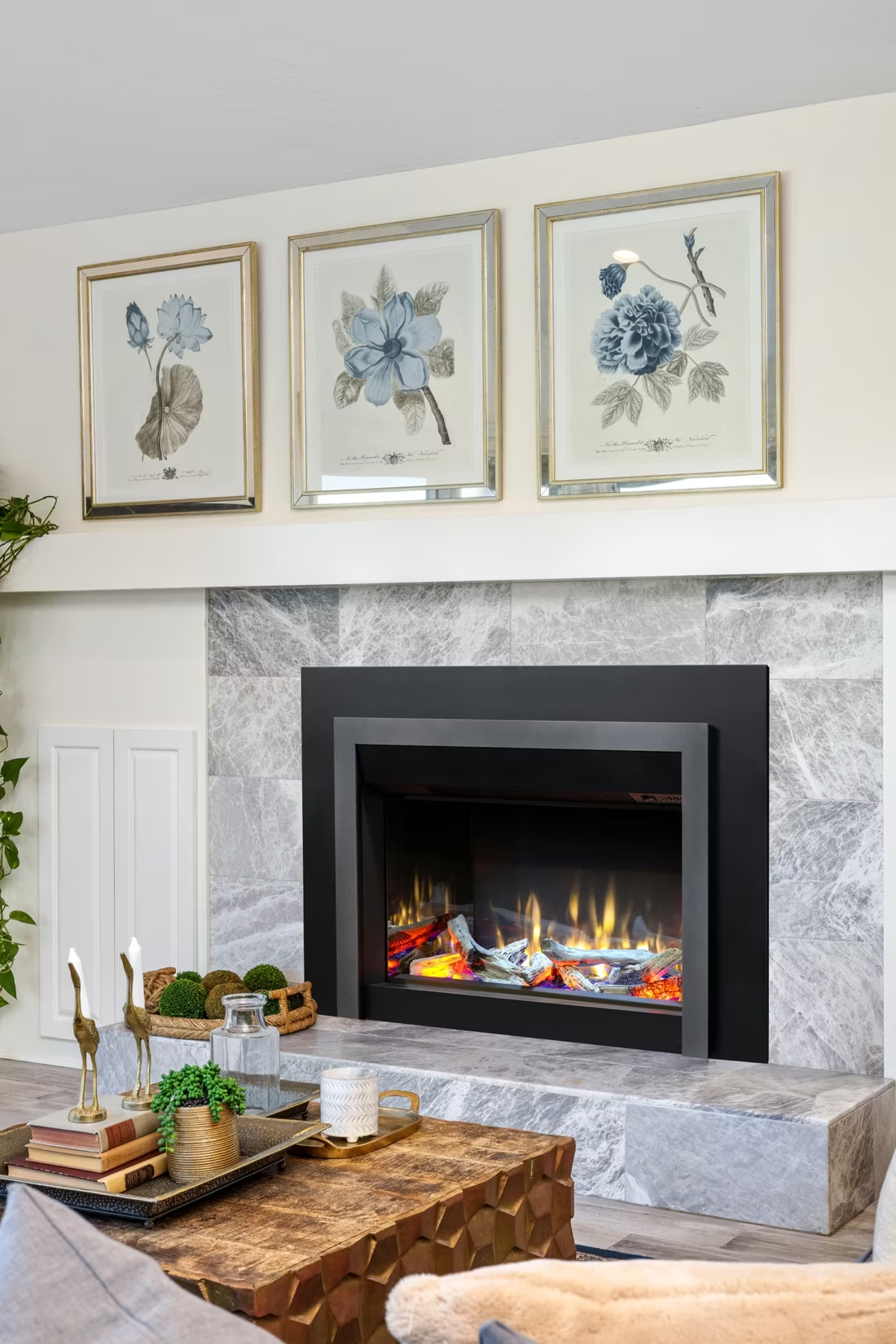
An electric fireplace is typically a built-in or wall-mount unit designed to look like a framed fireplace opening. An electric insert is built to slide into an existing masonry firebox, which is common in older Greene County homes around Stanardsville that already have a fireplace opening but no working chimney or a chimney they'd rather not maintain. An electric stove is a freestanding cabinet-style unit that mimics a wood stove's look and can go almost anywhere with an outlet nearby. All three heat a room the same way—with a fan-forced heating element—so the choice usually comes down to the look you want and whether you're filling an existing opening or starting from scratch.
Will my electric fireplace work during a power outage?
No—electric fireplaces need grid power to run the heating element, fan, and flame effect, so they go dark the moment power drops. That's a real consideration in Greene County, where Rappahannock Electric Cooperative service in the Blue Ridge foothills can see outages during ice storms and heavy winter weather. Many local households pair an electric unit for everyday convenience in a living room or bedroom with a wood stove burning locally abundant oak, hickory, or maple as genuine backup heat when the power's out.
What's the best electric fireplace for a Greene County home?
Since our winters are moderate—average lows around 30°F rather than deep sub-zero cold—you don't need to chase maximum heat output the way you would in a harsher climate. Look instead for models with a realistic flame effect and a reliable fan-forced heater in the 1,400 to 1,500 watt range, which comfortably supplements a bedroom, den, or sunroom addition. For older farmhouses near Stanardsville with an existing masonry opening, an insert-style electric unit sized to your firebox is usually the cleanest retrofit. A local dealer can walk you through specific models once they've seen your room and existing fireplace opening, if you have one.
Electric vs. pellet stove—which is right for my home?
Pellet stoves burning regional brands like Energex, Hamer Pellet Fuel, or Greene Team Pellet Fuel put out significantly more heat than an electric unit and can serve as a real primary or near-primary heat source for a Greene County home. But pellet stoves also need electricity to run their auger and blower, so they're not a backup during an outage either—you'd need a generator to keep one running. Electric fireplaces win on simplicity and cost of installation, no fuel storage, and no ash cleanup, but they're best thought of as supplemental, ambiance-focused heat rather than a whole-room primary source the way a pellet stove can be.
Electric vs. wood—which makes more sense in Greene County?
Wood, using the oak, hickory, and maple common throughout the county, remains the most reliable option during winter power outages and can genuinely heat a whole room or more on its own. Electric fireplaces can't do that—they're heat-when-the-grid's-up convenience, easiest to add to a room without an existing chimney, and far simpler to install and maintain. For Greene County's moderate 4A climate, a lot of homeowners land on a practical split: wood or a wood insert for real cold-weather heat and outage resilience, electric for the rooms where a fire is more about atmosphere and easy supplemental warmth than survival heat.
How much maintenance does an electric fireplace need?
Very little compared to wood or gas. There's no chimney to sweep and no annual gas line inspection—just occasional dusting of the heater vents, periodic filter cleaning on models that have one, and eventual LED light replacement, which most units are designed to make simple. This low-maintenance profile is part of why electric units are popular for Greene County rental properties and bonus-room additions where homeowners want reliable ambiance without an ongoing service routine.
Can I put a TV above my fireplace?
Yes—with an asterisk. Fireplaces are hot and TVs don't like heat. Either put a mantel between them to deflect rising warmth, or choose a fireplace with heat-management technology that creates a cool zone on the wall above—the wall stays around 125 degrees, barely warm, while the room still gets full heat. If you like clean lines and don't want a mantel, heat management is the answer.
Do electric fireplaces actually produce heat?
Yes—most put out around 4,800–5,000 BTUs from a standard outlet, which comfortably warms a bedroom, office, or den as a comfort-zone heater. What they won't do is carry a whole house the way wood, gas, or pellet can. Think of electric as ambiance-first with honest supplemental heat: flames on with no heat in July, flames plus warmth in January.
How much should I budget for a fireplace?
For an average home—covering the fireplace, the vent pipe, and basic installation—a budget between $3,900 and $5,500 gives you a lot of options across wood, gas, and pellet. By the time you add finish work, gas line, and electrical, the average complete installation lands between $5,000 and $12,000 all-in. In a remodel or new build, a good rule is to put about 2.5% of the total project cost toward the fireplace.
Can a fireplace actually lower my heating bill?
Yes—by creating a comfort zone. A furnace heats every square foot of the house just to warm the one room you're in; a gas fireplace on low burns roughly a sixth of the gas a typical furnace does. Set the furnace around 55–60 degrees as a baseline, then heat the rooms your family actually uses. Families who heat this way commonly save $20–$60 a month.
Stove and Fireplace Dealers in Greene County
Listings include WhyFire partner dealers, dealers we have verified as authorized for the brands we recommend, and established local businesses that carry hearth products. Every listing shows which one it is. The ones marked Preferred run on WhyFire's software, so they can show you real pricing and book your appointment right here. No manufacturer pays for placement. How we verify dealers →
The Chimney Guys
Acme Stoves Of Charlottesville
Mid-Atlantic Masonry Heat
Blossman Gas And Appliance
Foster Fuels
Blossman Gas And Appliance
Find your electric fireplace in Greene County.
Tell us about your room and your home, and we'll match you with a trusted local dealer and send over a free Project Guide & Parts List—the exact unit, wiring needs, and installation plan for your electric fireplace project in Greene County.
Find Your Fireplace →