
Comfortable heat for mild Tidewater winters, on demand.
With winter lows averaging around 31°F at the tip of the Middle Peninsula, Gloucester Point homes don't need a furnace-sized fire—they need instant, controllable warmth. Find the right gas fireplace or insert and get matched with a trusted local dealer.
Every Project Starts From One of These Five Situations
Convenient warmth for a mild coastal climate.
Gloucester Point sits at just 32 feet in elevation, at the mouth of the York River where it meets the Chesapeake Bay. With roughly 3,536 heating degree days a year—a fraction of what colder inland climates like Bismarck, ND or Burlington, VT see—this isn't a region that depends on wood or gas heat to survive winter. But damp nor'easters, occasional ice storms, and the raw chill of a river breeze make a fireplace something homeowners here genuinely use, whether it's the primary living space of a year-round home near VIMS and Yorktown or a waterfront getaway that needs to warm up fast when the owners arrive on a Friday night.
One local wrinkle worth knowing: municipal natural gas mains generally don't extend into Gloucester Point or much of rural Gloucester County. Most homes here that want gas heat run on propane, delivered and stored in an above-ground or buried tank by a regional propane supplier. That changes the install conversation slightly—you're planning for a tank as well as the fireplace—but the fireplace itself works exactly the same as a natural gas unit, and most models on the market today are dual-fuel or easily convertible. For an older brick masonry fireplace, a sealed propane insert also solves a real problem in this salt-air coastal environment: less moisture and less soot working its way into masonry over time.
Three steps. No salesperson until you're ready.
Tell us about your project
Your zip code, your situation, and the fuel you're leaning toward—or let the answers point you to one.
See what's actually available
The brands dealers within 100 miles genuinely carry—real options, never a catalog mirage.
Get your dealer & Project Guide
A trusted local dealer, plus the free Project Guide & Parts List that names every component of the job.
Frequently Asked Questions
How much does a gas fireplace installation cost in Gloucester Point?
For a home already running propane appliances with a tank in place, a direct-vent gas insert or fireplace typically lands in the $4,000 to $7,500 range, depending on the unit and venting path. If you don't yet have a propane tank, add setup and delivery costs from a regional propane supplier—most offer tank installation as part of a service agreement, sometimes at reduced upfront cost if you commit to fuel delivery. Homes near the water with longer gas line runs or unusual framing (common in older Gloucester Point cottages) tend to land toward the higher end. A local dealer will give you a firm number after seeing the space in person.
Can I convert my existing wood-burning fireplace to gas?
Yes, and it's a common project on the Middle Peninsula, where older homes were often built with brick masonry fireplaces burning local oak or hickory. A propane insert fits into that existing firebox, uses a stainless liner run up the existing chimney, and gives you push-button heat without the ash, sparks, or humidity-driven creosote buildup that's common in this coastal climate. Most conversions run $4,000 to $8,500 depending on the insert and whether new gas line work from the tank is required.
Should I plan on propane or natural gas for a new fireplace?
Plan on propane. Gloucester Point and most of rural Gloucester County are outside the natural gas utility footprint, so nearly every gas fireplace installed here runs on propane from a tank rather than a piped municipal line. The fireplace hardware is functionally identical either way—your installer simply sets the orifice and regulator for propane instead of natural gas. If you're building new or doing a major remodel, coordinate the propane tank size and placement with your dealer before the fireplace order goes in, since tank location affects the gas line run and cost.
Will a gas fireplace still work if the power goes out?
This matters more in Gloucester Point than in most places—being situated where the York River meets the Chesapeake Bay means real exposure to nor'easters and tropical systems, and Virginia Electric & Power Co. (Dominion Energy) outages here can stretch for days after a bad storm. Most modern gas fireplaces with intermittent pilot ignition run on AA battery backup, lighting on demand even with the power out, as long as you keep fresh batteries in the unit. Valor's gas fireplaces go a step further and generate their own electricity from the pilot's thermocouple, needing no batteries at all—worth asking about if storm-season reliability is a priority for your home.
Gas fireplace, gas insert, or gas stove—which fits my home?
A gas insert drops into an existing masonry firebox—the right call for many of the older brick fireplaces found in Gloucester Point's colonial-era and mid-century homes. A built-in gas fireplace is framed into a wall and suits new construction or a full remodel, common in the newer waterfront homes going up along the York River. A freestanding gas stove sits on the floor like a wood stove but runs on propane, and works well in a sunroom, workshop, or detached space that doesn't have an existing chimney. Your local dealer can tell you which fits your framing and venting situation in a single visit.
Do I need a permit to install a gas fireplace in Gloucester Point?
Yes—Gloucester County requires a building permit for new gas fireplace and insert installations, handled through the county's Building Inspections Division, and any new propane line work needs to be done by a licensed gas fitter. Reputable local hearth dealers pull these permits as part of the install so you're not coordinating separately with the propane supplier, the gas fitter, and the county. It's one of the clearer advantages of working with an established local installer rather than a big-box purchase with a subcontracted install crew.
What's the difference between vented and vent-free gas units, and does it matter here?
Vented (direct-vent) units draw combustion air from outside and exhaust it back outside through sealed venting. Vent-free units burn propane directly into the room, releasing water vapor and small amounts of combustion byproducts indoors. Vent-free is legal in Virginia within room-sizing limits, but in a humid coastal climate like Gloucester Point's—where indoor moisture already contributes to mold and mildew concerns near the water—adding more water vapor into the living space is a real downside. Direct-vent units are the more common and generally recommended choice for homes here, and local dealers can walk you through both if you want to weigh it yourself.
How often should a gas fireplace be serviced in this area?
Plan on an annual inspection, ideally in early fall before regular use ramps up. A technician checks the burner, pilot assembly, venting, and gas connections, and cleans the glass and interior—usually $150 to $250. In a salt-air environment like Gloucester Point's, it's also worth having the technician look at exterior venting terminations and any exposed metal components for corrosion, since proximity to the Bay accelerates wear on hardware that would last longer inland.
Gas or wood—which makes more sense for a Gloucester Point home?
With winters this mild—average lows around 31°F and roughly 3,536 heating degree days—neither fuel is doing heavy lifting for whole-home heat, so the choice comes down to convenience versus experience. Gas wins for weekend and vacation properties near the water, where you want heat the moment you walk in without hauling wood, and for anyone who'd rather not deal with ash and creosote in a humid climate. Wood still has a strong following on wooded lots around Gloucester County, where oak, hickory, and maple are easy to source and a real fire feels right for a cold, damp evening. Plenty of local homes end up with both: a gas insert for daily convenience and a wood-burning option elsewhere for ambiance or storm backup.
Can I put a TV above my fireplace?
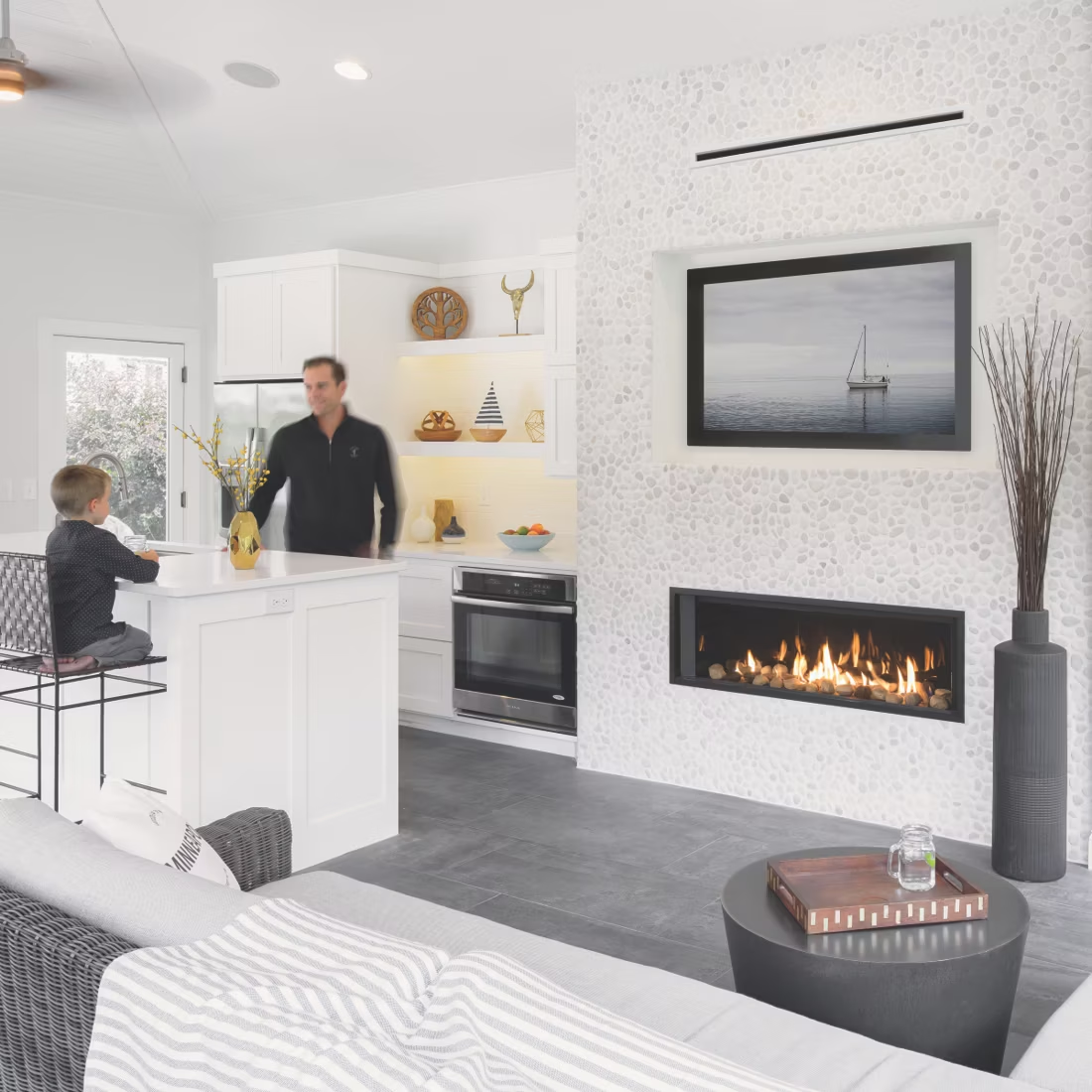
Yes—with an asterisk. Fireplaces are hot and TVs don't like heat. Either put a mantel between them to deflect rising warmth, or choose a fireplace with heat-management technology that creates a cool zone on the wall above—the wall stays around 125 degrees, barely warm, while the room still gets full heat. If you like clean lines and don't want a mantel, heat management is the answer.
Is my gas fireplace wasting gas?
If it was installed more than 15 years ago, probably. Older gas fireplaces keep a standing pilot light burning all the time, and that little flame can cost a couple hundred dollars a year. Newer models use pilot-on-demand ignition—the pilot lights only when you use the fireplace and goes out when you turn it off.
Can a fireplace actually lower my heating bill?
Yes—by creating a comfort zone. A furnace heats every square foot of the house just to warm the one room you're in; a gas fireplace on low burns roughly a sixth of the gas a typical furnace does. Set the furnace around 55–60 degrees as a baseline, then heat the rooms your family actually uses. Families who heat this way commonly save $20–$60 a month.
Can I install a fireplace myself?
If you're putting a fire in your house on purpose, it's best to work with an expert. Unless you're genuinely experienced in framing, gas line, vent pipe, and the national code on clearances to combustibles, have a professional do it—and ideally the same company that sells you the fireplace, so warranty, service, and liability all live under one roof.
Nearby Dealers
Hearth shops serving Gloucester Point and the surrounding area. Every listing shows whether it is a WhyFire partner, a dealer we have verified as authorized for the brands we recommend, or a local business carrying hearth products. No manufacturer pays for placement. How we verify dealers →
Fireside Hearth & Home - Newport News
Old Town Stove & Hearth
Nwp Energy
Find your gas fireplace in Gloucester Point.
Tell us a bit about your home and propane setup, and we'll match you with a trusted local dealer and send over a free Project Guide & Parts List—the exact fireplace or insert, vent kit, and install plan for your Gloucester Point project.
Find Your Fireplace →