
Real heat for Giles County homes, no chimney or gas line needed.
From the New River Valley floor in Narrows and Pearisburg to the ridges above Mountain Lake, electric fireplaces add instant zone heat and ambiance to homes running on propane, heat pumps, or wood. Find the right unit and connect with a trusted local dealer.
Every Project Starts From One of These Five Situations
Supplemental heat without the venting hassle.
Giles County is small and rural—just over 7,000 people spread across Pearisburg, Narrows, Pembroke, Rich Creek, and the hollows that climb from the New River up toward Mountain Lake and the ridges of the George Washington & Jefferson National Forest. Winters here average lows around 23°F with a solidly long, cold heating season—real cold, but not extreme. Most homes rely on a heat pump or propane furnace for primary heat, with wood stoves burning locally cut oak, hickory, and maple as a longstanding backup (personal-use cutting permits on national forest land run about $20 per cord, May through October).
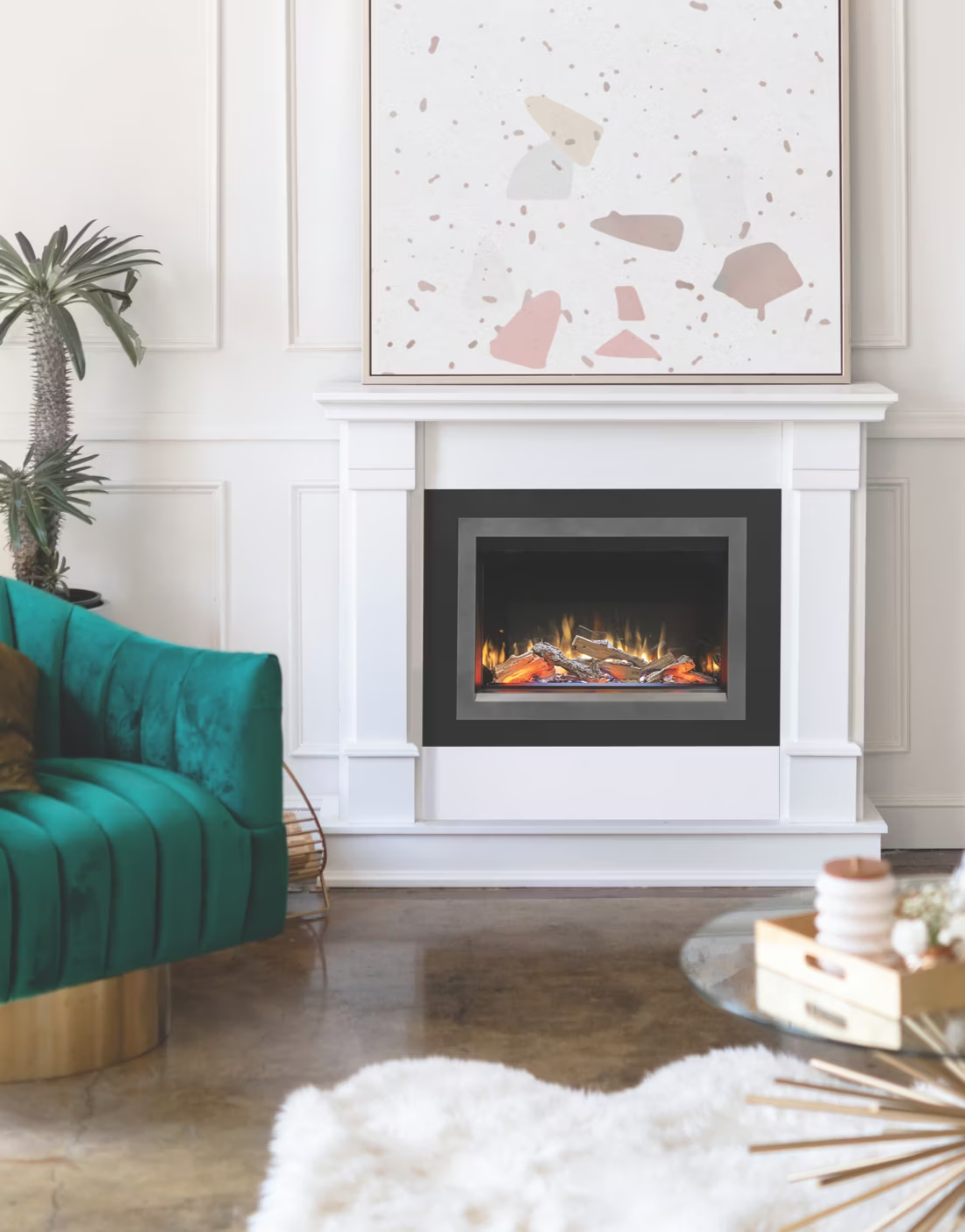
Electric fireplaces fit into that picture as supplemental heat rather than a whole-home solution—a way to warm a bedroom, den, or finished basement without running a chimney, gas line, or the whole HVAC system. That matters in a county where many homes are older farmhouses without a usable masonry chimney, or manufactured and modular homes without the clearances a wood stove needs. With no venting to size and no combustion to inspect, installs are simpler and generally cheaper—most plug into an existing outlet or run off a single dedicated circuit, with Appalachian Power supplying the electricity behind it.
Three steps. No salesperson until you're ready.
Tell us about your project
Your zip code, your situation, and the fuel you're leaning toward—or let the answers point you to one.
See what's actually available
The brands dealers within 100 miles genuinely carry—real options, never a catalog mirage.
Get your dealer & Project Guide
A trusted local dealer, plus the free Project Guide & Parts List that names every component of the job.
Frequently Asked Questions
How much does it cost to install an electric fireplace in Giles County?
Because electric units skip the chimney, flue, and gas line entirely, they're the least expensive fireplace project available in the county. A plug-in insert or mantel package that runs off a standard 120-volt outlet typically installs for $300 to $800. A built-in linear electric fireplace set into a wall or custom surround, which usually needs a dedicated circuit run by a licensed electrician, generally lands between $1,500 and $2,500 including trim and any framing. That's well below the cost of a comparable wood stove or propane insert install, which almost always involves chimney or venting work.
Do I need a permit for an electric fireplace in Giles County?
Usually not—since there's no combustion, flue, or gas line involved, most electric fireplace installs fall outside the mechanical permit process that applies to wood and gas units. If you're adding a new dedicated electrical circuit for a larger built-in unit, that portion of the work needs to meet code and should go through a licensed electrician; Giles County Building Inspections can confirm whether an electrical permit applies to your specific circuit. A simple plug-in unit on an existing outlet typically doesn't trigger any permitting at all.
Will an electric fireplace actually heat my room, or is it just for looks?
Most units include a fan-forced heater rated around 4,600 to 5,000 BTU (roughly 1,500 watts), enough to comfortably warm a single room of 300 to 400 square feet—a bedroom, den, or finished basement. That's supplemental heat, not whole-home heat: with Giles County's winter lows averaging near 23°F and a solidly long, cold heating season, most households still lean on a heat pump, propane furnace, or wood stove for primary heat. Electric works best for taking the edge off one room, or adding ambiance to a converted porch, sunroom, or garage apartment.
What happens to my electric fireplace during a power outage?
It shuts off—both the heater and the flame effect need household power to run. In the more rural stretches of Giles County, along ridges and hollows outside Pearisburg and Narrows where Appalachian Power lines can take longer to restore after an ice storm, that's worth planning around if you're counting on any single unit for real winter warmth. Many homeowners here pair an electric fireplace for everyday convenience with a wood stove for backup, since wood keeps producing heat with no electricity at all.
Is an electric fireplace a good fit for a mobile or manufactured home?
Yes, and it's one of the more common electric fireplace projects in the county. Manufactured and modular homes are common throughout rural Giles County, and most weren't built with a masonry chimney or the clearances a wood stove requires. An electric insert or wall-mounted unit sidesteps that entirely—no venting, no clearance-to-combustible calculations, often nothing more than a standard outlet or a simple added circuit. It's also a frequent choice for additions and finished basements where running a flue just isn't practical.
What's the difference between a plug-in electric fireplace and a built-in one?
A plug-in unit—a freestanding stove-style model or an insert sized for an existing masonry opening—runs off a standard 120-volt outlet and can often be installed in an afternoon with no electrical work at all. A built-in linear electric fireplace is recessed into a wall or custom surround, usually needs a dedicated circuit, and gives a more finished look closer to a true fireplace opening. For older Giles County farmhouses with an existing but unused masonry fireplace, a plug-in insert is often the simplest upgrade; for new construction or a remodel, a built-in linear unit offers more design flexibility.
How does electric compare to wood or propane heat in Giles County?
Wood remains deeply rooted here—oak, hickory, and maple are abundant on the surrounding George Washington & Jefferson National Forest land, where personal-use cutting permits run about $20 per cord from May through October. Propane fills the gap for whole-home heat in the many parts of the county without natural gas service. Electric fireplaces don't compete with either on BTU output or off-grid reliability, but they win on install simplicity, upfront cost, and near-zero maintenance—no chimney to sweep, no gas line to inspect, no ash to haul. Plenty of households run wood or propane as primary heat and add an electric unit in a bedroom or den purely for convenience.
How much maintenance does an electric fireplace need?
Very little. There's no chimney to sweep, no gas line to inspect, and no combustion byproducts to manage. Routine care amounts to dusting the unit, occasionally wiping the glass front, and replacing the LED flame bulbs every several years if they dim. Compare that to the annual chimney inspection recommended for a wood stove or the yearly burner check recommended for a propane unit, and electric is by far the lowest-maintenance option available to Giles County homeowners.
Where can I buy an electric fireplace in Giles County?
Giles County is small—just over 7,000 people spread across Pearisburg, Narrows, Pembroke, and the surrounding hollows—so big-box selection nearby is limited, and it's easy to end up with a unit that's the wrong wattage or size for your room and circuit. A trusted local dealer serving the New River Valley can size the unit correctly, confirm your circuit can handle it, and coordinate any electrical work through a licensed electrician. That local matchmaking is what Find My Fireplace does—we're not a retailer ourselves, but we connect you with a trusted local dealer and hand you a free Project Guide & Parts List for your specific project.
Can I put a TV above my fireplace?
Yes—with an asterisk. Fireplaces are hot and TVs don't like heat. Either put a mantel between them to deflect rising warmth, or choose a fireplace with heat-management technology that creates a cool zone on the wall above—the wall stays around 125 degrees, barely warm, while the room still gets full heat. If you like clean lines and don't want a mantel, heat management is the answer.
Does an electric fireplace need a vent or chimney?
No—that's its superpower. An electric fireplace needs a wall and an outlet, period. No vent pipe, no gas line, no clearances to design around, which is why it works in bedrooms, offices, apartments, and walls where venting a gas or wood unit would be impractical or impossible. Installation is typically the simplest and least expensive of any fireplace type.
Can I install a fireplace myself?
If you're putting a fire in your house on purpose, it's best to work with an expert. Unless you're genuinely experienced in framing, gas line, vent pipe, and the national code on clearances to combustibles, have a professional do it—and ideally the same company that sells you the fireplace, so warranty, service, and liability all live under one roof.
How much should I budget for a fireplace?
For an average home—covering the fireplace, the vent pipe, and basic installation—a budget between $3,900 and $5,500 gives you a lot of options across wood, gas, and pellet. By the time you add finish work, gas line, and electrical, the average complete installation lands between $5,000 and $12,000 all-in. In a remodel or new build, a good rule is to put about 2.5% of the total project cost toward the fireplace.
Stove and Fireplace Dealers in Giles County
Listings include WhyFire partner dealers, dealers we have verified as authorized for the brands we recommend, and established local businesses that carry hearth products. Every listing shows which one it is. The ones marked Preferred run on WhyFire's software, so they can show you real pricing and book your appointment right here. No manufacturer pays for placement. How we verify dealers →
Radford Chimney Works
Marsh Lp Gas Company
Country Power Equipment
Blue Ridge Heating And Air
McGrady Perdue Heating & Cooling
Air Tech Home & Business
Find your electric fireplace in Giles County.
Tell us a bit about your home and we'll match you with the right electric fireplace or insert—and connect you with a trusted local dealer who can size the circuit and handle installation.
Find Your Fireplace →