
Instant, clean heat for George Mason winters, minus the mess.
A direct-vent gas fireplace or insert gives Fairfax County homes real heat on demand, no firewood, no ash, no chimney upkeep. Find the right unit and get matched with a trusted local dealer.
Every Project Starts From One of These Five Situations
Gas fits how people actually live here.
The George Mason area of Fairfax County sits at about 400 feet elevation in climate zone 4A, with a winter heating season comparable to a typical Mid-Atlantic winter and winter lows averaging in the low 20s. That's a real but moderate heating season—nothing close to the sustained sub-zero stretches homeowners deal with in places like Burlington, VT or Madison, WI. It's cold enough that supplemental heat matters on winter mornings and during the shoulder seasons, but not so extreme that a household needs to plan around wood as a survival fuel.
That combination is exactly why gas has become the default choice around George Mason and the rest of Fairfax County. Many of the area's colonial and split-level homes built from the 1960s through the 1990s came with traditional masonry fireplaces originally meant to burn oak, hickory, or maple—but in practice those fireplaces get used a handful of times a season for ambiance, not as primary heat. Converting one to a direct-vent gas insert turns an occasional-use fireplace into a real, push-button heat source, and with no regional air quality non-attainment issues or burn restrictions in this part of Virginia, gas installations here are mostly a matter of gas line access and code compliance rather than environmental permitting.
Three steps. No salesperson until you're ready.
Tell us about your project
Your zip code, your situation, and the fuel you're leaning toward—or let the answers point you to one.
See what's actually available
The brands dealers within 100 miles genuinely carry—real options, never a catalog mirage.
Get your dealer & Project Guide
A trusted local dealer, plus the free Project Guide & Parts List that names every component of the job.
Frequently Asked Questions
How much does a gas fireplace installation cost near George Mason?
For Fairfax County homes near George Mason, a direct-vent gas insert installed into an existing masonry fireplace typically runs $4,000 to $8,000, depending on the unit and whether the flue needs a stainless liner. A new built-in gas fireplace for a remodel or addition—with framing, venting, and a fresh gas line run—usually lands closer to $6,000 to $11,000. Homes that already have a gas line nearby (from a furnace or range) tend to come in on the lower end since the plumber has less new pipe to run. A local dealer will give you a firm number after seeing your fireplace or wall in person.
Can I convert my existing wood-burning fireplace to gas?
Yes, and it's one of the most common projects in this part of Fairfax County. Most older homes near George Mason have a traditional masonry fireplace originally built to burn oak or hickory, but wood heat was never really used as a primary fuel here—these fireplaces get lit occasionally for ambiance. A gas insert installed into that same opening, using the existing chimney with a liner, typically runs $4,000 to $7,500 and gives you real, consistent heat at the flip of a switch instead of an occasional wood fire that needs tending and cleanup.
Do I need natural gas, or is propane more common here?
Most of the George Mason area, including the 22030 and 22032 zip codes, has natural gas service through Washington Gas, which serves the bulk of Fairfax County. If you already run gas to a furnace, water heater, or range, adding a fireplace is usually a straightforward tie-in. Propane is really only the fallback for homes just outside the natural gas footprint or on larger lots at the edges of the county—in those cases a dealer will spec the unit for propane and coordinate a tank with a local supplier.
Will my gas fireplace still work if the power goes out?
Most direct-vent gas fireplaces sold locally use intermittent pilot ignition (IPI) with a battery backup, so the unit lights and runs normally even when Virginia Electric & Power Co. service is interrupted—as long as the batteries inside are fresh. Valor fireplaces go a step further: their pilot assembly generates its own electricity through the thermocouple, so there's no battery to remember at all. For a heating season that occasionally includes ice storms and downed lines, that distinction is worth asking a dealer about when comparing models.
What's the difference between a gas fireplace, insert, and stove?
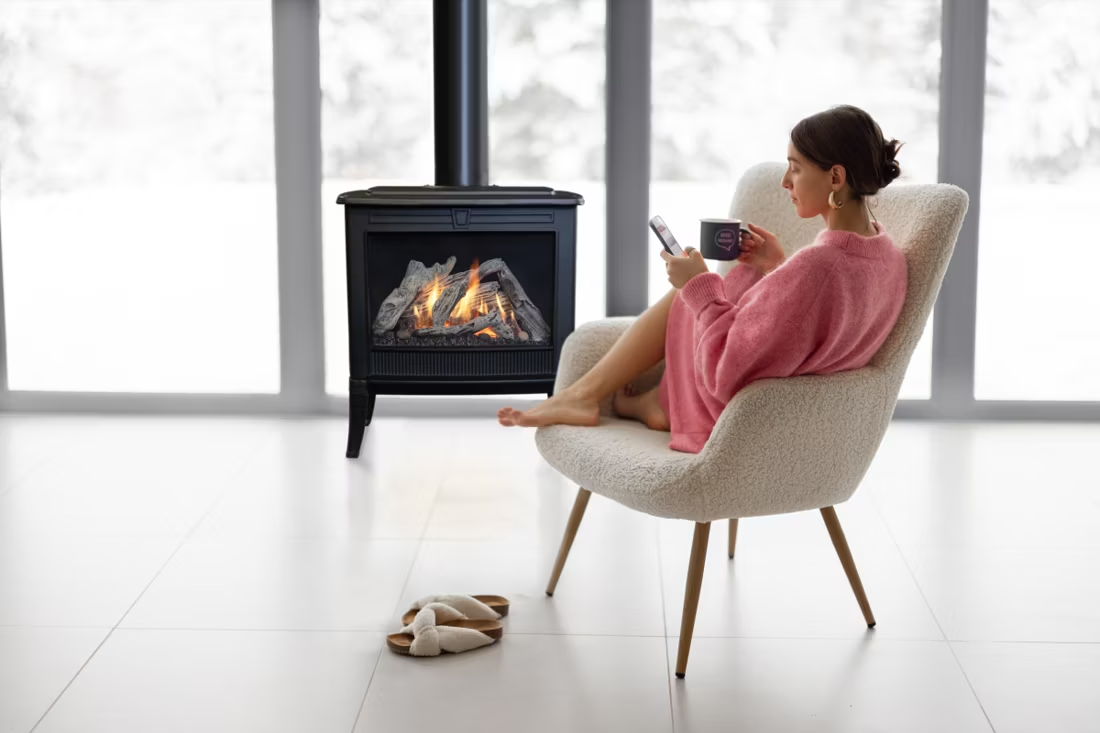
A gas fireplace is a built-in unit installed during new construction or a remodel, framed into a wall. A gas insert is sized to slide into an existing masonry fireplace opening, using your current chimney (with a liner) as the vent path—this is the most common upgrade for older Fairfax County homes near George Mason that already have a hearth. A gas stove is a freestanding unit that sits on the floor and vents through a wall or existing chimney, useful in rooms without a fireplace at all. Which one you need mostly comes down to whether you already have a masonry fireplace to work with.
Do I need a permit to install a gas fireplace near George Mason?
Yes. Fairfax County requires a building permit and a gas permit for new gas fireplace and insert installations, issued through the Fairfax County Department of Land Development Services, and the gas line connection has to be done by a licensed gas fitter. In practice, the hearth dealer you work with typically pulls these permits and schedules the inspection as part of the install, so you're not coordinating separate trades yourself.
Should I get a vented or vent-free gas fireplace?
Vented (direct-vent) gas fireplaces draw combustion air from outside and exhaust it back outside through a sealed pipe—they burn cleaner and deliver more usable heat into the room. Vent-free units burn without any outside venting and release some combustion byproducts into the house; Virginia permits them, but only within strict room-size and ventilation rules. For most George Mason area homes, direct-vent is the standard recommendation from local dealers, especially in bedrooms or smaller additions where indoor air quality matters more.
How often does a gas fireplace need to be serviced?
Plan on an annual inspection, ideally before the fall heating season starts. A technician checks the burner, pilot assembly, venting, and gas connections, and cleans the glass and interior—this runs about $150 to $250 locally. It's a shorter visit than a wood chimney sweep, but skipping it is how igniter and pilot problems go unnoticed until the coldest night of the year, which is exactly when you don't want a service call.
Gas vs. electric fireplace—which makes more sense for my home?
Gas gives you real heat output—enough to noticeably warm a room on a 23-degree morning—plus the look and sound of an actual flame, for an install typically running $4,000 to $8,000. Electric fireplaces cost far less to install ($400 to $1,500, often no permit at all) and can go almost anywhere with a standard outlet, but they're mainly ambiance and light supplemental heat rather than a real BTU source, and running one steadily adds up at Virginia Electric & Power Co.'s residential rate of about 14 cents per kWh. For a townhome or condo near George Mason without gas access, electric is often the practical choice; for a house with an existing fireplace or gas line, gas is usually the better long-term investment.
What's the difference between an insert and a zero-clearance fireplace?
An insert is a fireplace that slides into a pre-existing wood-burning fireplace—if you don't have one, there's nothing to insert it into. A zero-clearance fireplace is built into a framed wall, which makes it the answer for remodels and new construction. Simple test: existing masonry fireplace means insert; blank or framed wall means zero-clearance.
Is my gas fireplace wasting gas?
If it was installed more than 15 years ago, probably. Older gas fireplaces keep a standing pilot light burning all the time, and that little flame can cost a couple hundred dollars a year. Newer models use pilot-on-demand ignition—the pilot lights only when you use the fireplace and goes out when you turn it off.
What is an in-home preview and do I need one?
It's a visit where a hearth professional measures your space, confirms the model you picked actually works in your home, and walks the specs—framing, gas line, venting, finish work—before anything is ordered. Some details you just can't know until you see the house. Never make a down payment without one; it's the single most-skipped step that burns buyers.
Can I install a fireplace myself?
If you're putting a fire in your house on purpose, it's best to work with an expert. Unless you're genuinely experienced in framing, gas line, vent pipe, and the national code on clearances to combustibles, have a professional do it—and ideally the same company that sells you the fireplace, so warranty, service, and liability all live under one roof.
Nearby Dealers
Hearth shops serving George Mason and the surrounding area. Every listing shows whether it is a WhyFire partner, a dealer we have verified as authorized for the brands we recommend, or a local business carrying hearth products. No manufacturer pays for placement. How we verify dealers →
Homeliving Fireplaces
Aspen Green Gasworks
Genesis Chimney Services
Lawn & Leisure
Fireside Hearth & Home - Manassas
Deckscapes Of Virginia
Nova Fireplace And Stove
Cyprus Air, Indoor Comfort
Cyprus Air
Costello's Hearth & Spa - Rockville
Nova Fire Design
Capitol Chimney Service
Chimney.com
The Fireplace Shop
Find your gas fireplace in George Mason.
Tell us about your home and we'll put together a free Project Guide & Parts List—the exact parts, vent kit, and a trusted local Fairfax County dealer for your gas fireplace project.
Find Your Fireplace →