
Instant heat, zero venting, anywhere in Frederick County.
From townhomes in Stephens City to finished basements outside Winchester, electric fireplaces plug into an existing outlet or a single dedicated circuit—no chimney, no gas line, no masonry work. Find the right unit and get matched with a trusted local installer.
Every Project Starts From One of These Five Situations
A supplemental heat source that fits where a chimney can't.
Frederick County sits in the northern Shenandoah Valley in climate zone 4A, with an average winter low around 21°F and a moderate winter heating season—a meaningfully milder profile than northern-tier cities like Duluth, MN or Burlington, VT, where winters run much colder and longer. That moderate cold means most homes here aren't relying on a single fireplace to survive the season; wood heat from local oak, hickory, and maple has deep roots in the county's rural pockets, but a growing number of homeowners in Stephens City, Middletown, Gore, and the areas ringing Winchester are choosing electric fireplaces for the rooms where running a flue or gas line just isn't practical.
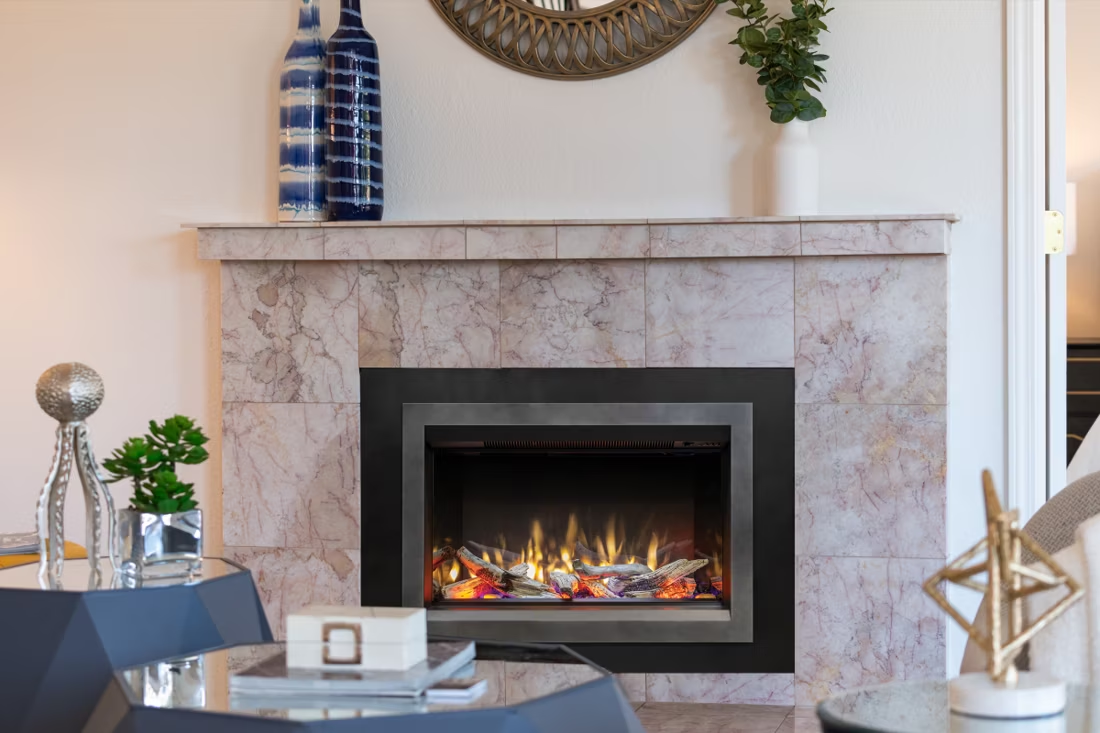
Electric units plug into standard household power (or a single dedicated 20-amp circuit for larger built-ins), which is why they show up so often in finished basements, primary bedrooms, condos, and additions where cutting a chimney chase through existing framing would be disruptive or expensive. Power in the county comes through a mix of providers—Shenandoah Valley Electric Cooperative serves much of rural Frederick County, with Dominion Energy and the city of Winchester's own utility covering areas closer to town—and either way, an electric fireplace draws no more than a space heater. It won't replace a furnace on a January night, but as zone heat for a den or bonus room, or as a low-maintenance focal point that still throws real warmth, it's often the fastest and least invasive project on this list.
Three steps. No salesperson until you're ready.
Tell us about your project
Your zip code, your situation, and the fuel you're leaning toward—or let the answers point you to one.
See what's actually available
The brands dealers within 100 miles genuinely carry—real options, never a catalog mirage.
Get your dealer & Project Guide
A trusted local dealer, plus the free Project Guide & Parts List that names every component of the job.
Frequently Asked Questions
How much does an electric fireplace installation cost in Frederick County?
A plug-in electric insert or freestanding unit typically runs $400 to $1,200 installed, since most models use an existing 120-volt outlet and require no electrician. Larger built-in wall units or linear fireplaces set into a custom surround run higher—often $1,500 to $2,500—when a dedicated circuit needs to be run by a licensed electrician, which is common for larger installs in newer Stephens City and Middletown builds. Mantel packages with an integrated electric insert fall in between. Local dealers will confirm exact pricing once they know the model and whether your panel has room for a new circuit.
Do I need a permit to install an electric fireplace in Frederick County?
In most cases, no permit is required for a plug-in electric fireplace that uses an existing outlet—it's treated like any other appliance. If your installer needs to run a new dedicated circuit for a larger built-in unit, that electrical work requires a permit through Frederick County Building Inspections (or the City of Winchester's building office if your property falls inside city limits). Licensed electricians handle this permitting as part of the job, so homeowners rarely have to file anything themselves.
What's the best electric fireplace for supplemental heat in Frederick County?
For rooms that need real supplemental warmth on the county's colder nights—when lows can dip into the low 20s or teens—look for a unit with a 1,500-watt heater rated for 400 to 1,000 square feet, which covers most bedrooms, dens, and finished basement rooms. Brands like Dimplex and Napoleon build wall-mounted linear units and mantel-style inserts with realistic flame effects and adjustable heat output, so you can run the flame without the heater in shoulder-season months. For larger open rooms, ask a local dealer about pairing two smaller units rather than oversizing one, since electric heat output doesn't scale the way a wood or gas appliance does.
Electric vs. wood—which makes more sense for my Frederick County home?
Wood heat has real staying power in this county—oak, hickory, and maple are all common locally, burn hot and long, and keep working when the power goes out, which matters given how weather-related outages can stretch on in rural Shenandoah Valley Electric Cooperative territory. Electric fireplaces can't provide backup heat during an outage since they're entirely power-dependent, but they win on convenience, upfront cost, and placement flexibility—no chimney, no wood storage, no ash cleanup, and installation in an afternoon rather than a full day. Many Frederick County homeowners use both: wood or a wood stove as primary or backup heat, and an electric unit in a secondary room where running venting doesn't make sense.
Will an electric fireplace heat my whole room, or just provide ambiance?
A quality 1,500-watt electric fireplace will noticeably heat a single room up to around 400-1,000 square feet, depending on ceiling height and insulation—enough to be the primary heat source for a finished basement rec room or guest bedroom on a mild winter day. It will not heat an entire house or hold its own against a January cold snap in an open-concept living area, since electric resistance heat is capped by that 1,500-watt limit regardless of price point. Think of it as zone heat: it can let you turn down the thermostat in the rest of the house while keeping one room comfortable, which is where most of the energy savings show up.
Where can an electric fireplace be installed in my house?
Almost anywhere with an outlet—that's the main advantage over wood or gas. Common spots in Frederick County homes include finished basements (no masonry chimney needed to reach below grade), primary bedrooms, home offices, and additions where running a flue through existing framing would be costly. Built-in wall units recess into a stud wall for a flush look, insert-style units drop into an existing fireplace opening (useful if you're retiring an old wood-burning firebox in an older Winchester-area farmhouse), and freestanding mantel packages need no wall modification at all. A local dealer can walk your space and tell you which format fits.
Will my electric fireplace still work during a power outage?
No—electric fireplaces are entirely dependent on grid power, so they shut off the moment the power does, along with the flame effect and any heat output. This matters more in the rural parts of Frederick County served by Shenandoah Valley Electric Cooperative, where ice storms and downed lines can mean outages lasting a day or more. If backup heat during outages is a priority, pair an electric unit with a wood stove, wood-burning fireplace, or a gas unit with a battery-backed ignition system rather than relying on electric as your only heat source.
What's the difference between an electric insert, a mantel package, and a wall-mounted unit?
An electric insert is built to drop into an existing fireplace opening—the most common choice for homeowners converting an old wood-burning firebox to something lower-maintenance. A mantel package pairs a freestanding electric unit with a surround and mantel shelf, requiring no wall cutting and working well in homes without an existing fireplace. A wall-mounted or linear unit recesses into (or hangs on) a wall for a modern, low-profile look, often used in newer construction around Stephens City and Middletown. All three plug into standard power or a dedicated circuit for larger models—the choice comes down to whether you're converting, adding, or modernizing.
Electric vs. gas—which is right for my Frederick County home?
Gas fireplaces produce more heat output and a more authentic flame, and some models can run during power outages with battery backup—a real consideration in a county where outages happen. But gas installs cost more, need either a natural gas line or propane tank, and require an annual service check. Electric fireplaces cost less upfront, install almost anywhere without venting or fuel lines, and need essentially no maintenance, but they max out around 1,500 watts and go dark in an outage. For a primary living space where you want real heat and some outage resilience, gas usually wins. For a secondary room, rental unit, or basement where low cost and easy install matter more, electric is typically the better fit.
Can I put a TV above my fireplace?
Yes—with an asterisk. Fireplaces are hot and TVs don't like heat. Either put a mantel between them to deflect rising warmth, or choose a fireplace with heat-management technology that creates a cool zone on the wall above—the wall stays around 125 degrees, barely warm, while the room still gets full heat. If you like clean lines and don't want a mantel, heat management is the answer.
Do electric fireplaces actually produce heat?
Yes—most put out around 4,800–5,000 BTUs from a standard outlet, which comfortably warms a bedroom, office, or den as a comfort-zone heater. What they won't do is carry a whole house the way wood, gas, or pellet can. Think of electric as ambiance-first with honest supplemental heat: flames on with no heat in July, flames plus warmth in January.
What is an in-home preview and do I need one?
It's a visit where a hearth professional measures your space, confirms the model you picked actually works in your home, and walks the specs—framing, gas line, venting, finish work—before anything is ordered. Some details you just can't know until you see the house. Never make a down payment without one; it's the single most-skipped step that burns buyers.
Can a fireplace actually lower my heating bill?
Yes—by creating a comfort zone. A furnace heats every square foot of the house just to warm the one room you're in; a gas fireplace on low burns roughly a sixth of the gas a typical furnace does. Set the furnace around 55–60 degrees as a baseline, then heat the rooms your family actually uses. Families who heat this way commonly save $20–$60 a month.
Stove and Fireplace Dealers in Frederick County
Listings include WhyFire partner dealers, dealers we have verified as authorized for the brands we recommend, and established local businesses that carry hearth products. Every listing shows which one it is. The ones marked Preferred run on WhyFire's software, so they can show you real pricing and book your appointment right here. No manufacturer pays for placement. How we verify dealers →
Dmv Chimneys & Masonry Repair
Prouty's Chimney Sweep
Miller Ace Hardware
Holtzman Propane
Blossman Gas And Appliance
Amazing Flame
Slanesville Home &Hardware
Justin Funk Lawn And Landscaping LLC
Find your electric fireplace in Frederick County.
Tell us a bit about your space and we'll match you with the right electric fireplace, insert, or wall unit—plus a free Project Guide & Parts List with the exact components and a trusted local Frederick County dealer to install it.
Find Your Fireplace →