
Warm up any room in Emporia County—no chimney required.
Mild Southside Virginia winters mean most Emporia County homes need supplemental warmth, not a whole-house furnace replacement. Find the right electric fireplace or stove and connect with a trusted local dealer.
Every Project Starts From One of These Five Situations
Mild winters, flexible heat.
Emporia County sits in Southside Virginia with roughly 3,517 heating degree days a year and winter lows that average around 29°F—a far cry from the 7,000-plus HDD winters places like Burlington, VT contend with. That mild profile is exactly why electric fireplaces do so well here: most homes don't need aggressive, all-night heat output, they need a clean, quick way to take the chill off a sunroom, den, or bedroom addition on the handful of genuinely cold nights each winter.
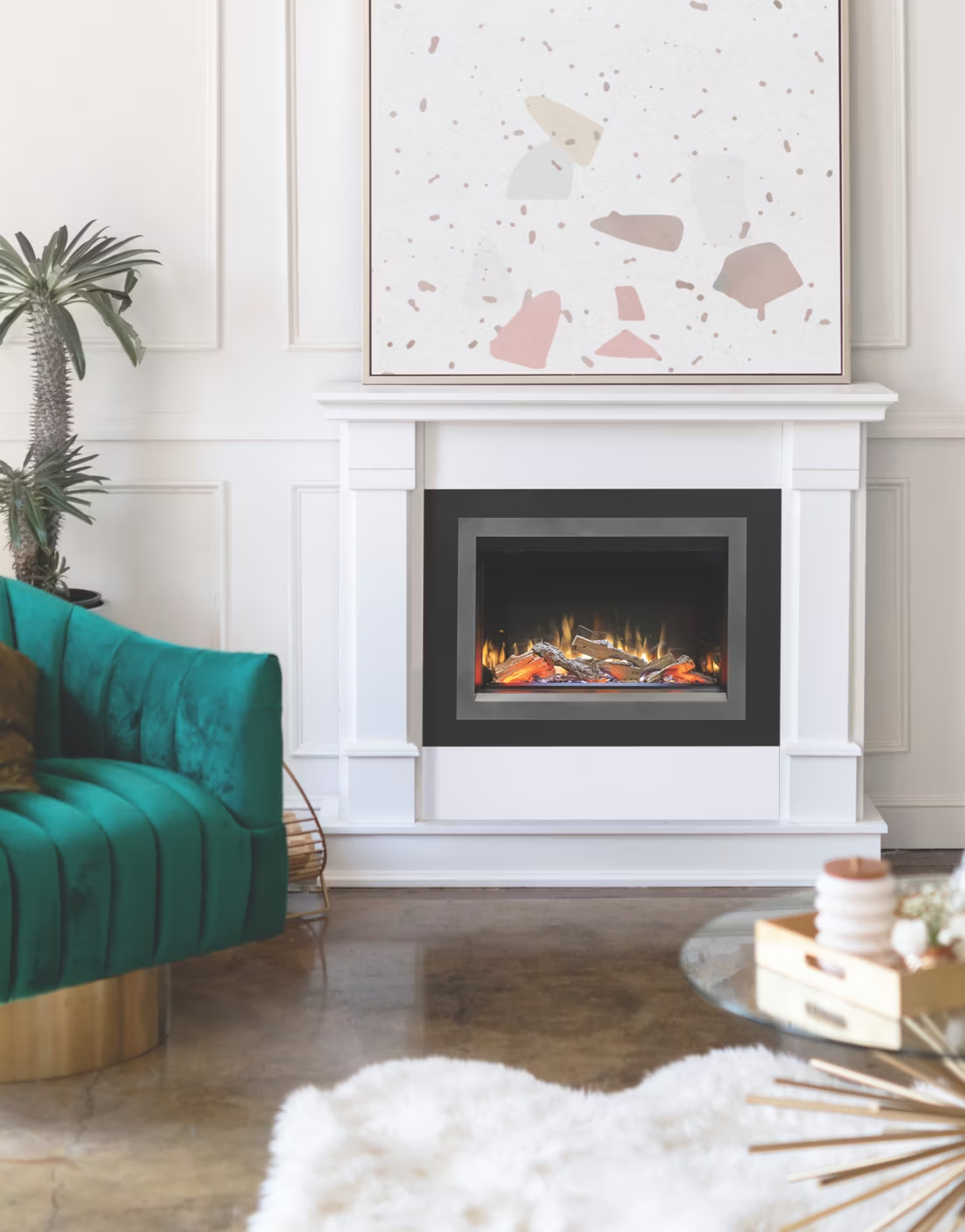
A lot of Emporia County's housing stock—manufactured homes, older farmhouses without ductwork into every room, additions built without central HVAC extension—is a natural fit for electric units that plug into a standard outlet or hardwire into a 120V/240V circuit with no chimney, no gas line, and no venting to plan around. Whether your power comes through Dominion Energy or Emporia's municipal electric department, an electric fireplace draws a known, predictable load that's easy to budget for, and it can go in a rental, a mobile home, or a room where running a flue simply isn't practical.
Three steps. No salesperson until you're ready.
Tell us about your project
Your zip code, your situation, and the fuel you're leaning toward—or let the answers point you to one.
See what's actually available
The brands dealers within 100 miles genuinely carry—real options, never a catalog mirage.
Get your dealer & Project Guide
A trusted local dealer, plus the free Project Guide & Parts List that names every component of the job.
Frequently Asked Questions
How much does an electric fireplace installation cost in Emporia County?
Plug-in electric fireplace inserts and freestanding stoves typically run $300 to $1,200 installed, since most just need a standard 120V outlet and no venting work at all. Built-in wall units or larger hardwired models that need a dedicated 240V circuit run higher, generally $1,500 to $3,000, once an electrician's time for the circuit and any wall framing is factored in. Because there's no chimney, gas line, or flue to build, electric installs in Emporia County are consistently the least expensive hearth option and often the fastest to complete—frequently a single day.
Do I need a permit to install an electric fireplace in Emporia County?
Plug-in units that use an existing outlet generally don't require a permit. Hardwired installations—a built-in unit tied into a new 240V circuit, or any project involving new wiring or wall modification—typically do require an electrical permit through the local building department, and the work should be done by a licensed electrician. Most local dealers who sell hardwired electric fireplaces either employ a licensed electrician or coordinate with one directly, so the permit and inspection happen as part of the install rather than something you have to chase down yourself.
What's the difference between an electric insert, a built-in, and a freestanding stove?
An electric insert is sized to slide into an existing masonry fireplace opening, which makes it a popular choice for older Emporia County homes with an unused wood-burning fireplace that's no longer practical to maintain. A built-in electric fireplace is designed to be framed into a wall like new construction—common in additions and remodels. A freestanding electric stove sits on the floor like a traditional wood stove but needs nothing more than a nearby outlet, which makes it the simplest option for a den, sunroom, or bonus room that never had a fireplace to begin with.
Will my electric fireplace work during a power outage?
No—and this is worth being upfront about. Electric fireplaces run entirely on grid power, so they shut off the moment the electricity does, unlike a wood stove that keeps burning through an outage. For most Emporia County homes that's an acceptable tradeoff since electric units are typically installed as supplemental or ambiance heat rather than the sole heat source. If backup heat during storm-related outages is a real priority for your household, a wood or gas appliance with a battery-backup ignition is a better fit for that specific role, and it's worth discussing with a local dealer alongside your electric plans.
How much does an electric fireplace cost to run in Emporia County?
Most electric fireplaces draw about 1,500 watts on the heat setting, which works out to roughly 15 cents an hour at typical Southside Virginia electric rates—a few dollars for a full evening of use. Because Emporia County's heating season is comparatively short, with heating degree days around 3,517 a year, a household using an electric fireplace to take the edge off cool mornings and evenings rather than heat the whole house will see a modest bump on the bill rather than a major one. Homes served by Emporia's municipal electric department or by Dominion Energy can check current per-kWh rates to estimate more precisely for a specific unit's wattage.
Is an electric fireplace enough heat for my Emporia County home?
For most rooms, yes—a mid-size electric fireplace or stove (1,200 to 1,500 watts) can comfortably supplement or replace heat in a single room up to around 400 square feet, which covers most dens, bedrooms, and sunroom additions common in the county. Given the area's mild winter lows averaging around 29°F, electric units rarely need to work as hard as they would in a colder climate. For a home relying on electric heat as its primary source rather than supplemental, a local dealer can help size multiple units or point you toward a central heat pump solution instead—electric fireplaces are best suited to zone heating, not whole-house replacement.
Electric vs. wood—which is right for my home?
Wood offers real flame, higher heat output, and continued operation during power outages—and Emporia County's oak, hickory, and maple woodlots make self-sourced firewood a realistic option for households that want it. Electric offers instant on-off convenience, zero ash or chimney maintenance, and no combustion byproducts to worry about, plus it can go anywhere with an outlet, including rentals and manufactured homes where a chimney isn't an option. With no air quality restrictions or burn bans in Emporia County, wood remains a fully viable choice—the decision usually comes down to whether you want the ritual and backup capability of a real fire or the simplicity of flipping a switch.
Electric vs. gas—which is right for my home?
Gas fireplaces produce genuine heat output comparable to a furnace and can run on propane where natural gas service isn't available, but they require venting work and a fuel line, which adds cost and complexity. Electric fireplaces skip all of that—no venting, no gas line, no propane tank—in exchange for lower maximum heat output and total dependence on grid power. For a lot of Emporia County homes looking to add ambiance and modest supplemental heat to a room without a fireplace already in place, electric is the simpler, lower-cost path; for homeowners wanting to genuinely offset furnace use in a larger space, gas is usually the stronger performer.
What should I look for when buying an electric fireplace?
Check the heater wattage (1,500 watts is standard for real supplemental heat, lower-wattage units lean more toward ambiance only), confirm whether it needs a dedicated circuit or works on a standard outlet, and look at flame-effect quality if realism matters to you—LED flame technology varies a lot between budget and premium models. A local dealer can also advise on whether an insert, built-in, or freestanding stove fits your specific room best, and can flag if a hardwired unit will need an electrician's visit before installation.
Can I put a TV above my fireplace?
Yes—with an asterisk. Fireplaces are hot and TVs don't like heat. Either put a mantel between them to deflect rising warmth, or choose a fireplace with heat-management technology that creates a cool zone on the wall above—the wall stays around 125 degrees, barely warm, while the room still gets full heat. If you like clean lines and don't want a mantel, heat management is the answer.
Does an electric fireplace need a vent or chimney?
No—that's its superpower. An electric fireplace needs a wall and an outlet, period. No vent pipe, no gas line, no clearances to design around, which is why it works in bedrooms, offices, apartments, and walls where venting a gas or wood unit would be impractical or impossible. Installation is typically the simplest and least expensive of any fireplace type.
Can I install a fireplace myself?
If you're putting a fire in your house on purpose, it's best to work with an expert. Unless you're genuinely experienced in framing, gas line, vent pipe, and the national code on clearances to combustibles, have a professional do it—and ideally the same company that sells you the fireplace, so warranty, service, and liability all live under one roof.
How much should I budget for a fireplace?
For an average home—covering the fireplace, the vent pipe, and basic installation—a budget between $3,900 and $5,500 gives you a lot of options across wood, gas, and pellet. By the time you add finish work, gas line, and electrical, the average complete installation lands between $5,000 and $12,000 all-in. In a remodel or new build, a good rule is to put about 2.5% of the total project cost toward the fireplace.
Stove and Fireplace Dealers in Emporia County
Listings include WhyFire partner dealers, dealers we have verified as authorized for the brands we recommend, and established local businesses that carry hearth products. Every listing shows which one it is. The ones marked Preferred run on WhyFire's software, so they can show you real pricing and book your appointment right here. No manufacturer pays for placement. How we verify dealers →
Parker Oil Company
Area – Bracey, Va
Service Plus Propane
Daughtridge Gas & Oil Company
Find your electric fireplace in Emporia County.
Tell us a bit about your home and we'll put together a free Project Guide & Parts List for your electric fireplace project—matched with a trusted local Emporia County dealer who can size the unit and handle installation.
Find Your Fireplace →