
Find gas fireplace heat built for Dulles Town Center living.
Direct-vent gas heat that fits the townhomes, condos, and new construction around the Dulles Town Center corridor. Get matched with a trusted local dealer and a free plan for your project.
Every Project Starts From One of These Five Situations
Built for newer construction, not old chimneys.
Dulles Town Center grew up around the mall and the airport corridor in eastern Loudoun County, and most of the housing stock here—townhomes, garden apartments, and mid-rise condos built from the 1990s onward—was never built with a masonry fireplace or a flue tall enough for a wood chimney. At climate zone 4A, 308 feet of elevation, and roughly 4,714 heating degree days a year, winters here are real but moderate—nothing like the sustained deep cold of Burlington, Vermont, but enough that heat matters steadily from December through February, with average winter lows around 25°F.
That housing mix is exactly why gas and electric fireplaces are the standard choice locally, while wood and pellet units are a rare fit. Pellet stoves are common elsewhere in Virginia—regional mills like Energex, Hamer Pellet Fuel, and Greene Team Pellet Fuel supply plenty of the state—but they need floor space, hopper access, and dedicated venting that most condos and townhomes here simply don't have. A direct-vent gas fireplace or insert, by contrast, can be framed into a wall with a short vertical or horizontal vent run, which is why builders in this corridor have leaned on gas as the default hearth feature for new construction.
Three steps. No salesperson until you're ready.
Tell us about your project
Your zip code, your situation, and the fuel you're leaning toward—or let the answers point you to one.
See what's actually available
The brands dealers within 100 miles genuinely carry—real options, never a catalog mirage.
Get your dealer & Project Guide
A trusted local dealer, plus the free Project Guide & Parts List that names every component of the job.
Frequently Asked Questions
How much does a gas fireplace installation cost in Dulles Town Center?
For most direct-vent gas fireplace or insert installs in newer Dulles Town Center construction, expect a range of roughly $4,000 to $9,000, depending on the unit, whether a gas line already runs to the room, and how much wall or framing work is involved. A full built-in installation in new construction or a remodel—with a fresh gas line run and finished surround—can land closer to $8,000 to $11,000. Because so much of the local housing stock is townhomes and condos with shared walls, venting path is often the biggest cost variable. A local dealer will give you a firm number after an in-home look, and your free Project Guide & Parts List will spell out the exact parts, including the vent kit, before you commit to anything.
Can I convert an existing wood fireplace to gas in Dulles Town Center?
It's less common here than in older parts of Loudoun County, simply because most homes built around the mall since the 1990s were never plumbed with masonry fireplaces to begin with—wood-burning units are effectively not part of the local housing stock. If you do own one of the area's older detached homes with an existing masonry fireplace, a gas insert using a stainless liner through the existing chimney is straightforward and typically runs $4,500 to $9,000. For the majority of Dulles Town Center residences without an existing fireplace, the more common project is a new direct-vent gas fireplace framed into a wall, which your local dealer can size for the room during a consultation.
Does my home in Dulles Town Center have natural gas, or do I need propane?
It depends on when and where your building was constructed. Many of the established communities around Dulles Town Center have natural gas mains, while some newer or more isolated developments—particularly ones finished before gas lines were extended along the corridor—rely on propane with an on-site tank. Most gas fireplace models sold by local dealers can be configured for either fuel with the correct orifice and regulator, so the fireplace choice itself usually isn't limited by which gas source you have. Your builder's disclosure paperwork or HOA documents will typically confirm which utility serves your specific building.
Will my gas fireplace still work if the power goes out?
Most direct-vent gas fireplaces sold today use intermittent pilot ignition (IPI) with a battery backup, so they'll continue to light and run during a power outage as long as the batteries are fresh—worth checking each fall before heating season. Valor fireplaces take a different approach: their pilot assembly generates its own electricity through the thermocouple, so there's no battery to remember at all. For Dulles Town Center residents near a busy airport corridor where storm-related outages do happen, that distinction is worth asking your local dealer about when comparing units.
What's the difference between a gas fireplace, gas insert, and gas stove?
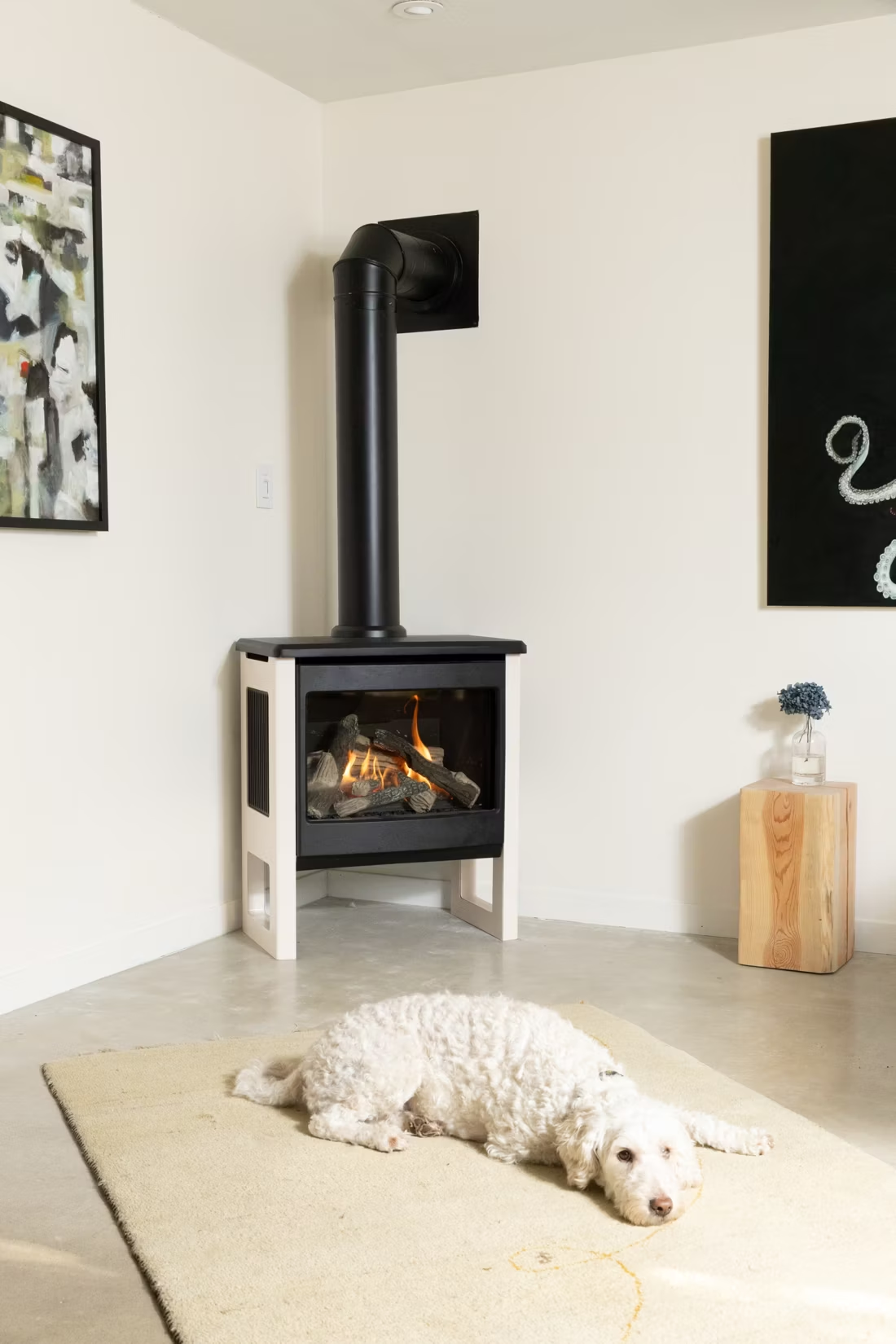
A gas fireplace is a fully framed-in unit, which is the most common configuration in new Dulles Town Center townhomes and condos since it's typically built into the wall during construction or a remodel. A gas insert is designed to slide into an existing masonry fireplace opening—relevant mainly to the area's older detached homes. A gas stove is a freestanding cabinet-style unit that sits on the floor and vents through a wall or roof, and it can work well in a condo or apartment where a framed-in fireplace isn't practical. Most Dulles Town Center homeowners end up choosing between a built-in fireplace and a freestanding stove, since true fireplace inserts require an existing masonry opening that much of the local housing doesn't have.
Do I need a permit to install a gas fireplace in Dulles Town Center?
Yes. Dulles Town Center is unincorporated, so building permits go through Loudoun County's Building and Development Department, and any new gas line work also requires sign-off from a licensed gas fitter. If your building is part of an HOA or condo association—common throughout this corridor—you'll likely need association approval for exterior venting changes as well. A certified local hearth dealer will typically coordinate the county permit, the gas line work, and the HOA paperwork together rather than leaving you to manage each one separately.
What's the difference between vented and vent-free gas fireplaces, and which can I install here?
Vented (direct-vent) gas fireplaces pull combustion air from outside and exhaust gases back outside through a sealed pipe—they're the cleaner, more universally recommended option and the standard in new Loudoun County construction. Vent-free gas fireplaces burn without any exterior venting and release combustion byproducts into the room; Virginia permits them but with strict room-size and ventilation requirements. Given how many Dulles Town Center residences are condos and townhomes with tighter square footage and shared air, most local dealers steer homeowners toward direct-vent units, though a vent-free log set can be a reasonable fit for a small supplemental space if code allows it.
How often does a gas fireplace need to be serviced?
Plan on an annual inspection, ideally before the weather turns cold each fall. A technician checks the burner, pilot assembly, venting, and gas connections, and cleans the glass and interior—a lighter job than wood-stove chimney sweeping but just as important for safe operation. Expect to pay roughly $150 to $250 for a standard annual visit. For condo and townhome installations in Dulles Town Center, it's also worth confirming your HOA doesn't require documentation of service for insurance purposes.
Gas vs. electric fireplace—which makes more sense for Dulles Town Center?
Gas delivers real heat output—enough to matter on a 25°F January night—plus a live flame, and it's the standard choice builders have used throughout this corridor for exactly that reason. Electric fireplaces plug into a standard outlet, need no venting or gas line at all, and install in under a day, which makes them the easier option in a condo or rental unit where structural changes aren't practical. Running cost matters too: at Dominion Energy's residential rate of about 14 cents per kWh, an electric unit run for supplemental heat costs more per BTU than gas, but the near-zero install cost often offsets that for smaller spaces. If you want genuine heating capacity for a living room, gas is usually the better investment; if you want ambiance and flexibility with minimal install disruption, electric is hard to beat.
Can I put a TV above my fireplace?
Yes—with an asterisk. Fireplaces are hot and TVs don't like heat. Either put a mantel between them to deflect rising warmth, or choose a fireplace with heat-management technology that creates a cool zone on the wall above—the wall stays around 125 degrees, barely warm, while the room still gets full heat. If you like clean lines and don't want a mantel, heat management is the answer.
Are new gas fireplaces really better than old ones?
Two ways, and they're both big. Looks: modern gas fireplaces are realistic enough that it's hard to believe they aren't burning wood. Cost: old units burn a standing pilot year-round (roughly $200 a year), while new ones use pilot-on-demand ignition and modern burners. Add remote controls and thermostat operation, and the day-to-day experience isn't close.
Does a fireplace add value to my home?
On average, a fireplace adds back to the home about the same amount you spent installing it. Add the monthly savings from heating the rooms you actually use instead of the whole house—often hundreds of dollars a year—and the value case is strong before you even count what a fire does for how your family uses the room.
Can a fireplace actually lower my heating bill?
Yes—by creating a comfort zone. A furnace heats every square foot of the house just to warm the one room you're in; a gas fireplace on low burns roughly a sixth of the gas a typical furnace does. Set the furnace around 55–60 degrees as a baseline, then heat the rooms your family actually uses. Families who heat this way commonly save $20–$60 a month.
Nearby Dealers
Hearth shops serving Dulles Town Center and the surrounding area. Every listing shows whether it is a WhyFire partner, a dealer we have verified as authorized for the brands we recommend, or a local business carrying hearth products. No manufacturer pays for placement. How we verify dealers →
Lawn & Leisure
Genesis Chimney Services
Aspen Green Gasworks
Homeliving Fireplaces
Deckscapes Of Virginia
Costello's Hearth & Spa - Rockville
Cyprus Air
Holtzman Propane
The Fireplace Shop
Bodmer's Stoves And Pottery
Fireside Hearth & Home - Manassas
Chelsea's Chimney
Chimney.com
Nova Fire Design
Best Htg And Air
Capitol Chimney Service
Get matched with a gas fireplace pro in Dulles Town Center.
Tell us about your home and we'll match you with a trusted local dealer and send you a free Project Guide & Parts List—the exact parts, including the vent kit, for your gas fireplace project.
Find Your Fireplace →