
Warm Up Fast, Without the Firewood.
Piedmont Virginia winters bring average lows near 23°F and a solid winter heating season—cold enough to matter, but not so extreme that instant gas heat feels like overkill. Find the right fireplace, insert, or stove and connect with a trusted local dealer.
Every Project Starts From One of These Five Situations
Convenient heat for Piedmont Virginia winters.
Culpeper County sits in the rolling farmland and battlefield country of Virginia's Piedmont, where oak, hickory, and maple woodlots have supplied firewood for generations of local homes—many of them historic properties dating back to the Civil War era around Brandy Station and Cedar Mountain. But a climate zone 4A winter, with average lows around 23°F, doesn't demand the all-day wood-burning commitment of a harder climate like Burlington, VT or Duluth, MN. That's part of why gas fireplaces and inserts have become a standard upgrade here—especially for owners of older masonry homes who want the character of a fireplace without hauling and stacking cordwood every week.
The Town of Culpeper operates its own municipal natural gas utility, so in-town homeowners typically already have gas service running to the house—often making a fireplace or insert installation a matter of tapping an existing line rather than trenching a new one. Outside town limits, where most of Culpeper County remains rural and agricultural, propane from regional suppliers is the standard fuel. Either way, a direct-vent gas unit delivers heat at the flip of a switch, with no cutting, splitting, or smoke—and with the right ignition system, it can keep running through the ice storms that occasionally knock out power across the county's rural power lines.
Three steps. No salesperson until you're ready.
Tell us about your project
Your zip code, your situation, and the fuel you're leaning toward—or let the answers point you to one.
See what's actually available
The brands dealers within 100 miles genuinely carry—real options, never a catalog mirage.
Get your dealer & Project Guide
A trusted local dealer, plus the free Project Guide & Parts List that names every component of the job.
Frequently Asked Questions
How much does a gas fireplace installation cost in Culpeper County?
Most gas fireplace and insert installations in Culpeper County run from roughly $3,800 to $10,000, with the spread driven mainly by venting and gas line work. A direct-vent insert going into an existing masonry fireplace in a Town of Culpeper home that already has gas service is on the lower end—often just a liner, insert, and hookup. A new direct-vent fireplace built into a wall for a remodel or new construction, especially in the rural county where a propane tank and longer gas line run are needed, sits at the higher end. A local dealer can give you a firm number after seeing your chimney or framing in person.
Can I convert my existing wood fireplace to gas?
Yes, and it's a common project in Culpeper County given how many homes—particularly the older farmhouses and historic properties near Brandy Station and downtown Culpeper—still have their original masonry fireplaces built for oak or hickory cordwood. A gas insert with a stainless liner run up the existing flue lets you keep the fireplace opening and mantel while switching to push-button heat. Cost typically depends on whether the home already has natural gas from the Town of Culpeper utility or needs a propane setup, since propane conversions often mean adding or relocating a tank.
Do I need natural gas, or can I use propane?
Either works, and which one you use mostly comes down to where in the county you live. Homes inside Town of Culpeper limits are often already served by the town's own municipal natural gas utility, which makes adding a fireplace straightforward if you're already using gas for a furnace or water heater. Outside town, across the county's farmland and outlying subdivisions, propane from a regional supplier is the norm—most gas fireplace models can be configured for propane just as easily as natural gas, so fuel type shouldn't limit which unit you choose.
Will my gas fireplace work during a power outage?
Most will, provided you choose the right ignition system. Units with intermittent pilot ignition (IPI) run on battery backup, so the fireplace still lights and operates even when the grid is down—useful in Culpeper County, where ice storms and downed lines along rural roads can knock out power for a day or more each winter. Valor fireplaces take it a step further: their pilot generates its own electricity through a thermocouple, so there are no batteries to remember or replace. Ask your local dealer which ignition system is on any model you're considering.
What's the difference between a gas fireplace, gas insert, and gas stove?
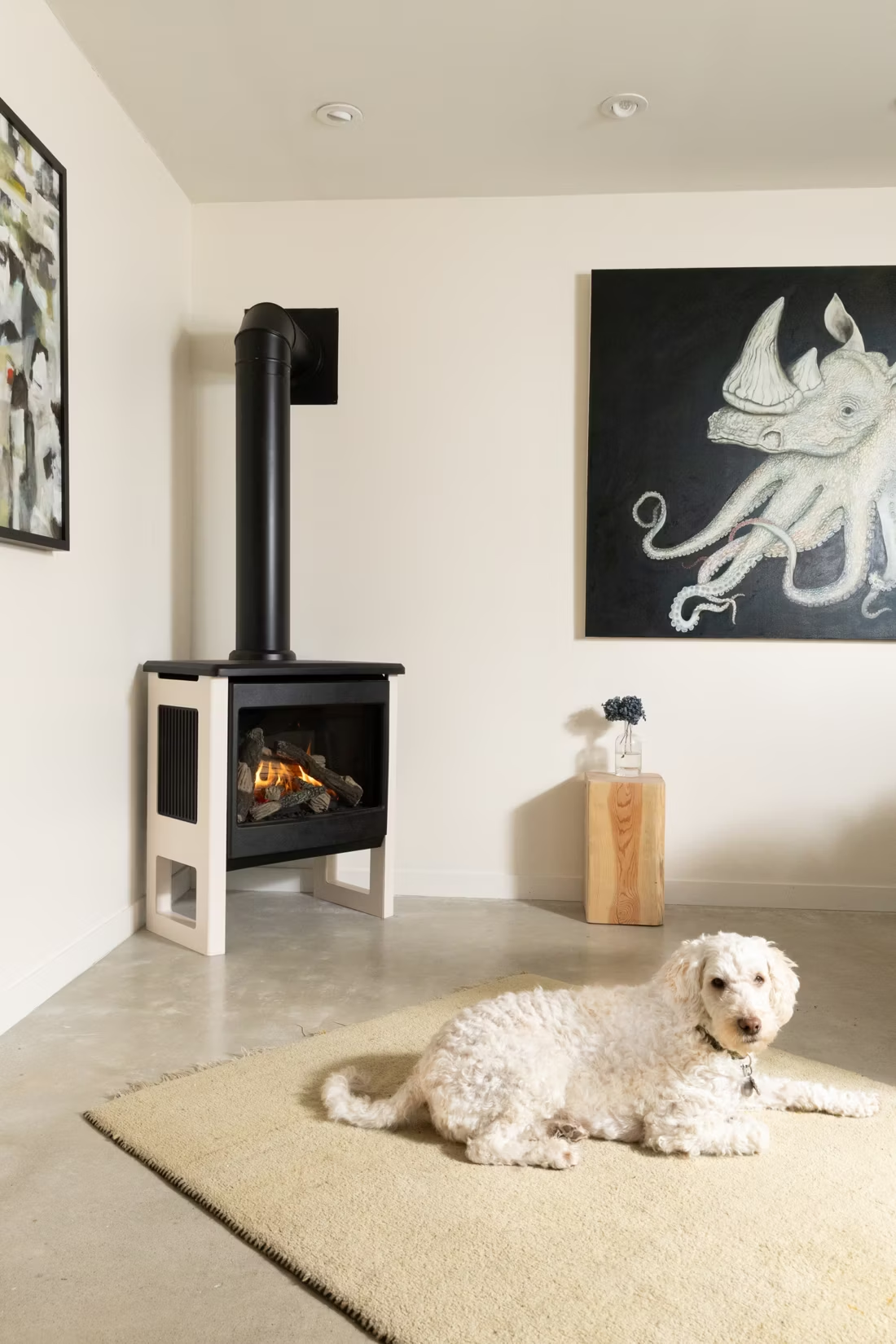
A gas fireplace is a fully built-in unit framed into a wall—the right choice for new construction or a remodel without an existing hearth. A gas insert slides into an existing masonry fireplace opening and vents through the existing chimney with a liner, which fits the many older Culpeper County homes built around a wood-burning hearth. A gas stove is a freestanding cabinet-style unit that sits on the floor, similar in footprint to a wood stove, and works well in a room without any existing fireplace at all. Most Culpeper County homeowners upgrading an existing fireplace land on an insert; new builds usually go with a built-in fireplace or freestanding stove.
Do I need a permit to install a gas fireplace in Culpeper County?
Yes. Inside town limits, permits go through the Town of Culpeper Building Department; in the surrounding unincorporated county, they're handled by Culpeper County Building Inspections. Both require a building permit for the fireplace installation and a separate gas permit for any new or modified gas line, which has to be run by a licensed gas fitter. Most established local dealers coordinate the permitting, gas line work, and inspection as part of the installation, so you're not left managing separate trades yourself.
What's the difference between vented and vent-free gas fireplaces?
Vented (direct-vent) fireplaces pull combustion air from outside and exhaust it back outside through a sealed pipe—they're the cleanest, safest option and there's no debate about indoor air quality. Vent-free units burn gas directly into the room with no chimney or vent pipe required, which makes them attractive for interior walls or rooms without existing flues, but they release some moisture and combustion byproducts into the living space and require careful attention to room size and ventilation. Virginia permits vent-free units with restrictions, and Culpeper County has no air-quality nonattainment issues that would complicate that, but most local dealers still steer whole-home installations toward direct-vent for the cleaner air and broader design flexibility. It's worth discussing both with your installer if you're weighing an interior room without a flue.
How often should my gas fireplace be serviced?
An annual inspection is the standard recommendation for any gas appliance. A technician checks the burner, pilot assembly, gas connections, and venting, and cleans the glass and interior—a much smaller job than sweeping a wood chimney, but not one to skip, especially for units that run daily through a Culpeper County winter. Local gas hearth service providers typically charge $150 to $250 for this annual visit.
Gas vs. wood—which is right for my home?
Wood still has deep roots in Culpeper County, where oak, hickory, and maple are abundant and many rural properties have the land and equipment to self-supply firewood—and a wood stove keeps working with no electricity during an outage. Gas offers instant on-off convenience, consistent heat with no ash or creosote to manage, and a cleaner look, which is a big part of why it's become the default choice for owners converting an old masonry fireplace in a historic Culpeper home into everyday usable heat. If you already burn wood for backup or ambiance elsewhere on the property, adding gas to your main living space is a common and practical combination local dealers see often.
Why is my open fireplace making my house colder?
Open fireplaces suck—literally. As the fire burns, it consumes air your furnace already paid to heat and pulls it out through the chimney, so the house is actually colder after the fire goes out than before you lit it. An insert fixes this: it seals the chimney, puts fixed glass across the front, and turns that hole in your house into a real heat source.
Why is a fireplace insert so efficient?
An insert does two things: it seals the chimney completely, so you stop losing air you already paid to heat, and it radiates warmth into the room through the firebox and glass. Most add a heat-exchange fan that pulls cool room air underneath, wraps it around the hot firebox, and pushes it back out warm. Your home is more efficient before you've even lit the first fire.
Can a fireplace actually lower my heating bill?
Yes—by creating a comfort zone. A furnace heats every square foot of the house just to warm the one room you're in; a gas fireplace on low burns roughly a sixth of the gas a typical furnace does. Set the furnace around 55–60 degrees as a baseline, then heat the rooms your family actually uses. Families who heat this way commonly save $20–$60 a month.
Does a fireplace add value to my home?
On average, a fireplace adds back to the home about the same amount you spent installing it. Add the monthly savings from heating the rooms you actually use instead of the whole house—often hundreds of dollars a year—and the value case is strong before you even count what a fire does for how your family uses the room.
Stove and Fireplace Dealers in Culpeper County
Listings include WhyFire partner dealers, dealers we have verified as authorized for the brands we recommend, and established local businesses that carry hearth products. Every listing shows which one it is. The ones marked Preferred run on WhyFire's software, so they can show you real pricing and book your appointment right here. No manufacturer pays for placement. How we verify dealers →
Mid-Atlantic Masonry Heat
Costello's Hearth & Spa - Warrenton
Area – Huntly, Va
The Chimney Guys
Find your gas fireplace in Culpeper County.
Tell us about your home and we'll match you with a trusted local Culpeper County dealer and send over a free Project Guide & Parts List—the exact parts, vent kit included, for your specific gas fireplace project.
Find Your Fireplace →