
Reliable Gas Heat for Covington's Mountain Winters.
Covington sits at 1,324 feet in Virginia's Alleghany Highlands, where winter lows average 22°F and the heating season runs five months or more. Find the right gas fireplace or insert, and get matched with a trusted local dealer.
Every Project Starts From One of These Five Situations
A practical answer to Alleghany Highlands winters.
Covington is a small mountain city in Virginia's Alleghany Highlands, sitting at 1,324 feet along the Jackson River with a winter heating load comparable to places with roughly five months of cold weather and average winter lows near 22°F—a heating season that runs a solid five months, October into March. Housing stock here is a mix of older Appalachian farmhouses and mill-town homes built up around the historic paper mill, many with existing masonry fireplaces that see more decorative use than real heat load today.
Covington doesn't have the natural gas distribution infrastructure of larger Virginia cities, so most gas fireplace installations here run on propane, stored in a tank on the property and supplied by regional propane companies serving Alleghany County. That makes propane the default for anyone considering a gas fireplace or insert in Covington. It's not a limitation on equipment—you get the same instant heat, the same battery-backup ignition options, and the same range of direct-vent inserts and fireplaces you'd find anywhere natural gas is piped in.
Three steps. No salesperson until you're ready.
Tell us about your project
Your zip code, your situation, and the fuel you're leaning toward—or let the answers point you to one.
See what's actually available
The brands dealers within 100 miles genuinely carry—real options, never a catalog mirage.
Get your dealer & Project Guide
A trusted local dealer, plus the free Project Guide & Parts List that names every component of the job.
Frequently Asked Questions
How much does a gas fireplace installation cost in Covington?
In Covington, a gas fireplace or insert installation typically runs $4,000 to $10,000, with the biggest cost drivers being whether you need a new propane tank set (Covington has no municipal natural gas system, so propane is the standard fuel here), the venting path, and whether you're installing into an existing masonry chimney or building a new hearth from scratch. A propane insert dropped into an existing fireplace with a stainless liner sits toward the lower end; a new direct-vent gas fireplace built into a wall, plus a fresh propane tank and line run, sits toward the higher end. A local dealer will give you a firm number after walking your home.
Can I convert my wood-burning fireplace to gas?
Yes, and it's a common upgrade in the older mill-town homes around Covington that still have working masonry fireplaces. A propane insert is fitted into the existing firebox with a stainless steel liner run up the chimney, which preserves the look of the fireplace while removing the need to season and haul oak or hickory firewood. Expect $4,000 to $8,500 for a straightforward conversion, more if the chimney needs relining work or the flue is out of code.
Does Covington have natural gas, or do I need propane?
Covington doesn't have the natural gas distribution infrastructure you'd find in a larger Virginia city, so propane is the default fuel for gas fireplaces here and throughout rural Alleghany County. That's not a limitation on equipment—nearly every direct-vent fireplace, insert, and stove on the market today is available in a propane configuration, and it performs identically to its natural-gas counterpart. You'll need either an existing propane tank on the property or a new tank set by a regional propane supplier, which your installer can typically coordinate as part of the job.
Will my gas fireplace work if the power goes out?
Most modern gas fireplaces will, and that matters here—ice storms and downed lines are a regular winter risk in the Alleghany Highlands, and Dominion Energy service in this part of the mountains can take longer to restore after a bad storm than it would in a denser service area. Units with intermittent pilot ignition (IPI) run on a small battery backup that kicks in the moment the power drops, so the fireplace lights on demand just like normal. Valor fireplaces go a step further—their pilot assembly generates its own electricity through the thermocouple, so there's no battery to remember at all. For a Covington home where you want heat guaranteed during an outage, that's worth asking about.
What's the difference between a gas fireplace, insert, and stove?
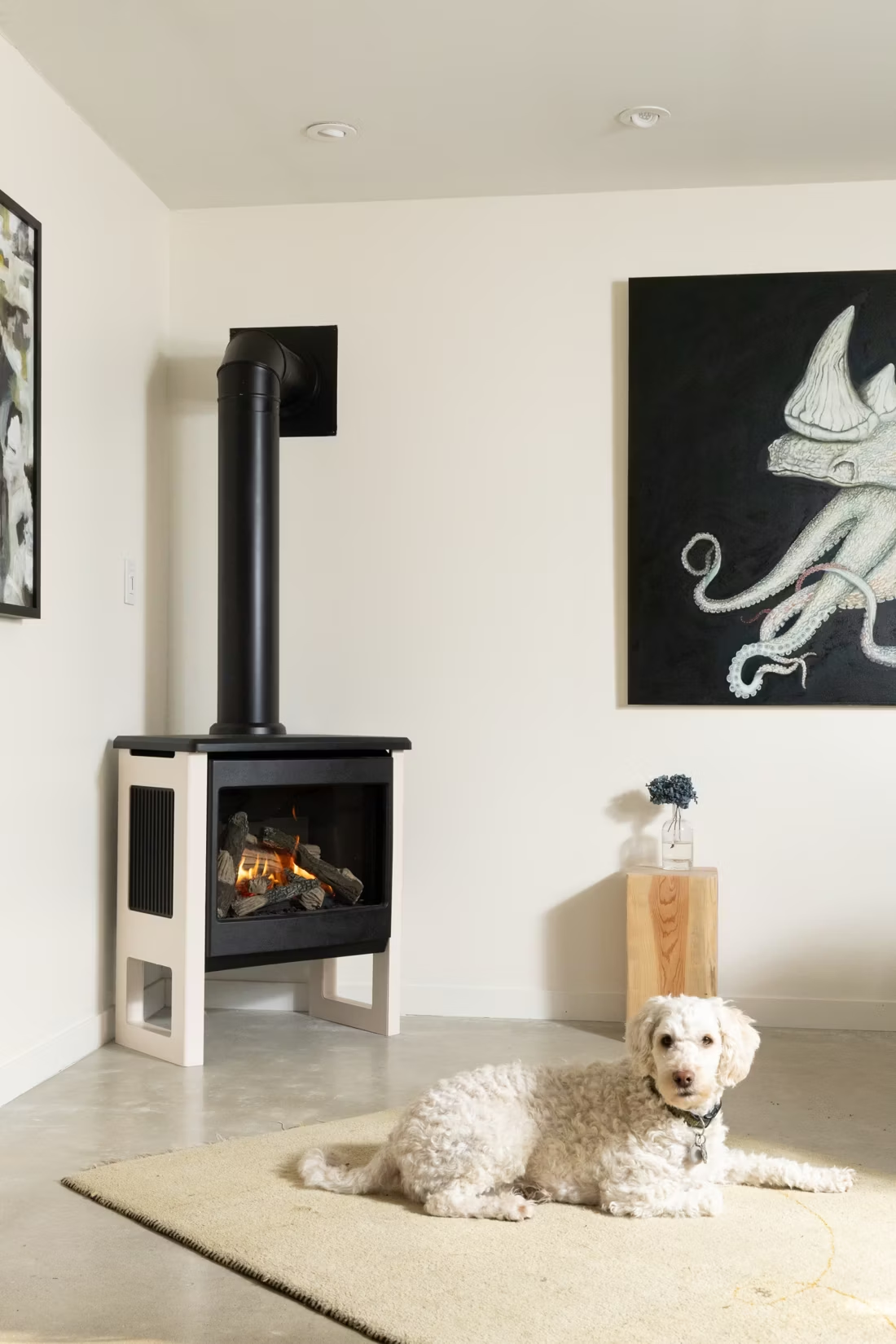
A gas fireplace is a full built-in unit, framed into a wall—the right choice for new construction or a remodel without an existing chimney. A gas insert slides into an existing masonry firebox and uses the existing chimney, relined, as its vent path, which is the more common project in Covington's older housing stock. A gas stove is a freestanding cast-iron or steel unit that sits on the floor like a wood stove but burns propane, often used in homes without any existing fireplace opening. For most homeowners here upgrading a fireplace they already have, an insert is the simplest and most cost-effective path.
Do I need a permit for a gas fireplace installation in Covington?
Yes—the City of Covington requires a building permit for gas fireplace installations, and any new propane line or tank set needs sign-off from a licensed gas fitter as well. Most hearth dealers who work in the area handle the permit application and inspection scheduling as part of the installation, so you're not coordinating separate trades yourself. If you're just outside city limits in the surrounding county, permitting runs through the county building department instead.
Should I choose a vented or vent-free gas fireplace?
Vented, direct-vent units draw combustion air from outside and exhaust it back outside through a sealed pipe—they're the safer, more universally recommended choice and produce real usable heat. Vent-free units burn propane directly into the room without exterior venting; they're legal in Virginia with proper room-sizing and an oxygen depletion sensor, but they add moisture and combustion byproducts to indoor air. For Covington's older homes, many of which weren't built with modern ventilation in mind, a direct-vent unit is almost always the better call, and it's what most local dealers will steer you toward.
How often does a gas fireplace need to be serviced?
Plan on an annual inspection, ideally before the start of the winter heating season. A technician checks the burner, pilot assembly, propane connections, and venting, and cleans the glass and interior—a $150 to $250 visit in most cases. This matters more in Covington than it might elsewhere because propane systems have a tank and regulator setup that natural gas systems don't, and those connections are worth having a professional eye on every year.
Should I get a gas fireplace or stick with wood in Covington?
Wood heat isn't especially common in Covington today—most homes here have shifted to propane, electric, or gas for daily heating, even though oak, hickory, and maple are all abundant nearby and Forest Service cutting permits through the George Washington & Jefferson National Forest run about $20 per cord. A handful of homeowners keep a wood stove for backup heat or ambiance, but it's the exception rather than the rule. Gas is the more practical choice for most Covington households: instant heat, no wood handling, and, with the right ignition system, reliable operation during the ice storms that occasionally take down power in the Highlands.
Can I put a TV above my fireplace?
Yes—with an asterisk. Fireplaces are hot and TVs don't like heat. Either put a mantel between them to deflect rising warmth, or choose a fireplace with heat-management technology that creates a cool zone on the wall above—the wall stays around 125 degrees, barely warm, while the room still gets full heat. If you like clean lines and don't want a mantel, heat management is the answer.
Why is a fireplace insert so efficient?
An insert does two things: it seals the chimney completely, so you stop losing air you already paid to heat, and it radiates warmth into the room through the firebox and glass. Most add a heat-exchange fan that pulls cool room air underneath, wraps it around the hot firebox, and pushes it back out warm. Your home is more efficient before you've even lit the first fire.
What is an in-home preview and do I need one?
It's a visit where a hearth professional measures your space, confirms the model you picked actually works in your home, and walks the specs—framing, gas line, venting, finish work—before anything is ordered. Some details you just can't know until you see the house. Never make a down payment without one; it's the single most-skipped step that burns buyers.
Does a fireplace add value to my home?
On average, a fireplace adds back to the home about the same amount you spent installing it. Add the monthly savings from heating the rooms you actually use instead of the whole house—often hundreds of dollars a year—and the value case is strong before you even count what a fire does for how your family uses the room.
Nearby Dealers
Hearth shops serving Covington and the surrounding area. Every listing shows whether it is a WhyFire partner, a dealer we have verified as authorized for the brands we recommend, or a local business carrying hearth products. No manufacturer pays for placement. How we verify dealers →
Top Hat Stove & Fireplace
Davenport Energy Roanoke
Skyline Hearth & Fire
Black Goose Chimney
Find the right gas fireplace for your Covington home.
Tell us about your home and heating goals, and we'll send you a free Project Guide & Parts List—a complete plan for your gas fireplace project in Covington, including the exact parts and vent kit you'll need, plus our recommended local dealer.
Find Your Fireplace →