
Find the right gas fireplace for your Campbell County home.
Reliable, instant heat for Campbell County winters—from Rustburg to Brookneal to Altavista. I'll match you with a trusted local dealer who can size, permit, and install it right.
Every Project Starts From One of These Five Situations
Instant heat without the wood pile.
Campbell County sits in climate zone 4A with about 4,295 heating degree days and average winter lows around 26°F—noticeably milder than places like Buffalo NY or Madison WI, but still cold enough that a fireplace does real work here, not just ambiance. Winters run roughly November through March, and while the county's oak, hickory, and maple forests have historically fed a lot of wood stoves in Rustburg, Brookneal, and Gladys, more homeowners are choosing gas for the convenience of flip-a-switch heat, especially in remodeled living rooms and newer construction along Route 501 and near Altavista.
Most of rural Campbell County runs on propane rather than piped natural gas, so a gas fireplace install here typically means either tapping an existing propane tank or coordinating a new one with a local propane supplier. Where natural gas service does reach—closer to Lynchburg city limits—a direct-vent unit can often use existing gas infrastructure. Either fuel source delivers the same benefit: consistent, controllable heat that doesn't require splitting or hauling wood, with select models able to run during a power outage on battery backup.
Three steps. No salesperson until you're ready.
Tell us about your project
Your zip code, your situation, and the fuel you're leaning toward—or let the answers point you to one.
See what's actually available
The brands dealers within 100 miles genuinely carry—real options, never a catalog mirage.
Get your dealer & Project Guide
A trusted local dealer, plus the free Project Guide & Parts List that names every component of the job.
Frequently Asked Questions
How much does a gas fireplace installation cost in Campbell County?
Gas fireplace installations in Campbell County generally run from a few thousand dollars for a direct-vent insert into an existing masonry fireplace with propane already on site, up to higher figures for new construction that requires a fresh gas line run or a new propane tank installation. Homes closer to Lynchburg with natural gas access tend to see lower costs than more rural parts of the county where propane tank setup adds to the bill. A local dealer can give you a firm number after an in-home look at your existing fireplace or planned install location.
Can I convert my existing wood fireplace to gas?
Yes, and it's a common project for older homes in Rustburg and Brookneal that still have a masonry fireplace built decades ago for wood. A gas insert slides into the existing firebox and uses a stainless liner run through your current chimney for venting, which keeps the project simpler and less invasive than building a new chase. Whether you're on propane or have natural gas access nearer Lynchburg affects the gas line work required, but the conversion itself preserves the look of the original fireplace while eliminating the need to source and split oak or hickory firewood every winter.
Do I need natural gas, or can I run a fireplace on propane?
Propane is the standard fuel for most of Campbell County outside the areas closest to Lynchburg, and the vast majority of gas fireplace models sold today can be configured for either fuel with the correct orifice and regulator. If you already have a propane tank for your water heater or range, adding a fireplace is usually a straightforward tie-in. If you don't have propane service yet, a local dealer can coordinate with a regional supplier for a new tank as part of the install. Neither fuel limits which fireplace styles or brands are available to you.
Will my gas fireplace still work if the power goes out?
Most models with intermittent pilot ignition include battery backup that keeps the unit operational during outages—useful given that Campbell County's rural distribution lines can mean longer restoration times after ice storms or downed trees than you'd see closer to town. Valor fireplaces take a different approach: their pilot generates its own electricity through the thermocouple, so there's no battery to maintain or forget. Ask your local dealer which ignition system is on any unit you're considering if outage performance matters to you.
What's the difference between a gas fireplace, insert, and stove?
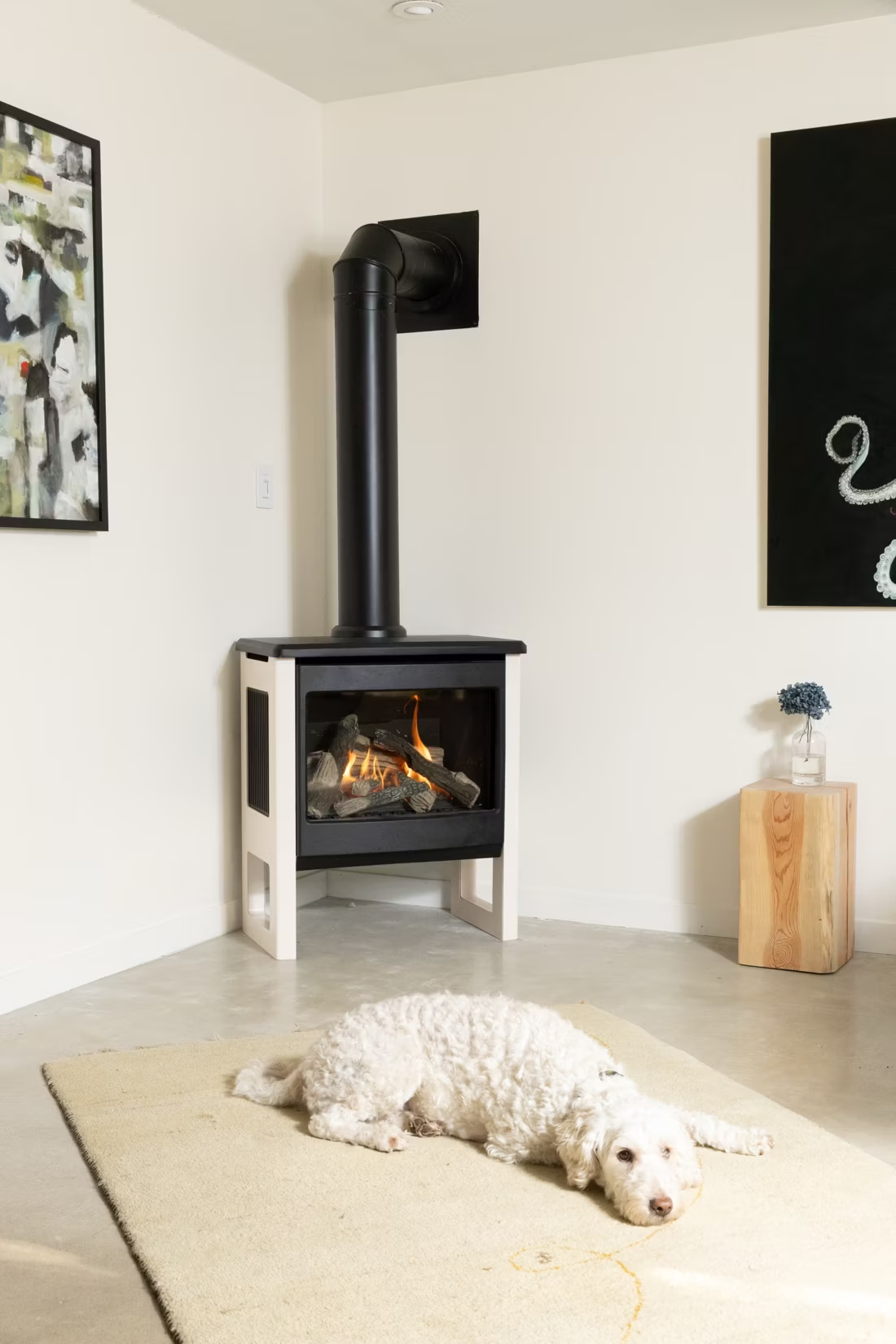
A gas fireplace is a built-in unit framed into a wall, typically chosen for new construction or a major remodel. A gas insert is built to slide into an existing masonry firebox, which is the more common route for older Campbell County farmhouses and ranch homes that already have a wood-burning fireplace they want to upgrade. A gas stove is a freestanding cabinet unit that sits on the floor, similar in footprint to a wood stove, and works well in a room without an existing chimney opening. Most homeowners with an existing hearth end up choosing an insert.
Do I need a permit to install a gas fireplace in Campbell County?
Yes—a building permit and gas line permit are typically required for a new gas fireplace installation, and the gas connection itself has to be handled by a licensed gas-fitter. Most local hearth dealers manage this paperwork as part of the installation, coordinating the permit, the gas or propane line work, and the final inspection so you're not juggling separate contractors. It's worth confirming with your dealer up front that permitting is included in their quote.
What's the difference between vented and vent-free gas fireplaces?
Vented (direct-vent) units draw combustion air from outside and exhaust it back outside through a sealed pipe, which is the more common and more broadly recommended setup. Vent-free units burn directly into the room without exterior venting, which is legal in Virginia but comes with room-sizing rules and requires an oxygen depletion sensor. For most Campbell County installs, direct-vent is the standard recommendation because it delivers strong heat output with no compromise on indoor air quality—a real consideration in a well-sealed newer home. A local dealer can walk you through both if you want to weigh the tradeoffs for your specific room.
How often should my gas fireplace be serviced?
An annual inspection is recommended for any gas-burning appliance, including direct-vent fireplaces and inserts. A technician checks the burner, pilot assembly, venting, and gas connections, and cleans the glass and interior—a shorter, less involved visit than a wood chimney sweep but just as important for safe operation. Plan this for late summer or early fall, before the first cold snap typically arrives in October or November.
Gas vs. wood—which makes more sense for my Campbell County home?
Wood has deep roots in Campbell County, where oak and hickory are abundant and cutting permits through George Washington & Jefferson National Forest run about $20 per cord during the May-to-October season—a real cost advantage for anyone willing to cut and split their own fuel. Wood also keeps working without electricity, which matters when a winter storm knocks out power in the more rural parts of the county. Gas wins on convenience: no hauling, no ash, instant on-off control, and a cleaner look in a main living space. Plenty of homes here run both—gas in the primary living room for daily use, wood elsewhere for backup heat or atmosphere.
Why is a fireplace insert so efficient?
An insert does two things: it seals the chimney completely, so you stop losing air you already paid to heat, and it radiates warmth into the room through the firebox and glass. Most add a heat-exchange fan that pulls cool room air underneath, wraps it around the hot firebox, and pushes it back out warm. Your home is more efficient before you've even lit the first fire.
Does a gas fireplace work when the power is out?
Yes—modern gas fireplaces have a battery backup for the ignition system that lasts for weeks, so no power equals no problem. Your furnace can't say that: no electricity, no blower, no heat. It's one of the most common reasons families add a fireplace, and worth confirming on any model you're considering.
Does a fireplace add value to my home?
On average, a fireplace adds back to the home about the same amount you spent installing it. Add the monthly savings from heating the rooms you actually use instead of the whole house—often hundreds of dollars a year—and the value case is strong before you even count what a fire does for how your family uses the room.
What is an in-home preview and do I need one?
It's a visit where a hearth professional measures your space, confirms the model you picked actually works in your home, and walks the specs—framing, gas line, venting, finish work—before anything is ordered. Some details you just can't know until you see the house. Never make a down payment without one; it's the single most-skipped step that burns buyers.
Stove and Fireplace Dealers in Campbell County
Listings include WhyFire partner dealers, dealers we have verified as authorized for the brands we recommend, and established local businesses that carry hearth products. Every listing shows which one it is. The ones marked Preferred run on WhyFire's software, so they can show you real pricing and book your appointment right here. No manufacturer pays for placement. How we verify dealers →
Foster Fuels - Rustburg
The Fireplace Shop
Taylor Brothers
Foster Fuels - Forest
Glenwood Oil & Gas
AquaPros Pools & Spas, Inc.
Blossman Gas And Appliance
Francis Oil And Propane
Black Goose Chimney
Get your free Project Guide & Parts List for a gas fireplace in Campbell County.
Tell me a bit about your home and I'll put together a Project Guide & Parts List—the exact parts, including the vent kit, and a trusted local dealer recommendation for your Campbell County gas project.
Find Your Fireplace →