
Instant heat for Buena Vista's Blue Ridge winters.
Gas heat that lights at the flip of a switch, sized right for your Rockbridge County home. Find the right unit and connect with a trusted local dealer.
Every Project Starts From One of These Five Situations
Reliable warmth in the shadow of the Blue Ridge.
Buena Vista sits at 822 feet in a valley between the Blue Ridge and the Alleghenies, where winter lows average in the low 20s and a solid winter heating season keeps furnaces and fireplaces working from November into March. That's a milder heating load than mountain towns like Bozeman or Burlington, but Rockbridge County still sees enough cold, damp stretches that homeowners want a heat source that doesn't depend on tending a woodpile every evening.
Many homes in and around Buena Vista rely on propane rather than a municipal natural gas main, since city gas service is limited in this part of the Shenandoah Valley. Virginia Electric & Power Co. supplies electricity at roughly 14 cents per kWh, which makes a gas unit's lower operating cost attractive for anyone running a fireplace regularly through the winter. Either way, a properly installed gas fireplace or insert delivers instant, consistent heat without the hauling, splitting, or ash cleanup that comes with wood—and some models keep working even when the power doesn't.
Three steps. No salesperson until you're ready.
Tell us about your project
Your zip code, your situation, and the fuel you're leaning toward—or let the answers point you to one.
See what's actually available
The brands dealers within 100 miles genuinely carry—real options, never a catalog mirage.
Get your dealer & Project Guide
A trusted local dealer, plus the free Project Guide & Parts List that names every component of the job.
Frequently Asked Questions
How much does a gas fireplace installation cost in Buena Vista?
Most gas fireplace and insert installations in the Buena Vista area run in the range typical for smaller Virginia towns without a dense natural gas grid—expect the low end if you already have a propane tank and are installing a direct-vent insert into an existing masonry fireplace, and the higher end if you need a new propane tank, gas line run, or full venting for new construction. Because most homes here run on propane rather than a gas main, your installer will also need to coordinate with a local propane supplier, which local hearth dealers handle routinely.
Do I need natural gas, or is propane the standard here?
Propane is the more common fuel for gas fireplaces around Buena Vista, since municipal natural gas service doesn't reach most of the surrounding Rockbridge County area. If you already have a propane tank for a water heater or range, adding a fireplace is straightforward—your installer sizes the appliance to your existing tank and regulator. If you don't have a tank yet, a local propane supplier can set one up, typically alongside the fireplace installation.
Can I convert my existing wood fireplace to gas?
Yes, and it's a common upgrade for older Buena Vista homes with masonry fireplaces that see little use. A gas insert slides into the existing firebox, using a stainless liner run through your current chimney to vent safely. Since most homes here run on propane, the installer will typically also plumb a line from your tank or set a new one. The result keeps the look of your original fireplace while giving you push-button heat without hauling oak or hickory splits in from the woodpile.
Will my gas fireplace still work if the power goes out?
Most will, with the right ignition system. Units with IPI (intermittent pilot ignition) run on AA batteries as backup, so they light on demand even without utility power—useful in Rockbridge County, where ice storms and downed lines can knock out power for a day or more. Valor fireplaces take a different approach: their pilot generates its own electricity through a thermocouple, so there's no battery to remember or replace. Ask your local dealer which ignition system is on the model you're considering.
What's the difference between a gas fireplace, insert, and stove?
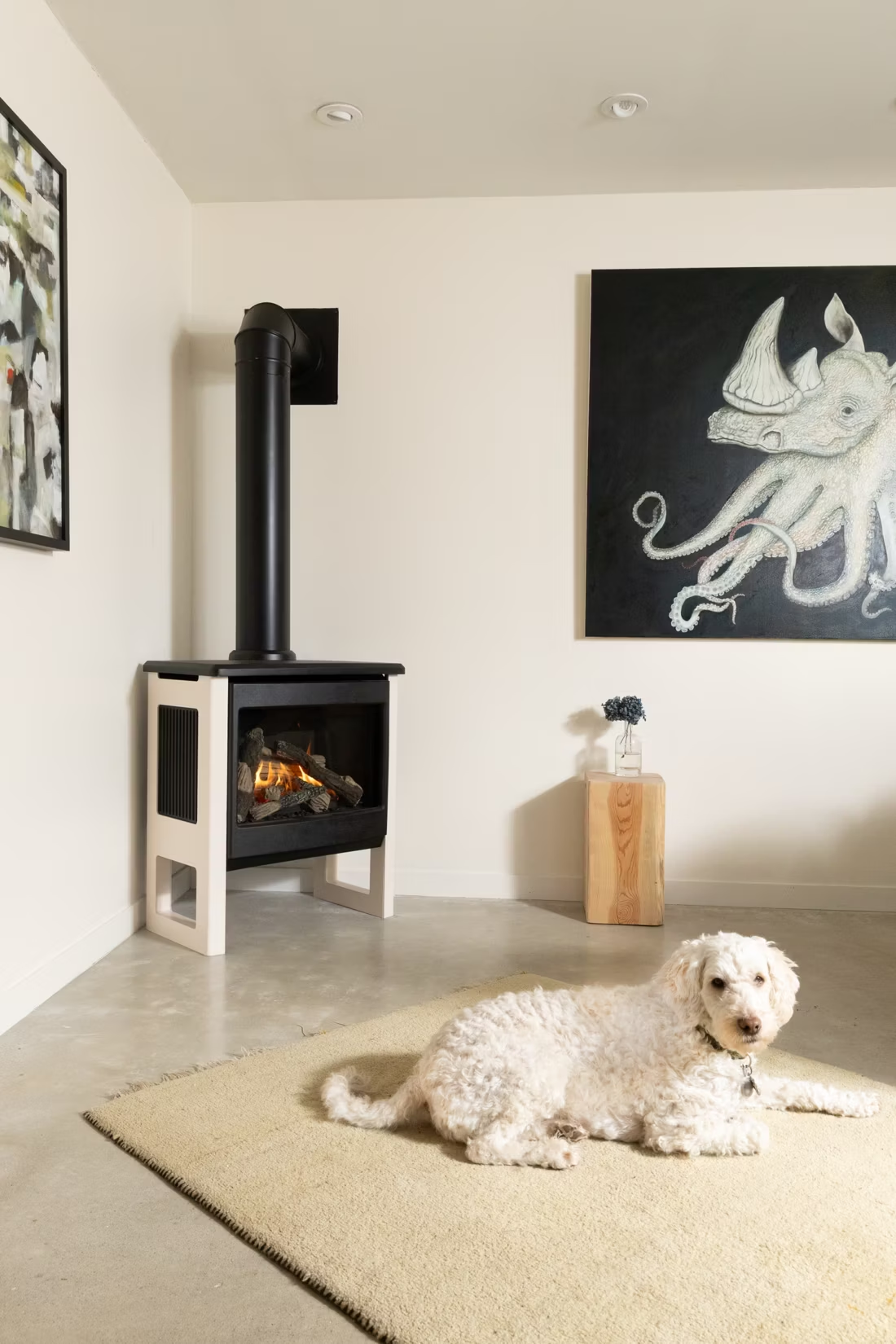
A gas fireplace is a built-in unit framed into a wall, typically chosen for new construction or a remodel. A gas insert drops into an existing masonry firebox and vents through the chimney you already have—the most common choice for older Buena Vista homes. A gas stove is a freestanding cabinet-style unit that sits on the floor, often used in a room without an existing fireplace. For most homeowners here with an existing hearth, an insert is the simplest and most cost-effective path.
Do I need a permit to install a gas fireplace in Buena Vista?
Yes—the City of Buena Vista requires a building permit for a new gas fireplace or insert installation, and any propane line work needs to be done by a licensed gas-fitter. Most local hearth dealers handle the permitting and inspection scheduling as part of the installation, so you're not left coordinating separate trades for the venting, the gas line, and the final inspection.
Vented vs. vent-free gas fireplaces—which should I choose?
Vented (direct-vent) units draw combustion air from outside and exhaust gases back outside through sealed pipe, making them the cleanest and most universally code-compliant option. Vent-free units burn fuel directly into the room and are legal in Virginia within room-size and ventilation guidelines, but they release some water vapor and combustion byproducts indoors. For most Buena Vista homes, a direct-vent unit is the safer, more comfortable choice and delivers more usable heat—but your local dealer can walk through both if a specific room's layout makes venting difficult.
How often does a gas fireplace need to be serviced?
Plan on an annual inspection, ideally before the coldest part of the season sets in. A technician checks the burner, pilot or ignition system, gas connections, and venting, and cleans the glass and interior components. This is a much smaller job than chimney sweeping for a wood unit, but skipping it lets soot and spider nests build up in the burner ports—a common issue with propane-fed units that sit unused part of the year.
Gas vs. wood—which makes more sense for a Buena Vista home?
Wood is still practical here—the George Washington & Jefferson National Forest issues cutting permits for $20 a cord during the May-to-October season, and oak, hickory, and maple all burn well and are locally abundant. But wood means hauling, splitting, and tending a fire. Gas costs more per BTU with propane but delivers instant, consistent heat with none of the labor, which matters most in a household without the time or interest in processing firewood. Many homes in the area keep both: a gas insert for daily convenience, a wood stove or fireplace elsewhere for backup heat and cheaper fuel when propane prices climb.
What's the difference between an insert and a zero-clearance fireplace?
An insert is a fireplace that slides into a pre-existing wood-burning fireplace—if you don't have one, there's nothing to insert it into. A zero-clearance fireplace is built into a framed wall, which makes it the answer for remodels and new construction. Simple test: existing masonry fireplace means insert; blank or framed wall means zero-clearance.
Why is a fireplace insert so efficient?
An insert does two things: it seals the chimney completely, so you stop losing air you already paid to heat, and it radiates warmth into the room through the firebox and glass. Most add a heat-exchange fan that pulls cool room air underneath, wraps it around the hot firebox, and pushes it back out warm. Your home is more efficient before you've even lit the first fire.
Can I install a fireplace myself?
If you're putting a fire in your house on purpose, it's best to work with an expert. Unless you're genuinely experienced in framing, gas line, vent pipe, and the national code on clearances to combustibles, have a professional do it—and ideally the same company that sells you the fireplace, so warranty, service, and liability all live under one roof.
How much should I budget for a fireplace?
For an average home—covering the fireplace, the vent pipe, and basic installation—a budget between $3,900 and $5,500 gives you a lot of options across wood, gas, and pellet. By the time you add finish work, gas line, and electrical, the average complete installation lands between $5,000 and $12,000 all-in. In a remodel or new build, a good rule is to put about 2.5% of the total project cost toward the fireplace.
Nearby Dealers
Hearth shops serving Buena Vista and the surrounding area. Every listing shows whether it is a WhyFire partner, a dealer we have verified as authorized for the brands we recommend, or a local business carrying hearth products. No manufacturer pays for placement. How we verify dealers →
AquaPros Pools & Spas, Inc.
Foster Fuels - Forest
Taylor Brothers
The Fireplace Shop
Black Goose Chimney
Blossman Gas And Appliance
Valley Filter & Maintenance
Clines Heating And Cooling
Foster Fuels - Rustburg
Holtzman Propane
Glenwood Oil & Gas
Find your gas fireplace in Buena Vista.
Tell us a bit about your home and we'll match you with the right gas fireplace, insert, or stove—plus a free Project Guide & Parts List with the exact parts, vent kit, and a recommended local dealer.
Find Your Fireplace →