
Real Fireplace Warmth, Zero Venting Required.
No chimney, no gas line, no HOA fight—just plug-in or hardwired warmth that fits Ashburn's newer homes. Find the right unit and connect with a trusted local dealer.
Every Project Starts From One of These Five Situations
The fireplace that fits Loudoun County's newest homes.
Ashburn sits at the center of Loudoun County's building boom—a corridor better known these days for data centers than farmland, and for planned communities like Brambleton, Broadlands, and Belmont than for older masonry construction. Most homes here were built in the last two decades without a chimney, and many HOA covenants in these communities restrict exterior venting or open-flame burning entirely. Wood stoves and pellet stoves are essentially off the table for most Ashburn homeowners as a result—not because of local air quality (Ashburn has none of the winter inversion issues that plague some regions) but because the housing stock and HOA rules simply weren't built for them. Electric fireplaces sidestep all of it: no venting, no fuel storage, no permit fight with the architectural review board.
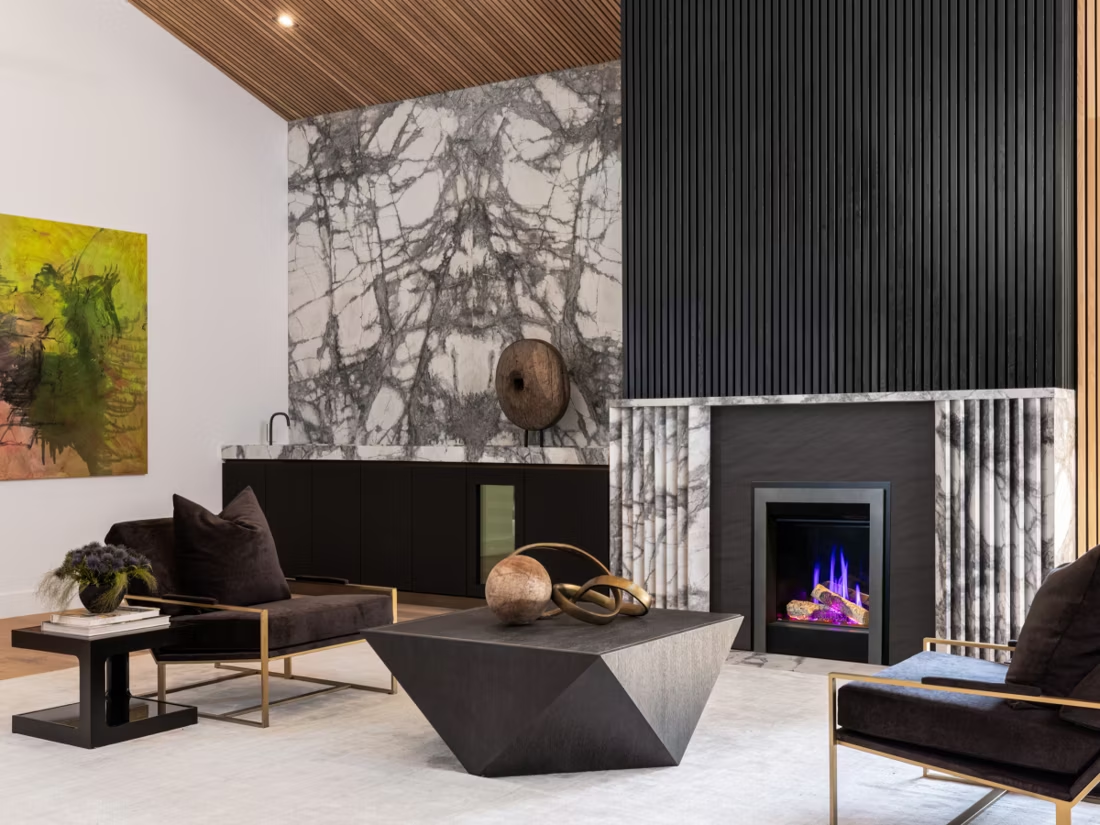
At 4,714 heating degree days and average winter lows around 25°F, Ashburn's winters are real but moderate—nothing like the sustained cold of Buffalo or Duluth. Most homes here rely on heat pumps served by Virginia Electric & Power Co. (Dominion Energy), and electric fireplaces slot in naturally as zone heat for the room that feels chilly when the heat pump is mid-defrost-cycle on a cold January night, or simply as a design centerpiece in a family room or primary suite. With Dominion's residential rate around 14 cents per kWh, running a 1,500-watt insert on high for a few hours in the evening costs roughly 20-25 cents an hour—a modest add to the bill for real, adjustable heat plus a flame effect that looks convincing from across the room.
Three steps. No salesperson until you're ready.
Tell us about your project
Your zip code, your situation, and the fuel you're leaning toward—or let the answers point you to one.
See what's actually available
The brands dealers within 100 miles genuinely carry—real options, never a catalog mirage.
Get your dealer & Project Guide
A trusted local dealer, plus the free Project Guide & Parts List that names every component of the job.
Frequently Asked Questions
How much does it cost to install an electric fireplace in Ashburn?
It depends heavily on the type of unit. A plug-in electric insert or freestanding stove that drops into an existing opening or sits against a wall typically runs $200-$700 for the unit itself, with no real installation cost beyond plugging it in. A built-in, wall-recessed, or linear electric fireplace—the kind many Ashburn homeowners want for a family room or primary suite in newer construction—usually runs $1,500-$4,000 installed, once you factor in the unit, framing or a mantel surround, and an electrician running a dedicated circuit if the unit draws more than a standard outlet can handle. A local dealer can walk your specific wall and give you a firm number.
Can I put an electric insert into my existing fireplace opening?
Yes, and it's a common project in Ashburn's older townhome sections and any home with an existing gas or decorative wood-burning fireplace it no longer wants to maintain. Electric inserts are sized to slot into standard masonry or prefab fireplace openings, plug into a nearby outlet (or a new dedicated circuit for higher-output models), and give you flame effect and heat without touching the existing chimney or flue. It's typically the fastest, least invasive electric fireplace project available, often completed in an afternoon.
How much real heat does an electric fireplace put out?
Most electric fireplaces top out around 1,500 watts, which translates to roughly 5,000 BTU—enough to comfortably heat a single room (200-400 square feet) but not a whole house. Think of it as zone heat: it's genuinely useful for taking the edge off a chilly family room while your heat pump handles the rest of the home, especially during Ashburn's coldest stretches when heat pumps run frequent defrost cycles and can feel like they're losing ground. It is not a replacement for central heat in a Zone 4A climate with 4,714 heating degree days a year.
Will an electric fireplace work during a power outage?
No—this is the honest tradeoff against gas. Electric fireplaces require power to run the heater, blower, and flame effect, so they go dark along with everything else during an outage. If backup heat during winter storms is a priority for your Ashburn home, a gas fireplace or a battery-backed generator setup is a better fit for that specific need. Electric fireplaces are best understood as a supplemental comfort and design feature, not an emergency heat source.
Do I need a permit to install an electric fireplace in Ashburn?
A plug-in unit that uses a standard outlet needs no permit at all. If you're installing a hardwired, built-in, or wall-recessed electric fireplace that requires a new dedicated circuit, Loudoun County's Building and Development Services division typically requires an electrical permit for that circuit work, pulled by a licensed electrician. Most local dealers coordinate this as part of the installation, so it rarely falls on the homeowner to manage directly.
What's the best electric fireplace for a home in Ashburn?
For most Ashburn living rooms and primary suites, a linear built-in model from a brand like Dimplex, Napoleon, or Amantii gives the most realistic flame presentation and can double as supplemental zone heat on the coldest nights when the heat pump is working hardest. For renters, townhome owners with HOA restrictions on wall modifications, or anyone who wants a lower-commitment option, a freestanding electric stove or a plug-in insert into an existing opening delivers most of the ambiance without any electrical work. A local dealer can match the unit to your wall dimensions and whether you want supplemental heat or purely visual effect.
Will my HOA allow an electric fireplace?
Almost certainly, and that's a big part of why electric is the default choice in many of Ashburn's planned communities. Because electric fireplaces require no exterior venting, no chimney, and no gas line, they typically clear architectural review committees in communities like Brambleton, Broadlands, and Belmont with little friction—unlike wood stoves, which most of these covenants prohibit outright. Built-in units mounted into a wall may still need a straightforward notice to your HOA for the framing or mantel surround, so it's worth a quick check before work begins.
What's the difference between an electric fireplace, insert, and wall-mount unit?
A freestanding electric fireplace or stove sits on the floor and plugs in anywhere near an outlet—the least permanent option. An electric insert is built to slide into an existing fireplace opening, whether that opening previously held wood, gas, or was purely decorative. A wall-mount or built-in linear unit is recessed into a wall or framed enclosure, usually wired on a dedicated circuit, and functions more like a piece of architecture than an appliance. For Ashburn's newer construction without existing fireplace openings, built-in wall units are the most popular choice; for homes with an existing opening to fill, an insert is usually the simpler upgrade.
Electric vs. gas—which fireplace is right for my Ashburn home?
Gas delivers more real heat output, works during power outages on units with battery-backed ignition, and is the better choice if you already have a gas line run to the house. Electric requires no venting or gas work at all, clears HOA review more easily, costs far less to install, and lets you put a fireplace almost anywhere in the house—a spare bedroom, a basement, a home office—without construction. For most Ashburn homes in newer HOA communities without existing gas fireplace infrastructure, electric is the lower-friction option; for homes that already have a gas hookup and want backup heat capability, gas is worth the extra investment. Some homeowners install both: gas in the main living area, electric in secondary rooms.
Can I put a TV above my fireplace?
Yes—with an asterisk. Fireplaces are hot and TVs don't like heat. Either put a mantel between them to deflect rising warmth, or choose a fireplace with heat-management technology that creates a cool zone on the wall above—the wall stays around 125 degrees, barely warm, while the room still gets full heat. If you like clean lines and don't want a mantel, heat management is the answer.
Do electric fireplaces actually produce heat?
Yes—most put out around 4,800–5,000 BTUs from a standard outlet, which comfortably warms a bedroom, office, or den as a comfort-zone heater. What they won't do is carry a whole house the way wood, gas, or pellet can. Think of electric as ambiance-first with honest supplemental heat: flames on with no heat in July, flames plus warmth in January.
How much should I budget for a fireplace?
For an average home—covering the fireplace, the vent pipe, and basic installation—a budget between $3,900 and $5,500 gives you a lot of options across wood, gas, and pellet. By the time you add finish work, gas line, and electrical, the average complete installation lands between $5,000 and $12,000 all-in. In a remodel or new build, a good rule is to put about 2.5% of the total project cost toward the fireplace.
Can I install a fireplace myself?
If you're putting a fire in your house on purpose, it's best to work with an expert. Unless you're genuinely experienced in framing, gas line, vent pipe, and the national code on clearances to combustibles, have a professional do it—and ideally the same company that sells you the fireplace, so warranty, service, and liability all live under one roof.
Nearby Dealers
Hearth shops serving Ashburn and the surrounding area.
Electric Service in Ashburn
An electric fireplace's heater draws about 1,500 watts—pennies per hour at local rates.
Virginia Electric & Power Co
Find your electric fireplace in Ashburn.
Tell us about your room, your wall, and whether you want supplemental heat or just the flame effect—we'll put together a free Project Guide & Parts List and match you with a trusted local Ashburn dealer who can install it right.
Find Your Fireplace →