
Reliable Gas Heat for Arlington Homes, Old and New.
From Clarendon colonials to Rosslyn high-rises, a properly sized gas fireplace or insert delivers real heat without the chimney work wood requires. Find the right unit and connect with a trusted local dealer.
Every Project Starts From One of These Five Situations
Mild winters, dense living, real heat on demand.
Arlington sits in climate zone 4A directly across the Potomac from Washington, D.C., with milder winters than much of the country—average lows hover around 30°F and the county has a winter heating load of less than half the seasonal load of a place like Madison, WI or Burlington, VT. That milder profile, paired with Arlington's mix of 1920s-40s brick colonials in neighborhoods like Clarendon and Ashton Heights, Craftsman bungalows, and high-rise condo towers along the Rosslyn-Ballston corridor, shapes what actually gets installed here: supplemental zone heat and ambiance rather than a primary wood-burning heat source.
Wood and pellet stoves are largely impractical in Arlington's dense urban fabric—small lots, tight setbacks, condo association rules, and high-rise buildings that simply have nowhere to route a masonry chimney or accommodate pellet delivery and storage. Natural gas, by contrast, is available essentially county-wide, and a direct-vent gas fireplace or insert can be installed in almost any structure, from a 1930s colonial with an existing masonry chimney to a sealed condo unit that never had one. That's a big part of why gas, not wood, is the standard hearth fuel across Arlington.
Three steps. No salesperson until you're ready.
Tell us about your project
Your zip code, your situation, and the fuel you're leaning toward—or let the answers point you to one.
See what's actually available
The brands dealers within 100 miles genuinely carry—real options, never a catalog mirage.
Get your dealer & Project Guide
A trusted local dealer, plus the free Project Guide & Parts List that names every component of the job.
Frequently Asked Questions
How much does a gas fireplace installation cost in Arlington?
A gas fireplace installation in Arlington typically runs $4,000 to $11,000, depending on whether you're converting an existing masonry fireplace to a direct-vent insert (the lower end) or installing a new built-in unit in a remodel or condo that requires fresh gas line and venting work (the higher end). Because natural gas service covers the vast majority of the county, most projects avoid the added cost of a propane tank setup. A local hearth dealer will give you a firm number after seeing your specific chimney, wall, or venting situation.
Can I convert my existing wood fireplace to gas?
Yes, and it's one of the most common hearth projects in Arlington's older neighborhoods—Clarendon, Ashton Heights, Lyon Village, and Westover all have plenty of 1920s-1950s brick colonials with existing masonry fireplaces that were never great at producing usable heat. A gas insert slides into that existing firebox, runs a liner up the original flue, and taps into the home's existing gas line. Expect $4,500 to $9,000 depending on the insert model and whether the gas line needs to be extended to the fireplace location.
Do I need natural gas to install a gas fireplace, or can I use propane?
Nearly all of Arlington is already served by natural gas, so propane is rarely necessary here. Unlike more rural stretches of Virginia where propane tanks fill the gap, Arlington's dense grid means most homes and condos have a gas line nearby, and connecting a new fireplace or insert is usually a matter of running a branch line rather than starting from scratch. The exception is a handful of detached homes on the county's edges without existing gas service, where a propane tank remains an option your installer can spec for.
Will my gas fireplace work during a power outage?
Most modern gas fireplaces are designed to keep working when the power goes out. Units with IPI (intermittent pilot ignition) include a battery backup that kicks in automatically, so the fireplace lights on demand just like normal until power is restored. Valor's gas fireplaces take a different approach—they generate their own electricity through the pilot's thermocouple, so there's no battery to remember at all. For Arlington homes that occasionally lose power during Nor'easters or the remnants of tropical storms moving up the East Coast, that's a real advantage worth asking your local retailer about.
What's the difference between a gas fireplace, gas insert, and gas stove?
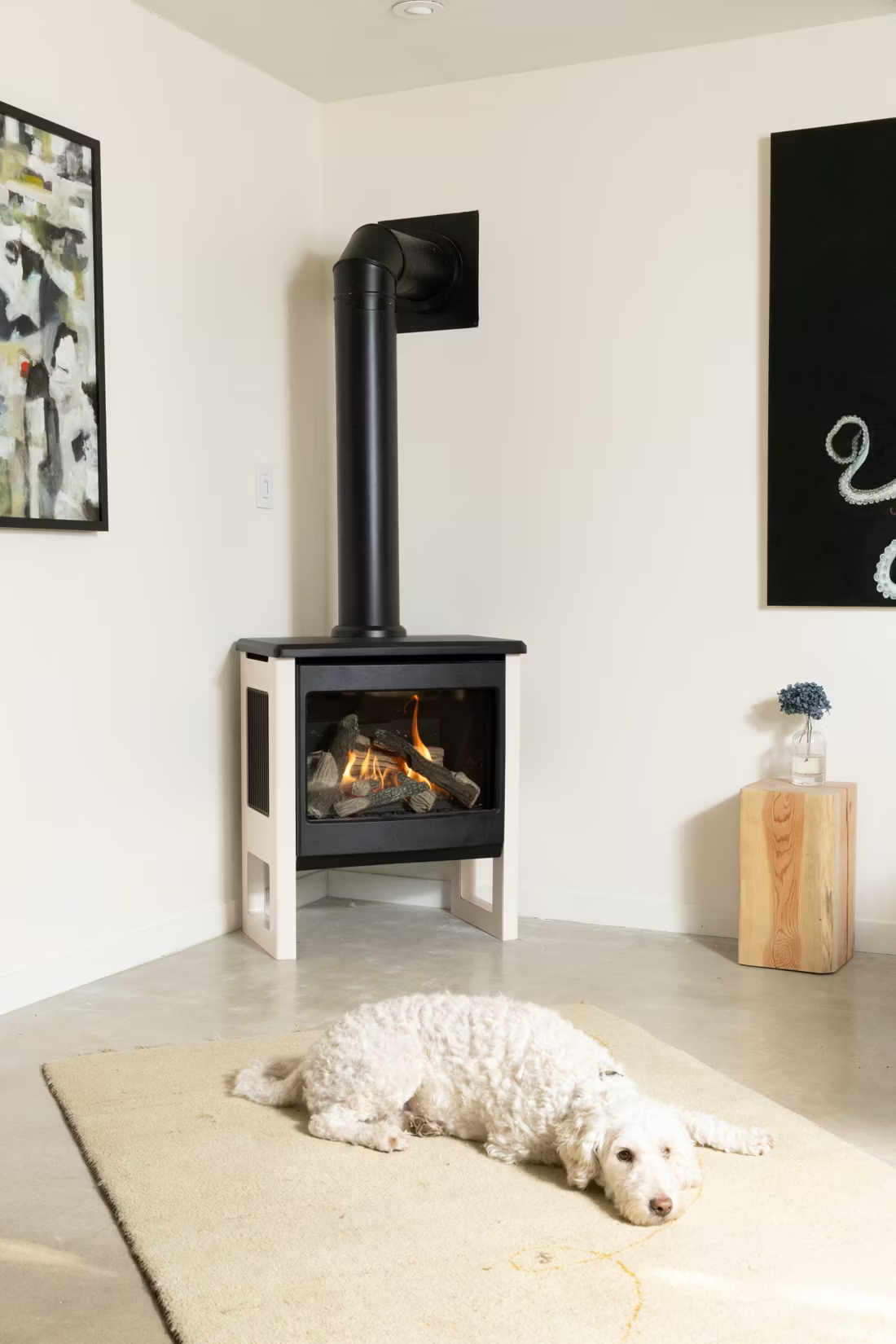
A gas fireplace is a fully built-in unit framed into a wall—common in Arlington's newer condo buildings and remodels where there's no existing masonry to work with. A gas insert fits into an existing masonry firebox, which is the typical path for the county's older brick colonials and bungalows. A gas stove is a freestanding unit that sits on the floor, which works well in a den or basement where you want heat without cutting into a wall. Condo owners should also confirm with their building or HOA which venting types are permitted before choosing a unit.
Do I need a permit to install a gas fireplace in Arlington?
Yes—Arlington County's Department of Community Planning, Housing and Development (CPHD) requires both a building permit and a mechanical/gas permit for new gas fireplace installations, and the gas line work must be done by a licensed gas fitter. Most local installers handle this paperwork as part of the job. Condo and co-op owners have an extra step: many buildings require HOA or condo board approval for venting penetrations or gas line modifications before the county permit is even filed, so it's worth checking with building management early.
What's the difference between vented and vent-free gas fireplaces?
Vented gas fireplaces (direct-vent or B-vent) draw combustion air from outside and exhaust gases back outside through a sealed system, making them the cleanest and most universally accepted option. Vent-free units burn fuel directly into the room without exterior venting; Virginia code permits them with room-sizing and oxygen-sensor requirements, but many Arlington condo and co-op buildings prohibit them outright because of shared-air and insurance concerns. For most Arlington homes and virtually all multi-unit buildings, a direct-vent unit is the practical and recommended choice—ask your local dealer to confirm what your building or HOA allows before you commit to a model.
How often should my gas fireplace be serviced?
An annual inspection is recommended for any gas fireplace or insert. A technician checks the burner, pilot assembly, venting, and gas connections, and cleans the glass and interior—a much lighter lift than wood-stove chimney sweeping, but just as important for safety. Local gas appliance service providers in Arlington typically charge $150 to $250 for this annual visit, and it's worth scheduling before the first cold snap each fall.
Gas vs. electric—which is right for my Arlington home or condo?
Electric fireplaces need no gas line and no exterior venting, which makes them the go-to option for condo units where the building won't permit new penetrations through an exterior wall. They run on standard household current—Arlington's electric service comes from Virginia Electric and Power Co. at roughly 14 cents per kWh—and provide flame-effect ambiance with supplemental heat from a built-in resistance element. Gas fireplaces cost more to install but deliver noticeably higher heat output, which matters more in Arlington's older, larger colonials than in a well-insulated high-rise unit. If your building allows venting, gas is generally the better long-term heat source; if it doesn't, electric is often the only realistic path.
Is my gas fireplace wasting gas?
If it was installed more than 15 years ago, probably. Older gas fireplaces keep a standing pilot light burning all the time, and that little flame can cost a couple hundred dollars a year. Newer models use pilot-on-demand ignition—the pilot lights only when you use the fireplace and goes out when you turn it off.
What's the difference between an insert and a zero-clearance fireplace?
An insert is a fireplace that slides into a pre-existing wood-burning fireplace—if you don't have one, there's nothing to insert it into. A zero-clearance fireplace is built into a framed wall, which makes it the answer for remodels and new construction. Simple test: existing masonry fireplace means insert; blank or framed wall means zero-clearance.
Can I install a fireplace myself?
If you're putting a fire in your house on purpose, it's best to work with an expert. Unless you're genuinely experienced in framing, gas line, vent pipe, and the national code on clearances to combustibles, have a professional do it—and ideally the same company that sells you the fireplace, so warranty, service, and liability all live under one roof.
How much should I budget for a fireplace?
For an average home—covering the fireplace, the vent pipe, and basic installation—a budget between $3,900 and $5,500 gives you a lot of options across wood, gas, and pellet. By the time you add finish work, gas line, and electrical, the average complete installation lands between $5,000 and $12,000 all-in. In a remodel or new build, a good rule is to put about 2.5% of the total project cost toward the fireplace.
Nearby Dealers
Hearth shops serving Arlington and the surrounding area. Every listing shows whether it is a WhyFire partner, a dealer we have verified as authorized for the brands we recommend, or a local business carrying hearth products. No manufacturer pays for placement. How we verify dealers →
Cyprus Air, Indoor Comfort
Capitol Chimney Service
Cyprus Air
Costello's Hearth & Spa - Rockville
Chimney.com
Aspen Green Gasworks
Genesis Chimney Services
Nova Fireplace And Stove
Lawn & Leisure
Homeliving Fireplaces
Belair Engineering & Service Co, Inc
Tri-County Hearth & Patio
The Fireplace Shop
Masters Pellet Stoves
Superior Fireplaces - La Plata
Fireside Hearth & Home - Manassas
Chelsea's Chimney
Deckscapes Of Virginia
Find your gas fireplace in Arlington.
Tell us a bit about your home or condo and we'll match you with the right gas fireplace, insert, or stove—and connect you with a trusted local dealer.
Find Your Fireplace →