
Real fireplace warmth, no chimney required.
Appomattox County's mix of historic farmhouses and newer homes doesn't always have a flue or gas line to work with—electric fireplaces solve that. Find the right unit for your room and connect with a trusted local dealer.
Every Project Starts From One of These Five Situations
The heat upgrade that skips the flue entirely.
Appomattox County is small and rural—around 2,200 people in and near the town itself, with the rest of the county spread across farmland and woodlots that stretch toward the George Washington & Jefferson National Forest. Winters here sit in Climate Zone 4A, with an average low around 27°F and a moderate winter heating season overall—cold enough to matter, but far short of what a mountain or northern-plains town deals with. That moderate profile is exactly why electric fireplaces make sense for a lot of local homes: you're rarely trying to heat an entire farmhouse through a January cold snap, you're topping off a room.
A lot of Appomattox County housing stock is older—frame farmhouses, historic homes near the Courthouse village, and additions that were never built with a chimney in mind. Retrofitting a flue for wood or running a new gas line in those situations gets expensive fast, and can mean cutting into walls you'd rather leave alone. An electric fireplace or insert plugs into existing wiring (or a single new circuit for larger built-ins), heats the room you're actually sitting in, and adds real ambiance without smoke, ash, or venting. It's also a common choice for the double-wides and manufactured homes found throughout the county, where a masonry chimney was never in the plan to begin with.
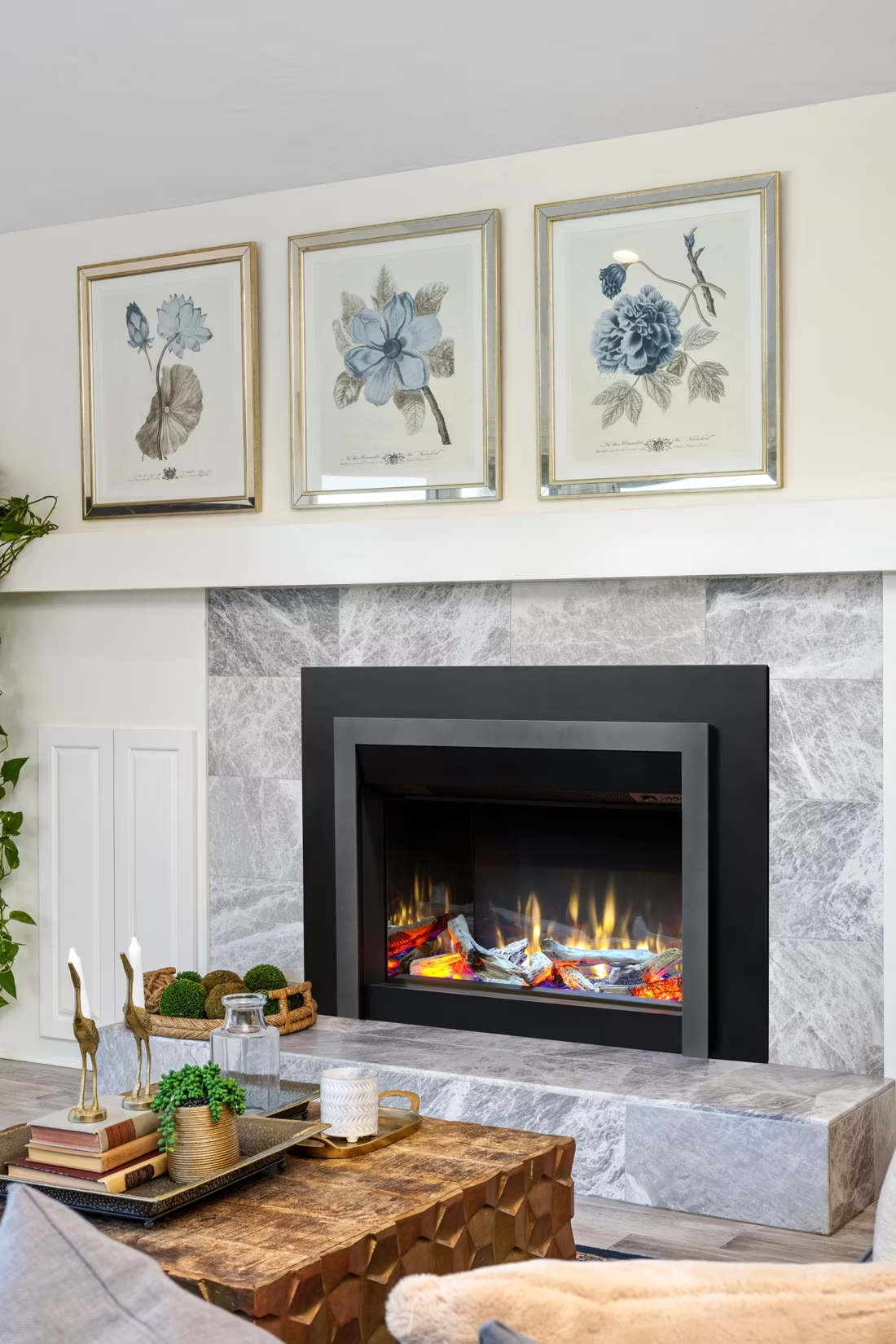
Three steps. No salesperson until you're ready.
Tell us about your project
Your zip code, your situation, and the fuel you're leaning toward—or let the answers point you to one.
See what's actually available
The brands dealers within 100 miles genuinely carry—real options, never a catalog mirage.
Get your dealer & Project Guide
A trusted local dealer, plus the free Project Guide & Parts List that names every component of the job.
Frequently Asked Questions
How much does an electric fireplace installation cost in Appomattox County?
Plug-in electric inserts and freestanding stoves typically run $400 to $1,200 for the unit, and most homeowners can set one up in an existing opening in an afternoon without hiring anyone. Larger built-in electric fireplaces that need their own dedicated 120V or 240V circuit run higher once you add a licensed electrician—usually $800 to $2,500 total depending on how far the new circuit has to run. Because there's no chimney, gas line, or masonry work involved, electric installs in Appomattox County are consistently the least expensive and least disruptive fireplace option, especially for older farmhouses and additions.
Do I need a permit to install an electric fireplace in Appomattox County?
In most cases, no. A plug-in electric fireplace or insert that uses an existing outlet doesn't require a building permit. If you're adding a built-in unit that needs a new dedicated circuit, that electrical work typically requires a permit through Appomattox County's building department, and should be pulled by whoever runs the wiring. This is a much lighter permitting lift than wood or gas installs, which is one of the reasons electric is popular for quick upgrades in the county's older housing stock.
Is an electric fireplace a good fit for a historic home near Appomattox Court House?
Often, yes. Many homes in and around the Courthouse village and surrounding rural roads predate central heating systems and were never built with a masonry chimney positioned where you'd want a fireplace today. An electric insert or built-in unit adds fireplace warmth and appearance without cutting into original walls, adding a flue, or altering the historic exterior—which matters if your home falls inside any local historic overlay or is simply old enough that you'd rather not touch the structure. Local dealers can walk through mantel and surround options that match a period home's look.
Will an electric fireplace actually heat my room, or is it just for looks?
Most electric fireplaces put out real, usable heat—typically 4,000 to 5,000 BTUs, enough to noticeably warm a single room of 400 square feet or so, which covers a living room or bedroom in a typical Appomattox County home. Given the county's moderate winters—average lows around 27°F and a winter heating season that's moderate rather than severe—an electric unit works well as supplemental heat for the room you're actually using, letting you turn down the central thermostat elsewhere. It's not designed to replace a furnace or heat pump for the whole house, but for zone heating on a cold evening, it does real work.
Electric vs. wood—which makes more sense for my home?
Wood heat still has a strong following in Appomattox County—oak, hickory, and maple are the common local species, and cutting permits through the George Washington & Jefferson National Forest run about $20 per cord during the May-to-October season. For homeowners with land, a chimney already in place, and a willingness to handle firewood, wood remains an efficient way to heat through the winter and keeps working during a power outage. Electric can't do that—it needs the grid running—but it wins on convenience: no wood to split or stack, no ash, no chimney to maintain, and it can go into rooms and additions where a flue was never an option. A lot of county homes end up with both: wood as the primary or backup heat source, electric for a den, bedroom, or finished basement.
Electric vs. gas—which is the better fit?
Much of rural Appomattox County runs on propane rather than piped natural gas, which means a gas fireplace usually means a tank, a delivery contract, and gas line work to the fireplace location. Electric skips all of that—no tank, no fuel deliveries, no combustion byproducts to vent. What you give up is total BTU output and the flame-and-heat performance of gas during extended outages. For a supplemental heat source in a specific room, especially in a home without existing propane service, electric is usually the simpler and cheaper path. For whole-room primary heat in a home already running propane appliances, gas is worth a look too.
What happens to my electric fireplace during a power outage?
It stops working—electric fireplaces have no independent fuel source and go dark the moment the grid drops. That matters in a rural county like Appomattox, where storm-related outages can stretch for hours or longer. If backup heat during outages is a real concern for your household, pair an electric fireplace (for everyday convenience and ambiance) with a wood stove or a small generator for outage coverage, rather than relying on electric alone as your only heat source.
How much does it cost to run an electric fireplace day to day?
Most electric fireplaces draw around 1,500 watts on the heat setting, which works out to roughly 15 cents an hour of heated operation at typical Southside Electric Cooperative residential rates—a few dollars for an evening of use. Running the flame effect alone, without heat, uses only a fraction of that. Compared to running central heat to warm a whole house for the sake of one occupied room, an electric fireplace is usually the cheaper way to stay comfortable in the space you're actually using.
Where can I find a dealer who installs electric fireplaces near Appomattox County?
Given the county's small population, most residents end up working with hearth dealers based in Lynchburg or other nearby towns who service Appomattox County on installation calls. A good local dealer will look at your existing electrical panel, the room you want to heat, and whether you want a plug-in insert or a built-in unit tied into a new circuit, then recommend a model and handle any electrical work. Working with a dealer rather than a big-box return counter also means someone stands behind the install if something needs adjusting after the fact.
Can I put a TV above my fireplace?
Yes—with an asterisk. Fireplaces are hot and TVs don't like heat. Either put a mantel between them to deflect rising warmth, or choose a fireplace with heat-management technology that creates a cool zone on the wall above—the wall stays around 125 degrees, barely warm, while the room still gets full heat. If you like clean lines and don't want a mantel, heat management is the answer.
Do electric fireplaces actually produce heat?
Yes—most put out around 4,800–5,000 BTUs from a standard outlet, which comfortably warms a bedroom, office, or den as a comfort-zone heater. What they won't do is carry a whole house the way wood, gas, or pellet can. Think of electric as ambiance-first with honest supplemental heat: flames on with no heat in July, flames plus warmth in January.
Can a fireplace actually lower my heating bill?
Yes—by creating a comfort zone. A furnace heats every square foot of the house just to warm the one room you're in; a gas fireplace on low burns roughly a sixth of the gas a typical furnace does. Set the furnace around 55–60 degrees as a baseline, then heat the rooms your family actually uses. Families who heat this way commonly save $20–$60 a month.
Can I install a fireplace myself?
If you're putting a fire in your house on purpose, it's best to work with an expert. Unless you're genuinely experienced in framing, gas line, vent pipe, and the national code on clearances to combustibles, have a professional do it—and ideally the same company that sells you the fireplace, so warranty, service, and liability all live under one roof.
Stove and Fireplace Dealers in Appomattox County
Listings include WhyFire partner dealers, dealers we have verified as authorized for the brands we recommend, and established local businesses that carry hearth products. Every listing shows which one it is. The ones marked Preferred run on WhyFire's software, so they can show you real pricing and book your appointment right here. No manufacturer pays for placement. How we verify dealers →
AquaPros Pools & Spas, Inc.
Foster Fuels - Rustburg
Taylor Brothers
Francis Oil And Propane
The Fireplace Shop
Foster Fuels - Forest
Find your electric fireplace in Appomattox County.
Tell us about your room and your home, and we'll match you with a trusted local dealer and send over a free Project Guide & Parts List—the exact parts, including any wiring needs, for your electric fireplace project in Appomattox County.
Find Your Fireplace →