
Find the right gas fireplace for your Washington County home.
Mild winters and Dominion Energy service across St. George, Hurricane, and Santa Clara make gas one of the easiest heat upgrades in Washington County. I'll match you with a trusted local dealer who can size the unit and pull the permit.
Every Project Starts From One of These Five Situations
Zone heat that fits a mild-winter climate.
Washington County sits in climate zone 3B, with an average winter low around 28°F and a fairly light winter heating load overall—a fraction of what a place like Bozeman, Montana sees. That's not a climate that demands a whole-house wood-burning setup for survival; it's a climate where a single well-placed gas fireplace or insert can comfortably handle the cool desert nights from December through February in St. George, Hurricane, Ivins, and Santa Clara without ever needing kindling or a wood pile.
Dominion Energy provides natural gas service across most of the developed parts of the county, which makes direct-vent gas fireplaces and inserts a straightforward retrofit for existing masonry fireplaces or a clean addition to new construction in the county's fast-growing subdivisions. For homes outside the natural gas footprint—some of the more rural stretches toward Enterprise or the outlying areas near the Dixie National Forest boundary—propane fills the gap with the same equipment options. Either way, a properly sized gas unit gives you instant, thermostat-controlled heat for a living room or great room, without the smoke concerns that come up during regional wildfire season.
Three steps. No salesperson until you're ready.
Tell us about your project
Your zip code, your situation, and the fuel you're leaning toward—or let the answers point you to one.
See what's actually available
The brands dealers within 100 miles genuinely carry—real options, never a catalog mirage.
Get your dealer & Project Guide
A trusted local dealer, plus the free Project Guide & Parts List that names every component of the job.
Frequently Asked Questions
How much does a gas fireplace installation cost in Washington County?
Most gas fireplace and insert installations in Washington County run in the range that's typical for direct-vent equipment statewide: roughly $4,000 to $9,000 depending on whether you're converting an existing masonry fireplace, running new gas line, or installing in new construction. Conversions into an existing chimney using a stainless liner tend to land on the lower end, since the venting path is already there. New builds in the newer St. George and Washington City subdivisions, where gas line and framing work is done at rough-in, often come in lower still because it's bundled with construction. A local dealer will give you a firm number after seeing your home and your gas service situation.
Can I convert my existing wood fireplace to gas?
Yes, and it's a common upgrade in Washington County's older St. George and Hurricane neighborhoods where homes were built with a traditional masonry fireplace. A gas insert goes into the existing firebox and vents through a stainless liner run inside your current chimney. If you already have natural gas from Dominion Energy nearby—say, a gas water heater or range—extending a line to the fireplace is usually simple. If you're outside the gas service footprint, the same insert works on propane with a tank setup. Either path keeps the look of your original fireplace while eliminating ash, smoke, and wood handling.
Do I need natural gas, or can I use propane?
Either works, and the choice mostly comes down to where you live. Dominion Energy serves natural gas throughout most of St. George, Washington City, Hurricane, and the more established parts of the county, so if you're already on the gas grid, adding a fireplace is a straightforward tie-in. Out toward the county's rural edges, near Enterprise or the areas bordering the Dixie National Forest, propane is the standard fallback—the same gas fireplaces and inserts run on propane with a different orifice and a tank installation. A local dealer will confirm what's available at your address before recommending equipment.
Will my gas fireplace still work if the power goes out?
Most direct-vent gas fireplaces sold today use IPI (intermittent pilot ignition) with a battery backup, so the unit still lights and runs during a power outage—you just need to keep fresh batteries in the compartment. Valor is a notable exception worth asking about: their units generate their own electricity from the pilot's thermocouple, so there's no battery to remember at all. Power outages are less of a driving concern in Washington County than in colder, storm-prone climates, but it's still a reasonable question to ask your dealer, especially if you're relying on the fireplace as your only heat source in a room during a summer monsoon-related outage.
What's the difference between a gas fireplace, gas insert, and gas stove?
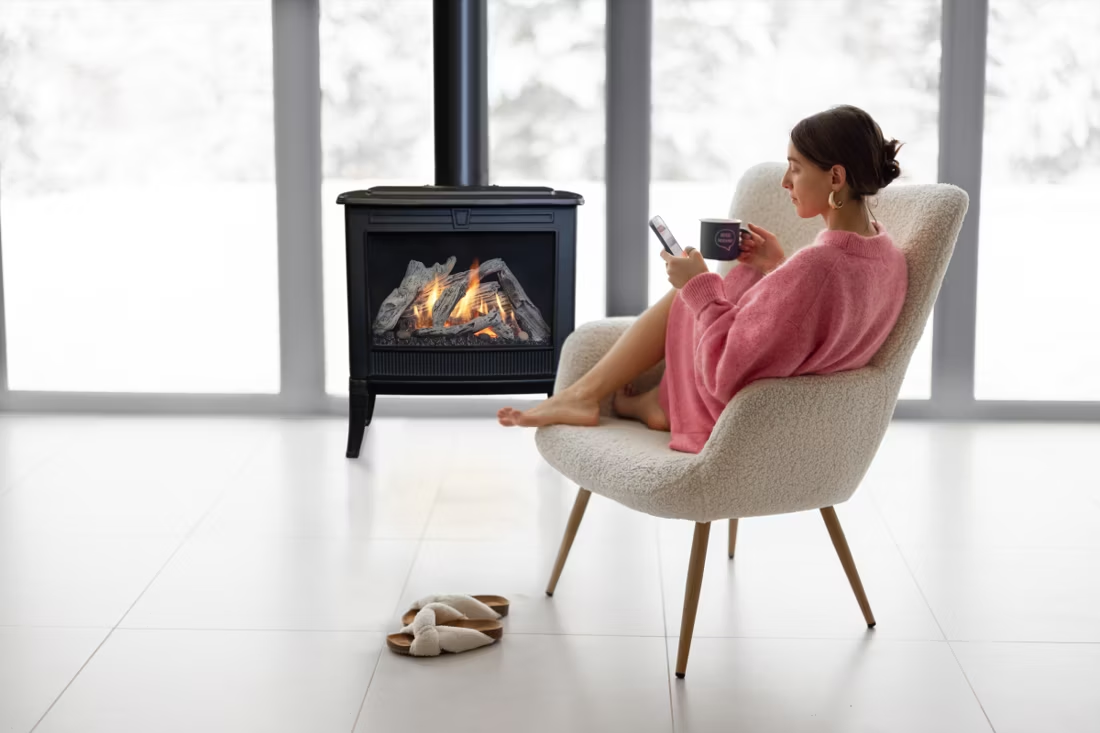
A gas fireplace is a fully built-in unit, framed into a wall—the right choice for new construction or a remodel in one of the county's newer developments. A gas insert drops into an existing masonry firebox and uses the current chimney as its vent path, which is the more common retrofit for older St. George and Hurricane homes. A gas stove is a freestanding cast-iron or steel unit that sits on the floor like a wood stove but runs on gas—a good fit for a room without an existing fireplace opening. Most Washington County homeowners with an older fireplace go with an insert; those building new typically choose a built-in fireplace.
Do I need a permit to install a gas fireplace in Washington County?
Yes. New gas fireplace installations require both a building permit and a gas line permit, and the gas line work has to be done by a licensed gas-fitter. Most established hearth dealers in the county coordinate all of this—the permit, the gas line, and the final inspection—so you're not left managing separate trades. It's one of the reasons working with a certified local installer rather than a handyman matters for gas work specifically: a botched gas connection is a safety issue, not just a cosmetic one.
What's the difference between vented and vent-free gas fireplaces?
Vented (direct-vent) units draw combustion air from outside and exhaust the byproducts back outside through a sealed pipe—they're the standard, code-approved choice in nearly every situation. Vent-free units burn gas directly into the room air, which makes installation simpler since there's no venting to run, but they release some water vapor and combustion byproducts into your living space and come with strict room-size and ventilation rules. Vent-free units are legal in Utah, and some Washington County homeowners use them in small dens or rooms without an existing flue, but direct-vent remains the more common and more broadly recommended option for a primary living space. Ask your dealer to walk through both if you're deciding.
How often should a gas fireplace be serviced?
Plan on an annual inspection—a technician checks the burner, pilot assembly, venting, and gas connections, and cleans the glass and interior. It's a much lighter lift than chimney sweeping on a wood system, but it matters just as much for safety, particularly on units that see daily use through the county's cooler months from November through February. Local hearth and gas service providers typically charge somewhere in the $150 to $250 range for this visit.
Gas vs. wood—which makes more sense for a Washington County home?
Wood is still workable here—pinyon, juniper, and aspen are the common local species, and cutting permits through the Dixie National Forest run $5 to $20 per cord during the May-through-October season—but with only a fairly light winter heating load overall, most homes don't need wood as a primary heat source the way a colder climate like Fargo, North Dakota would. Gas tends to be the more practical choice for daily-use zone heating in a St. George or Hurricane living room: instant on-off, no ash or smoke, and no concern about adding to wildfire-season air quality issues. Some homeowners still keep a wood stove or fireplace for ambiance or backup, but for most of the county, gas covers the everyday need.
Can I put a TV above my fireplace?
Yes—with an asterisk. Fireplaces are hot and TVs don't like heat. Either put a mantel between them to deflect rising warmth, or choose a fireplace with heat-management technology that creates a cool zone on the wall above—the wall stays around 125 degrees, barely warm, while the room still gets full heat. If you like clean lines and don't want a mantel, heat management is the answer.
What do I measure to size a fireplace insert?
Four numbers tell you what fits: the front width, the front height, the back width, and the overall depth of your existing fireplace opening. Grab a tape measure, jot those down, and snap a photo of the wall—those two things do more to move your project forward than anything else you can do today.
Can a fireplace actually lower my heating bill?
Yes—by creating a comfort zone. A furnace heats every square foot of the house just to warm the one room you're in; a gas fireplace on low burns roughly a sixth of the gas a typical furnace does. Set the furnace around 55–60 degrees as a baseline, then heat the rooms your family actually uses. Families who heat this way commonly save $20–$60 a month.
Does a fireplace add value to my home?
On average, a fireplace adds back to the home about the same amount you spent installing it. Add the monthly savings from heating the rooms you actually use instead of the whole house—often hundreds of dollars a year—and the value case is strong before you even count what a fire does for how your family uses the room.
Stove and Fireplace Dealers in Washington County
Listings include WhyFire partner dealers, dealers we have verified as authorized for the brands we recommend, and established local businesses that carry hearth products. Every listing shows which one it is. The ones marked Preferred run on WhyFire's software, so they can show you real pricing and book your appointment right here. No manufacturer pays for placement. How we verify dealers →
Carpet Plus
Dixie Fireplace
Custom Fireplace
Get your Washington County gas fireplace Project Guide.
Tell me a bit about your home and gas service situation, and I'll send a free Project Guide & Parts List—the right unit, the vent kit, and a match with a trusted local dealer who can install it correctly.
Find Your Fireplace →