
Instant heat, zero venting, for Heber Valley and beyond.
From Heber City condos to Midway cabins and the fast-growing Jordanelle shoreline, electric fireplaces bring real ambiance and zone heat to homes where a chimney or gas line isn't in the cards. Find the right unit and connect with a trusted local dealer.
Every Project Starts From One of These Five Situations
The easiest add-on heat for a fast-growing valley.
Wasatch County sits in the Heber Valley at roughly 5,600 feet, ringed by the Wasatch Range, with winter lows averaging 12°F and a long, hard heating season lasting nearly seven months a year—a climate that has long depended on wood cut from pinyon, juniper, and aspen stands under Uinta-Wasatch-Cache and Manti-La Sal National Forest permits. But the county has changed fast. New construction around Jordanelle Reservoir, Midway's second-home market, and condo development near Deer Valley East have brought a lot of homes where venting a wood or gas appliance through a shared wall or HOA-restricted roofline simply isn't practical.
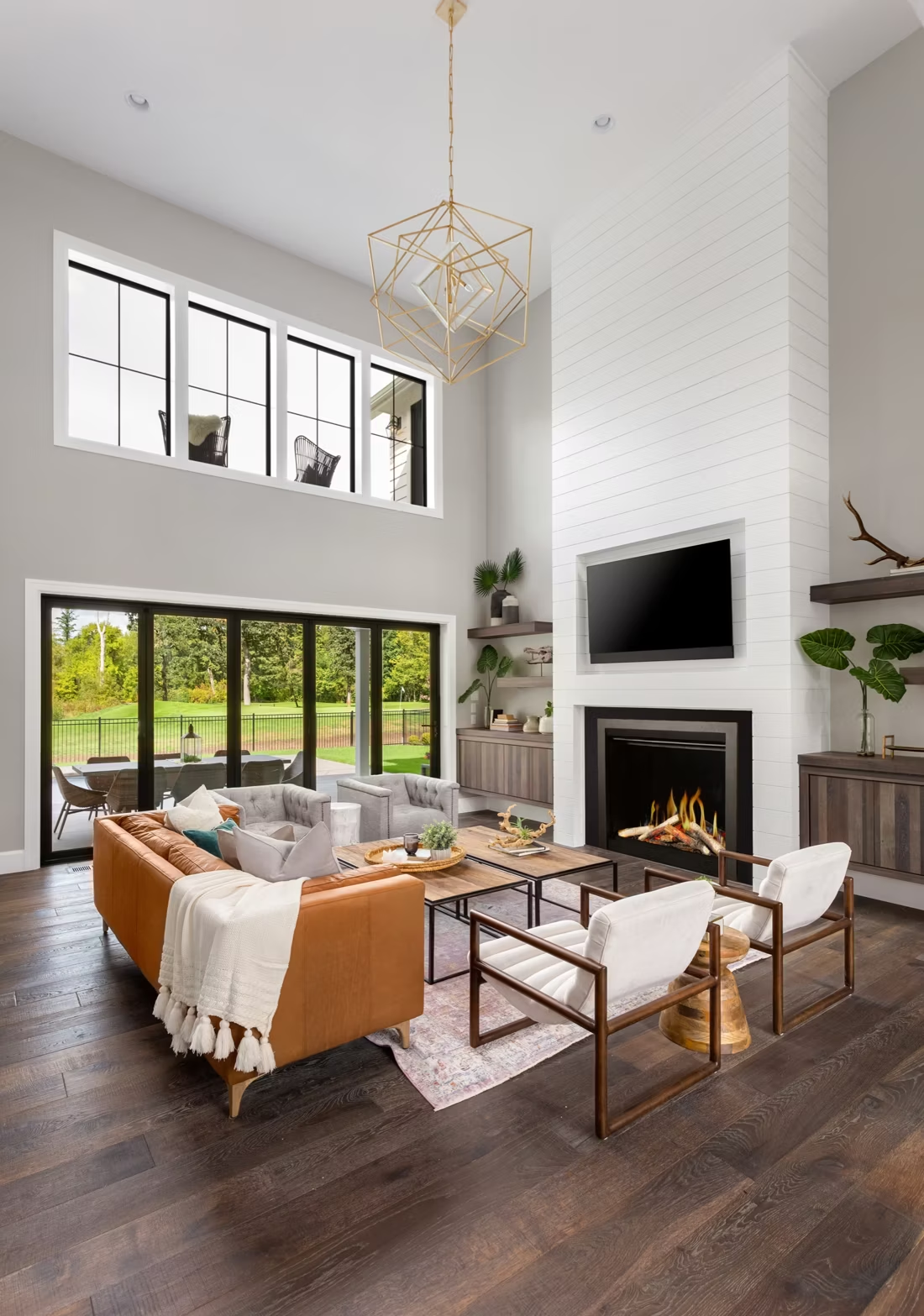
That's where electric fireplaces earn their place here. They install with no chimney, no gas line, and no combustion byproducts—which also matters given the wildfire smoke that regularly settles into the valley in late summer and early fall, when burning anything else isn't appealing anyway. A plug-in insert or wall-mounted unit can go into a basement rec room in Heber City, a bedroom in a Midway cabin, or a Jordanelle-area rental in an afternoon, with power drawn from a standard outlet or a dedicated circuit run by an electrician. It's not a whole-home heat source at 12°F, but as ambiance and zone heat in the rooms that need it, it's the lowest-friction option in the county.
Three steps. No salesperson until you're ready.
Tell us about your project
Your zip code, your situation, and the fuel you're leaning toward—or let the answers point you to one.
See what's actually available
The brands dealers within 100 miles genuinely carry—real options, never a catalog mirage.
Get your dealer & Project Guide
A trusted local dealer, plus the free Project Guide & Parts List that names every component of the job.
Frequently Asked Questions
How much does an electric fireplace installation cost in Wasatch County?
Plug-in electric inserts and mantel units typically run $300 to $1,200 installed, since they need nothing more than a standard 120V outlet—no permit, no venting, no gas line. Built-in, hardwired units with custom trim and a dedicated 240V circuit run higher, generally $1,500 to $4,000, and that work should go through a licensed electrician who pulls an electrical permit through the Wasatch County Building Department. Costs edge up for Jordanelle-area and Deer Valley East builds where framing crews and finish carpenters are already booked out on new construction.
Will an electric fireplace actually heat my house at Heber Valley's winter lows?
Not on its own. Most electric fireplaces top out around 1,500 watts, which is enough to noticeably warm a single room—a bedroom, a basement family room, a home office—but it won't carry a whole house when overnight temperatures drop into the low teens across the valley floor. Think of it as supplemental zone heat layered on top of your furnace, not a replacement for it. If you're looking for genuine off-grid backup heat during a winter storm, a wood stove burning local pinyon or aspen is the better fit; electric is about ambiance and comfort, not emergency heat.
Do I need a permit to install an electric fireplace in Wasatch County?
A simple plug-in unit that uses an existing outlet doesn't require a permit. A hardwired built-in that needs a new dedicated circuit does—that work falls under the Wasatch County Building Department's electrical permit process, and it needs to be pulled by a licensed electrician regardless of whether you're in Heber City, unincorporated county land, or a newer Jordanelle-area subdivision. Most local dealers who sell built-in units either employ a licensed electrician or coordinate directly with one as part of the install.
Are electric fireplaces a good fit for condos and vacation rentals near Jordanelle?
Yes—this is one of the most common installs in that part of the county. HOAs around Jordanelle Reservoir and Deer Valley East frequently restrict exterior venting and chimney modifications, and electric fireplaces sidestep that entirely. Property managers running short-term rentals also like that there's no ash, no gas line liability, and no chimney to inspect between guest turnovers. A wall-mounted or built-in unit gives a rental listing the visual warmth buyers and renters expect without touching the building envelope.
Does wildfire smoke in Wasatch County affect the case for electric heat?
It's part of the appeal. Late-summer and early-fall wildfire smoke settles into the Heber Valley some years, and on those days adding more particulate matter—from a wood stove or even an open gas flame—isn't something most homeowners want to do. Electric fireplaces produce zero combustion byproducts, so they're the one hearth option that never competes with local air quality, whether the concern is wildfire smoke in September or a static winter inversion in January.
What's the difference between an electric insert, a mantel unit, and a built-in?
An electric insert drops into an existing fireplace opening—a common upgrade for an old, rarely-used masonry firebox in an older Heber City or Charleston home. A mantel unit is a freestanding electric fireplace with its own surround, useful in a room with no existing fireplace at all. A built-in is designed to be framed into a wall during construction or remodel, which is increasingly common in new Jordanelle-corridor homes where the fireplace is planned into the wall from the start rather than retrofitted later. Local dealers can walk through which fits your framing and finish plans.
Will my electric fireplace work if the power goes out?
No—unlike a wood stove, an electric fireplace is fully dependent on grid power, so it goes dark the moment the power does. Rocky Mountain Power service is generally reliable through the valley, but outlying areas like Wallsburg and Daniel can see longer outage windows after heavy snow than Heber City proper. If backup heat during a storm is a real concern for your property, pair an electric fireplace for daily ambiance with a wood stove or a propane appliance rated for off-grid use.
Electric vs. gas fireplace—which makes more sense for my Wasatch County home?
Gas delivers more heat output and a more traditional flame, but it requires a gas line—propane in most of the county outside city gas service—plus venting and a larger up-front install cost. Electric skips all of that: no gas line, no venting, and a fraction of the install cost, but less real heat and a flame that's simulated rather than actual combustion. For a primary living space where you want the appliance to meaningfully offset the furnace, gas is usually the better call. For a bedroom, basement, or rental unit where ambiance and low install cost matter more than raw BTUs, electric wins.
Electric vs. pellet stove—which is right for me?
Pellet stoves burn compressed wood pellets (regional brands like Bear Mountain and Lignetics are widely stocked) and put out real, substantial heat—enough to serve as a primary heat source in a well-insulated Heber Valley home. But they need a vent through an exterior wall or roof, a hopper to refill, and ash to manage. Electric fireplaces need none of that, but top out at a fraction of the heat output. If you're heating a whole space through a Wasatch County winter, pellet is the workhorse. If you want a clean, low-maintenance focal point in a room that already has adequate heat, electric is the simpler choice.
Can I put a TV above my fireplace?
Yes—with an asterisk. Fireplaces are hot and TVs don't like heat. Either put a mantel between them to deflect rising warmth, or choose a fireplace with heat-management technology that creates a cool zone on the wall above—the wall stays around 125 degrees, barely warm, while the room still gets full heat. If you like clean lines and don't want a mantel, heat management is the answer.
Does an electric fireplace need a vent or chimney?
No—that's its superpower. An electric fireplace needs a wall and an outlet, period. No vent pipe, no gas line, no clearances to design around, which is why it works in bedrooms, offices, apartments, and walls where venting a gas or wood unit would be impractical or impossible. Installation is typically the simplest and least expensive of any fireplace type.
Does a fireplace add value to my home?
On average, a fireplace adds back to the home about the same amount you spent installing it. Add the monthly savings from heating the rooms you actually use instead of the whole house—often hundreds of dollars a year—and the value case is strong before you even count what a fire does for how your family uses the room.
Can I install a fireplace myself?
If you're putting a fire in your house on purpose, it's best to work with an expert. Unless you're genuinely experienced in framing, gas line, vent pipe, and the national code on clearances to combustibles, have a professional do it—and ideally the same company that sells you the fireplace, so warranty, service, and liability all live under one roof.
Stove and Fireplace Dealers in Wasatch County
Listings include WhyFire partner dealers, dealers we have verified as authorized for the brands we recommend, and established local businesses that carry hearth products. Every listing shows which one it is. The ones marked Preferred run on WhyFire's software, so they can show you real pricing and book your appointment right here. No manufacturer pays for placement. How we verify dealers →
All Hours Plumbing, Drain Cleaning, Heating & Cooling
Uintah Fireplace And Design
Delta Stone Products, Inc.
First Class Fireplace
Modscapes Outdoor Living
Modscapes Modern Living
Standard Plumbing
Find your electric fireplace in Wasatch County.
Tell us a bit about your home—Heber City condo, Midway cabin, or a new build near Jordanelle—and we'll match you with a trusted local dealer and send over a free Project Guide & Parts List: the right unit, the circuit requirements, and what it'll take to get it installed correctly.
Find Your Fireplace →