
Steady Heat for Uinta Basin Winters.
Vernal winters push well below freezing for months at a time. Find the right gas fireplace or insert for your home, and get matched with a trusted local dealer.
Every Project Starts From One of These Five Situations
Natural gas heat runs deep here—literally.
Vernal sits at 5,357 feet in the Uinta Basin, where a climate zone 6B winter means an average low around 10°F and roughly 7,115 heating degree days a year—long, cold stretches made worse by the temperature inversions that settle over the Basin floor. Uintah County isn't just cold, it's also one of Utah's most productive natural gas fields, so gas heat here isn't an imported convenience—it's tied to the local economy and the pipeline running right through the county.
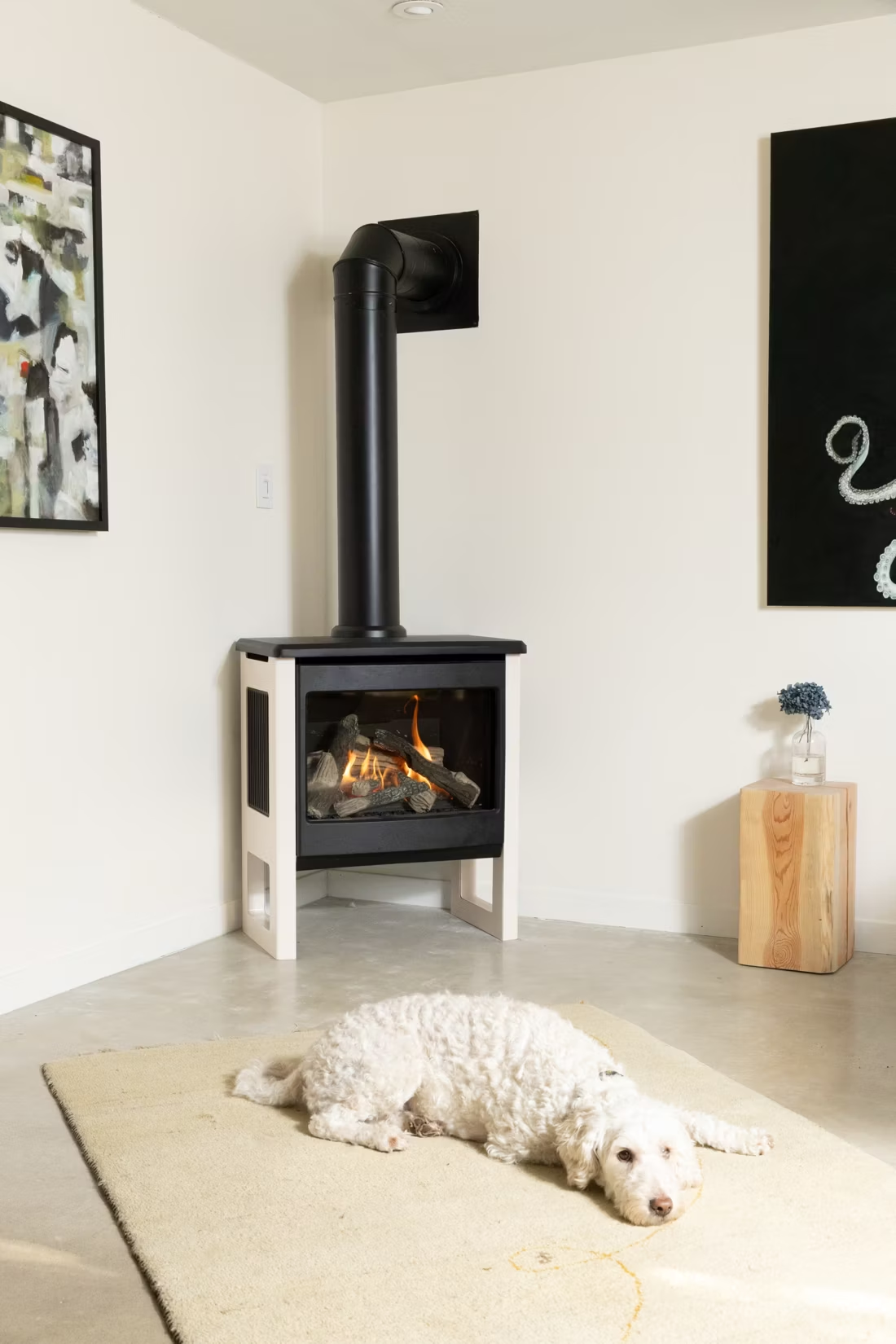
That combination shapes what's actually installed in Vernal homes. Inside city limits, gas fireplaces and inserts are the default supplemental heat source, prized for instant warmth on a sub-zero night without adding to wildfire-season smoke loads that already strain regional air quality. Wood-burning is fairly rare in town—it shows up more on rural properties and cabins near Ashley National Forest, where pinyon, juniper, and aspen are cut under Forest Service permits. For most Vernal households, a properly sized, direct-vent gas fireplace or insert, installed by someone who knows the local gas infrastructure, is the practical answer to a punishing heating season.
Three steps. No salesperson until you're ready.
Tell us about your project
Your zip code, your situation, and the fuel you're leaning toward—or let the answers point you to one.
See what's actually available
The brands dealers within 100 miles genuinely carry—real options, never a catalog mirage.
Get your dealer & Project Guide
A trusted local dealer, plus the free Project Guide & Parts List that names every component of the job.
Frequently Asked Questions
How much does a gas fireplace installation cost in Vernal?
Most gas fireplace and insert installations in Vernal run in the $3,500 to $9,500 range, depending on the unit, the venting path, and whether a new gas line is needed. A direct-vent insert into an existing masonry fireplace with gas already run to the room sits toward the low end. New construction, or adding a fireplace to a room with no existing gas service—meaning a line has to be trenched from the meter—pushes toward the higher end. Given how much of Uintah County's economy runs on natural gas, local plumbers and hearth dealers are well versed in gas line work, which tends to keep that part of the job straightforward. Get a firm number from a local dealer after an in-home look at your space.
Can I convert an existing wood-burning fireplace to gas in Vernal?
Yes, and it's a common upgrade in Vernal's older homes. A gas insert drops into your existing masonry fireplace opening and vents through the same chimney with a stainless liner, so you keep the look of the fireplace while gaining instant, thermostat-controlled heat. Wood-burning is fairly rare inside Vernal city limits—most in-town homes lean on gas because it's abundant and reliable here in the Basin—so converting an old wood fireplace to gas is usually less about saving money on fuel and more about convenience: no hauling pinyon or juniper rounds, no ash, no worrying about burn restrictions during wildfire smoke season.
Is natural gas available throughout Vernal, or do I need propane?
Most homes within Vernal city limits have natural gas service through Dominion Energy Utah, the utility serving this part of the state—not surprising given Uintah County produces more natural gas than almost any other county in Utah. Outside city limits and in more spread-out parts of the Basin, propane is common instead, delivered and stored in a tank on the property. Either fuel works with the large majority of gas fireplace models; your installer just sets the correct orifice and regulator for whichever one you have.
Will my gas fireplace still work if the power goes out?
Most gas fireplaces with an IPI (intermittent pilot ignition) system run on a battery backup that kicks in automatically when the power drops, so the fireplace lights and runs normally even without electricity. That matters in Vernal—Moon Lake Electric Association serves a lot of spread-out rural line, and a hard winter storm across the Basin can knock out power for hours at a stretch. Valor fireplaces go a step further: their pilot assembly generates its own electricity through a thermocouple, so there's no battery to remember at all. Ask your local dealer which ignition system is built into any unit you're considering.
What's the difference between a gas fireplace, gas insert, and gas stove?
A gas fireplace is a built-in unit framed into a wall—the right call for new construction or a full remodel. A gas insert slides into an existing masonry fireplace opening and uses the existing chimney as its vent, which is the most common route for Vernal's older in-town homes that already have a fireplace. A gas stove is a freestanding cabinet-style unit that sits out from the wall, similar in footprint to a wood stove, and works well in a room with no existing fireplace or chimney at all. A local dealer can walk your space and tell you which fits.
Do I need a permit for a gas fireplace installation in Vernal?
Yes. The Uintah County Building Department requires a building permit for gas fireplace installations, and any new or modified gas line has to be run by a licensed gas-fitter and inspected. Most hearth dealers working in Vernal handle the permitting and inspection scheduling as part of the installation, so you're not left coordinating separate trades yourself.
Should I get a vented or vent-free gas fireplace?
Vented (direct-vent) gas fireplaces pull combustion air from outside and exhaust it back outside through a sealed pipe—they're the standard choice and what most local dealers install by default. Vent-free units burn without any outside venting at all, which is legal in Utah but comes with strict room-sizing rules and a required oxygen depletion sensor. Given how long and cold Vernal's heating season runs—over 7,000 heating degree days most winters—a direct-vent unit that doesn't add moisture or combustion byproducts to a tightly sealed home is usually the better long-term choice.
How often does a gas fireplace need to be serviced?
Plan on an annual inspection, ideally before the heating season starts each fall. A technician checks the burner, pilot assembly, gas connections, and venting, and cleans the glass and interior. It's a lighter lift than chimney-sweeping a wood stove, but skipping it is how pilot and ignition problems go unnoticed until the coldest night of the year—not when you want to discover your fireplace won't light.
Gas vs. wood vs. electric—what's actually common in Vernal?
Gas is the default in Vernal, and it's not close—natural gas is produced right here in the Uinta Basin, service is reliable in town, and it heats a home through a long, cold season (winter lows average around 10°F) without any wood handling. Wood stoves are uncommon inside city limits; you'll find them more on rural properties and cabins near Ashley National Forest, where pinyon, juniper, and aspen are cut under Forest Service permits running $5 to $20 per cord between May and October, mostly for people who want backup heat off the grid. Electric fireplaces are a smaller niche too, mostly used for ambiance or zone heat in a bedroom or den—Moon Lake Electric's residential rate runs under 9 cents per kWh, among the cheaper rates in the state, but electric units still can't match a gas fireplace's real heat output through a Basin winter.
Why is a fireplace insert so efficient?
An insert does two things: it seals the chimney completely, so you stop losing air you already paid to heat, and it radiates warmth into the room through the firebox and glass. Most add a heat-exchange fan that pulls cool room air underneath, wraps it around the hot firebox, and pushes it back out warm. Your home is more efficient before you've even lit the first fire.
Why is my open fireplace making my house colder?
Open fireplaces suck—literally. As the fire burns, it consumes air your furnace already paid to heat and pulls it out through the chimney, so the house is actually colder after the fire goes out than before you lit it. An insert fixes this: it seals the chimney, puts fixed glass across the front, and turns that hole in your house into a real heat source.
Can I install a fireplace myself?
If you're putting a fire in your house on purpose, it's best to work with an expert. Unless you're genuinely experienced in framing, gas line, vent pipe, and the national code on clearances to combustibles, have a professional do it—and ideally the same company that sells you the fireplace, so warranty, service, and liability all live under one roof.
How much should I budget for a fireplace?
For an average home—covering the fireplace, the vent pipe, and basic installation—a budget between $3,900 and $5,500 gives you a lot of options across wood, gas, and pellet. By the time you add finish work, gas line, and electrical, the average complete installation lands between $5,000 and $12,000 all-in. In a remodel or new build, a good rule is to put about 2.5% of the total project cost toward the fireplace.
Nearby Dealers
Hearth shops serving Vernal and the surrounding area. Every listing shows whether it is a WhyFire partner, a dealer we have verified as authorized for the brands we recommend, or a local business carrying hearth products. No manufacturer pays for placement. How we verify dealers →
Bridger Valley Propane
Benedict Trading Company
Window & Door Store
A. Johnson Heating & Air
Howa And Sons
Southwest Plumbing Supply - Price
Find your gas fireplace in Vernal.
Tell us about your home and heating goals, and we'll match you with a trusted local dealer and send over a free Project Guide & Parts List—the exact parts, vent kit, and installer recommendation for your Vernal gas fireplace project.
Find Your Fireplace →