
Dependable heat for Tooele Valley winters.
Clean, instant heat for a valley where winter lows average 21°F and wood-burning options are limited. Find the right gas unit and connect with a trusted local dealer.
Every Project Starts From One of These Five Situations
Instant heat built for the valley's temperature inversions.
Tooele sits at nearly 4,900 feet in a valley pinched between the Oquirrh Mountains and the Stansbury Range, with a winter heating load a bit higher than Denver's—though not as brutal as Bismarck, ND—and winter lows that settle around 21°F. That combination of elevation and topography means cold air and haze tend to sit in the valley rather than clear out, and area residents are used to keeping an eye on air quality, especially during wildfire smoke season.
Wood stoves and pellet inserts are genuinely uncommon here—most Tooele homeowners heat with gas or electric rather than cordwood, even though pinyon, juniper, and aspen grow in the surrounding hills and Forest Service permits are available through the Uinta-Wasatch-Cache National Forest. Natural gas service through Dominion Energy covers most of the city, and a direct-vent gas fireplace or insert delivers real, on-demand heat without adding anything to the valley's air. For homes off the gas main in outlying parts of Tooele County, propane fills the same role.
Three steps. No salesperson until you're ready.
Tell us about your project
Your zip code, your situation, and the fuel you're leaning toward—or let the answers point you to one.
See what's actually available
The brands dealers within 100 miles genuinely carry—real options, never a catalog mirage.
Get your dealer & Project Guide
A trusted local dealer, plus the free Project Guide & Parts List that names every component of the job.
Frequently Asked Questions
How much does a gas fireplace installation cost in Tooele?
Most gas fireplace and insert installations in Tooele run somewhere between $4,000 and $10,500, depending on the unit, the venting run, and whether a new gas line needs to be pulled from the meter. A direct-vent insert going into an existing masonry fireplace with gas already nearby lands on the lower end. New construction, remodels, or homes needing a gas line extension from the street or meter push toward the higher end. Because Tooele sits above 4,900 feet, some appliances also need an altitude-derated orifice kit to burn correctly—a good local installer will already have this built into the quote.
Can I convert an existing wood-burning fireplace to gas?
Yes, and it's a common request in Tooele's older neighborhoods, where mid-century homes near downtown often have an original masonry fireplace that rarely gets used for real wood fires anymore. A direct-vent gas insert typically drops into that opening using a stainless liner run up the existing chimney, and the job usually runs $4,500 to $9,000 depending on the insert and whether new gas piping is needed. It keeps the look of the original hearth while giving you heat you can actually use on a regular basis without hauling or storing firewood.
Do I need natural gas, or can I use propane instead?
Either works, and which one applies mostly comes down to where in Tooele County you live. Dominion Energy serves natural gas throughout most of the city of Tooele, so if your water heater or range already runs on gas, adding a fireplace is straightforward. Out toward Stansbury Park, Erda, Rush Valley, and other unincorporated parts of the county, propane is more common, supplied by tank and refilled by a local propane provider. Nearly every gas fireplace on the market today can be set up for either fuel—your installer just configures the correct orifice and regulator.
Will a gas fireplace still work if the power goes out?
Most will, with the right ignition system. Units with an IPI (intermittent pilot ignition) system run on a small battery backup—typically AA batteries—that kicks in automatically and lets the fireplace light on demand even with no grid power. Valor units go a step further: their pilot generates its own electricity through the thermocouple, so there's no battery to remember to replace. In Tooele, where high-wind events and winter storms occasionally knock out power for a few hours at a time, that battery-free reliability is worth asking about when you're comparing models.
What's the difference between a gas fireplace, gas insert, and gas stove?
A gas fireplace is a fully built-in unit framed into a wall—the standard choice for new construction or a full remodel. A gas insert is sized to slide into an existing masonry firebox, sealing it up and using the existing chimney as the vent path. A gas stove is a freestanding, cast-iron-style unit that sits on the floor like a wood stove but runs on gas. For the many Tooele homes with an older open masonry fireplace that barely gets used, an insert is usually the easiest upgrade. New homes or additions without an existing chimney are better suited to a built-in fireplace or a freestanding stove.
Do I need a permit to install a gas fireplace in Tooele?
Yes. New gas fireplace installations require a building permit and gas piping permit through either the Tooele City Building Department or the Tooele County Building Department, depending on whether the property is inside city limits. The gas line connection itself has to be done by a licensed gas fitter, which is one reason it pays to use an established hearth dealer—they coordinate the gas work, venting, and inspection instead of leaving you to manage separate trades.
What's the difference between vented and vent-free gas fireplaces?
Vented (direct-vent) gas fireplaces pull combustion air from outside and exhaust the byproducts back outside through a sealed pipe. Vent-free units burn directly into the room air with no outside venting at all, which makes them more efficient on paper but releases some moisture and combustion byproducts indoors, and Utah restricts room size and requires an oxygen depletion sensor on any vent-free unit sold. Given Tooele's inversion-prone valley air, most local dealers steer homeowners toward direct-vent units—they heat well, look the same as a vent-free unit, and don't add anything to indoor or outdoor air. One more local wrinkle: at Tooele's elevation, some models need an altitude-adjusted orifice to burn at the correct BTU output, so make sure whoever installs yours accounts for that.
How often does a gas fireplace need to be serviced?
Plan on an annual inspection, ideally in late summer or early fall before you start using it regularly through the winter. A technician checks the burner, pilot assembly, venting, and gas connections, and cleans the glass and interior. It's a lighter lift than sweeping a wood chimney but just as important for safety—most local service providers charge in the $150 to $250 range for a standard annual visit.
Why gas instead of wood or pellet in Tooele?
Wood and pellet appliances are genuinely rare here—most Tooele homes simply aren't set up for them, and the valley's tendency to trap smoke during wildfire season makes gas the more practical everyday choice for most households, even though pinyon, juniper, and aspen are available under Forest Service cutting permits ($5 to $20 per cord, May through October) up in the Uinta-Wasatch-Cache National Forest. Pellet stoves from regional brands like Bear Mountain or Lignetics show up occasionally in outlying homes, but they're the exception rather than the rule. Gas gives you instant, thermostatically controlled heat with no smoke, no ash, and no permit needed to burn it—which is why it's the standard hearth choice across Tooele.
Are new gas fireplaces really better than old ones?
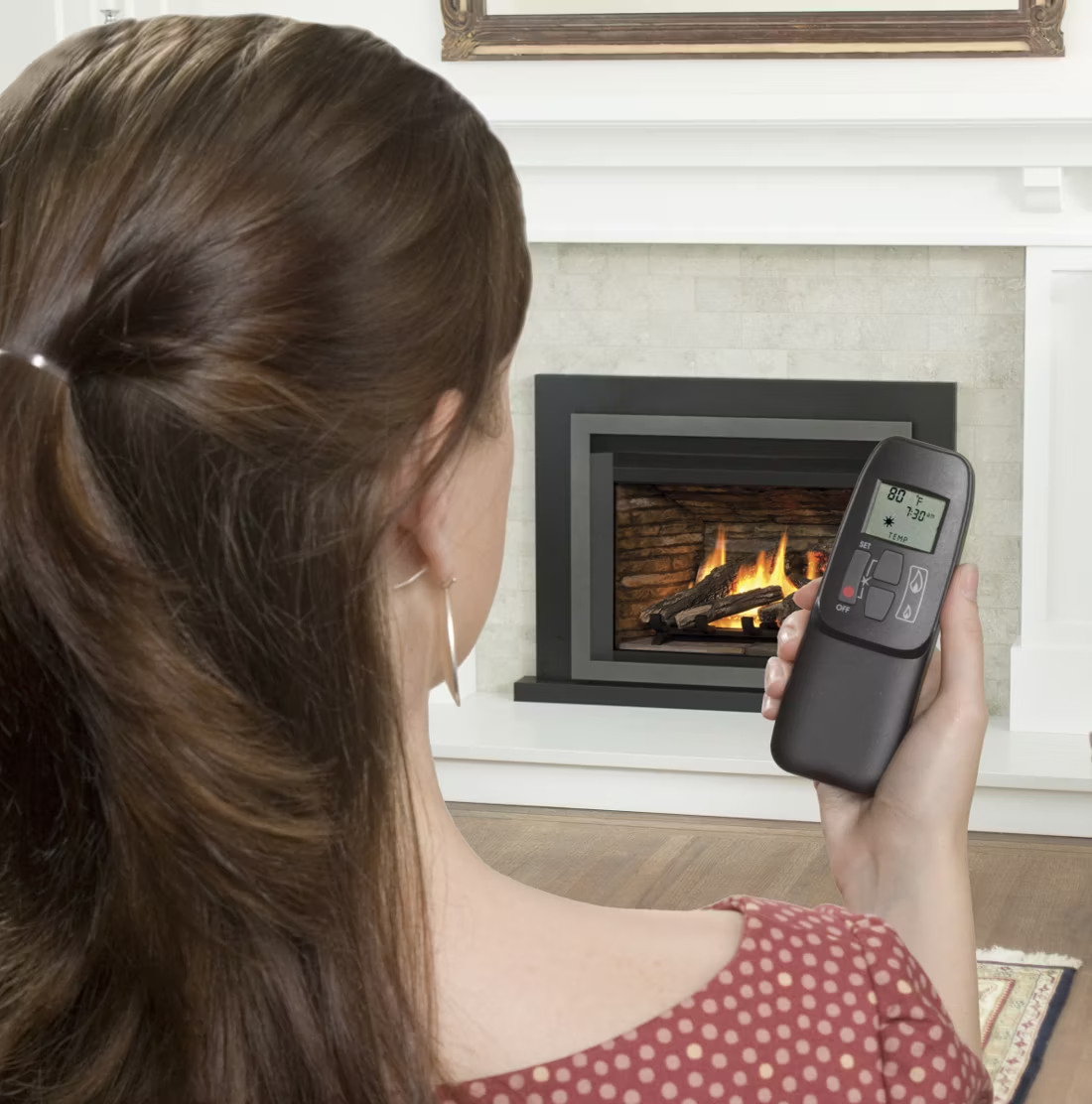
Two ways, and they're both big. Looks: modern gas fireplaces are realistic enough that it's hard to believe they aren't burning wood. Cost: old units burn a standing pilot year-round (roughly $200 a year), while new ones use pilot-on-demand ignition and modern burners. Add remote controls and thermostat operation, and the day-to-day experience isn't close.
Can I put a TV above my fireplace?
Yes—with an asterisk. Fireplaces are hot and TVs don't like heat. Either put a mantel between them to deflect rising warmth, or choose a fireplace with heat-management technology that creates a cool zone on the wall above—the wall stays around 125 degrees, barely warm, while the room still gets full heat. If you like clean lines and don't want a mantel, heat management is the answer.
How much should I budget for a fireplace?
For an average home—covering the fireplace, the vent pipe, and basic installation—a budget between $3,900 and $5,500 gives you a lot of options across wood, gas, and pellet. By the time you add finish work, gas line, and electrical, the average complete installation lands between $5,000 and $12,000 all-in. In a remodel or new build, a good rule is to put about 2.5% of the total project cost toward the fireplace.
Can I install a fireplace myself?
If you're putting a fire in your house on purpose, it's best to work with an expert. Unless you're genuinely experienced in framing, gas line, vent pipe, and the national code on clearances to combustibles, have a professional do it—and ideally the same company that sells you the fireplace, so warranty, service, and liability all live under one roof.
Nearby Dealers
Hearth shops serving Tooele and the surrounding area.
Find your gas fireplace in Tooele.
Tell us about your home and we'll put together a free Project Guide & Parts List—the right gas fireplace or insert, the vent kit it needs, and a trusted local Tooele dealer to install it.
Find Your Fireplace →