
Electric Heat That Skips Syracuse's Inversion Smog.
No chimney, no combustion, no contribution to Davis County's winter inversion. Find the right electric fireplace or insert and connect with a trusted local dealer.
Every Project Starts From One of These Five Situations
The cleanest heat option along the Wasatch Front.
Syracuse sits along the eastern shore of the Great Salt Lake at about 4,271 feet, where winter lows average 21°F and the city has a long, solidly cold heating season—a real but not extreme cold, nowhere near a Fargo ND deep freeze, but enough that supplemental heat matters most rooms of the year. What makes Syracuse's winters distinct isn't just the cold, it's the air: Davis County sits inside the Wasatch Front's notorious winter inversion bowl, where cold air traps particulate pollution against the valley floor for days at a time. Utah's Division of Air Quality regularly calls mandatory wood-burning restrictions on red and orange air days along the Front, which is a big part of why wood and pellet appliances see little demand here even though pinyon, juniper, and aspen grow just up the bench in the Uinta-Wasatch-Cache National Forest.
Electric fireplaces sidestep that problem entirely—zero combustion, zero particulate output, and nothing to restrict on a bad-air day. They also sidestep the venting and gas-line work that gas units require, which keeps most installs simple: a dedicated outlet or circuit, a mantel or wall opening, and you're done. With PacifiCorp (Rocky Mountain Power) billing residential customers around $0.1252 per kWh, running a 1,500-watt electric fireplace as zone heat in a bedroom or family room costs roughly 19 cents an hour—cheap enough to run daily without a second thought about the utility bill.
Three steps. No salesperson until you're ready.
Tell us about your project
Your zip code, your situation, and the fuel you're leaning toward—or let the answers point you to one.
See what's actually available
The brands dealers within 100 miles genuinely carry—real options, never a catalog mirage.
Get your dealer & Project Guide
A trusted local dealer, plus the free Project Guide & Parts List that names every component of the job.
Frequently Asked Questions
How much does an electric fireplace installation cost in Syracuse?
Plug-in electric fireplaces and small mantel units typically run $400 to $1,200 installed, since most just need a standard 120-volt outlet that's often already in place. Larger built-in units—recessed into a wall, framed into new construction, or paired with custom cabinetry—run higher, generally $1,200 to $2,500, especially if a dedicated 240-volt circuit needs to be added by a licensed electrician. Because there's no chimney, no venting, and no gas line involved, electric installs in Syracuse are consistently the least expensive hearth option a local dealer will quote you.
Can an electric fireplace actually heat a room in Syracuse's winters?
Most electric fireplaces are rated around 1,500 watts, which is enough to comfortably supplement heat in a 400 to 600 square foot room—a bedroom, family room, or basement—even when overnight lows hit the low 20s, which is typical for Syracuse. They're not designed to replace your furnace across a whole house through Syracuse's long, solidly cold heating season, but as targeted zone heat for the room you actually live in, they do the job well and let you turn the thermostat down elsewhere.
Do electric fireplaces help with Davis County's winter inversion problem?
Yes, directly. When a Wasatch Front temperature inversion sets in, cold air gets trapped against the valley floor and pollution—including wood smoke—has nowhere to go, which is why Utah's Division of Air Quality calls mandatory burn restrictions on red and orange air days. An electric fireplace produces zero combustion byproducts, so it keeps working exactly the same on the worst inversion day of the year, with nothing to shut off and nothing added to the air. It's one of the main reasons wood and pellet appliances see little demand in Syracuse while electric units remain a straightforward, unrestricted choice.
What's the difference between an electric fireplace, insert, and stove?
An electric fireplace is typically a built-in or wall-mounted unit, often installed into a mantel surround or a framed niche, and is the most common choice for new construction or remodels in Syracuse. An electric insert is sized to slide into an existing masonry or factory-built fireplace opening, letting you convert an old wood-burning firebox into clean, on-demand heat without touching the chimney. An electric stove is a freestanding cabinet-style unit that can go against almost any wall with just an outlet nearby—a good fit for a basement or finished garage where there's no existing fireplace opening at all.
What does it cost to run an electric fireplace with Rocky Mountain Power rates?
At PacifiCorp's residential rate of about $0.1252 per kWh, a typical 1,500-watt electric fireplace costs roughly 19 cents an hour to run on full heat, or around $4.50 for a full 24-hour day of continuous use. Most households run theirs a few hours an evening rather than around the clock, which usually lands the monthly cost well under $20 even in the coldest stretch of a Syracuse winter—a fraction of what supplemental space heating would cost with resistance heaters of similar output.
Do I need a permit to install an electric fireplace in Syracuse?
Plug-in units that use an existing standard outlet generally don't require a permit. If your installation needs a new dedicated circuit—common for larger built-in units—Davis County requires an electrical permit, and the work needs to be done by a licensed electrician regardless of whether you pull the permit yourself or have your installer handle it. There's no venting, chimney, or combustion-appliance inspection involved, which is part of why electric permitting in Syracuse is simpler and faster than it is for wood or gas installs.
Can I install an electric fireplace myself?
A plug-in mantel unit or small stove is genuinely a DIY-friendly project—set it in place, plug it into an existing outlet, and it's ready to use. Built-in units that require a new 240-volt circuit or in-wall recessing are a different story: that work should go to a licensed electrician, both for safety and because Davis County's electrical permit requires it. Local dealers can tell you which category your chosen unit falls into before you buy.
Electric vs. gas—which is right for my Syracuse home?
Gas fireplaces are common in Syracuse and deliver higher heat output along with the look and sound of a real flame, but they require venting or a direct-vent chimney chase and a gas line, which adds cost and some construction complexity. Electric fireplaces cost less to install, need no venting or gas work, and produce zero emissions—a real advantage on the Wasatch Front's inversion days—but they can't match a gas unit's raw BTU output for whole-room heating in the coldest stretches. For a primary heat source in a larger living area, gas often wins; for a bedroom, basement, or rental property where installation simplicity and clean operation matter most, electric is usually the better fit.
Why don't more Syracuse homeowners use wood or pellet stoves?
It's not that firewood isn't available—pinyon, juniper, and aspen are all cut locally under Forest Service permits ($5 to $20 per cord) through the Uinta-Wasatch-Cache National Forest during the May-to-October season. It's that Syracuse sits inside the Wasatch Front's inversion zone, where Utah's Division of Air Quality regularly restricts wood burning on red and orange air days each winter, and typical suburban lot sizes here leave little room for wood storage or a masonry chimney retrofit. Between the burn restrictions and the practical constraints of a newer subdivision home, most Syracuse homeowners land on gas or electric instead—which is also why pellet brands like Bear Mountain and Lignetics are stocked regionally but see comparatively little local demand.
Can I put a TV above my fireplace?
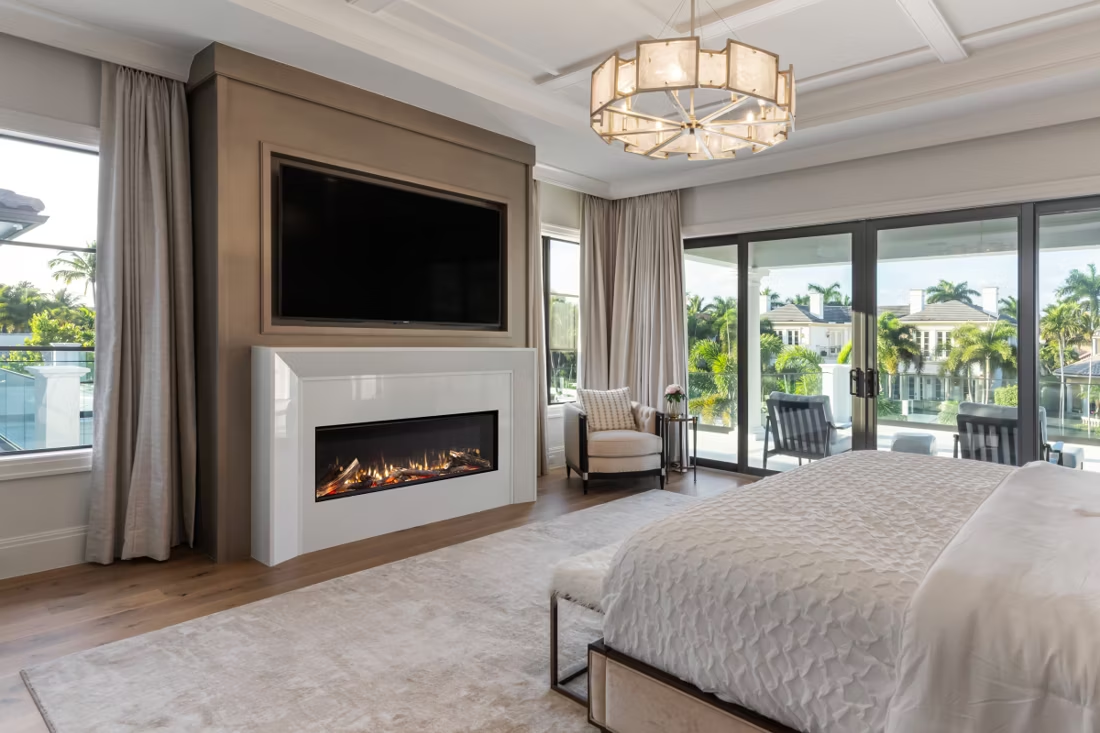
Yes—with an asterisk. Fireplaces are hot and TVs don't like heat. Either put a mantel between them to deflect rising warmth, or choose a fireplace with heat-management technology that creates a cool zone on the wall above—the wall stays around 125 degrees, barely warm, while the room still gets full heat. If you like clean lines and don't want a mantel, heat management is the answer.
What fireplace styles should I know before shopping?
Four cover most of the market: screen-front traditional (mesh front, open feel, fits craftsman homes), traditional door set (the classic look you grew up with), modern linear (wide, low, the statement piece for entertaining), and clean face contemporary (no trim—your tile or stone runs right to the fire's edge). Walk in knowing those four terms and you're ahead of most buyers.
Can a fireplace actually lower my heating bill?
Yes—by creating a comfort zone. A furnace heats every square foot of the house just to warm the one room you're in; a gas fireplace on low burns roughly a sixth of the gas a typical furnace does. Set the furnace around 55–60 degrees as a baseline, then heat the rooms your family actually uses. Families who heat this way commonly save $20–$60 a month.
How much should I budget for a fireplace?
For an average home—covering the fireplace, the vent pipe, and basic installation—a budget between $3,900 and $5,500 gives you a lot of options across wood, gas, and pellet. By the time you add finish work, gas line, and electrical, the average complete installation lands between $5,000 and $12,000 all-in. In a remodel or new build, a good rule is to put about 2.5% of the total project cost toward the fireplace.
Nearby Dealers
Hearth shops serving Syracuse and the surrounding area.
Electric Service in Syracuse
An electric fireplace's heater draws about 1,500 watts—pennies per hour at local rates.
Find your electric fireplace in Syracuse.
Tell us a bit about your home and we'll match you with the right electric fireplace, insert, or stove—plus a free Project Guide & Parts List and a trusted local dealer to install it.
Find Your Fireplace →