
Zone heat for Sevier County's cold, high-desert winters.
No chimney, no venting, no wood to split—just clean, instant heat for a bedroom, den, or add-on room in Richfield, Salina, or anywhere else in the county. Find the right unit and get matched with a trusted local dealer.
Every Project Starts From One of These Five Situations
Clean heat for high desert winters, no chimney required.
Sevier County sits in south-central Utah's high desert basin, with Richfield and Salina at roughly 5,300 feet and the Pahvant and Tushar ranges climbing well above that on either side. Winters here are long and cold—average lows around 17°F and a heating season as demanding as winters in Bismarck, ND. Wildfire smoke is also a recognized air quality concern in this part of Utah during late summer and fall, which is one reason more homeowners are looking at electric fireplaces: they add zero combustion byproducts to the air, indoors or out, at a time of year when regional air quality is already strained.
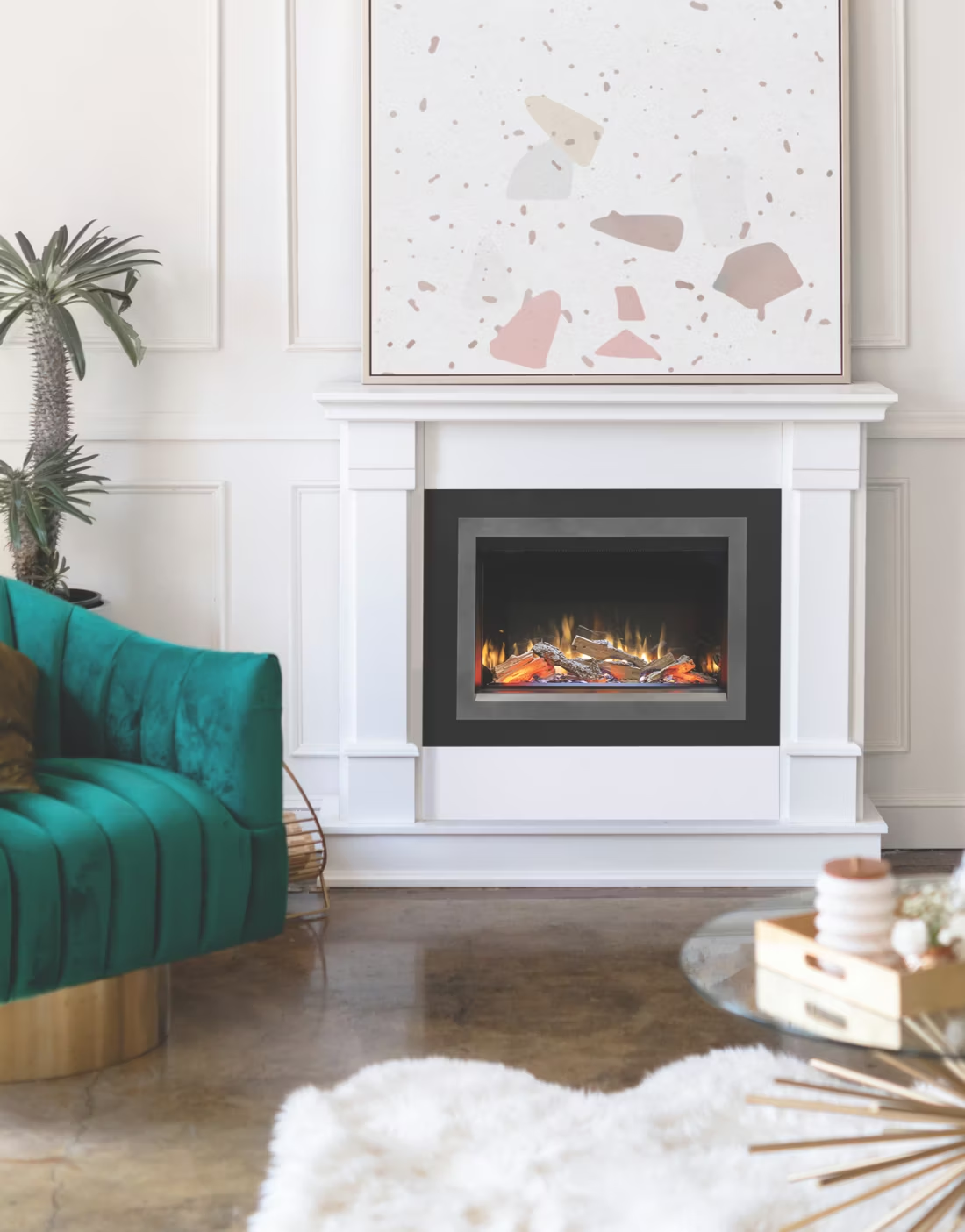
Most Sevier County homes still rely on a central furnace or wood stove as primary heat, and that's not changing. Where electric fireplaces earn their place is as targeted zone heat—a plug-in or hardwired unit in a bedroom, a converted den, a mobile or manufactured home addition, or a room that the main HVAC system never quite reaches. There's no masonry, no flue, and in most cases no permit for a simple plug-in unit. Rocky Mountain Power serves most of the county's electrical grid, and a licensed local electrician can have a hardwired built-in unit running in an afternoon. The tradeoff worth understanding up front: unlike a wood stove, most electric fireplaces go dark the moment the power does, which matters in a rural county where winter storms occasionally take down feeder lines.
Three steps. No salesperson until you're ready.
Tell us about your project
Your zip code, your situation, and the fuel you're leaning toward—or let the answers point you to one.
See what's actually available
The brands dealers within 100 miles genuinely carry—real options, never a catalog mirage.
Get your dealer & Project Guide
A trusted local dealer, plus the free Project Guide & Parts List that names every component of the job.
Frequently Asked Questions
How much does an electric fireplace installation cost in Sevier County?
A basic plug-in electric fireplace insert or freestanding unit typically runs $400 to $1,200 installed in Sevier County, since there's no venting or masonry work involved—most of that cost is the unit itself plus a licensed electrician's time if it needs a dedicated circuit. Built-in wall units with custom mantel surrounds or linear designs can run higher, toward $2,000 to $2,500, especially in newer construction around Richfield where homeowners want the unit finished into cabinetry. Converting an old wood-burning firebox to hold an electric log insert is usually on the lower end, since the existing masonry surround stays in place and only the insert and outlet need attention.
What size electric fireplace do I need for my Sevier County home?
Most electric fireplace heaters are rated at 750 to 1,500 watts, which covers a single room of roughly 400 square feet under normal conditions. In Sevier County's older farmhouses and drafty ranch-style homes—common outside Richfield and Salina—that supplemental heat rating matters more than it would in a tightly built newer home, since single-pane windows and uninsulated additions lose heat fast on the county's coldest nights. If you're after ambiance more than actual heat output, some models let you run the flame effect with the heater off, which is worth asking about if you're placing a unit in a room that already has adequate central heat.
Where can I find electric fireplace installers near me in Sevier County?
For plug-in units, no specialized installer is required—the unit simply needs an outlet. For hardwired built-ins or larger wall units, you'll want a licensed electrician, and several hearth retailers serving Richfield and Salina either employ one directly or work with a local electrical contractor on installs. Unlike wood or gas installations, there's no masonry or venting trade involved, which keeps electric projects simpler and generally faster to schedule—often within a week or two rather than waiting on a chimney sweep or gas-fitter.
What's the difference between an electric fireplace, insert, and stove?
An electric fireplace is typically a wall-mounted or built-in unit designed to look like a framed hearth, often with a linear or traditional firebox appearance. An electric insert is sized to slide into an existing masonry fireplace opening, which is common in older Sevier County homes that have a wood-burning firebox they no longer use for actual burning. An electric stove is a freestanding cabinet-style unit that mimics a wood stove's footprint but plugs into a standard outlet—a popular option for a mobile home addition or a room without an existing fireplace opening at all.
Do I need a permit to install an electric fireplace in Sevier County?
A simple plug-in electric fireplace generally doesn't require a permit since it uses an existing outlet and involves no structural or venting work. A hardwired built-in unit that requires a new dedicated circuit does typically need an electrical permit through the Sevier County Building Department, and any licensed electrician doing the work will usually pull that permit as part of the job. This is a much lighter permitting lift than wood or gas installations in the county, which require inspection of venting and clearances.
Will my electric fireplace still provide heat during a power outage?
No—this is the honest tradeoff with electric heat, and it's worth knowing before you buy. Most electric fireplaces stop producing heat the moment the power goes out, and Sevier County's rural feeder lines can go down during winter storms, particularly in outlying areas around Salina, Monroe, and Sigurd. If backup heat during an outage matters to your household, many local homeowners pair an electric fireplace for everyday convenience with a wood stove for true off-grid emergency heat—pinyon, juniper, and aspen are the common local species, and Fishlake National Forest issues personal-use cutting permits from May through October at $5 to $20 per cord for residents who want to stock their own supply.
How much does it cost to run an electric fireplace in Sevier County?
Electric heat is essentially 100% efficient at the appliance—every watt drawn becomes heat in the room, unlike combustion appliances that lose some energy up a flue. At typical Utah residential electricity rates through Rocky Mountain Power, running a 1,500-watt unit on high for several hours a day during Sevier County's coldest stretches usually adds somewhere in the range of $15 to $35 a month to a winter electric bill, depending on how many hours it runs and local rate tiers. That's a reasonable cost for supplemental zone heat in a single room, though it's not meant to replace a central furnace as primary heat for the whole house.
Electric vs. wood—which is right for my Sevier County home?
Wood offers the deepest heat output and works without electricity, which matters for the county's rural properties and the wildfire-smoke-adjacent late summers when many households still burn locally cut pinyon, juniper, or aspen for at least part of the winter. Electric offers zero indoor combustion byproducts, no chimney maintenance, no cutting or hauling firewood, and near-instant on-off convenience—which is why it's become the default choice for a bedroom or den where full-time ambiance and easy heat matter more than fuel independence. Many Sevier County homes end up with both: a wood stove or insert as the primary or backup heat source, and an electric unit in a secondary room where running a flue or gas line isn't practical.
Electric vs. gas fireplace—which should I choose?
Gas fireplaces put out significantly more heat and offer a more realistic flame, but they require either natural gas service or a propane tank, plus venting work and gas line permitting—a bigger project overall. Electric fireplaces skip all of that: no fuel line, no venting, and a much shorter path from decision to installed unit, which is why they're common in Sevier County additions, mobile homes, and rooms where running gas or a flue isn't worth the cost. If you want serious supplemental heat output for a main living space, gas is usually the better long-term investment; if you want ambiance and light heat for a bedroom or den without the added infrastructure, electric is the simpler and cheaper route.
Can I put a TV above my fireplace?
Yes—with an asterisk. Fireplaces are hot and TVs don't like heat. Either put a mantel between them to deflect rising warmth, or choose a fireplace with heat-management technology that creates a cool zone on the wall above—the wall stays around 125 degrees, barely warm, while the room still gets full heat. If you like clean lines and don't want a mantel, heat management is the answer.
Do electric fireplaces actually produce heat?
Yes—most put out around 4,800–5,000 BTUs from a standard outlet, which comfortably warms a bedroom, office, or den as a comfort-zone heater. What they won't do is carry a whole house the way wood, gas, or pellet can. Think of electric as ambiance-first with honest supplemental heat: flames on with no heat in July, flames plus warmth in January.
Does a fireplace add value to my home?
On average, a fireplace adds back to the home about the same amount you spent installing it. Add the monthly savings from heating the rooms you actually use instead of the whole house—often hundreds of dollars a year—and the value case is strong before you even count what a fire does for how your family uses the room.
What is an in-home preview and do I need one?
It's a visit where a hearth professional measures your space, confirms the model you picked actually works in your home, and walks the specs—framing, gas line, venting, finish work—before anything is ordered. Some details you just can't know until you see the house. Never make a down payment without one; it's the single most-skipped step that burns buyers.
Stove and Fireplace Dealers in Sevier County
Listings include WhyFire partner dealers, dealers we have verified as authorized for the brands we recommend, and established local businesses that carry hearth products. Every listing shows which one it is. The ones marked Preferred run on WhyFire's software, so they can show you real pricing and book your appointment right here. No manufacturer pays for placement. How we verify dealers →
Blake Electric Company
Larsen’s Ace Hardware
Peterson Refrigeration & Mechanical
Hill's Heating & Air Con
Find your electric fireplace in Sevier County.
Tell us a bit about your home and we'll match you with the right electric fireplace, insert, or stove—plus a free Project Guide & Parts List with the exact parts and a trusted local Sevier County dealer to install it.
Find Your Fireplace →