
Warm, dependable heat across Utah's largest county.
From Monticello's alpine winters to the sun-baked canyons around Bluff and Mexican Hat, San Juan County spans nearly 7,900 square miles of high desert and mountain terrain. Find the right gas fireplace or insert for your home, and get matched with a trusted local dealer who knows the difference between a Monticello install and one along the San Juan River.
Every Project Starts From One of These Five Situations
Reliable heat when the nearest town is an hour away.
San Juan County is Utah's largest county by area—nearly 7,900 square miles—and one of its least populated, with just over 9,100 residents spread from the 7,050-foot elevation of Monticello down to the 4,000-foot canyon floor near Bluff and Mexican Hat. Winters bring an average low near 22°F and a heating season on par with places like Flagstaff, AZ countywide, though the swing between the Abajo Mountains and the San Juan River corridor means a Monticello winter looks nothing like one in Bluff. Add periodic wildfire smoke from summer fire season, and it's easy to see why more homeowners here are shifting away from open wood-burning toward sealed, direct-vent gas units that don't add to smoke exposure and don't require a woodpile.
Natural gas service reaches the county's two largest towns, Monticello and Blanding, through the regional utility, while most of the rest of San Juan County—Bluff, Mexican Hat, Montezuma Creek, White Mesa, and the Navajo Nation communities along Highways 191 and 163—relies on propane delivered by tank. Either fuel works well in a modern direct-vent fireplace or insert, but the choice affects your line work, tank placement, and who installs it. Find My Fireplace doesn't sell or ship anything—we match you with a trusted local dealer who already knows which fuel serves your address, and we send you a free Project Guide & Parts List so you walk into the install with the right unit, the right vent kit, and a contractor who's made this drive before.
Three steps. No salesperson until you're ready.
Tell us about your project
Your zip code, your situation, and the fuel you're leaning toward—or let the answers point you to one.
See what's actually available
The brands dealers within 100 miles genuinely carry—real options, never a catalog mirage.
Get your dealer & Project Guide
A trusted local dealer, plus the free Project Guide & Parts List that names every component of the job.
Frequently Asked Questions
How much does a gas fireplace installation cost in San Juan County?
A gas fireplace installation in San Juan County typically runs $4,000 to $9,500, depending on whether you're tying into natural gas in Monticello or Blanding, or setting up a new propane tank and line further out. A direct-vent insert into an existing masonry fireplace sits at the low end; a new propane tank installation with a long line run to a stand-alone gas fireplace lands at the high end. Because the county covers nearly 7,900 square miles, expect a modest travel charge added to estimates for installs in Bluff, Mexican Hat, or Montezuma Creek—most Monticello- and Blanding-based installers build in drive time for outlying jobs.
Can I convert my wood-burning fireplace to gas?
Yes. Many of the older brick and rock homes in Monticello and Blanding were built with a standard masonry fireplace, and converting to a gas insert with a stainless liner run up the existing chimney is one of the more common jobs local dealers handle. Expect $4,500 to $8,000 depending on whether you're on natural gas or need a propane hookup, plus whatever it takes to bring the flue up to current code. The conversion keeps your existing hearth and mantel while eliminating the pinyon and juniper woodpile.
Do I need natural gas, or is propane the standard here?
It depends on your address. Monticello and Blanding both have natural gas service through the regional utility, so if you're already running a gas furnace or water heater in town, adding a fireplace is a straightforward tie-in. Outside those two towns—Bluff, Mexican Hat, Montezuma Creek, La Sal, White Mesa, and most of the Navajo Nation land within the county—propane is the standard, delivered and stored in a tank on your property. Nearly every gas fireplace on the market can be configured for either fuel; your local dealer sets the correct orifice and regulator for whichever one serves your home.
Will a gas fireplace still work if the power goes out?
Most will, with the right ignition system. Units with intermittent pilot ignition (IPI) run on a small battery backup that keeps the fireplace lighting on demand even without utility power—worth having in a county where a downed line can mean hours, not minutes, before a crew reaches you. A handful of manufacturers, including Valor, go a step further and generate their own power through the pilot's thermocouple, so there's no battery to remember to replace. Given how spread out San Juan County is, ask your dealer specifically about the ignition system on any unit you're considering.
What's the difference between a gas fireplace, insert, and stove?
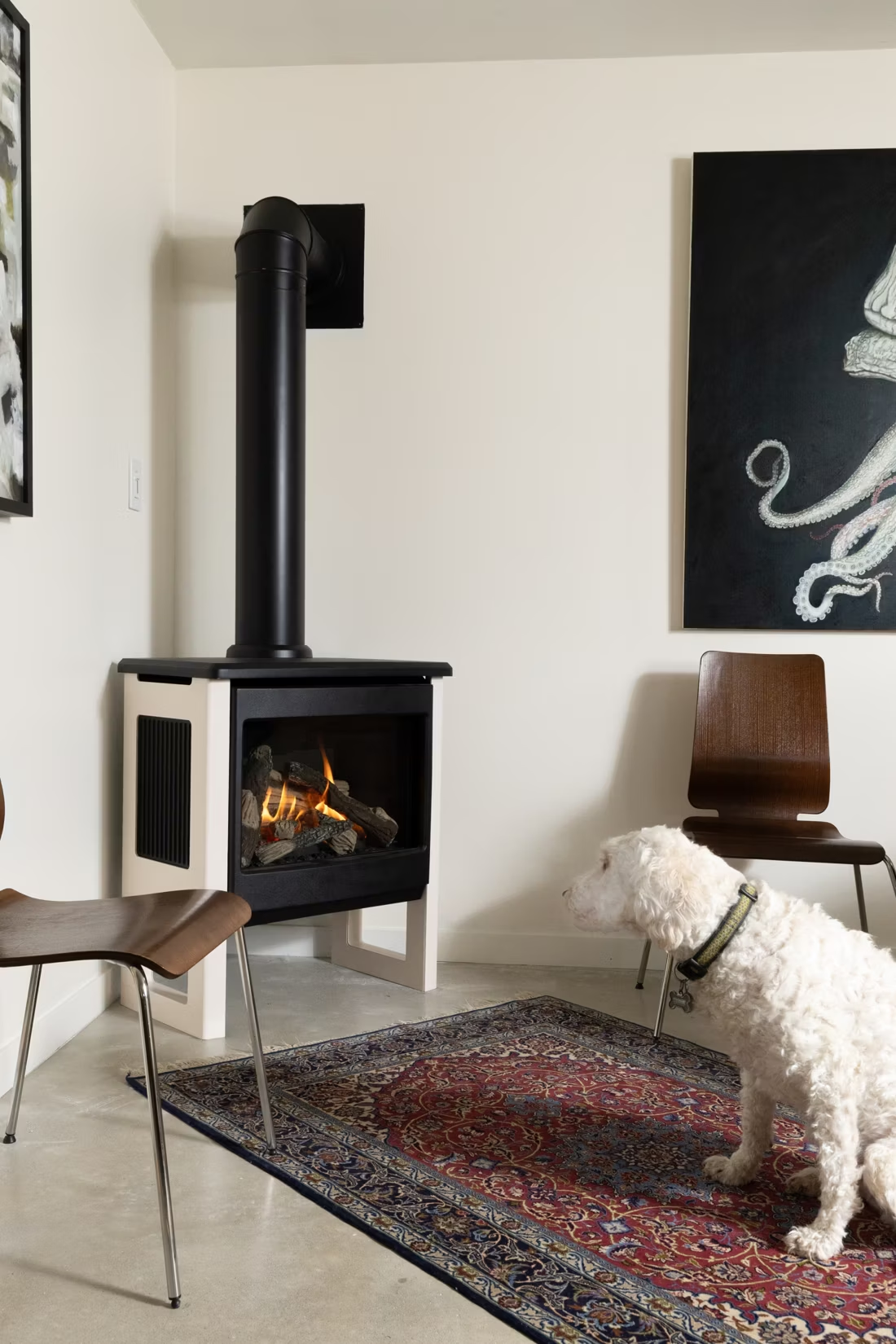
A gas fireplace is a built-in unit framed into a wall—the right call for new construction or a remodel without an existing hearth. A gas insert slides into an existing masonry fireplace opening and uses the chimney as its vent path, which fits a lot of the older Monticello and Blanding housing stock. A gas stove is a freestanding, cast-iron-look unit that sits on the floor like a wood stove but runs on gas or propane—a good option for a cabin or outbuilding near Recapture Reservoir or the Abajo Mountains that doesn't have a chimney at all. Your local dealer can walk you through which fits your existing structure.
Do I need a permit to install a gas fireplace in San Juan County?
Yes—San Juan County requires a building permit for gas fireplace installations, and any new gas or propane line needs to be run by a licensed gas-fitter. Because the county building department covers all 7,900 square miles from a single office, scheduling an inspection for a job in Bluff or Mexican Hat can take longer than one in Monticello, so build a little slack into your timeline. Dealers who install regularly in the county already know the inspection turnaround and typically handle the permit paperwork for you.
Does elevation affect how a gas fireplace performs in San Juan County?
It can. Monticello sits at roughly 7,050 feet, and appliances calibrated for sea-level combustion generally need a high-altitude orifice kit above about 4,500 to 5,000 feet to burn correctly. Blanding, at around 6,100 feet, and Monticello both fall into that range; Bluff and Mexican Hat, down near 4,000 feet, are closer to standard sea-level performance. A local dealer familiar with the county's elevation swing will order the correct kit with your unit rather than leaving you to troubleshoot it after installation.
How often does a gas fireplace need to be serviced?
An annual inspection is standard—a technician checks the burner, pilot assembly, venting, and gas connections, and cleans the glass and interior. Because certified gas hearth technicians are thin on the ground in a county this size, many San Juan County homeowners schedule service through a Monticello- or Blanding-based dealer, or a technician who covers the wider Four Corners region out of Cortez or Durango. Booking early in the fall, before the heating season starts, helps avoid the wait.
Gas vs. wood—which makes more sense in San Juan County?
Wood is deeply practical here—pinyon, juniper, and aspen are all locally available, a wood stove keeps working without electricity, and that matters on the reservation roads and remote stretches of the county where storm response can take a while. But wildfire smoke is a real seasonal concern, and hauling and storing wood isn't for everyone, especially in a second home or a property you're not at year-round. Gas gives you instant, smoke-free heat at the flip of a switch, whether you're on natural gas in Monticello or propane out toward Bluff. Plenty of local homes run both: gas for daily convenience, a wood stove or insert as backup.
Why is a fireplace insert so efficient?
An insert does two things: it seals the chimney completely, so you stop losing air you already paid to heat, and it radiates warmth into the room through the firebox and glass. Most add a heat-exchange fan that pulls cool room air underneath, wraps it around the hot firebox, and pushes it back out warm. Your home is more efficient before you've even lit the first fire.
Can I put a TV above my fireplace?
Yes—with an asterisk. Fireplaces are hot and TVs don't like heat. Either put a mantel between them to deflect rising warmth, or choose a fireplace with heat-management technology that creates a cool zone on the wall above—the wall stays around 125 degrees, barely warm, while the room still gets full heat. If you like clean lines and don't want a mantel, heat management is the answer.
Can a fireplace actually lower my heating bill?
Yes—by creating a comfort zone. A furnace heats every square foot of the house just to warm the one room you're in; a gas fireplace on low burns roughly a sixth of the gas a typical furnace does. Set the furnace around 55–60 degrees as a baseline, then heat the rooms your family actually uses. Families who heat this way commonly save $20–$60 a month.
Does a fireplace add value to my home?
On average, a fireplace adds back to the home about the same amount you spent installing it. Add the monthly savings from heating the rooms you actually use instead of the whole house—often hundreds of dollars a year—and the value case is strong before you even count what a fire does for how your family uses the room.
Stove and Fireplace Dealers in San Juan County
Listings include WhyFire partner dealers, dealers we have verified as authorized for the brands we recommend, and established local businesses that carry hearth products. Every listing shows which one it is. The ones marked Preferred run on WhyFire's software, so they can show you real pricing and book your appointment right here. No manufacturer pays for placement. How we verify dealers →
Choice Building Supply
Slavens True Value Hardware
Find your gas fireplace in San Juan County.
Tell us about your home and where it sits in San Juan County, and we'll match you with a trusted local dealer and a free Project Guide & Parts List—the right unit, the right vent kit, and a fuel setup built for your address, whether that's natural gas in town or propane out toward Bluff.
Find Your Fireplace →