
Clean-Burning Heat for Wasatch Front Winters.
Roy sits low in the Salt Lake Basin, where winter inversions trap cold air and smoke against the valley floor. Gas delivers reliable heat without adding to the haze. Find the right unit and connect with a trusted local dealer.
Every Project Starts From One of These Five Situations
Inversion season made gas the practical choice.
Roy sits at just under 4,400 feet in the Weber County basin along the Wasatch Front, where winter lows average around 21°F and the region has a winter heating load comparable to a Helena, Montana winter. The bigger issue isn't just cold, though. Roy and the rest of the Wasatch Front are prone to persistent winter temperature inversions that trap cold, stagnant air (and everything in it) against the valley floor for days at a time. The Utah Division of Air Quality calls Mandatory Action days on the worst of these, and solid-fuel devices—wood stoves, fireplace inserts, anything burning cordwood—are typically the first thing restricted. That's a big part of why wood heat barely registers here even though pinyon, juniper, and aspen are all abundant in the nearby Uinta-Wasatch-Cache National Forest.
Natural gas, by contrast, isn't touched by those burn restrictions, and Dominion Energy Utah's distribution network reaches essentially every home in Roy, making a gas fireplace or insert the path of least resistance for homeowners who want real heat without worrying about red-air-day rules. A gas insert into an existing masonry fireplace, or a new direct-vent unit in a remodel, typically runs $3,500 to $9,500 installed depending on venting complexity and whether new gas line work is needed. Roy City's Building Division handles permitting for the work, and for households that want a backup that needs zero gas or wood at all, PacifiCorp's electric service (residential rate around 12.5¢/kWh) supports electric fireplace inserts as a low-cost supplemental option.
Three steps. No salesperson until you're ready.
Tell us about your project
Your zip code, your situation, and the fuel you're leaning toward—or let the answers point you to one.
See what's actually available
The brands dealers within 100 miles genuinely carry—real options, never a catalog mirage.
Get your dealer & Project Guide
A trusted local dealer, plus the free Project Guide & Parts List that names every component of the job.
Frequently Asked Questions
How much does a gas fireplace installation cost in Roy?
Most gas fireplace and insert installations in Roy run between $3,500 and $9,500. A gas insert dropped into an existing masonry fireplace with a gas line already nearby tends to land on the lower end. A new direct-vent gas fireplace built into a remodel or new construction—with framing, venting, and a fresh gas line run from the meter—sits toward the middle and upper end. Homes needing longer gas line extensions or complex venting through multiple floors can run higher. A local dealer will give you a firm number after seeing the space.
Why is wood heat so uncommon in Roy compared to gas?
It comes down to air quality more than preference. Roy sits in the Weber County basin along the Wasatch Front, an area prone to winter temperature inversions that trap smoke and pollutants at ground level for days. The Utah Division of Air Quality issues Mandatory Action orders on the worst days, and solid-fuel burning—wood stoves and fireplaces—is almost always the first thing restricted. Gas appliances aren't affected by those rules, which is a major reason gas fireplaces and inserts are the standard choice here while wood-burning units have largely fallen out of use.
Can I convert my existing wood-burning fireplace to gas?
Yes, and it's a common project for Roy homeowners who inherited an old wood fireplace and want to stop worrying about winter burn restrictions. A gas insert is fitted into the existing masonry firebox and vented using a stainless liner run up your current chimney. Installed cost typically falls between $3,800 and $8,500 depending on the insert model and whether new gas line work is required. Homes already served by Dominion Energy Utah with a line nearby the fireplace are usually on the lower end.
Will my gas fireplace still work during a power outage?
Most modern gas fireplaces with intermittent pilot ignition (IPI) include a battery backup—typically a few AA batteries built into the control module—that keeps the unit lighting on demand when the power drops. Valor fireplaces skip batteries altogether: their pilot assembly generates its own electricity through the thermocouple, so the unit works with or without utility power. Given how often Wasatch Front winter storms coincide with PacifiCorp outages, that's worth asking your local dealer about when comparing models.
What's the difference between a gas fireplace, gas insert, and gas stove?
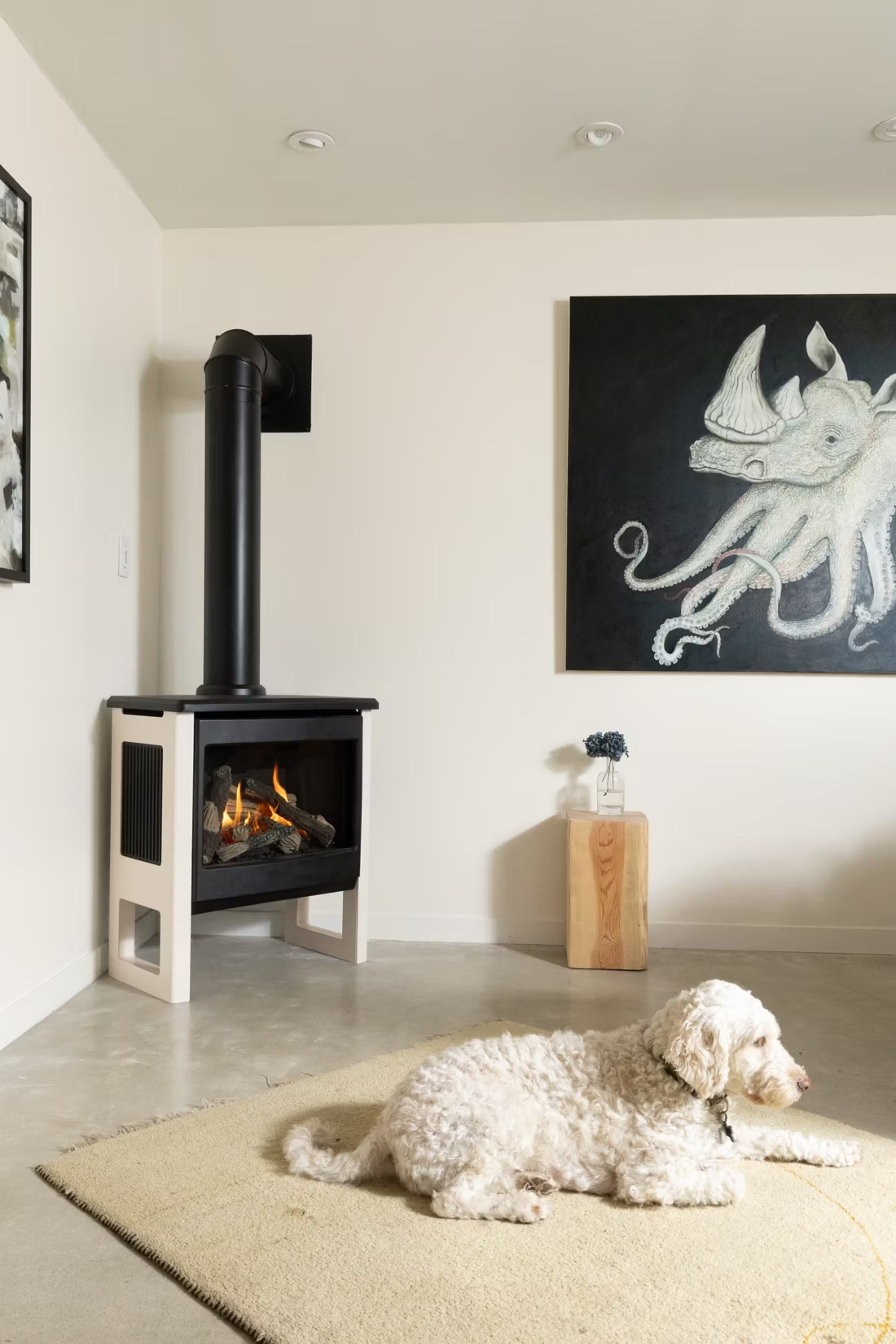
A gas fireplace is a fully built-in unit set into a framed wall or enclosure, typically used in new construction or a remodel. A gas insert slides into an existing masonry fireplace opening and uses your current chimney as the vent path, converting an old firebox into a sealed, efficient heat source. A gas stove is freestanding, sitting on the floor like a wood stove would, but running on gas. Most Roy homes with an older wood fireplace they're retiring choose an insert; homes without an existing fireplace usually go with a built-in unit or a freestanding stove instead.
Do I need a permit to install a gas fireplace in Roy?
Yes. Roy City's Building Division requires both a building permit and a gas line permit for new gas fireplace or insert installations, and the gas line portion has to be run or inspected by a licensed gas-fitter. Most established hearth dealers handle the paperwork as part of the install, coordinating the permit, the gas line, and the final inspection so you aren't managing separate trades yourself.
Should I get a vented or vent-free gas fireplace?
Vented (direct-vent) units draw combustion air from outside and exhaust it back outside through sealed venting—they're the safer, more universally recommended option and what most Roy dealers install by default. Vent-free units burn directly into the room without exterior venting; they're legal in Utah but release water vapor and small amounts of combustion byproducts indoors, which matters more here than in most places given how often winter inversions already trap stagnant air against the valley floor. For that reason, most local installers steer homeowners toward direct-vent models unless there's a specific reason a vent-free unit is the only option for the space.
How often does a gas fireplace need to be serviced?
Plan on an annual inspection, ideally before the coldest stretch of winter sets in. A technician checks the burner, pilot assembly, gas connections, and venting, and cleans the glass and interior components. This is a much lighter job than sweeping a wood chimney but just as important for safe operation—a typical inspection runs $150 to $250 in the Roy/Ogden area.
Should I consider wood or electric instead of gas?
For most Roy homes, gas is the clear default. Wood is technically available—pinyon, juniper, and aspen can be cut under Forest Service permits ($5-$20 per cord) through the Uinta-Wasatch-Cache National Forest between May and October—but wood-burning devices are frequently sidelined by Mandatory Action burn restrictions during winter inversions, which makes wood impractical as a dependable heat source here. Electric fireplaces, powered through PacifiCorp at roughly 12.5¢/kWh, are a fine low-cost, no-venting option for ambiance or supplemental heat in a bedroom or den, but they don't match a gas unit's real heat output for a main living space. For primary heating with real BTUs, gas is what most local dealers will point you toward.
What's the difference between an insert and a zero-clearance fireplace?
An insert is a fireplace that slides into a pre-existing wood-burning fireplace—if you don't have one, there's nothing to insert it into. A zero-clearance fireplace is built into a framed wall, which makes it the answer for remodels and new construction. Simple test: existing masonry fireplace means insert; blank or framed wall means zero-clearance.
Can I put a TV above my fireplace?
Yes—with an asterisk. Fireplaces are hot and TVs don't like heat. Either put a mantel between them to deflect rising warmth, or choose a fireplace with heat-management technology that creates a cool zone on the wall above—the wall stays around 125 degrees, barely warm, while the room still gets full heat. If you like clean lines and don't want a mantel, heat management is the answer.
Does a fireplace add value to my home?
On average, a fireplace adds back to the home about the same amount you spent installing it. Add the monthly savings from heating the rooms you actually use instead of the whole house—often hundreds of dollars a year—and the value case is strong before you even count what a fire does for how your family uses the room.
What is an in-home preview and do I need one?
It's a visit where a hearth professional measures your space, confirms the model you picked actually works in your home, and walks the specs—framing, gas line, venting, finish work—before anything is ordered. Some details you just can't know until you see the house. Never make a down payment without one; it's the single most-skipped step that burns buyers.
Nearby Dealers
Hearth shops serving Roy and the surrounding area.
Hearth & Home Dist. Of UT-Ogden
Find your gas fireplace in Roy.
Tell us a bit about your home and we'll put together a free Project Guide & Parts List—the exact parts, vent kit included, and a trusted local Roy dealer to install it.
Find Your Fireplace →