
Add real warmth to any room in Moab—no chimney required.
From red-rock casitas to short-term rentals near Arches, electric fireplaces give Moab homes and guest properties instant ambiance and supplemental heat without a wood pile, a gas line, or a permit fight.
Every Project Starts From One of These Five Situations
The easiest heat upgrade for red-rock country.
Moab sits at just over 4,000 feet in the high desert of Grand County, where winter days often climb into the 40s while nighttime lows average around 21°F. With a moderate winter heating load, the climate here is real but not brutal—nothing like the deep, sustained cold of a place like Bozeman or Duluth. Most Moab homes handle the bulk of their heating with a furnace, a propane system, or a wood stove burning local pinyon and juniper, and that's exactly where electric fireplaces earn their place: as fast, controllable heat for the specific room you're actually sitting in.
PacifiCorp serves electric customers throughout Moab at a residential rate around 12.5 cents per kWh, and running a typical electric insert or built-in for a few hours a night costs a fraction of heating an entire home. That matters in a town built on tourism—Grand County has an unusually high share of vacation rentals and second homes near Arches and Canyonlands, and property owners like electric units because there's no firewood to stock, no propane tank to monitor, and no combustion byproducts to worry about between guest turnovers. A local dealer can size the right unit, wire in a dedicated circuit if needed, and get it installed without the venting or clearance work a wood or gas project requires.
Three steps. No salesperson until you're ready.
Tell us about your project
Your zip code, your situation, and the fuel you're leaning toward—or let the answers point you to one.
See what's actually available
The brands dealers within 100 miles genuinely carry—real options, never a catalog mirage.
Get your dealer & Project Guide
A trusted local dealer, plus the free Project Guide & Parts List that names every component of the job.
Frequently Asked Questions
How much does an electric fireplace installation cost in Moab?
Plug-in electric inserts and freestanding units are the cheapest path—often $300 to $900 installed, since most run on a standard household outlet with no electrician required. Built-in electric fireplaces or larger wall units that need a dedicated 20-amp circuit typically run $1,200 to $2,500 once a licensed electrician wires the circuit and a carpenter frames the surround. Retrofitting an electric insert into an existing masonry fireplace—common in older Moab homes from the ranching and uranium-boom eras—usually lands in the middle of that range.
Do electric fireplaces actually put out enough heat for Moab winters?
For a single room, yes. Most electric fireplaces output 4,000 to 9,000 BTU, which comfortably heats a 300 to 400 square foot room even on a 21°F night. They're not designed to replace a furnace or a wood stove burning pinyon and juniper as the whole-home heat source—Moab's moderate winter heating load means most homes still need a primary system for the coldest stretches. Electric units shine as zone heat for a bedroom, den, or rental living room where you want warmth on demand without running the whole-house system.
Do I need a permit to install an electric fireplace in Moab?
A plug-in unit needs no permit at all—it's no different than plugging in a space heater. A built-in electric fireplace that requires new wiring or a dedicated circuit does require an electrical permit through the Grand County Building Department, since any new circuit work has to be inspected. Most local dealers or the electrician they work with will pull that permit as part of the job, so it's rarely something you have to manage yourself.
Electric vs. wood—which makes more sense for a Moab home?
Wood still makes sense for full-time residents with access to cheap pinyon, juniper, or aspen and a fireplace or stove already in place—it's the traditional heat source across Grand County and works during power outages. Electric makes more sense for guest houses, casitas, and the area's many short-term rentals, where owners want reliable ambiance without the liability of an open flame, ash cleanup between guests, or firewood storage. A growing number of Moab property owners run both: wood or propane for real heat, electric for the rooms that see the most casual use.
Can I put an electric insert into my existing wood-burning fireplace?
Yes, and it's a common project on older Moab properties with a masonry firebox that's rarely used. An electric insert slides into the existing opening, uses the outlet or a newly wired circuit behind it, and gives you flame effect and heat without maintaining a chimney or dealing with wildfire-season burn restrictions. It's usually the fastest and cheapest way to bring a dormant fireplace back into daily use.
What will an electric fireplace add to my PacifiCorp bill?
At Moab's residential rate of about 12.5 cents per kWh, a typical 1,500-watt electric fireplace costs roughly 19 cents an hour to run on high heat. Used a few hours a night through a Moab winter, that's usually $10 to $25 a month—far less than heating an extra room with a whole-home furnace or propane system. Most units let you run the flame effect alone with the heater off, which costs almost nothing, useful for rental properties that want ambiance without added load.
What's the best electric fireplace for a Moab vacation rental?
For short-term rentals, durability and simple guest operation matter more than raw heat output. Wall-mounted units or inserts with a physical remote (not just an app) tend to hold up better with rotating guests, and models with an auto shut-off and no exposed heating element are safer for unsupervised use. Local dealers carrying Dimplex, Napoleon, or Amantii lines can point you toward models built for exactly this kind of repeat-guest, low-maintenance use.
How do I size an electric fireplace for my room?
Match wattage to square footage: a 1,000 to 1,500-watt unit comfortably heats 150 to 400 square feet, which covers most bedrooms, dens, and rental living rooms in Moab's smaller casitas and townhomes. Larger open-concept living areas may need a bigger built-in unit or should treat the fireplace as ambiance-only supplemental heat rather than the primary source. A local dealer will look at your room dimensions and ceiling height before recommending a specific model.
Electric vs. gas—which is right for my Moab home?
Grand County has limited natural gas infrastructure, so most gas-fired homes in Moab run on propane, which means a tank, deliveries, and gas line work for a new fireplace. Electric skips all of that—no fuel storage, no gas permit, no venting—which is a real advantage for rentals, casitas, and detached guest spaces where running a propane line isn't practical. Propane gas fireplaces still put out more heat and can run during outages with the right battery-backup ignition, so homeowners who want a primary heat source sometimes prefer gas. For supplemental warmth and simplicity, electric is usually the easier call.
Can I put a TV above my fireplace?
Yes—with an asterisk. Fireplaces are hot and TVs don't like heat. Either put a mantel between them to deflect rising warmth, or choose a fireplace with heat-management technology that creates a cool zone on the wall above—the wall stays around 125 degrees, barely warm, while the room still gets full heat. If you like clean lines and don't want a mantel, heat management is the answer.
Does an electric fireplace need a vent or chimney?
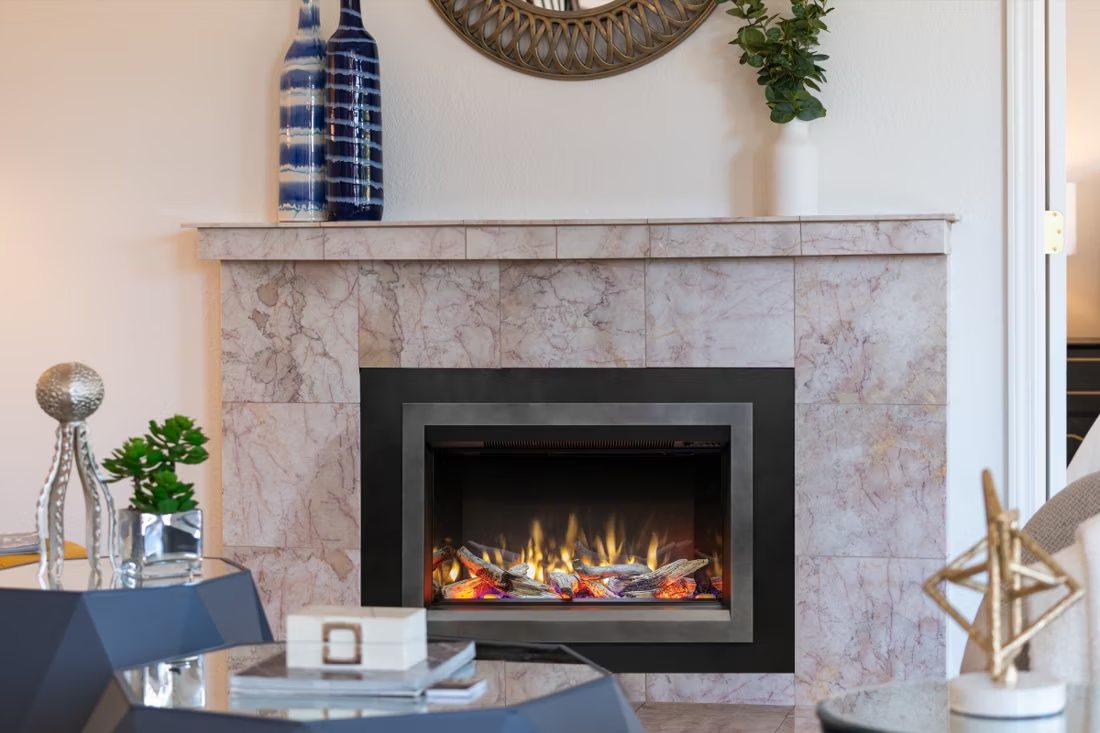
No—that's its superpower. An electric fireplace needs a wall and an outlet, period. No vent pipe, no gas line, no clearances to design around, which is why it works in bedrooms, offices, apartments, and walls where venting a gas or wood unit would be impractical or impossible. Installation is typically the simplest and least expensive of any fireplace type.
Can a fireplace actually lower my heating bill?
Yes—by creating a comfort zone. A furnace heats every square foot of the house just to warm the one room you're in; a gas fireplace on low burns roughly a sixth of the gas a typical furnace does. Set the furnace around 55–60 degrees as a baseline, then heat the rooms your family actually uses. Families who heat this way commonly save $20–$60 a month.
Can I install a fireplace myself?
If you're putting a fire in your house on purpose, it's best to work with an expert. Unless you're genuinely experienced in framing, gas line, vent pipe, and the national code on clearances to combustibles, have a professional do it—and ideally the same company that sells you the fireplace, so warranty, service, and liability all live under one roof.
Nearby Dealers
Hearth shops serving Moab and the surrounding area. Every listing shows whether it is a WhyFire partner, a dealer we have verified as authorized for the brands we recommend, or a local business carrying hearth products. No manufacturer pays for placement. How we verify dealers →
Woodstove Warehouse
Fireplace West
Gas Products Corp
Alpine Stove & Fireplace
Electric Service in Moab
An electric fireplace's heater draws about 1,500 watts—pennies per hour at local rates.
Find your electric fireplace in Moab.
Tell us about your room, your rental, or your remodel, and we'll match you with a trusted local Moab dealer plus a free Project Guide & Parts List for your electric fireplace project.
Find Your Fireplace →