
Find gas heat built for Kane County's high desert winters.
From Kanab up to Duck Creek Village on Cedar Mountain, Kane County covers nearly 5,000 feet of elevation change and two very different winters. Find the right gas fireplace, insert, or stove, and connect with a trusted local dealer who can actually install it.
Every Project Starts From One of These Five Situations
Reliable heat across canyon country's elevation swings.
Kane County stretches from Big Water and Lake Powell at around 3,700 feet up to Duck Creek Village on the Cedar Mountain plateau near 8,400 feet—two elevations with two different winters under one county government. Kanab, the county seat at roughly 4,900 feet, averages winter lows near 25°F with a moderate heating season, closer to a mild high-desert winter than the sustained deep cold you'd find in Bozeman MT. Up on the plateau near Duck Creek Village and Alton, though, snow lingers and nights get considerably colder, and homeowners there lean harder on dependable, always-ready heat.
Natural gas service reaches Kanab and the immediate surrounding area through Dominion Energy, so direct-vent gas fireplaces and inserts are a straightforward add for homes already on the gas main. Outside town—in Alton, Glendale, Duck Creek Village, Big Water, and the rural stretches along Highway 89—propane is the standard fuel, delivered and stored in a tank on the property. Either way, a gas fireplace gives Kane County homeowners instant heat without hauling and stacking pinyon, juniper, or aspen, and select models keep running when winter storms knock out power on the plateau.
Three steps. No salesperson until you're ready.
Tell us about your project
Your zip code, your situation, and the fuel you're leaning toward—or let the answers point you to one.
See what's actually available
The brands dealers within 100 miles genuinely carry—real options, never a catalog mirage.
Get your dealer & Project Guide
A trusted local dealer, plus the free Project Guide & Parts List that names every component of the job.
Frequently Asked Questions
How much does a gas fireplace installation cost in Kane County?
Most gas fireplace installations in Kane County run somewhere between $4,000 and $10,000, with the spread driven by the unit itself, the venting path, and whether new gas line work is needed. A direct-vent insert going into an existing masonry fireplace in a Kanab home already tied into the Dominion Energy main tends to land on the lower end. A new propane installation out toward Alton or Duck Creek Village—which may require a new tank set and a longer gas line run from tank to hearth—sits at the higher end. A local dealer will give you a firm number after seeing the home in person.
Can I convert my existing wood fireplace to gas?
Yes, and it's a common project for older homes around Kanab and the smaller Cedar Mountain communities where a masonry fireplace was the original heat source. A gas insert typically slides into that existing firebox, using a stainless liner run through your current chimney as the vent path. In Kane County that conversion usually runs $4,000 to $9,000, with propane-fueled conversions often landing a bit higher once tank placement and line work are factored in. The finished look stays close to your original fireplace opening while the heat output and convenience improve significantly.
Do I need natural gas, or can I run my fireplace on propane?
Either works, and which one applies mostly comes down to where in the county you live. Kanab has natural gas service through Dominion Energy, so homes already using gas for a water heater, range, or furnace can usually add a fireplace without much extra plumbing. Outside Kanab—in Alton, Glendale, Big Water, and up on the Duck Creek Village plateau—there's no gas main, so propane from a regional supplier and a tank on the property is the standard setup. Most gas fireplace models can be configured for either fuel; your installer sets the correct orifice and regulator for whichever you have.
Will my gas fireplace still work if the power goes out?
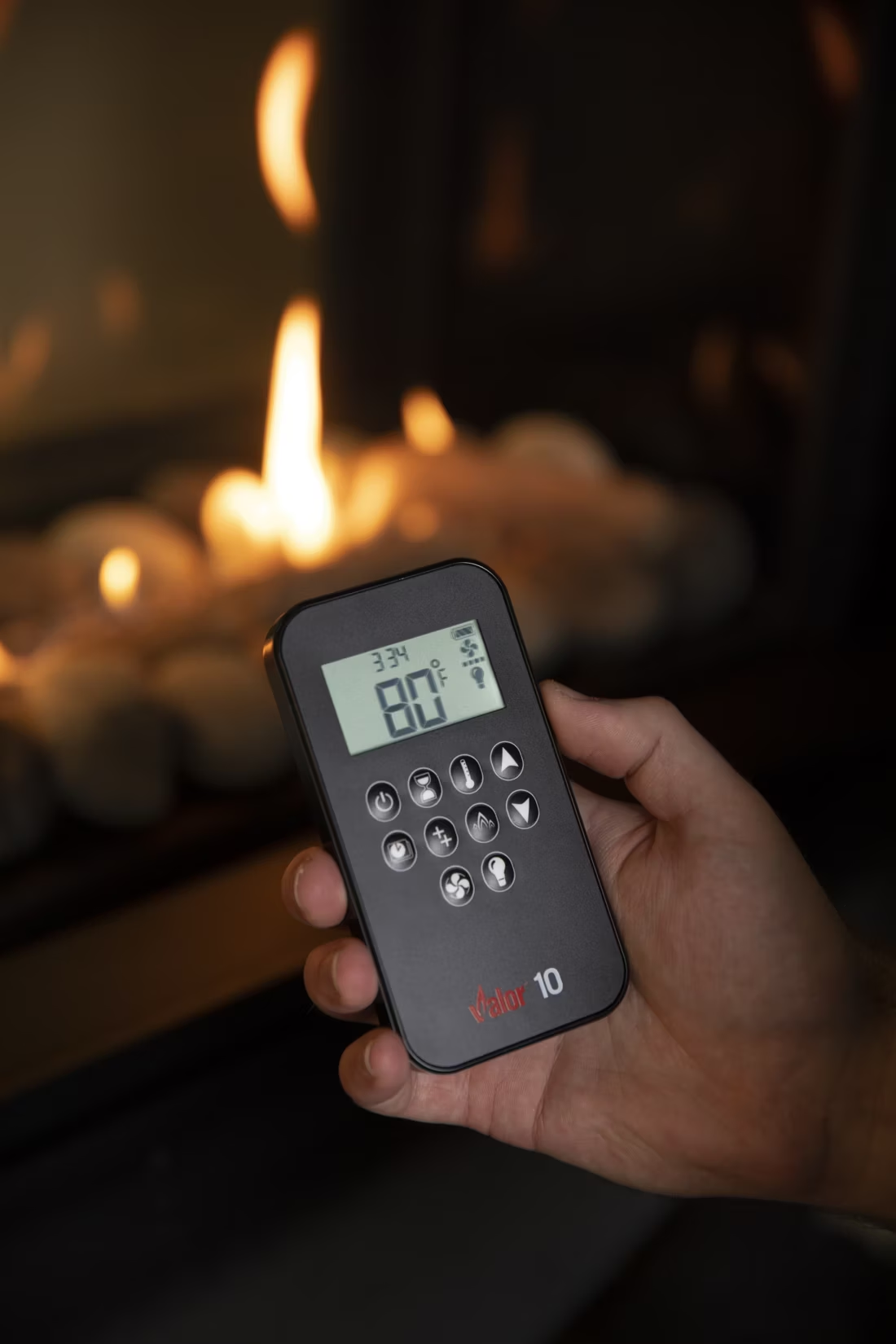
Most modern gas fireplaces will, with the right ignition system. Units with IPI (intermittent pilot ignition) run on a battery backup—usually AA batteries built into the unit—that kicks in automatically the moment power drops, so the fireplace lights on demand just like normal. Valor fireplaces skip batteries entirely: their pilot generates its own electricity through the thermocouple, so the unit never depends on outside power at all. For homes up on the Cedar Mountain plateau near Duck Creek Village, where winter storms can knock out power for a stretch, that self-powering design is worth asking about directly.
What's the difference between a gas fireplace, gas insert, and gas stove?
A gas fireplace is a fully built-in unit framed into a wall—the right call for new construction or a major remodel. A gas insert is sized to slide into an existing masonry fireplace opening, sealing it up and venting through the existing chimney with a liner. A gas stove is a freestanding cabinet-style unit that sits on the floor like a traditional wood stove but burns gas instead. For the older homes scattered through Kanab and the smaller Kane County towns that already have a masonry fireplace, an insert is usually the most cost-effective upgrade; homes without one are better suited to a built-in fireplace or a freestanding stove.
Do I need a permit to install a gas fireplace in Kane County?
Yes—a building permit and a gas line permit are both typically required for a new gas fireplace installation, handled through the Kane County Building Department for anything outside city limits or the applicable city office within Kanab. The gas line portion has to be run by a licensed gas-fitter, which is one of the main reasons to work with an established local hearth dealer rather than a handyman—they coordinate the gas work, venting, and inspection sign-off as one job instead of leaving you to manage separate trades.
What's the difference between vented and vent-free gas fireplaces, and does elevation matter?
Vented gas fireplaces (direct-vent or B-vent) pull combustion air from outside and exhaust the byproducts back outside through sealed venting—they're the cleanest and most universally code-compliant option. Vent-free units burn directly into the room without external venting, which is more efficient on paper but releases some water vapor and combustion byproducts indoors, so they come with strict room-sizing and oxygen-sensor requirements. Elevation is a real factor here: up on the Cedar Mountain plateau near Duck Creek Village, at over 8,000 feet, vent-free units can need altitude-adjusted orifices to burn correctly, and not every model is rated for that elevation. Direct-vent units don't have that complication and are the more common, more reliable choice across most of Kane County.
How often should a gas fireplace be serviced?
Plan on an annual inspection, same as any gas appliance. A technician checks the burner, pilot assembly, venting, and gas connections, and cleans the glass and firebox interior—a much smaller job than sweeping a wood chimney, but just as important for safe operation. Local gas appliance service providers in the Kanab area typically charge in the $150 to $250 range for this visit, and it's worth scheduling before the fireplace sees heavy use each fall.
Gas vs. wood—which makes more sense in Kane County?
Wood has deep roots here—pinyon, juniper, and aspen are all locally available, and Dixie National Forest issues cutting permits for $5 to $20 per cord during the May-through-October season, which keeps self-cut firewood cheap for anyone willing to do the work. Wood also keeps burning with zero electricity, a real advantage for the plateau communities where winter outages happen. Gas trades that self-sufficiency for convenience: instant on-off heat, no ash or hauling, and a cleaner look for a primary living space. Many Kane County homes split the difference—gas for daily use in the main room, a wood stove elsewhere as backup heat when the power's out or the wood's already on hand.
Why is my open fireplace making my house colder?
Open fireplaces suck—literally. As the fire burns, it consumes air your furnace already paid to heat and pulls it out through the chimney, so the house is actually colder after the fire goes out than before you lit it. An insert fixes this: it seals the chimney, puts fixed glass across the front, and turns that hole in your house into a real heat source.
Can I put a TV above my fireplace?
Yes—with an asterisk. Fireplaces are hot and TVs don't like heat. Either put a mantel between them to deflect rising warmth, or choose a fireplace with heat-management technology that creates a cool zone on the wall above—the wall stays around 125 degrees, barely warm, while the room still gets full heat. If you like clean lines and don't want a mantel, heat management is the answer.
How much should I budget for a fireplace?
For an average home—covering the fireplace, the vent pipe, and basic installation—a budget between $3,900 and $5,500 gives you a lot of options across wood, gas, and pellet. By the time you add finish work, gas line, and electrical, the average complete installation lands between $5,000 and $12,000 all-in. In a remodel or new build, a good rule is to put about 2.5% of the total project cost toward the fireplace.
Can I install a fireplace myself?
If you're putting a fire in your house on purpose, it's best to work with an expert. Unless you're genuinely experienced in framing, gas line, vent pipe, and the national code on clearances to combustibles, have a professional do it—and ideally the same company that sells you the fireplace, so warranty, service, and liability all live under one roof.
Stove and Fireplace Dealers in Kane County
Listings include WhyFire partner dealers, dealers we have verified as authorized for the brands we recommend, and established local businesses that carry hearth products. Every listing shows which one it is. The ones marked Preferred run on WhyFire's software, so they can show you real pricing and book your appointment right here. No manufacturer pays for placement. How we verify dealers →
Cooling Heating Supply
Southwest Appliance Wholesale, Inc.
Melling Granite
The Hot Guys Fireplace Guys
Custom Fireplace
Dixie Fireplace
Page Fast Glass
Find your gas fireplace in Kane County.
Tell us a bit about your home in Kanab, Alton, Duck Creek Village, or anywhere else in Kane County, and we'll match you with a trusted local dealer and send over a free Project Guide & Parts List—the exact parts, including the vent kit, for your gas fireplace project.
Find Your Fireplace →