
Electric Heat Built for Ivins' Mild Desert Winters.
No chimney, no venting, no wood smoke drifting toward Snow Canyon—just clean electric warmth sized right for a high-desert climate. Find the right unit and connect with a trusted local dealer.
Every Project Starts From One of These Five Situations
Low heating demand meets clean, flexible electric heat.
Ivins sits at 3,158 feet in the red rock country west of St. George, where winter lows average a mild 28°F and the town has a short, mild heating season. Compare that to a place like Bozeman, MT, which racks up more than double the winter heating load, and it's clear Ivins simply doesn't demand the brute-force heat output that a place with a real winter needs. That makes electric fireplaces a genuinely practical fit here, not just a decorative afterthought.
With PacifiCorp serving the area at roughly $0.1252 per kWh, an electric insert or wall-mount unit costs pennies an hour to run and can take the edge off a cool desert evening in a stucco home in Kayenta or Tuacahn without touching the thermostat. Ivins also deals with wildfire smoke as a seasonal air quality concern, and homeowners in some of the planned communities here face HOA rules that limit real combustion appliances—electric sidesteps both issues entirely while still delivering a realistic flame effect and zone heat where you actually spend time.
Three steps. No salesperson until you're ready.
Tell us about your project
Your zip code, your situation, and the fuel you're leaning toward—or let the answers point you to one.
See what's actually available
The brands dealers within 100 miles genuinely carry—real options, never a catalog mirage.
Get your dealer & Project Guide
A trusted local dealer, plus the free Project Guide & Parts List that names every component of the job.
Frequently Asked Questions
How much does an electric fireplace installation cost in Ivins?
Most electric fireplace projects in Ivins run $400 to $2,500. A plug-in insert dropped into an existing masonry or wood-burning firebox sits at the low end since it needs no venting and often no dedicated circuit. A built-in wall unit or a linear electric fireplace installed during a remodel—with framing, a dedicated 120V or 240V circuit, and finish work around a stucco or drywall surround—runs toward the middle to upper end. Because there's no chimney, gas line, or exterior venting involved, electric installs are consistently the least expensive hearth option available to Ivins homeowners.
Do I need a permit to install an electric fireplace in Ivins?
A simple plug-in electric insert or freestanding unit generally doesn't require a permit since it's treated like any other appliance. If your project involves a new dedicated electrical circuit, a built-in wall unit, or structural framing changes, the City of Ivins Building Department will typically require an electrical permit pulled by a licensed electrician. Most local dealers coordinate this as part of the installation, so you're not left tracking down the paperwork yourself.
Will an electric fireplace actually heat my home?
Electric fireplaces are built for supplemental, zone heat rather than whole-house heating—but in Ivins' climate, that's often all that's needed. With winter lows averaging around 28°F and mild heating demand overall, a 1,500-watt unit can comfortably take the chill off a living room, casita, or home office on the cooler nights between November and February. For a home that needs real primary heat during a cold snap, most local dealers will point you toward a gas or wood option instead, but for year-round ambiance with occasional heat boost, electric covers the vast majority of what Ivins winters ask for.
What's the difference between an electric insert, a wall-mount unit, and an electric stove?
An electric insert is built to slide into an existing fireplace opening, making it the easiest upgrade for Ivins homes with an old wood-burning firebox that's rarely used. A wall-mount or linear electric fireplace is a built-in unit installed flush into a wall, common in newer construction and remodels around Kayenta and Tuacahn where a modern, minimalist look is the goal. An electric stove is a freestanding cabinet-style unit that mimics a wood stove's footprint without any venting requirement—a good fit for a casita, garage conversion, or secondary living space where running a chimney isn't practical.
What size electric fireplace do I need for my home?
Electric fireplaces are sized more by room and application than by whole-house square footage. A 30- to 40-inch insert or wall unit comfortably heats a single living area of 400 to 600 square feet, which covers most great rooms in Ivins' single-story desert homes. Larger linear units (50 inches and up) are typically chosen for visual impact across an open great room rather than for additional heat output—most electric units top out around 5,000 BTU regardless of size. A local dealer can walk through your room dimensions and recommend the right width for both heat and appearance.
How much does it cost to run an electric fireplace in Ivins?
At PacifiCorp's residential rate of about $0.1252 per kWh, a typical 1,500-watt electric fireplace costs roughly 19 cents an hour to run on heat mode, or well under $1 for a full evening of use. Running the flame effect alone without heat draws a fraction of that, often just 20-30 watts, so many Ivins homeowners leave the ambiance on through cooler months without meaningfully affecting their bill. That low operating cost is one of the biggest draws of electric heat in a mild climate like this one, where you're supplementing rather than fighting a real winter.
Will my electric fireplace work during a power outage?
No—this is the honest tradeoff with electric heat. Unlike a wood stove or a gas fireplace with battery-backup ignition, an electric fireplace is entirely dependent on grid power and will shut off the moment PacifiCorp service drops. For most Ivins homeowners this is a minor concern given the mild winters and generally reliable local grid, but if backup heat during a storm or outage matters to you, it's worth pairing an electric unit with a wood stove or gas appliance elsewhere in the home rather than relying on electric alone.
Is electric or gas the better choice for my Ivins home?
Gas delivers more real heat output, works during a power outage with the right ignition system, and suits a home used as a primary living space year-round. Electric costs less to install, requires no venting or gas line, runs for pennies an hour at Ivins' mild heating demand, and produces zero combustion byproducts or wildfire-adjacent smoke—a real consideration here given the seasonal wildfire smoke that affects regional air quality. For a casita, remodel, or secondary room where running gas line or venting isn't practical, electric is usually the simpler and cheaper answer. For a primary gathering space where you want stronger heat output, gas is worth the extra investment.
Can I install an electric fireplace myself?
A basic plug-in insert or freestanding electric stove can often be self-installed since it just needs a standard outlet—no combustion, no venting, no gas line. A built-in wall unit or linear fireplace requiring a new dedicated circuit should go through a licensed electrician, both for safety and because the City of Ivins Building Department will expect permitted electrical work on anything beyond a simple plug-in. Local hearth dealers typically handle both the unit and the electrical coordination together, which is the easiest path if you want the built-in look without pulling your own permits.
Can I put a TV above my fireplace?
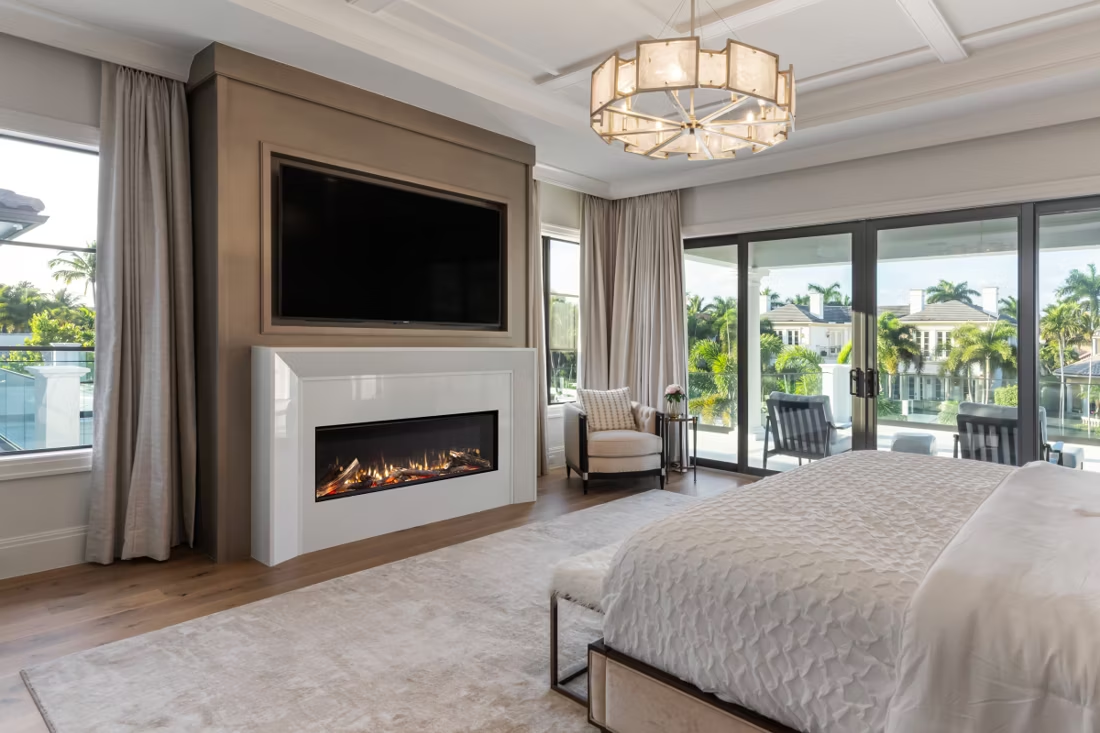
Yes—with an asterisk. Fireplaces are hot and TVs don't like heat. Either put a mantel between them to deflect rising warmth, or choose a fireplace with heat-management technology that creates a cool zone on the wall above—the wall stays around 125 degrees, barely warm, while the room still gets full heat. If you like clean lines and don't want a mantel, heat management is the answer.
Do electric fireplaces actually produce heat?
Yes—most put out around 4,800–5,000 BTUs from a standard outlet, which comfortably warms a bedroom, office, or den as a comfort-zone heater. What they won't do is carry a whole house the way wood, gas, or pellet can. Think of electric as ambiance-first with honest supplemental heat: flames on with no heat in July, flames plus warmth in January.
Can a fireplace actually lower my heating bill?
Yes—by creating a comfort zone. A furnace heats every square foot of the house just to warm the one room you're in; a gas fireplace on low burns roughly a sixth of the gas a typical furnace does. Set the furnace around 55–60 degrees as a baseline, then heat the rooms your family actually uses. Families who heat this way commonly save $20–$60 a month.
Can I install a fireplace myself?
If you're putting a fire in your house on purpose, it's best to work with an expert. Unless you're genuinely experienced in framing, gas line, vent pipe, and the national code on clearances to combustibles, have a professional do it—and ideally the same company that sells you the fireplace, so warranty, service, and liability all live under one roof.
Nearby Dealers
Hearth shops serving Ivins and the surrounding area. Every listing shows whether it is a WhyFire partner, a dealer we have verified as authorized for the brands we recommend, or a local business carrying hearth products. No manufacturer pays for placement. How we verify dealers →
Carpet Plus
Dixie Fireplace
Custom Fireplace
Electric Service in Ivins
An electric fireplace's heater draws about 1,500 watts—pennies per hour at local rates.
Find your electric fireplace in Ivins.
Tell us a bit about your home and we'll match you with the right electric insert, wall unit, or stove—plus a free Project Guide & Parts List and a trusted local dealer to install it.
Find Your Fireplace →