
Steady heat for Cache Valley's inversion-locked winters.
At 4,642 feet with a long, heavy winter heating season and winter lows averaging 15°F, Hyde Park sits in a valley that holds onto cold—and onto smoke—longer than most. I'll match you with a local dealer who can size a gas fireplace correctly for this climate and get it vented right.
Every Project Starts From One of These Five Situations
Warmth that doesn't add to the inversion.
Hyde Park sits at the north end of Cache Valley, boxed in by the Bear River Range, and that geography matters as much as the elevation does. With winter lows averaging 15°F and a long, heavy winter heating season—comparable to Bozeman, Montana rather than the Salt Lake benches an hour south—the valley floor traps cold air through the winter months. It also traps smoke: Cache Valley is well known for winter inversions that pin wood smoke and vehicle exhaust close to the ground for days at a stretch, and wildfire smoke in late summer adds a second seasonal concern residents already watch closely.
Wood heat still has a real place here—pinyon, juniper, and aspen are the species most local burners split, often cut under Uinta-Wasatch-Cache National Forest permits running $5 to $20 a cord between May and October—but a growing number of Hyde Park households are choosing gas for their main living space specifically because it doesn't add particulate to the air during inversion weeks. Dominion Energy serves natural gas through most of the valley, PacifiCorp supplies the electricity a modern gas unit's blower or ignition needs, and a properly vented direct-vent fireplace gives you real heat on demand without another woodpile to manage or another chimney to sweep.
Three steps. No salesperson until you're ready.
Tell us about your project
Your zip code, your situation, and the fuel you're leaning toward—or let the answers point you to one.
See what's actually available
The brands dealers within 100 miles genuinely carry—real options, never a catalog mirage.
Get your dealer & Project Guide
A trusted local dealer, plus the free Project Guide & Parts List that names every component of the job.
Frequently Asked Questions
How much does a gas fireplace installation cost in Hyde Park?
Most gas fireplace and insert installations in Hyde Park run roughly $4,500 to $10,500, depending on scope. A direct-vent insert dropped into an existing masonry firebox with a gas line already nearby lands toward the low end. New construction or a remodel that requires framing a built-in unit, running a fresh gas line from the meter, and venting through an exterior wall pushes toward the top of that range. Homes on the edges of town without natural gas service and running on propane instead should budget a bit more for tank setup or line work.
Can I convert my existing wood fireplace to gas?
Yes, and it's a common project in Hyde Park, especially in older homes originally built around a masonry fireplace meant for pinyon, juniper, or aspen. A gas insert typically slides into that existing firebox with a stainless liner run up through the current chimney, which keeps costs down since the structural work is already done. Expect somewhere in the $4,500 to $9,000 range depending on whether you're on natural gas or propane, and whether the flue needs relining before the insert goes in.
Is natural gas available in Hyde Park, or do I need propane?
Dominion Energy provides natural gas service through most of Hyde Park and the surrounding Cache Valley communities, so if your home already has gas for the furnace or water heater, adding a fireplace is usually a straightforward tap-in. Some outlying properties toward the foothills or on larger lots run on propane instead, which works just as well for a fireplace but adds tank costs if you don't already have one. Your local dealer can confirm which situation applies to your address before quoting the job.
Will my gas fireplace still work during a winter power outage?
Most will, and that matters in a valley where winter storms occasionally knock out PacifiCorp service for hours at a time. Units with IPI (intermittent pilot ignition) run their control board off a small battery pack that kicks in automatically when the power drops. Valor fireplaces handle it differently—the pilot's thermocouple generates its own electricity, so there's no battery to check or replace. If backup heat during an outage is a priority, ask your dealer which ignition system a given model uses before you buy.
What's the difference between a gas fireplace, insert, and stove?
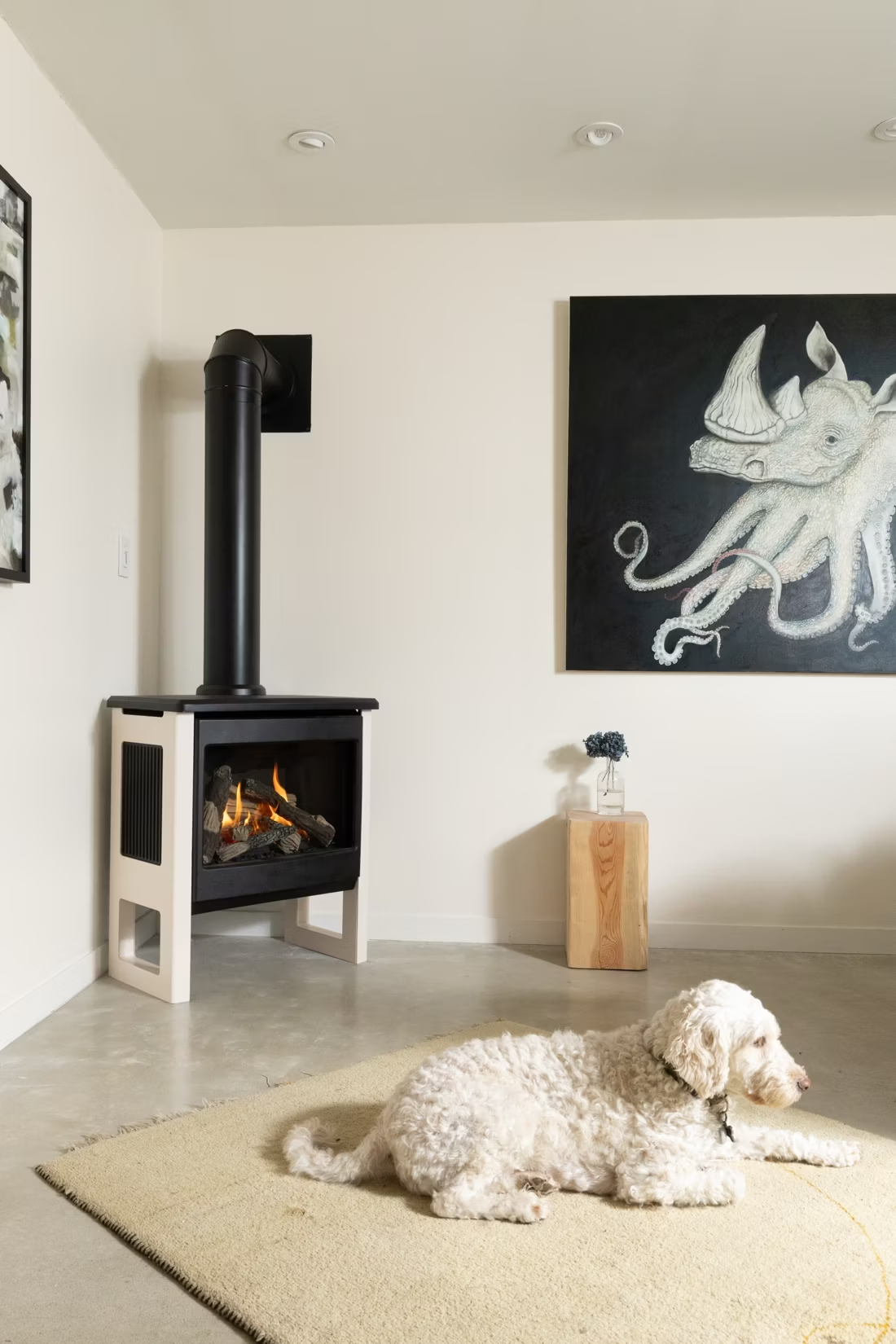
A gas fireplace is a built-in unit framed into a wall, most common in new construction or a remodel. A gas insert fits inside an existing masonry firebox, which suits a lot of Hyde Park's older homes that started out burning pinyon or juniper in an open hearth. A gas stove is freestanding on a hearth pad, similar in footprint to a wood stove but running off a gas line or propane tank instead of cordwood. For a home with an existing chimney, an insert is usually the simpler and cheaper upgrade.
Do I need a permit to install a gas fireplace in Hyde Park?
Yes. Gas fireplace installations require a building permit, generally coordinated through the Cache County Building Division, along with a separate gas line permit pulled by a licensed gas-fitter for any new or modified line. A reputable local hearth dealer will typically handle both the building permit and the gas work as part of the installation, including scheduling the final inspection, so you aren't managing two separate trades on your own.
Should I choose a vented or vent-free gas fireplace?
Vented, direct-vent units pull combustion air from outside and exhaust the byproducts back outside through sealed pipe—they're the safer, code-compliant choice everywhere, including Utah. Vent-free units are legal here but burn directly into the room and come with strict sizing and ventilation rules. Given how often Cache Valley sits under a winter inversion that already concentrates particulate near the ground, most local dealers steer Hyde Park homeowners toward direct-vent models rather than adding any combustion byproducts indoors during exactly the stagnant-air weeks you'd be running the fireplace most.
How often does a gas fireplace need to be serviced?
Plan on an annual inspection, ideally in late summer or early fall before you're relying on the fireplace daily through a Hyde Park winter. A technician checks the burner and pilot assembly, tests the gas connections, and cleans the glass. It's a lighter job than sweeping a wood chimney, but a unit that runs for months on end through a long, demanding winter heating season is exactly the kind of appliance where a skipped service call shows up as an ignition failure on the coldest night of the year. A standard visit typically runs $150 to $250.
Gas vs. wood—which makes more sense for a Hyde Park home?
Wood—pinyon, juniper, and aspen cut under a Uinta-Wasatch-Cache National Forest permit for as little as $5 a cord—still wins on fuel cost and keeps working through a power outage. But gas has become the default for a lot of main living spaces here for a simple reason: it doesn't add smoke to a valley that already fights winter inversions and wildfire haze. Many Hyde Park households end up running gas day to day and keeping a wood stove or fireplace elsewhere as backup heat for extended outages, saving the wood-burning for days when the air isn't already stagnant.
What's the difference between an insert and a zero-clearance fireplace?
An insert is a fireplace that slides into a pre-existing wood-burning fireplace—if you don't have one, there's nothing to insert it into. A zero-clearance fireplace is built into a framed wall, which makes it the answer for remodels and new construction. Simple test: existing masonry fireplace means insert; blank or framed wall means zero-clearance.
Is my gas fireplace wasting gas?
If it was installed more than 15 years ago, probably. Older gas fireplaces keep a standing pilot light burning all the time, and that little flame can cost a couple hundred dollars a year. Newer models use pilot-on-demand ignition—the pilot lights only when you use the fireplace and goes out when you turn it off.
Can I install a fireplace myself?
If you're putting a fire in your house on purpose, it's best to work with an expert. Unless you're genuinely experienced in framing, gas line, vent pipe, and the national code on clearances to combustibles, have a professional do it—and ideally the same company that sells you the fireplace, so warranty, service, and liability all live under one roof.
Does a fireplace add value to my home?
On average, a fireplace adds back to the home about the same amount you spent installing it. Add the monthly savings from heating the rooms you actually use instead of the whole house—often hundreds of dollars a year—and the value case is strong before you even count what a fire does for how your family uses the room.
Nearby Dealers
Hearth shops serving Hyde Park and the surrounding area. Every listing shows whether it is a WhyFire partner, a dealer we have verified as authorized for the brands we recommend, or a local business carrying hearth products. No manufacturer pays for placement. How we verify dealers →
Advanced Fireplace And Stove
Gary Ricks Services
Western Mechanical
Standard Plumbing - Logan
Tremonton Heating & Cooling
Mr Cool Inc
Chim Chiminey Fireplace
Get your free Project Guide & Parts List for a gas fireplace in Hyde Park.
Tell me about your home and your gas access—Dominion Energy service or propane—and I'll match you with a trusted local dealer and send a free Project Guide & Parts List with the exact vent kit and parts your project needs.
Find Your Fireplace →