
Reliable gas heat for Grand County's high-desert winters.
From Moab to Castle Valley to the outlying stretches along the Colorado River, gas fireplaces deliver instant, low-maintenance heat for red rock country's cool nights. Find the right unit and connect with a trusted local dealer.
Every Project Starts From One of These Five Situations
Instant warmth without the wood pile.
Grand County stretches across roughly 3,684 square miles of southeastern Utah's canyon country, with Moab sitting at about 4,000 feet along the Colorado River and the county's outlying communities—Castle Valley, Thompson Springs, Cisco—scattered across higher, more exposed desert terrain. With a winter heating load well under half that of a place like Bozeman, MT, winters here are real but comparatively mild—winter lows average around 21°F, and hard freezes are common overnight even when afternoons warm up fast. That swing, plus a tourism economy built on vacation rentals and second homes, has made gas fireplaces a popular choice for homeowners and property managers who want dependable heat without tending a fire between guest turnovers.
Natural gas service through Dominion Energy Utah reaches Moab and the immediately surrounding Spanish Valley, while propane is the standard fuel source for Castle Valley, Thompson Springs, Cisco, and other outlying parts of the county where gas lines don't run. Either fuel path works well with a direct-vent gas fireplace or insert. Grand County also deals with periodic wildfire smoke advisories in summer and fall—during those events, homeowners who've already made the switch from wood to gas appreciate not having another combustion source to think about, and the cleaner air quality gas offers year-round.
Three steps. No salesperson until you're ready.
Tell us about your project
Your zip code, your situation, and the fuel you're leaning toward—or let the answers point you to one.
See what's actually available
The brands dealers within 100 miles genuinely carry—real options, never a catalog mirage.
Get your dealer & Project Guide
A trusted local dealer, plus the free Project Guide & Parts List that names every component of the job.
Frequently Asked Questions
How much does a gas fireplace installation cost in Grand County?
A typical gas fireplace installation in Grand County runs roughly $4,000 to $10,000, depending on the unit, the venting path, and whether new gas line work is required. A direct-vent insert going into an existing masonry fireplace in a Moab or Spanish Valley home already piped for gas sits toward the lower end. New construction or a remodel that requires framing, venting, and a propane tank installation for a home in Castle Valley or Thompson Springs will run higher, and propane households should budget for tank setup or delivery contracts on top of the install. A local dealer will quote a firm number after an in-home look at your existing chimney, gas access, and venting options.
Can I convert my existing wood fireplace to gas in Grand County?
Yes, and it's a common project for older Moab homes and cabins built with a traditional masonry fireplace burning pinyon, juniper, or aspen. A gas insert typically slides into the existing firebox and uses a stainless liner run through your current chimney for venting, which keeps the cost down compared to a full new install. Whether you convert to natural gas or propane depends on where you're located—inside the Dominion Energy Utah service area around Moab, or out in the county where propane is the norm. Either way, the conversion keeps the look of your fireplace while giving you push-button heat and no more hauling and stacking wood.
Do I need natural gas, or can I use propane in Grand County?
Both work fine, and which one you use mostly comes down to where your property sits. Natural gas through Dominion Energy Utah is available in Moab and the adjacent Spanish Valley area. Outside that footprint—Castle Valley, Thompson Springs, Cisco, and other rural stretches of the county—propane is the standard, either from an existing tank or a new tank set up by a regional propane supplier. Nearly every gas fireplace on the market can be configured for either fuel; your installer sets the correct orifice and regulator for whichever you have.
Will my gas fireplace work during a power outage?
Most modern gas fireplaces will, as long as they have the right ignition system. Units with IPI (intermittent pilot ignition) run on a small battery backup that kicks in automatically if the power drops, so the fireplace still lights on demand. Valor fireplaces take a different route—they generate their own electricity from the pilot's thermocouple, so there's no battery to remember at all. In Grand County's more remote areas, where a downed line can mean a longer wait for a repair crew, that kind of built-in backup heat is worth asking your local dealer about directly.
What's the difference between a gas fireplace, gas insert, and gas stove?
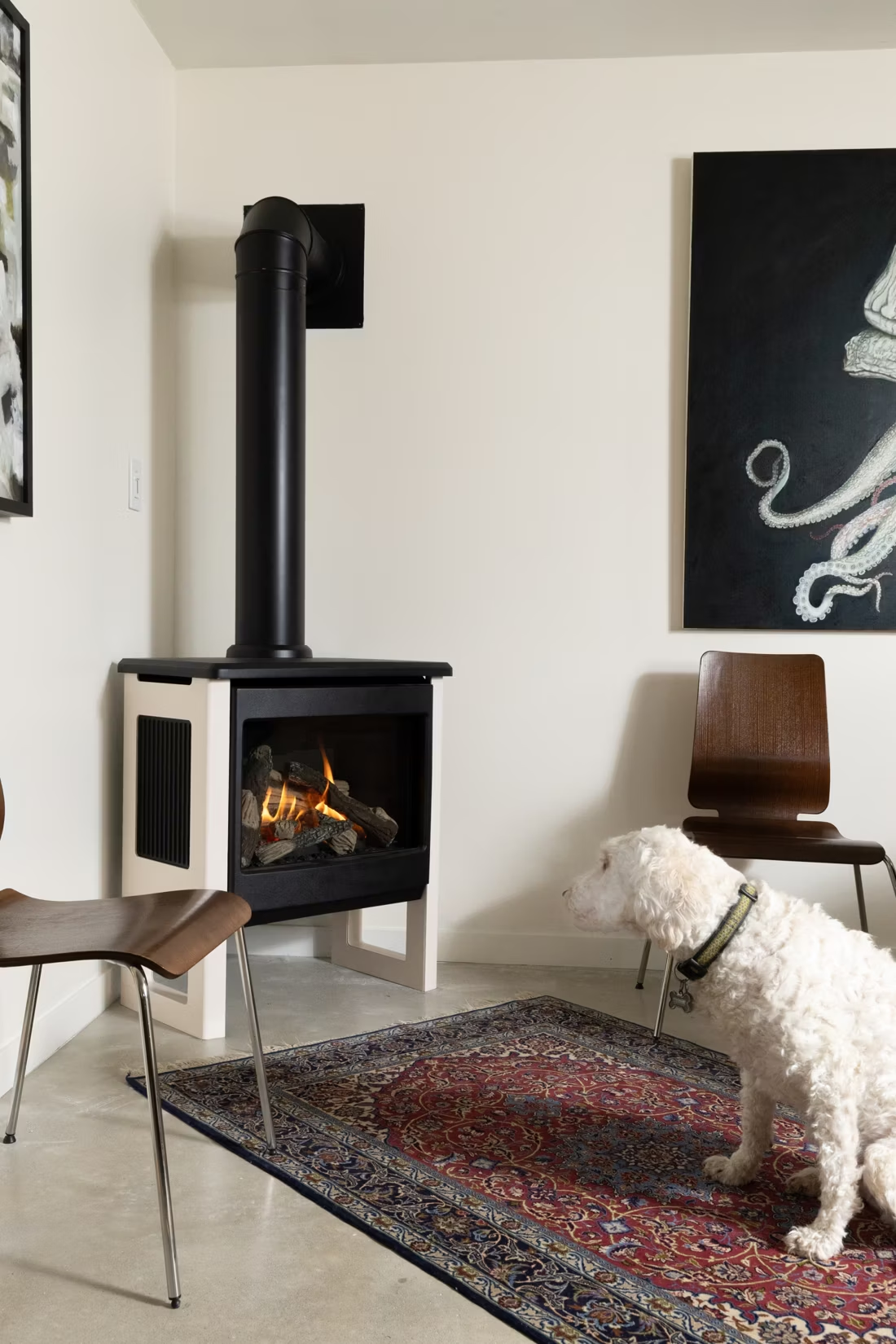
A gas fireplace is a fully built-in unit installed into a framed wall or new construction—common in Moab's newer builds and remodels. A gas insert slides into an existing masonry fireplace and uses the chimney as a vent path, which is the typical upgrade for older homes with a traditional wood-burning hearth. A gas stove is a freestanding unit that sits on the floor like a wood stove but runs on gas—a good fit for cabins or additions without an existing fireplace. Most Grand County homeowners upgrading an older fireplace go with an insert; new builds usually go with a built-in unit.
Do I need a permit to install a gas fireplace in Grand County?
Yes—new gas fireplace installations in Grand County require a building permit through the Grand County Building Department, along with a gas line permit for any new gas piping. The gas-fitting work itself has to be done by a licensed gas-fitter. Most local hearth dealers coordinate the permit, the gas line, and the venting inspection together as part of the install, so you're not stuck managing multiple trades and multiple permit trips yourself.
What's the difference between vented and vent-free gas fireplaces?
Vented gas fireplaces—direct-vent or B-vent—pull combustion air from outside and exhaust it back outside through sealed venting. Vent-free units burn directly into the room without external venting, which is more efficient on paper but releases combustion byproducts into your living space. Vent-free models are legal in Utah with strict room-sizing and ventilation rules. Given that Grand County already deals with periodic wildfire smoke advisories affecting indoor air quality in summer and fall, most local dealers steer homeowners toward a vented direct-vent unit—it delivers real heat without adding another source of indoor combustion byproducts on top of an already smoky season.
How often should my gas fireplace be serviced?
An annual inspection is recommended for any gas fireplace or insert. A technician checks the burner, pilot assembly, venting, gas connections, and ignition system, and cleans the glass and interior—a quicker job than a wood-stove chimney sweep but just as important, especially for units in vacation rental properties around Moab that see heavy seasonal use with gaps in between. Expect to pay somewhere in the $150–$250 range for a standard annual service call from a local gas appliance technician.
Gas vs. wood—which is right for my Grand County home?
Wood—typically pinyon, juniper, or aspen cut locally—offers strong heat output, lower fuel cost if you're already set up to process it, and the ability to run without power. Gas offers instant on-off convenience, no ash or smoke to manage, and one less combustion source to worry about during the wildfire smoke advisories that periodically affect the region. For full-time Moab and Spanish Valley residents who want daily convenience, or for the county's many vacation rentals and second homes where guests need simple, foolproof heat, gas is usually the better fit. For a backup heat source at a rural property outside the gas and easy-propane-delivery footprint, wood still has a place.
Are new gas fireplaces really better than old ones?
Two ways, and they're both big. Looks: modern gas fireplaces are realistic enough that it's hard to believe they aren't burning wood. Cost: old units burn a standing pilot year-round (roughly $200 a year), while new ones use pilot-on-demand ignition and modern burners. Add remote controls and thermostat operation, and the day-to-day experience isn't close.
Does a gas fireplace work when the power is out?
Yes—modern gas fireplaces have a battery backup for the ignition system that lasts for weeks, so no power equals no problem. Your furnace can't say that: no electricity, no blower, no heat. It's one of the most common reasons families add a fireplace, and worth confirming on any model you're considering.
Does a fireplace add value to my home?
On average, a fireplace adds back to the home about the same amount you spent installing it. Add the monthly savings from heating the rooms you actually use instead of the whole house—often hundreds of dollars a year—and the value case is strong before you even count what a fire does for how your family uses the room.
What is an in-home preview and do I need one?
It's a visit where a hearth professional measures your space, confirms the model you picked actually works in your home, and walks the specs—framing, gas line, venting, finish work—before anything is ordered. Some details you just can't know until you see the house. Never make a down payment without one; it's the single most-skipped step that burns buyers.
Stove and Fireplace Dealers in Grand County
Listings include WhyFire partner dealers, dealers we have verified as authorized for the brands we recommend, and established local businesses that carry hearth products. Every listing shows which one it is. The ones marked Preferred run on WhyFire's software, so they can show you real pricing and book your appointment right here. No manufacturer pays for placement. How we verify dealers →
Woodstove Warehouse
Fireplace West
Gas Products Corp
Alpine Stove & Fireplace
Find your gas fireplace in Grand County.
Tell us a bit about your home and we'll match you with a trusted local dealer and a free Project Guide & Parts List—the right gas fireplace, insert, or stove, the exact parts including the vent kit, and a plan built for Grand County's climate.
Find Your Fireplace →