
Clean, Instant Heat for Wasatch Front Winters.
Farr West sits in the Weber County basin where winter inversions trap smoke and cold settles in for months. Find the right electric fireplace or insert, and connect with a trusted local dealer.
Every Project Starts From One of These Five Situations
No smoke, no permits, no inversion worries.
Farr West sits at 4,251 feet in the Weber County valley just west of Ogden, part of the broader Wasatch Front basin. Winters here bring lows averaging around 20°F and a long, demanding heating season—colder than Boise, milder than Bozeman, Montana, but cold enough that supplemental heat matters for months at a stretch. The same mountain-ringed geography that makes the valley scenic also traps air during winter temperature inversions, and Weber County regularly sees PM2.5 buildup along with wildfire smoke drifting in during fire season.
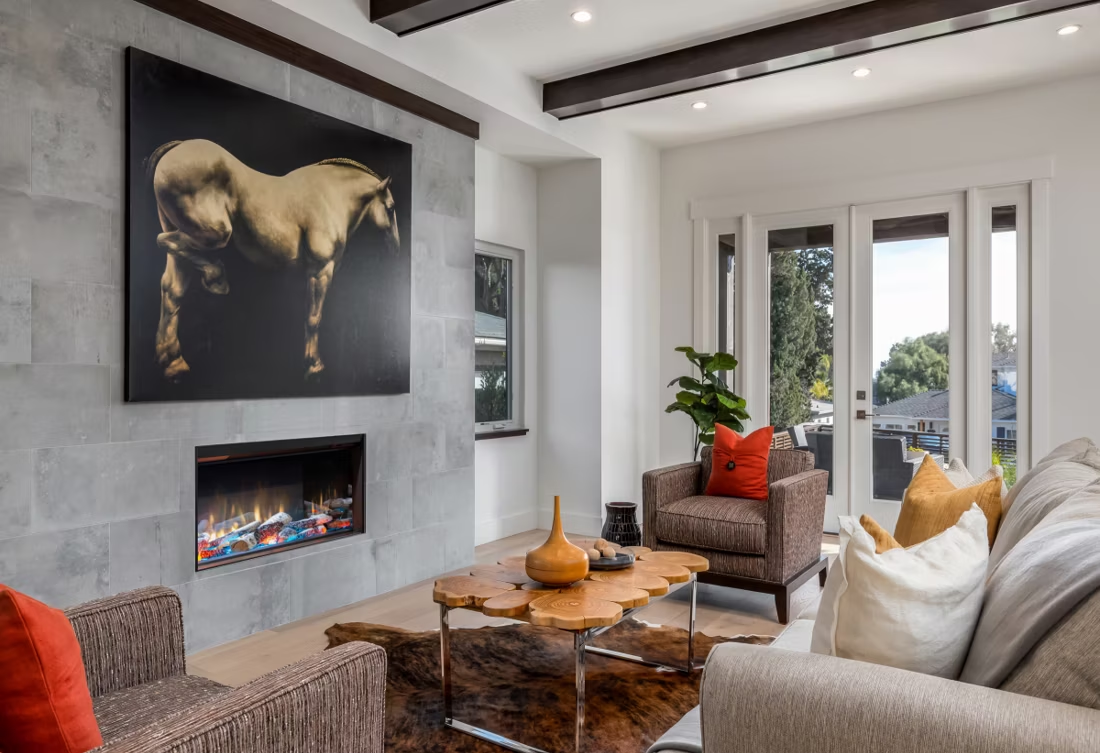
That geography is exactly why electric fireplaces have real staying power in Farr West. During Utah Division of Air Quality mandatory action days—called when inversion pollution spikes along the Wasatch Front—solid-fuel burning gets restricted or banned outright, but an electric fireplace never triggers those rules because it produces zero combustion byproducts. Running on PacifiCorp's grid at roughly 12.5 cents per kWh, an electric insert or built-in unit delivers instant, thermostat-controlled zone heat without a flue, a gas line, or a woodpile—a straightforward retrofit for existing fireplaces or new construction alike.
Three steps. No salesperson until you're ready.
Tell us about your project
Your zip code, your situation, and the fuel you're leaning toward—or let the answers point you to one.
See what's actually available
The brands dealers within 100 miles genuinely carry—real options, never a catalog mirage.
Get your dealer & Project Guide
A trusted local dealer, plus the free Project Guide & Parts List that names every component of the job.
Frequently Asked Questions
How much does an electric fireplace installation cost in Farr West?
Most electric fireplace projects in Farr West run $400 to $2,500. A plug-in insert that drops into an existing fireplace opening sits at the low end and needs nothing more than a standard outlet. A built-in linear electric fireplace with a custom mantel or wall surround—increasingly popular in newer Weber County homes—runs toward the higher end once framing, a dedicated 20-amp circuit, and finish carpentry are factored in. Local dealers will quote a firm number based on the unit and your wall or fireplace opening.
Why do so many Farr West homeowners choose electric over wood or gas?
Weber County sits inside the Wasatch Front's winter inversion zone, and the Utah Division of Air Quality calls mandatory action days most winters when PM2.5 pollution spikes—those days restrict or ban solid-fuel burning entirely. An electric fireplace produces no smoke, no particulate, and never falls under a burn restriction, which makes it a dependable option on the exact days a wood stove would need to sit cold. It's also a simpler retrofit than running a new gas line, especially in homes without existing natural gas service nearby.
Do I need a chimney or vent for an electric fireplace?
No. Electric fireplaces and inserts produce heat through resistance coils or infrared elements and don't burn fuel, so there's no combustion byproduct to vent. That means no chimney, no flue, and no clearance-to-combustibles calculations like you'd need with wood or gas. It's one of the reasons electric units are the easiest retrofit for homes in Farr West that don't already have a masonry fireplace or gas line—a unit can go into almost any wall with power access.
Can an electric fireplace heat my whole house?
Not on its own. Most electric fireplaces top out around 5,000–7,000 BTU (roughly 1,500 watts), which is enough to comfortably heat a single room or open living area but not a whole home through Farr West's winter, when the heating season runs long and demanding. Think of it as zone heat—supplemental warmth for the room you're in, paired with your furnace or heat pump for the rest of the house. That's typically how local homeowners use them.
What does it cost to run an electric fireplace in Farr West?
Rocky Mountain Power (PacifiCorp) bills Farr West residential customers at roughly 12.5 cents per kWh. A typical electric fireplace running on its 1,500-watt heat setting costs about 19 cents an hour to operate, or a little over $4.50 for a full 24-hour day of continuous use. Most households don't run one continuously—used a few hours an evening in the coldest months, the added cost to a monthly PacifiCorp bill is usually modest.
Do I need a permit to install an electric fireplace in Farr West?
Plug-in electric fireplace inserts that use a standard household outlet typically don't require a permit. Hardwired built-in units—especially larger linear fireplaces wired to a dedicated circuit—usually do need an electrical permit through the Weber County Building Division, since that work involves running new wiring. Any licensed electrician or hearth dealer handling a built-in installation should pull that permit as part of the job.
Electric vs. gas fireplace—which is better for my Farr West home?
Gas fireplaces put out more heat (often 20,000+ BTU) and can serve as genuine supplemental heat during a cold snap, but they require a gas line, venting, and a larger installation budget. Electric fireplaces cost less upfront, need no venting or gas work, and never contribute to particulate levels during a Weber County inversion advisory—but they're realistically a zone-heat, ambiance-first choice rather than a serious heat source. Homes already on natural gas service often add a gas fireplace for the living room and use electric units in bedrooms or bonus rooms where running a gas line isn't practical.
Why don't more Farr West homes have wood stoves?
Wood heat is far less common here than in Utah's mountain communities. Weber County's winter inversions concentrate wood smoke in the valley air, and installing a new wood-burning appliance means navigating local building code alongside the reality that mandatory action days can shut down solid-fuel burning for days at a stretch during the worst pollution events. Some rural properties near the Uinta-Wasatch-Cache National Forest still cut their own firewood—pinyon, juniper, and aspen are the common local species, with Forest Service permits running $5 to $20 per cord—but inside Farr West itself, gas and electric are the far more practical choices for most homeowners.
What types of electric fireplaces are available for my home?
Local dealers typically carry three configurations for Farr West homes: plug-in inserts that slide into an existing fireplace opening, wall-mounted linear units that hang like a piece of art with minimal depth, and built-in models framed into a wall or custom mantel for a more permanent, furniture-grade look. Freestanding electric stoves are also available for a portable option that can move between rooms. A local dealer can walk through which format fits your wall, your fireplace opening (if you have one), and your budget.
Can I put a TV above my fireplace?
Yes—with an asterisk. Fireplaces are hot and TVs don't like heat. Either put a mantel between them to deflect rising warmth, or choose a fireplace with heat-management technology that creates a cool zone on the wall above—the wall stays around 125 degrees, barely warm, while the room still gets full heat. If you like clean lines and don't want a mantel, heat management is the answer.
Do electric fireplaces actually produce heat?
Yes—most put out around 4,800–5,000 BTUs from a standard outlet, which comfortably warms a bedroom, office, or den as a comfort-zone heater. What they won't do is carry a whole house the way wood, gas, or pellet can. Think of electric as ambiance-first with honest supplemental heat: flames on with no heat in July, flames plus warmth in January.
Can a fireplace actually lower my heating bill?
Yes—by creating a comfort zone. A furnace heats every square foot of the house just to warm the one room you're in; a gas fireplace on low burns roughly a sixth of the gas a typical furnace does. Set the furnace around 55–60 degrees as a baseline, then heat the rooms your family actually uses. Families who heat this way commonly save $20–$60 a month.
Can I install a fireplace myself?
If you're putting a fire in your house on purpose, it's best to work with an expert. Unless you're genuinely experienced in framing, gas line, vent pipe, and the national code on clearances to combustibles, have a professional do it—and ideally the same company that sells you the fireplace, so warranty, service, and liability all live under one roof.
Nearby Dealers
Hearth shops serving Farr West and the surrounding area. Every listing shows whether it is a WhyFire partner, a dealer we have verified as authorized for the brands we recommend, or a local business carrying hearth products. No manufacturer pays for placement. How we verify dealers →
Utah Air
Hearth & Home Dist. Of UT-Ogden
Ogden Lawn & Garden
Comfort Solutions
Stone World Supply
Rocky Mountain Stove
Timber Ridge Fireplace
Chim Chiminey Fireplace
Electric Service in Farr West
An electric fireplace's heater draws about 1,500 watts—pennies per hour at local rates.
Find your electric fireplace in Farr West.
Tell us a bit about your home and we'll match you with the right electric fireplace or insert—plus a free Project Guide & Parts List and a trusted local dealer to install it.
Find Your Fireplace →