
Real Heat, Zero Smoke, Any Day of the Year.
Clean zone heat for Clearfield homes that works even on the Wasatch Front's worst inversion days. Find the right unit and connect with a trusted local dealer.
Every Project Starts From One of These Five Situations
Heat that works on every red-air-quality day.
Clearfield sits on the valley floor at 4,442 feet, boxed in by the Wasatch Range to the east and the Great Salt Lake to the west—a geography that traps cold, stagnant air against the ground every winter. When a temperature inversion settles over Davis County, PM2.5 levels climb and the Utah Division of Air Quality issues mandatory no-burn action days that restrict solid-fuel burning across the Wasatch Front. It's part of why wood heat barely registers here and pellet stoves are rare—an electric fireplace is simply unaffected by any of it.
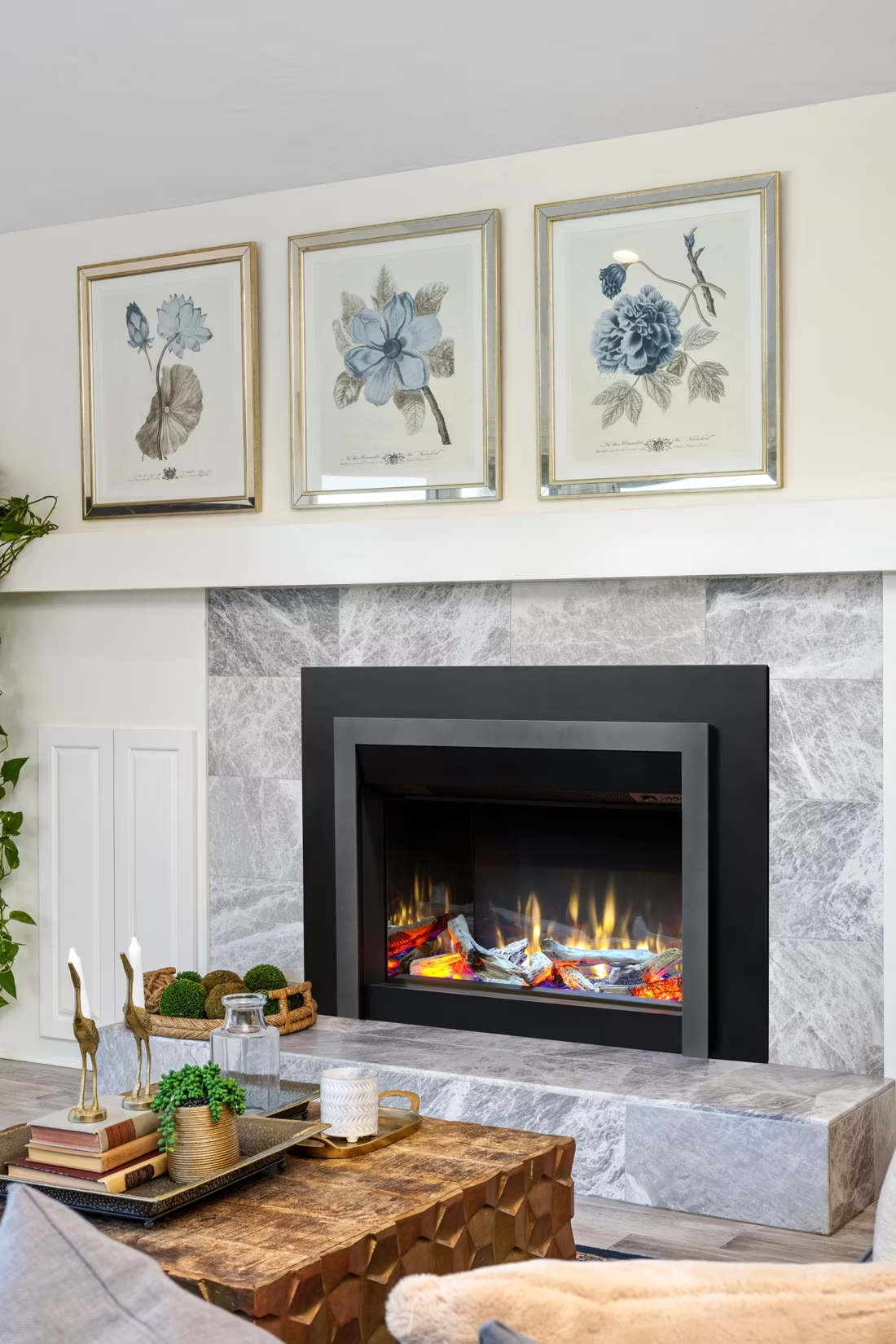
PacifiCorp serves Clearfield's residential electric accounts at a rate of roughly $0.1252 per kWh, which keeps a typical 1,500-watt electric fireplace running for under 20 cents an hour. For newer subdivisions near Hill Air Force Base and Clearfield Station, where HOA rules or townhome construction make venting a chimney impractical, an electric insert or wall-mounted linear unit delivers real supplemental warmth and ambiance without a flue, a gas line, or a permit headache—and it runs on every single one of the 15 to 20 no-burn days Davis County typically sees each winter.
Three steps. No salesperson until you're ready.
Tell us about your project
Your zip code, your situation, and the fuel you're leaning toward—or let the answers point you to one.
See what's actually available
The brands dealers within 100 miles genuinely carry—real options, never a catalog mirage.
Get your dealer & Project Guide
A trusted local dealer, plus the free Project Guide & Parts List that names every component of the job.
Frequently Asked Questions
How much does it cost to install an electric fireplace in Clearfield?
Most electric fireplace projects in Clearfield run $400 to $2,500. A plug-in insert that drops into an existing fireplace opening or a freestanding unit sits at the low end—no wiring changes needed if it's on a standard 120V outlet. Built-in linear units, wall-recessed models, or anything requiring a new dedicated circuit run higher, especially if an electrician needs to open a wall or route wire from the panel. Because there's no venting, no chimney, and no gas line to run, electric installs are consistently the least expensive fireplace project you can do in Clearfield—a fraction of what a gas conversion typically costs.
Will an electric fireplace actually heat my house?
It will heat a room, not a house. Most electric fireplaces top out around 1,500 watts, which translates to roughly 4,600 to 5,200 BTUs per hour—enough to comfortably warm a bedroom, den, or basement family room. With Clearfield's average winter low around 20°F and a long, demanding winter heating season, an electric unit works best as targeted supplemental heat in the room you actually live in, paired with your existing furnace for the rest of the house. It's not designed to replace central heat during a hard freeze.
Why don't more people in Clearfield have wood stoves?
Wood heat is uncommon in Clearfield largely because of the valley's winter inversions. When PM2.5 pollution builds up along the Wasatch Front, the Utah Division of Air Quality calls mandatory no-burn action days for Davis, Salt Lake, and Weber counties, and solid-fuel appliances have to stay cold. A homeowner who cuts pinyon, juniper, or aspen under a Uinta-Wasatch-Cache National Forest permit ($5 to $20 per cord, May through October season) can still burn on clear days, but the restrictions make wood impractical as a dependable heat source here. It's a big reason electric and gas dominate the local market instead.
Do I need a permit to install an electric fireplace in Clearfield?
In most cases, no. A plug-in electric fireplace or insert that uses an existing outlet doesn't require a permit. If your project involves adding a new dedicated circuit, moving wiring inside a wall, or a larger built-in unit that needs its own breaker, an electrical permit through the City of Clearfield Building Department is typically required, and a licensed electrician should pull it. Local dealers who install built-in units usually coordinate this as part of the job.
What size electric fireplace do I need?
For a bedroom or small den under 300 square feet, a compact 26–33 inch insert or wall-mount unit is usually plenty. Larger open living spaces of 400 to 600 square feet do better with a wider linear unit or a higher-output model, though remember wattage—not width—determines actual heat output, and most units cap at 1,500 watts regardless of size. If you're trying to offset heating costs in a specific room during Clearfield's coldest stretches, a local dealer can walk you through wattage versus square footage rather than just picking based on looks.
What's the difference between an electric insert, a wall-mount, and an electric stove?
An electric insert is built to slide into an existing fireplace opening, masonry or zero-clearance, and is the most common choice for Clearfield homes converting an old wood-burning fireplace that's rarely used anyway. A wall-mount or linear unit hangs on the wall like a flat-screen TV, popular in newer Clearfield builds and townhomes where there's no existing fireplace at all. A freestanding electric stove mimics a wood stove's look and can go almost anywhere near an outlet—a good fit for a basement or garage conversion. All three plug into standard household power in most configurations.
How much does it cost to run an electric fireplace in Clearfield?
At PacifiCorp's residential rate of about $0.1252 per kWh, a 1,500-watt electric fireplace running on high costs roughly 19 cents per hour, or about $4.50 for a full 24 hours of continuous use. Most households run theirs a few hours an evening rather than around the clock, which keeps monthly cost well under $20 even during Clearfield's coldest months. That's meaningfully cheaper to operate than a gas fireplace once you factor in Utah's natural gas rates, though gas still wins on total heat output for larger spaces.
What brands of electric fireplaces do local dealers carry?
Dimplex, Napoleon, and Amantii are the brands most frequently stocked by hearth dealers serving the Davis County area, ranging from basic plug-in inserts to high-end linear units with realistic flame technology and multi-color ambiance lighting. Because there's no combustion involved, electric units also see more design variety than wood or gas—frameless, extra-wide, and see-through models are all viable options a local dealer can show you in person.
Should I get an electric fireplace or a gas fireplace instead?
Gas delivers more real heat and works well as a supplemental source through Clearfield's full winter, but it requires a gas line, venting, and a higher install cost, plus it's still subject to occasional inversion-related air quality guidance depending on the unit. Electric skips all of that—no venting, no gas line, install costs a fraction of gas, and it runs every single day regardless of air quality alerts, though it heats a smaller area and costs more per BTU to operate long-term. For a secondary room or an ambiance-focused project, electric is usually the simpler, cheaper path. For a primary supplemental heat source in a larger living space, gas is worth the extra investment.
Can I put a TV above my fireplace?
Yes—with an asterisk. Fireplaces are hot and TVs don't like heat. Either put a mantel between them to deflect rising warmth, or choose a fireplace with heat-management technology that creates a cool zone on the wall above—the wall stays around 125 degrees, barely warm, while the room still gets full heat. If you like clean lines and don't want a mantel, heat management is the answer.
Does an electric fireplace need a vent or chimney?
No—that's its superpower. An electric fireplace needs a wall and an outlet, period. No vent pipe, no gas line, no clearances to design around, which is why it works in bedrooms, offices, apartments, and walls where venting a gas or wood unit would be impractical or impossible. Installation is typically the simplest and least expensive of any fireplace type.
Does a fireplace add value to my home?
On average, a fireplace adds back to the home about the same amount you spent installing it. Add the monthly savings from heating the rooms you actually use instead of the whole house—often hundreds of dollars a year—and the value case is strong before you even count what a fire does for how your family uses the room.
Can I install a fireplace myself?
If you're putting a fire in your house on purpose, it's best to work with an expert. Unless you're genuinely experienced in framing, gas line, vent pipe, and the national code on clearances to combustibles, have a professional do it—and ideally the same company that sells you the fireplace, so warranty, service, and liability all live under one roof.
Nearby Dealers
Hearth shops serving Clearfield and the surrounding area. Every listing shows whether it is a WhyFire partner, a dealer we have verified as authorized for the brands we recommend, or a local business carrying hearth products. No manufacturer pays for placement. How we verify dealers →
Timber Ridge Fireplace
Stone World Supply
Rocky Mountain Stove
Comfort Solutions
Ogden Lawn & Garden
Hearth & Home Dist. Of UT-Ogden
Utah Air
Croft Fireplaces (Bountiful)
Comfort Solutions
Electric Service in Clearfield
An electric fireplace's heater draws about 1,500 watts—pennies per hour at local rates.
Find your electric fireplace in Clearfield.
Tell us a bit about your home and we'll put together a free Project Guide & Parts List for your electric fireplace project—the right unit, the exact parts, and a trusted local Clearfield dealer to install it.
Find Your Fireplace →