
Heat that still works on Centerville's worst air days.
No smoke, no venting, no gas line—just clean supplemental heat for Davis County homes. Find the right unit and get matched with a trusted local dealer.
Every Project Starts From One of These Five Situations
Electric heat sidesteps the inversion problem entirely.
Centerville sits at 4,245 feet along the base of the Wasatch Front in Davis County, boxed in by the mountains to the east and the Great Salt Lake basin to the west. That geography is exactly what produces the valley's notorious winter inversions, when cold air gets trapped under a warm layer and wildfire smoke, vehicle exhaust, and wood smoke all sit stagnant over the city for days at a time. With 5,936 heating degree days and average winter lows around 23°F, homes here need real supplemental heat—but not the kind that adds another source of particulate matter to an already strained air basin.
That's where electric fireplaces earn their keep. Utah's Division of Air Quality issues mandatory no-burn action days across the Wasatch Front during the worst inversion stretches, restricting solid-fuel burning countywide—which is a big part of why wood stoves see almost no residential use in Centerville today. Electric units sidestep that entirely: no combustion, no emissions inside the home, no exception dates to track. They run on standard household current through Rocky Mountain Power (PacifiCorp), Centerville's electric utility, at a residential rate around $0.1252 per kWh—and installation is typically a fraction of what a vented gas or wood unit requires, since there's no chimney, gas line, or exterior venting involved.
Three steps. No salesperson until you're ready.
Tell us about your project
Your zip code, your situation, and the fuel you're leaning toward—or let the answers point you to one.
See what's actually available
The brands dealers within 100 miles genuinely carry—real options, never a catalog mirage.
Get your dealer & Project Guide
A trusted local dealer, plus the free Project Guide & Parts List that names every component of the job.
Frequently Asked Questions
How much does an electric fireplace cost to install in Centerville?
Plug-in electric inserts that drop into an existing fireplace opening run $200 to $600 and need no electrician if there's already an outlet nearby. Built-in wall-mount units or linear electric fireplaces that require a licensed electrician to run a dedicated 20-amp circuit typically land between $1,500 and $4,000 installed, including any framing or trim work. Custom mantel packages or full media-wall installations with tile or stone surrounds can run $4,000 to $7,000. Compared to a gas conversion, which needs a licensed gas-fitter and venting, electric is almost always the lower-cost, faster-to-install option—a local dealer can quote the exact number once they see your space.
Why don't more homes in Centerville use wood stoves?
The Wasatch Front's winter inversions are the main reason. When the Division of Air Quality declares a mandatory action day—common during the coldest, stillest stretches of a Davis County winter—solid-fuel burning is restricted countywide, wood stoves included. That regulatory reality, combined with limited firewood access this close to the Salt Lake valley floor, has pushed most Centerville homeowners toward gas or electric instead. Electric is the cleanest fit of the two: there's no fuel to restrict on a red air day, because there's nothing being burned in the first place.
Will my electric fireplace work if the power goes out?
No—and this is worth being honest about upfront. Electric fireplaces run entirely on household current, so a power outage takes them offline along with everything else on the circuit. If backup heat during outages matters to you, a vented gas fireplace with battery-backed ignition is a better fit for that specific job. Most Centerville homeowners treat electric as a supplemental or ambiance heat source for daily use, not an emergency heat plan, and pair it with a separate backup strategy for outages.
Do I need a permit to install an electric fireplace in Centerville?
A plug-in insert that uses an existing outlet needs no permit at all. A hardwired built-in or wall-mount unit that requires a new dedicated circuit does need an electrical permit through the Centerville City Building Department, since it involves running new wiring. There's no gas line inspection, no venting review, and no chimney work to schedule—which is part of why electric installs move faster than wood or gas projects here. Most local dealers pull the electrical permit as part of the installation if one's required.
How much space will an electric fireplace actually heat?
Most electric fireplace heaters are rated around 1,500 watts and are built to supplement, not replace, your existing furnace—figure roughly 400 to 1,000 square feet of comfortable supplemental heat depending on ceiling height and insulation. With Centerville's 5,936 heating degree days and average winter lows in the low 20s, that's enough to take the chill off a living room or finished basement on a cold evening, but it isn't a substitute for central heat during a hard January cold snap. If you're trying to heat a whole floor, talk to a local dealer about zone heating with multiple units or pairing electric with your existing HVAC.
What's the difference between an electric insert, a wall-mount unit, and a freestanding electric stove?
An electric insert slides into an existing fireplace opening—a common fit in Centerville's newer tract homes that were built with a prefab masonry or metal fireplace box but never got a wood or gas unit installed. A wall-mount or linear electric fireplace is a built-in look for new construction or remodels, usually centered under a TV or in a media wall. A freestanding electric stove mimics the look of a wood stove and can go almost anywhere with an outlet, which makes it a flexible option for condos and townhomes near Parrish Lane and other higher-density parts of the city. A local dealer can tell you which fits your existing fireplace opening, if you have one.
How much does it cost to run an electric fireplace in Centerville?
At Rocky Mountain Power's (PacifiCorp) residential rate of about $0.1252 per kWh, a typical 1,500-watt electric fireplace running on its heat setting for five hours a day costs roughly $0.94 a day, or about $28 a month. Running it on flame-only mode with the heater off costs pennies, since the LED flame effect itself draws very little power. That's meaningfully cheaper than running a gas insert for the same hours once fuel cost is factored in, though gas still wins on raw heat output for larger rooms.
Is electric or gas the better choice for a Centerville home?
Gas fireplaces put out more heat per hour and can double as a real backup heat source during outages if equipped with battery-backed ignition—a meaningful plus given how cold Centerville winters get. Electric fireplaces cost less to install, need no gas line or venting, produce zero emissions or byproducts inside the home, and are exempt from any Division of Air Quality action-day restrictions, since there's nothing being burned. For a primary living room where you want real supplemental warmth and outage protection, gas is often the stronger fit. For a bedroom, basement, condo, or a spot where ambiance matters more than serious heat output, electric is usually the simpler and cheaper answer. Local dealers here install both and can walk through the tradeoffs for your specific room.
Can I add an electric fireplace to a rental or condo in Centerville?
Yes—this is one of the more common electric fireplace projects in the area. Because plug-in inserts and freestanding electric stoves need no venting, gas line, or structural modification, they're often the only fireplace option that's realistic in a rented townhome or a condo association with restrictions on gas appliances or exterior venting. Renters should confirm with their landlord before any hardwiring work, but a simple plug-in unit typically requires no landlord approval or permit at all.
Can I put a TV above my fireplace?
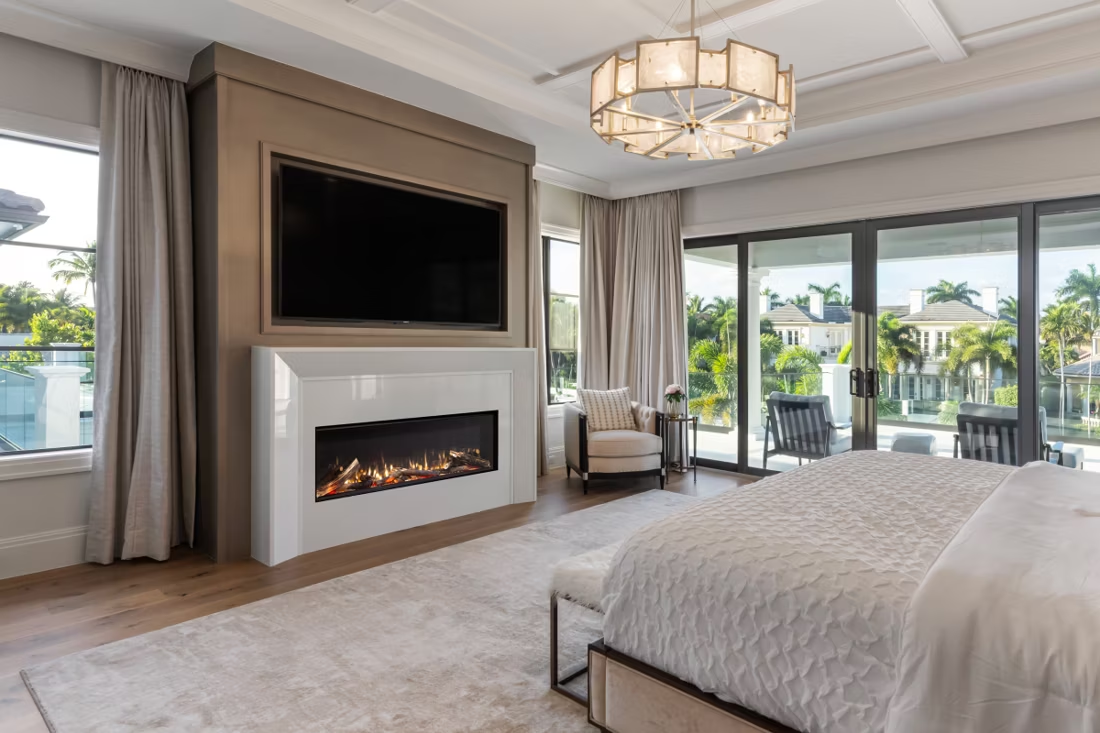
Yes—with an asterisk. Fireplaces are hot and TVs don't like heat. Either put a mantel between them to deflect rising warmth, or choose a fireplace with heat-management technology that creates a cool zone on the wall above—the wall stays around 125 degrees, barely warm, while the room still gets full heat. If you like clean lines and don't want a mantel, heat management is the answer.
Do electric fireplaces actually produce heat?
Yes—most put out around 4,800–5,000 BTUs from a standard outlet, which comfortably warms a bedroom, office, or den as a comfort-zone heater. What they won't do is carry a whole house the way wood, gas, or pellet can. Think of electric as ambiance-first with honest supplemental heat: flames on with no heat in July, flames plus warmth in January.
How much should I budget for a fireplace?
For an average home—covering the fireplace, the vent pipe, and basic installation—a budget between $3,900 and $5,500 gives you a lot of options across wood, gas, and pellet. By the time you add finish work, gas line, and electrical, the average complete installation lands between $5,000 and $12,000 all-in. In a remodel or new build, a good rule is to put about 2.5% of the total project cost toward the fireplace.
Can I install a fireplace myself?
If you're putting a fire in your house on purpose, it's best to work with an expert. Unless you're genuinely experienced in framing, gas line, vent pipe, and the national code on clearances to combustibles, have a professional do it—and ideally the same company that sells you the fireplace, so warranty, service, and liability all live under one roof.
Nearby Dealers
Hearth shops serving Centerville and the surrounding area. Every listing shows whether it is a WhyFire partner, a dealer we have verified as authorized for the brands we recommend, or a local business carrying hearth products. No manufacturer pays for placement. How we verify dealers →
Croft Fireplaces (Bountiful)
Comfort Solutions
Timber Ridge Fireplace
(Sugar House) Alpine Fireplaces (In Breezeway Next To Theatres)
Bills Comfort Systems
Rocky Mountain Stove
Ignite Fireplace
Stone World Supply
Degrees Above Fireplaces
Comfort Solutions
Ogden Lawn & Garden
Hearth & Home Dist. Of UT-Ogden
Wasatch Fireplace & Stove
Standard Plumbing
Electric Service in Centerville
An electric fireplace's heater draws about 1,500 watts—pennies per hour at local rates.
Find your electric fireplace in Centerville.
Tell us about your home and we'll put together a free Project Guide & Parts List—the right electric fireplace or insert for your space, plus a trusted local dealer to install it.
Find Your Fireplace →