
Real flame-look warmth built for Carbon County's cold, dry winters.
From Price to Helper to Wellington, electric fireplaces add zone heat and ambiance without a flue, a gas line, or a permit hassle. Tell us about your home and we'll match you with a trusted local dealer who installs what actually works here.
Every Project Starts From One of These Five Situations
Supplemental heat that earns its keep in the high desert cold.
Carbon County sits in east-central Utah's high desert, with Price at roughly 5,600 feet and Scofield pushing well past 7,000. With a heating season stretching into a long, cold winter and an average winter low of 8°F—a heating load similar to Buffalo, NY—this isn't a mild climate, and it's not one where an electric fireplace should be asked to carry the whole house. Historically, families here have leaned on pinyon, juniper, and aspen cut under Manti-La Sal National Forest permits for real heat output, especially in outlying areas around East Carbon and Sunnyside where a woodpile has always been part of getting through winter.
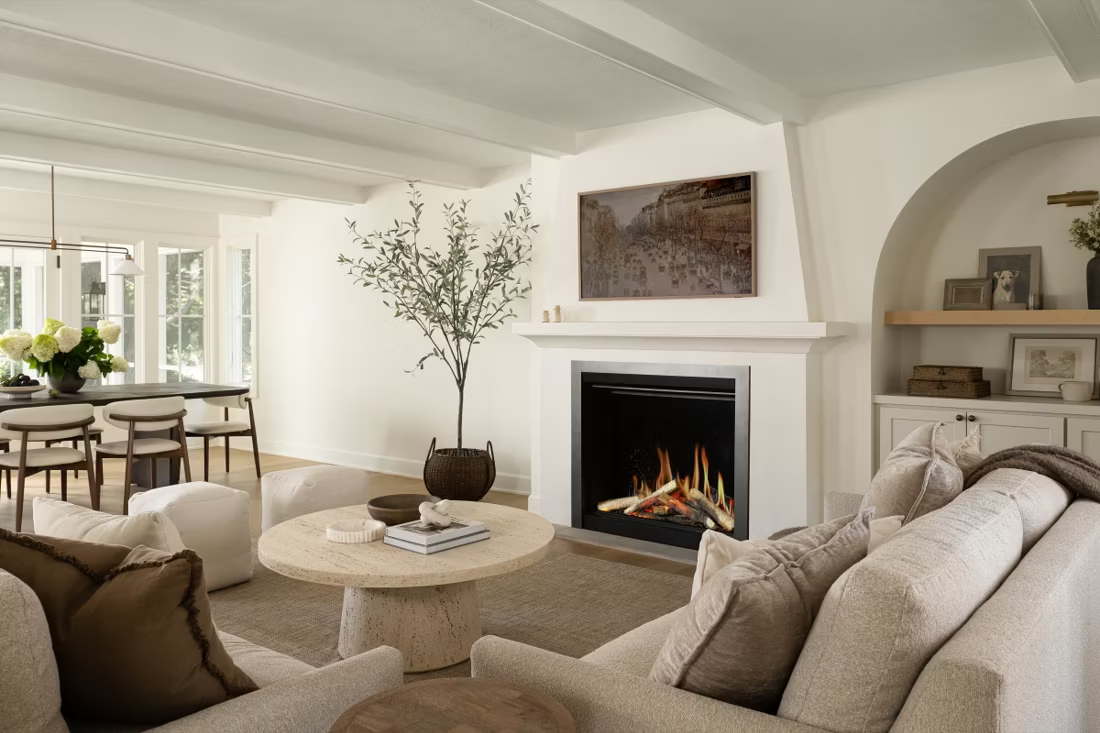
Electric fireplaces fill a different, genuinely useful role in Carbon County homes: zone heat for a bedroom or basement rec room, ambiance in a living room that's already served by a furnace, and a no-smoke option during the wildfire-smoke stretches of late summer when even wood burners here are glad to have an alternative. Plug-in units need no permit and no venting at all—you plug them in and they work. Built-in wired units draw more current and typically require an electrical permit through the Carbon County Building Department, but the trade-off is a cleaner, flush-mounted look with no cord in sight. Either way, a local dealer can tell you honestly whether an electric unit fits the room you're heating or whether you'd be better served pairing it with your existing furnace or a wood stove for the coldest weeks.
Three steps. No salesperson until you're ready.
Tell us about your project
Your zip code, your situation, and the fuel you're leaning toward—or let the answers point you to one.
See what's actually available
The brands dealers within 100 miles genuinely carry—real options, never a catalog mirage.
Get your dealer & Project Guide
A trusted local dealer, plus the free Project Guide & Parts List that names every component of the job.
Frequently Asked Questions
How much does an electric fireplace installation cost in Carbon County?
Plug-in electric fireplaces and inserts are the least expensive option—many run under $1,000 for the unit itself and require no installation cost beyond finding an outlet, since there's no venting or gas line involved. Built-in wired units that require a dedicated 120V or 240V circuit typically add $500 to $1,500 in electrical work, especially if the breaker panel is older or the run to the panel is long—something more common in the older homes around Helper and Price. A local dealer will give you a firm number after seeing the room and your panel.
Will an electric fireplace actually heat my home during a Carbon County winter?
Realistically, no—not on its own. With a long, cold winter and average winter lows around 8°F, most electric fireplaces (typically rated around 1,500 watts, or roughly 5,000 BTUs) are built to warm a single room, not carry a whole house through a Price or Wellington winter. They're best used as zone heat alongside your existing furnace, or as a supplemental source in a room you want warmer without running central heat harder. If you're looking for a primary heat source for the coldest months, a wood stove or gas unit is usually the better fit—a local dealer can walk you through both.
Do I need a permit to install an electric fireplace in Carbon County?
It depends on the unit. Plug-in electric fireplaces and inserts don't require any building or electrical permit—they run off a standard outlet like any other appliance. Built-in units wired directly into your home's electrical system typically require an electrical permit through the Carbon County Building Department, since a licensed electrician needs to verify the circuit can handle the load. Most local dealers who sell built-in units will coordinate the electrician and permit as part of the install.
What's the difference between an electric fireplace insert and a built-in unit?
An electric insert is designed to drop into an existing fireplace opening—including old wood-burning fireplaces that homeowners around Price and Helper are looking to retire without tearing out the masonry. It typically plugs into a standard outlet behind the firebox. A built-in electric fireplace is framed into a wall like a real firebox, often wired on its own circuit, and gives you a flush, no-cord look with more design flexibility for new construction or remodels. Inserts are the simpler, lower-cost path if you already have a fireplace opening to work with.
Will my electric fireplace work during a power outage?
No—electric fireplaces need power to run the heater, blower, and flame effect, so they go dark along with everything else in an outage. That's worth weighing carefully in Carbon County, where winter storms and rural power lines can mean outages that stretch for hours. If backup heat matters to your household, many local homeowners pair an electric fireplace for everyday convenience with a wood stove for genuine outage-proof heat—firewood permits through Manti-La Sal National Forest run $5 to $20 per cord during the May-to-October cutting season, which keeps that backup option affordable.
What should I look for in an electric fireplace for Carbon County's climate?
Look for a unit with a real thermostat (not just a high/low switch) so it can hold a set temperature efficiently, and check the wattage—most quality units top out around 1,500 watts, which is standard for supplemental heat in a single room. In a county with dry, cold winters like Carbon's, a unit with a strong flame-effect LED display also earns its keep on the many gray, short-daylight days between November and February. Beyond that, fit and finish matter most—a local dealer can show you options in person and help you match the unit to your room size and existing decor.
Electric vs. wood vs. pellet—which fits my Carbon County home?
Wood remains the traditional backbone of home heat in Carbon County, with pinyon, juniper, and aspen cut locally under Manti-La Sal National Forest permits—but it means real ash, real chimney maintenance, and smoke output that gets scrutinized during the county's wildfire-smoke stretches. Pellet stoves, using regional brands like Bear Mountain, Lignetics, or Forest Energy, burn cleaner and are easier to load and run, but still need electricity for the auger and blower. Electric fireplaces are the cleanest and simplest of the three—no ash, no smoke, no fuel to store—but they're supplemental heat only, not a primary source for a county averaging 8°F winter lows. Many Carbon County households end up running two: a real heat source (wood or gas) for the cold months, and electric for ambiance and easy zone heat the rest of the year.
How much does it cost to run an electric fireplace with Rocky Mountain Power?
A typical 1,500-watt electric fireplace run on high for several hours a day costs a few dollars a week at standard Rocky Mountain Power residential rates—considerably less than heating an entire room with a furnace running longer cycles. Most owners use theirs a few hours in the evening for ambiance and supplemental warmth rather than running it continuously, which keeps the added cost on your monthly bill modest. If you want a specific estimate for your usage pattern, a local dealer can help translate wattage into expected monthly cost.
Where can I find a local dealer to install an electric fireplace in Carbon County?
Find My Fireplace isn't a retailer—we're a neutral matching service. Tell us about your home in Price, Helper, Wellington, East Carbon, or elsewhere in the county, and we'll connect you with a trusted local dealer who carries units genuinely suited to your space, along with a free Project Guide & Parts List covering the exact unit and any electrical work needed. We don't take manufacturer money to steer you toward a particular brand—the goal is matching you with what actually fits your room and your budget.
Can I put a TV above my fireplace?
Yes—with an asterisk. Fireplaces are hot and TVs don't like heat. Either put a mantel between them to deflect rising warmth, or choose a fireplace with heat-management technology that creates a cool zone on the wall above—the wall stays around 125 degrees, barely warm, while the room still gets full heat. If you like clean lines and don't want a mantel, heat management is the answer.
How much does an electric fireplace cost to run?
With the heater on, a typical unit draws about 1,500 watts—at average electric rates that's roughly 20 cents an hour. Run the flame effect alone and it costs pennies; the flames are LED-driven and use about as much power as a light bulb. There's no pilot light, no fuel delivery, and essentially no maintenance.
Can I install a fireplace myself?
If you're putting a fire in your house on purpose, it's best to work with an expert. Unless you're genuinely experienced in framing, gas line, vent pipe, and the national code on clearances to combustibles, have a professional do it—and ideally the same company that sells you the fireplace, so warranty, service, and liability all live under one roof.
What is an in-home preview and do I need one?
It's a visit where a hearth professional measures your space, confirms the model you picked actually works in your home, and walks the specs—framing, gas line, venting, finish work—before anything is ordered. Some details you just can't know until you see the house. Never make a down payment without one; it's the single most-skipped step that burns buyers.
Stove and Fireplace Dealers in Carbon County
Listings include WhyFire partner dealers, dealers we have verified as authorized for the brands we recommend, and established local businesses that carry hearth products. Every listing shows which one it is. The ones marked Preferred run on WhyFire's software, so they can show you real pricing and book your appointment right here. No manufacturer pays for placement. How we verify dealers →
A. Johnson Heating & Air
Howa And Sons
Southwest Plumbing Supply - Price
Find your electric fireplace in Carbon County.
Tell us about your home and we'll match you with a trusted local dealer and a free Project Guide & Parts List—the exact unit, any electrical work needed, and a plan built for Carbon County's winters.
Find Your Fireplace →