
Warmth that never counts against Brigham City's air quality.
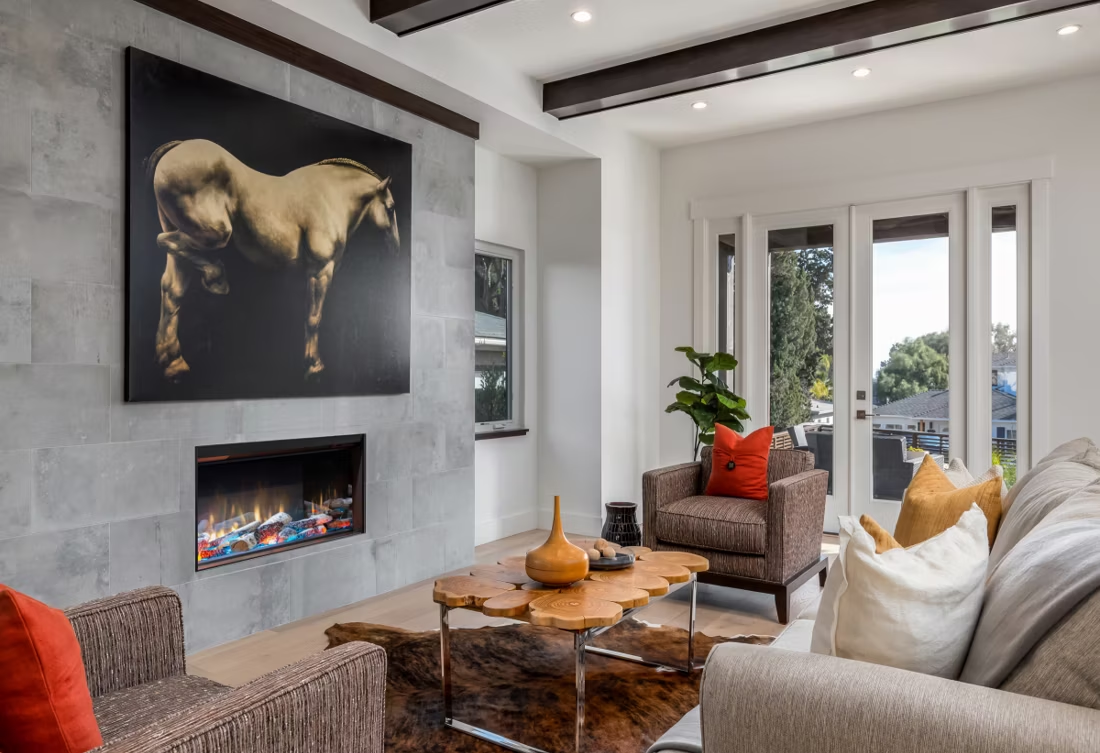
No chimney, no gas line, no smoke—just a plug-in or hardwired unit that adds real zone heat and flame ambiance to a Box Elder County home. Find the right unit and connect with a trusted local dealer.
Every Project Starts From One of These Five Situations
Heat that works with the Wasatch Front's air, not against it.
Brigham City sits at 4,234 feet where the Wasatch Front meets the Bear River, with a long, cold winter season and winter lows that average around 18°F—cold enough to put it in the same range as Helena, Montana. What makes the valley distinct isn't just the cold, it's the winter temperature inversions that trap wood smoke and particulates against the mountains for days at a time. Utah's Division of Air Quality regularly calls mandatory no-burn action days on the Wasatch Front during these events, and solid-fuel and gas-log burning is restricted on those days regardless of how cold it is outside.
Electric fireplaces sidestep that problem entirely—there's nothing to burn, so there's nothing for the state to restrict. Most Brigham City homes still rely on a furnace or heat pump for whole-home heat, since a 1,500-watt electric unit is built for zone heating rather than replacing a central system in a 6B climate. But for a bonus room, basement, or bedroom where running a chimney or gas line isn't practical, or for the exact days when a red air alert grounds the wood stove, an electric insert or wall unit plugged into power from PacifiCorp (Rocky Mountain Power) or Brigham City Corporation's own municipal utility is often the simplest fix in the house.
Three steps. No salesperson until you're ready.
Tell us about your project
Your zip code, your situation, and the fuel you're leaning toward—or let the answers point you to one.
See what's actually available
The brands dealers within 100 miles genuinely carry—real options, never a catalog mirage.
Get your dealer & Project Guide
A trusted local dealer, plus the free Project Guide & Parts List that names every component of the job.
Frequently Asked Questions
How much does an electric fireplace installation cost in Brigham City?
Plug-in electric inserts and mantel packages typically run $300 to $1,500 installed, since most units drop into an existing opening or come as a self-contained cabinet and only need a standard 120-volt outlet. Built-in wall units or linear models set into new framing run higher, often $2,000 to $5,000, especially if a licensed electrician needs to run a dedicated 20-amp circuit to the location. Because there's no venting, no chimney, and no gas line, electric is consistently the least expensive fireplace option to install in Brigham City—a fraction of what wood or gas conversions cost.
Will an electric fireplace actually heat my home in Brigham City's winters?
Not as a whole-home solution—with a long, cold winter season and average winter lows near 18°F, Brigham City needs a real furnace or heat pump for primary heat. A typical electric fireplace puts out about 5,000 BTU on the heat setting, which is enough to noticeably warm a single bedroom, den, or basement family room but won't carry a whole house through a January cold snap. Most local homeowners install one as targeted zone heat for a specific room, or run it alongside existing central heat rather than in place of it.
Can I run an electric fireplace during a winter inversion or red air day?
Yes, and that's one of the strongest reasons homeowners in Box Elder County add one. When Utah's Division of Air Quality calls a mandatory action day during a Wasatch Front inversion, wood stoves and many gas appliances are restricted from burning. Electric fireplaces produce no combustion byproducts, so they're never subject to those burn restrictions—you can still get flame ambiance and supplemental warmth on exactly the days when the wood stove has to stay cold.
What's the difference between an electric insert, a mantel package, and a wall-mounted unit?
An electric insert is a self-contained unit that slides into an existing fireplace opening—a common upgrade for a masonry firebox that's rarely used or was never converted to gas. A mantel package pairs an insert with a surrounding cabinet and shelf, giving you a complete fireplace look in a room that never had one. A wall-mounted or linear unit hangs flush on the wall or recesses into new framing, which is popular in additions, basements, and bedrooms where floor space is tight. All three plug in or hardwire—none require venting.
Do I need an electrician to install an electric fireplace?
For most plug-in inserts and mantel units, no—they run off a standard household outlet and any homeowner can set one in place. Larger built-in or linear units, especially ones over 1,500 watts or installed in a new location without existing wiring, usually call for a licensed electrician to run a dedicated 20-amp circuit. If you're adding new wiring, check with Brigham City's building department on whether an electrical permit is needed for the circuit work—the fireplace itself typically doesn't trigger a separate permit since there's no venting or gas involved.
What will it cost to run an electric fireplace in Brigham City?
At Brigham City's residential rate of roughly $0.1252 per kWh, a standard 1,500-watt unit on its heat setting costs about $0.19 an hour to run—call it under a dollar for a five-hour evening. Whether you're served by PacifiCorp or Brigham City Corporation's municipal power, the rate is similar, and it's one of the cheapest ways to add supplemental heat to a single room compared to running a furnace harder or burning through a cord of pinyon or juniper.
Electric vs. gas vs. wood—which is right for my home in Brigham City?
Wood, using local pinyon, juniper, or aspen from a Uinta-Wasatch-Cache National Forest cutting permit, delivers the most heat per dollar and works without power, but it's the fuel most likely to be restricted during a Wasatch Front inversion. Gas gives instant, substantial heat and can run during outages with the right ignition system, but needs a gas line and venting. Electric has the lowest install cost, zero emissions, and never gets shut down by an air quality alert, but it's supplemental heat only—not a replacement for the furnace on the coldest nights. Many Box Elder County homes end up with wood or gas for real heat and an electric unit for the rooms and days where neither is practical.
Do electric fireplaces need venting or permits in Brigham City?
No venting is required—there's no combustion, so there's no chimney, flue, or exterior vent to plan for. Permitting is minimal too: a plug-in insert generally needs no permit at all, and even a hardwired built-in usually only triggers an electrical permit for the new circuit, not a full building permit. That's a meaningful difference from wood installs, which require a building permit and EPA-certified equipment, or gas installs, which need both a building permit and a licensed gas-fitter.
Where do electric fireplaces make the most sense in a Brigham City home?
The most common installs we see are additions and finished basements where running a masonry chimney or new gas line isn't realistic, bedrooms where a homeowner wants ambiance without an open flame, and second living spaces in homes that already burn pinyon or juniper in a main-floor wood stove. It's also a practical backup for households that want a heat source that keeps working—and stays legal—during a winter inversion action day when wood-burning restrictions are in effect.
Does an electric fireplace need a vent or chimney?
No—that's its superpower. An electric fireplace needs a wall and an outlet, period. No vent pipe, no gas line, no clearances to design around, which is why it works in bedrooms, offices, apartments, and walls where venting a gas or wood unit would be impractical or impossible. Installation is typically the simplest and least expensive of any fireplace type.
Do electric fireplaces actually produce heat?
Yes—most put out around 4,800–5,000 BTUs from a standard outlet, which comfortably warms a bedroom, office, or den as a comfort-zone heater. What they won't do is carry a whole house the way wood, gas, or pellet can. Think of electric as ambiance-first with honest supplemental heat: flames on with no heat in July, flames plus warmth in January.
How much should I budget for a fireplace?
For an average home—covering the fireplace, the vent pipe, and basic installation—a budget between $3,900 and $5,500 gives you a lot of options across wood, gas, and pellet. By the time you add finish work, gas line, and electrical, the average complete installation lands between $5,000 and $12,000 all-in. In a remodel or new build, a good rule is to put about 2.5% of the total project cost toward the fireplace.
What is an in-home preview and do I need one?
It's a visit where a hearth professional measures your space, confirms the model you picked actually works in your home, and walks the specs—framing, gas line, venting, finish work—before anything is ordered. Some details you just can't know until you see the house. Never make a down payment without one; it's the single most-skipped step that burns buyers.
Nearby Dealers
Hearth shops serving Brigham City and the surrounding area. Every listing shows whether it is a WhyFire partner, a dealer we have verified as authorized for the brands we recommend, or a local business carrying hearth products. No manufacturer pays for placement. How we verify dealers →
Chim Chiminey Fireplace
Utah Air
Tremonton Heating & Cooling
Standard Plumbing - Logan
Hearth & Home Dist. Of UT-Ogden
Ogden Lawn & Garden
Western Mechanical
Comfort Solutions
Stone World Supply
Rocky Mountain Stove
Gary Ricks Services
Advanced Fireplace And Stove
Electric Service in Brigham City
An electric fireplace's heater draws about 1,500 watts—pennies per hour at local rates.
Brigham City Corporation
Find your electric fireplace in Brigham City.
Tell us a bit about your home and we'll match you with a trusted local dealer and send over a free Project Guide & Parts List—sized to your room, your circuit, and your Brigham City address.
Find Your Fireplace →