
Clean gas heat for Box Elder County's high-desert winters.
From Brigham City and Tremonton along the Wasatch Front to Snowville and Park Valley out past the Raft River Range, Box Elder County runs long, cold winters with 6,101 heating degree days. Find the right gas fireplace or insert and connect with a trusted local dealer.
Every Project Starts From One of These Five Situations
Instant heat when the valley inversion sets in.
Box Elder County stretches from the shore of the Great Salt Lake at Willard and Perry, through Brigham City and Tremonton, out across the west desert to Snowville, Park Valley, and Grouse Creek near the Nevada and Idaho lines. It's one of the largest counties in Utah by land area, and winters here are genuinely cold—Climate Zone 6B, an average winter low of 18°F, and 6,101 heating degree days. Wood heat has deep roots along this stretch of the Wasatch Front, with pinyon, juniper, and aspen cut under permit from the Uinta-Wasatch-Cache National Forest, but gas fireplaces have become the default choice in a lot of newer homes and main living spaces where instant, clean heat matters more than tending a fire.
Natural gas service through Dominion Energy covers Brigham City, Tremonton, Perry, Willard, and the other incorporated cities along the valley floor. Head out toward Snowville, Park Valley, or Grouse Creek and propane becomes the standard fuel, delivered and stored on-site by regional suppliers. Either way, a gas fireplace matters here for a specific reason: Box Elder County sits in the same winter-inversion pattern that traps smoke and particulate along the whole Wasatch Front, and on the mandatory-action days the Utah Division of Air Quality calls during those inversions, a clean-burning gas unit keeps the house warm without adding to the haze sitting over the valley.
Three steps. No salesperson until you're ready.
Tell us about your project
Your zip code, your situation, and the fuel you're leaning toward—or let the answers point you to one.
See what's actually available
The brands dealers within 100 miles genuinely carry—real options, never a catalog mirage.
Get your dealer & Project Guide
A trusted local dealer, plus the free Project Guide & Parts List that names every component of the job.
Frequently Asked Questions
How much does a gas fireplace installation cost in Box Elder County?
Installations across Box Elder County generally run $4,000 to $9,500, with the spread driven mostly by venting and gas line work. A direct-vent insert going into an existing masonry fireplace in a Brigham City or Tremonton home that already has a gas line nearby sits toward the lower end. New construction or a remodel that needs framing, a fresh gas line run, and full venting lands in the middle to upper range. Out toward Snowville, Park Valley, or Grouse Creek, where a propane tank has to be set and a longer gas line trenched, costs run higher and installers typically add a travel charge given the distance from the valley floor.
Can I convert my existing wood fireplace to gas?
Yes, and it's a common project for older Brigham City and Perry homes built with a masonry fireplace that originally burned local pinyon or juniper. A gas insert drops into the existing firebox and vents through a stainless liner run up the same chimney, so you keep the look of the fireplace while gaining real, controllable heat output. Cost typically runs $4,500 to $8,500 depending on the insert and whether new gas piping is needed—homes already on Dominion Energy service with a nearby gas line are usually on the lower end.
Do I need natural gas, or is propane the option in my part of the county?
It depends on where you are. Dominion Energy runs natural gas service through Brigham City, Tremonton, Perry, Willard, and the other incorporated communities along the I-15 and I-84 corridors—if your water heater or furnace already runs on natural gas, adding a fireplace is straightforward. Once you get out to Snowville, Park Valley, Grouse Creek, or other unincorporated stretches of the county, there's no gas main, and propane is the standard fuel, supplied from a tank set on the property. Most gas fireplace models can be configured for either fuel; your installer just sets the correct orifice and regulator for the one you have.
Will my gas fireplace still work if the power goes out?
Most modern gas fireplaces will, which matters in a county where winter storms and wind events along the west desert can knock out power for hours at a time. Units with intermittent pilot ignition (IPI) run on a small battery backup that kicks in automatically when the power drops, so the fireplace still lights on demand. Valor fireplaces take a different approach—their pilot assembly generates its own electricity through the thermocouple, so there are no batteries to remember at all. Ask your local dealer which ignition system is on any unit you're considering, especially if you're out past Tremonton where outages tend to run longer.
What's the difference between a gas fireplace, gas insert, and gas stove?
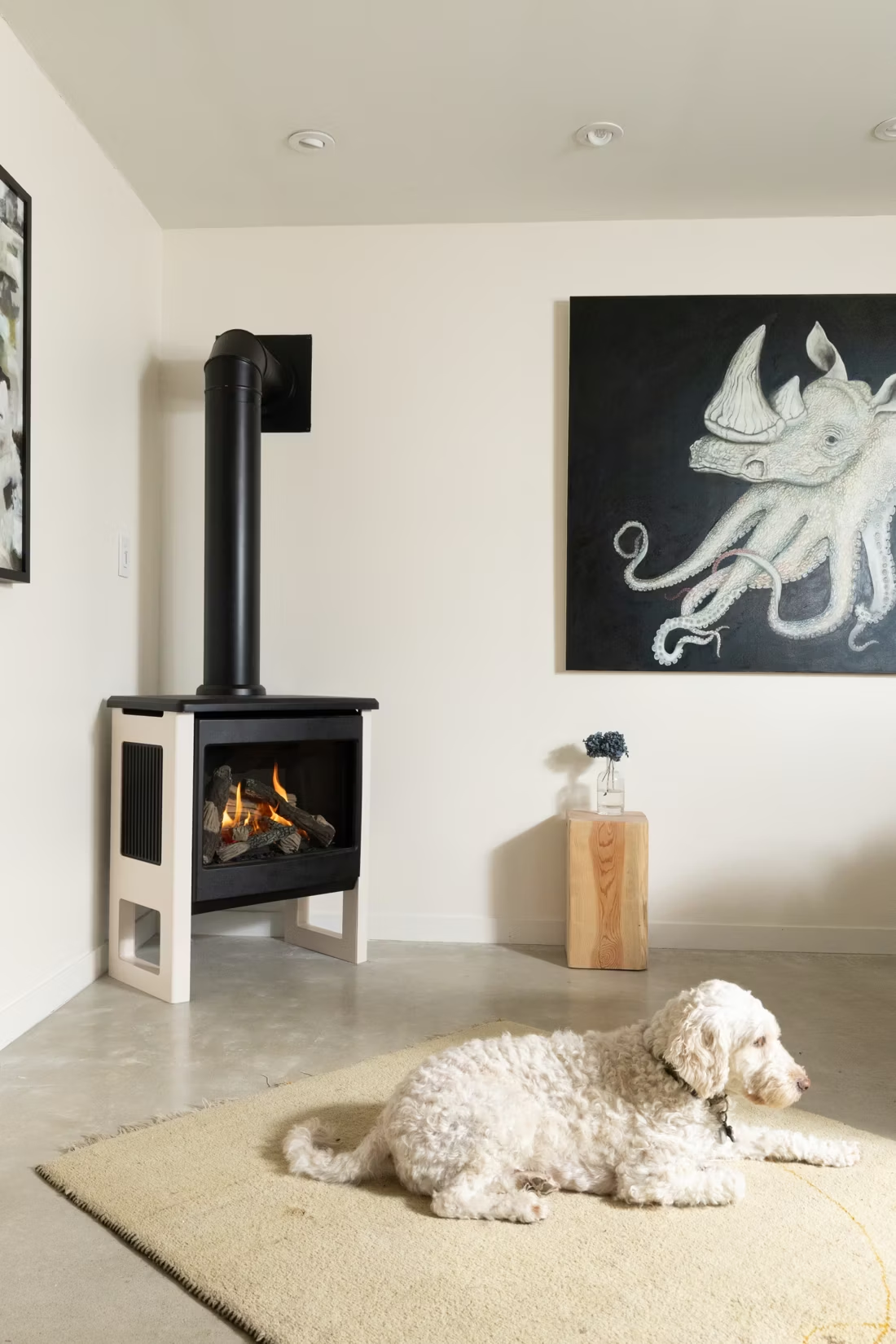
A gas fireplace is a fully built-in unit framed into a wall—the right call for new construction or a major remodel. A gas insert is sized to slide into an existing masonry firebox, which is the common upgrade path for older Brigham City and Perry homes with a wood fireplace already in place. A gas stove is a freestanding unit that sits on the floor on its own hearth pad, similar in footprint to a wood stove but running on gas or propane. For most Box Elder County homeowners with an existing fireplace, an insert is the straightforward answer; homes without one are usually better suited to a built-in unit or a freestanding stove.
Do I need a permit to install a gas fireplace in Box Elder County?
Yes. Inside Brigham City or Tremonton, permits are pulled through the city building department; in unincorporated parts of the county—Perry, Willard, Garland, and the outlying west desert communities—permits go through the Box Elder County Building Department. Either way, the gas line work needs to be done by a licensed gas-fitter and inspected separately from the framing and venting. Most local hearth dealers coordinate all of this as part of the installation, which is one of the real advantages of going through a certified retailer instead of piecing the job together yourself.
Should I get a vented or vent-free gas fireplace given the inversion issues here?
Vented, direct-vent units are the better fit for Box Elder County. They draw combustion air from outside and exhaust it back outside through a sealed pipe, so they don't add anything to indoor air. Vent-free units burn directly into the room and release some water vapor and combustion byproducts indoors—legal in Utah under specific room-sizing and ventilation rules, but a harder sell in a county that already deals with winter inversions trapping particulate along the valley floor. Direct-vent fireplaces are the standard recommendation from local dealers here, and they deliver more real heat output besides.
How often does a gas fireplace need to be serviced?
Plan on an annual inspection, ideally in late summer or early fall before the heating season and any winter inversion advisories start. A technician checks the burner, pilot assembly, gas connections, and venting, and cleans the glass and interior. It's a quicker visit than a wood chimney sweep, but skipping it is how pilot and ignition problems go unnoticed until the coldest night of the year. Local gas appliance service providers in the Brigham City and Tremonton area typically charge $150 to $250 for this.
Gas or wood—which makes more sense for a Box Elder County home?
Wood still has a real place here—pinyon, juniper, and aspen are locally available, cutting permits through the Uinta-Wasatch-Cache National Forest run $5 to $20 per cord from May through October, and a wood stove keeps working during a power outage with no gas or electric hookup needed. Gas wins on convenience and on air quality: it lights instantly, needs no ash cleanup, and doesn't add smoke to the valley during the inversion months when the Utah Division of Air Quality calls mandatory action days. A lot of homes along the Wasatch Front end up with both—gas in the main living space for daily use, wood or a wood stove elsewhere for backup heat when the power's out.
Why is a fireplace insert so efficient?
An insert does two things: it seals the chimney completely, so you stop losing air you already paid to heat, and it radiates warmth into the room through the firebox and glass. Most add a heat-exchange fan that pulls cool room air underneath, wraps it around the hot firebox, and pushes it back out warm. Your home is more efficient before you've even lit the first fire.
What's the difference between an insert and a zero-clearance fireplace?
An insert is a fireplace that slides into a pre-existing wood-burning fireplace—if you don't have one, there's nothing to insert it into. A zero-clearance fireplace is built into a framed wall, which makes it the answer for remodels and new construction. Simple test: existing masonry fireplace means insert; blank or framed wall means zero-clearance.
How much should I budget for a fireplace?
For an average home—covering the fireplace, the vent pipe, and basic installation—a budget between $3,900 and $5,500 gives you a lot of options across wood, gas, and pellet. By the time you add finish work, gas line, and electrical, the average complete installation lands between $5,000 and $12,000 all-in. In a remodel or new build, a good rule is to put about 2.5% of the total project cost toward the fireplace.
Can a fireplace actually lower my heating bill?
Yes—by creating a comfort zone. A furnace heats every square foot of the house just to warm the one room you're in; a gas fireplace on low burns roughly a sixth of the gas a typical furnace does. Set the furnace around 55–60 degrees as a baseline, then heat the rooms your family actually uses. Families who heat this way commonly save $20–$60 a month.
Stove and Fireplace Dealers in Box Elder County
Listings include WhyFire partner dealers, dealers we have verified as authorized for the brands we recommend, and established local businesses that carry hearth products. Every listing shows which one it is. The ones marked Preferred run on WhyFire's software, so they can show you real pricing and book your appointment right here. No manufacturer pays for placement. How we verify dealers →
Chim Chiminey Fireplace
Tremonton Heating & Cooling
Standard Plumbing - Logan
Western Mechanical
Gary Ricks Services
Advanced Fireplace And Stove
Utah Air
Hearth & Home Dist. Of UT-Ogden
Ogden Lawn & Garden
Comfort Solutions
Stone World Supply
Rocky Mountain Stove
Find your gas fireplace in Box Elder County.
Tell us about your home and we'll put together a free Project Guide & Parts List for your gas fireplace project—the right unit, the vent kit, and a trusted local Box Elder County dealer to install it.
Find Your Fireplace →