
Warmth that doesn't add to Bountiful's winter inversion.
Zero-emission heat for a valley that already fights bad air every winter. Find the right electric unit and connect with a trusted local dealer.
Every Project Starts From One of These Five Situations
On the Wasatch Front, electric is the low-friction choice.
Bountiful sits at roughly 4,771 feet against the base of the Wasatch Range, and like the rest of Davis County it gets trapped in the same cold-air inversions that settle over the Salt Lake Valley every winter. When the Utah Division of Air Quality calls a mandatory action day along the Wasatch Front, solid-fuel burning is restricted—which is a big part of why wood stoves and pellet appliances never really took hold here despite plenty of pinyon, juniper, and aspen up in the canyons above town. Summer wildfire smoke adds another reason homeowners lean away from anything that burns.
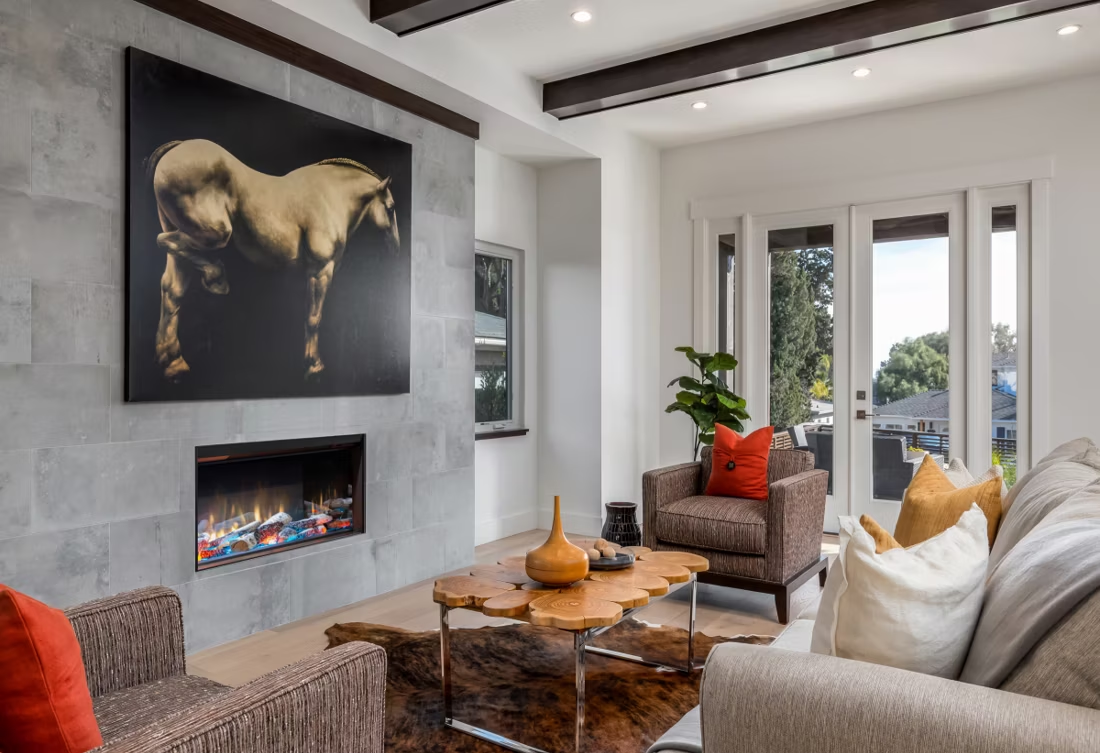
Electric fireplaces sidestep the inversion problem entirely—no emissions, no burn-day restrictions, no chimney to maintain. Bountiful is one of the few cities in Utah with its own municipal electric utility (City of Bountiful Power) alongside PacifiCorp/Rocky Mountain Power service in surrounding areas, and residential rates in the 12.5–13 cents per kWh range keep an electric insert cheap to run for supplemental heat or ambiance. For benches and foothill neighborhoods with view walls and finished basements, an electric unit installs in an afternoon with no venting and no gas line.
Three steps. No salesperson until you're ready.
Tell us about your project
Your zip code, your situation, and the fuel you're leaning toward—or let the answers point you to one.
See what's actually available
The brands dealers within 100 miles genuinely carry—real options, never a catalog mirage.
Get your dealer & Project Guide
A trusted local dealer, plus the free Project Guide & Parts List that names every component of the job.
Frequently Asked Questions
How much does an electric fireplace installation cost in Bountiful?
Plug-in electric inserts and wall-mount units start around $400–$800 installed, since most just need a standard 120V outlet and a mounting bracket. Larger built-in units or those requiring a dedicated 240V circuit run closer to $1,200–$2,500 once an electrician is involved, particularly for basement remodels or new-construction framing on Bountiful's bench neighborhoods. Because there's no venting or gas line to run, electric is consistently the least expensive hearth option in Davis County by a wide margin.
Will an electric fireplace actually heat my room, or is it just for looks?
Most residential electric fireplaces use a 1,500-watt fan-forced or infrared heater good for roughly 400–500 square feet—enough to take the chill off a family room or finished basement, but not intended to replace a furnace on a 23°F January morning. In Bountiful, where central heat carries the bulk of the load through a long, cold winter, electric units are best framed as zone heat: warming the room you're actually in without running the whole system.
Do I need a permit to install an electric fireplace in Bountiful?
A simple plug-in insert or wall-mount unit typically doesn't require a permit. If your installer needs to run a new dedicated circuit or do any wiring inside a wall, that electrical work generally requires a permit through the City of Bountiful or Davis County building department, pulled by a licensed electrician. Most local dealers coordinate this as part of the install so you're not tracking down paperwork yourself.
Why don't more homes in Bountiful use wood stoves?
Wood is technically available—Uinta-Wasatch-Cache National Forest sells cutting permits for $5 to $20 per cord during the May–October season, and pinyon, juniper, and aspen are all common up-canyon. But Davis County sits inside the Wasatch Front's inversion zone, where the Utah Division of Air Quality calls mandatory no-burn action days for solid fuel appliances on the worst air days each winter. That restriction, combined with valley-trapped wildfire smoke in summer, is why wood and pellet appliances are rare inside city limits even though the raw material is nearby. Electric and gas are the practical options for most Bountiful homes.
How much does it cost to run an electric fireplace in Bountiful?
At Bountiful's residential rates—about 12.5 cents per kWh through PacifiCorp or 13 cents through City of Bountiful's municipal utility—a 1,500-watt electric fireplace costs roughly 18 to 20 cents per hour to run on high heat. Left on for a few hours most winter evenings, that's typically $15–$25 a month, considerably cheaper than most people expect and far less than running a gas insert for the same hours.
Can I install an electric insert into my existing wood-burning fireplace?
Yes, and it's one of the more common upgrades in older Bountiful homes with an original masonry fireplace that rarely gets used. An electric insert slides into the existing firebox opening, plugs into a nearby outlet (or is hardwired for a cleaner look), and gives you flame effect and supplemental heat without dealing with wood, ash, or inversion-season burn restrictions. No chimney liner or venting work is needed, which keeps the project simple and inexpensive compared to a gas conversion.
What's the difference between an electric insert, a wall-mount, and a freestanding electric stove?
An electric insert is built to slot into an existing fireplace opening, typically framed with a matching surround. A wall-mount unit hangs like a flat-screen TV and works well in newer great rooms or bedrooms without an existing hearth. A freestanding electric stove mimics the look of a wood or pellet stove and can sit almost anywhere near an outlet, which makes it a good fit for basements, apartments, or rental properties around Bountiful where permanent modifications aren't an option.
Electric vs. gas fireplace—which makes more sense for a Bountiful home?
Gas delivers more heat output and the look of a real flame, and it remains popular in Bountiful homes with existing natural gas service, especially for primary living spaces. Electric wins on installation simplicity and operating flexibility—no venting, no gas line, no combustion byproducts, and it keeps working with zero emissions on the exact days Davis County calls a mandatory no-burn action. For basements, secondary rooms, condos, or any homeowner who wants supplemental warmth without construction, electric is usually the simpler call. A local dealer can walk through both options against your specific room and budget.
How long do electric fireplaces last, and what maintenance do they need?
Most quality electric fireplaces last 10 to 15 years with essentially no maintenance beyond an occasional dusting of the heater vents and replacing LED flame bulbs if the unit uses them (many newer models use long-life LEDs that rarely need replacement). There's no chimney to sweep, no gas line to inspect, and no annual service call required—a meaningful advantage for Bountiful homeowners who'd rather not add another appliance to the yearly maintenance list.
Do electric fireplaces actually produce heat?
Yes—most put out around 4,800–5,000 BTUs from a standard outlet, which comfortably warms a bedroom, office, or den as a comfort-zone heater. What they won't do is carry a whole house the way wood, gas, or pellet can. Think of electric as ambiance-first with honest supplemental heat: flames on with no heat in July, flames plus warmth in January.
Can I put a TV above my fireplace?
Yes—with an asterisk. Fireplaces are hot and TVs don't like heat. Either put a mantel between them to deflect rising warmth, or choose a fireplace with heat-management technology that creates a cool zone on the wall above—the wall stays around 125 degrees, barely warm, while the room still gets full heat. If you like clean lines and don't want a mantel, heat management is the answer.
Can a fireplace actually lower my heating bill?
Yes—by creating a comfort zone. A furnace heats every square foot of the house just to warm the one room you're in; a gas fireplace on low burns roughly a sixth of the gas a typical furnace does. Set the furnace around 55–60 degrees as a baseline, then heat the rooms your family actually uses. Families who heat this way commonly save $20–$60 a month.
What is an in-home preview and do I need one?
It's a visit where a hearth professional measures your space, confirms the model you picked actually works in your home, and walks the specs—framing, gas line, venting, finish work—before anything is ordered. Some details you just can't know until you see the house. Never make a down payment without one; it's the single most-skipped step that burns buyers.
Nearby Dealers
Hearth shops serving Bountiful and the surrounding area. Every listing shows whether it is a WhyFire partner, a dealer we have verified as authorized for the brands we recommend, or a local business carrying hearth products. No manufacturer pays for placement. How we verify dealers →
Croft Fireplaces (Bountiful)
Comfort Solutions
(Sugar House) Alpine Fireplaces (In Breezeway Next To Theatres)
Bills Comfort Systems
Timber Ridge Fireplace
Ignite Fireplace
Degrees Above Fireplaces
Wasatch Fireplace & Stove
Standard Plumbing
Rocky Mountain Stove
Electric Service in Bountiful
An electric fireplace's heater draws about 1,500 watts—pennies per hour at local rates.
City Of Bountiful
Find your electric fireplace in Bountiful.
Tell us a bit about your home and we'll match you with the right electric insert, wall-mount, or stove—plus a free Project Guide & Parts List and a trusted local dealer to install it.
Find Your Fireplace →