
No gas line, no chimney—just heat in Winkler County.
From Kermit to Wink, electric fireplaces plug into the wall you already have and heat the room you're in—no venting, no gas line, no masonry work. Find the right unit and connect with a trusted local dealer.
Every Project Starts From One of These Five Situations
Simple heat for a county built on oil, not gas lines.
Winkler County sits in the heart of the Permian Basin, and its housing stock reflects that history—a mix of older ranch homes in Kermit and Wink alongside manufactured and modular housing tied to decades of oil field work. With a Zone 3B climate, an average winter low of 29 degrees, and only about 2,578 heating degree days a year—roughly a third of what a place like Bismarck, ND sees—nobody in Winkler County is fighting to keep a house above freezing. The heating need here is real but modest, and that changes the calculus on what fuel makes sense.
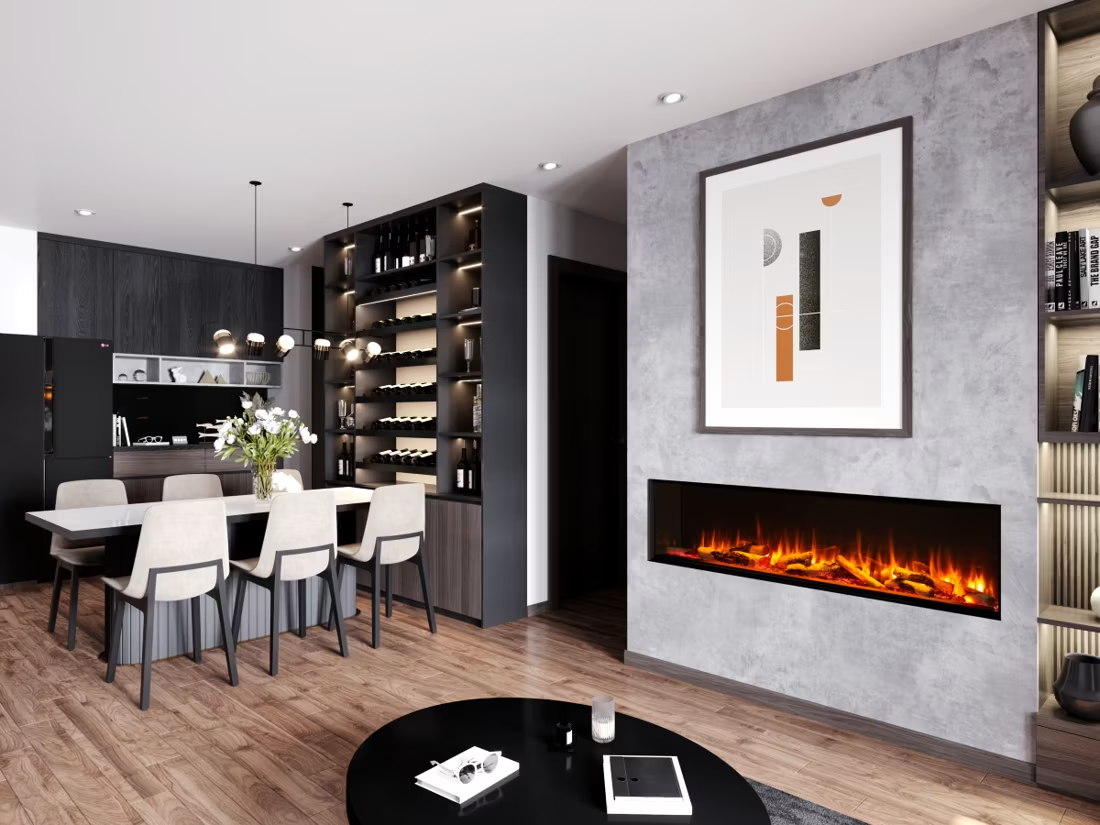
That's where electric fireplaces earn their place. A recessed wall unit or an electric insert drops into an existing opening or a stud wall with no chimney, no flue, and in most cases no dedicated gas line—a meaningful advantage in a county where a lot of housing is manufactured or rented and where landlords and homeowners alike want a clean retrofit. Electric units also carry zero spark or ember risk, which matters in mesquite and grassland country where range fires are a real seasonal concern. For supplemental warmth in a spare room, a den, or a mobile home addition, electric is often the fastest and least disruptive option available in Winkler County.
Three steps. No salesperson until you're ready.
Tell us about your project
Your zip code, your situation, and the fuel you're leaning toward—or let the answers point you to one.
See what's actually available
The brands dealers within 100 miles genuinely carry—real options, never a catalog mirage.
Get your dealer & Project Guide
A trusted local dealer, plus the free Project Guide & Parts List that names every component of the job.
Frequently Asked Questions
How much does an electric fireplace installation cost in Winkler County?
Plug-in electric fireplace inserts and freestanding stoves that use a standard 120V outlet typically run $300 to $900 installed, since there's no venting or gas line to run. Built-in linear units or larger electric fireplaces that need a dedicated 240V circuit and some wall framing run higher, generally $1,200 to $2,500, depending on breaker panel capacity and how much electrical work is involved. Homes in older parts of Kermit with dated panels sometimes need a panel upgrade first, which adds to the total. Local dealers will walk your specific wall and panel setup before quoting a firm number.
Will an electric fireplace actually heat a room in Winkler County's climate?
For most rooms, yes. With an average winter low around 29 degrees and only about 2,578 heating degree days a year, Winkler County doesn't demand the kind of sustained, whole-home BTU output that a place like Duluth, MN or Fargo, ND requires. A properly sized electric unit (most top out around 5,000-6,000 BTU) comfortably heats a bedroom, den, or single living area as either supplemental heat alongside central air or as the primary comfort layer on the mild cold snaps the county does see. It won't replace a furnace for a whole house, but for zone heating in Winkler County's climate, it's genuinely sufficient.
Do I need a permit to install an electric fireplace in Winkler County?
In most cases, no—a plug-in electric insert or freestanding unit that uses an existing outlet doesn't trigger a building or electrical permit. If your installation requires a new dedicated circuit or a panel upgrade to support a larger built-in unit, that electrical work generally does require a permit and should be pulled by a licensed electrician, whether you're inside Kermit city limits or out in the unincorporated parts of the county. Most local dealers can tell you upfront whether your specific unit and wall setup will need one.
What type of electric fireplace is best for a manufactured or rental home in Winkler County?
Recessed wall-mount units and electric log inserts are usually the best fit for manufactured and rental housing, which makes up a significant share of Winkler County's stock given the county's oil field history. These units typically mount into a stud wall or slide into an existing opening without structural changes, and because most run off a standard outlet, they're easy to remove if a tenant moves or a home is relocated. Freestanding electric stoves are another good option for renters since they need no installation at all—just an outlet.
Electric fireplace vs. gas—which makes more sense in Winkler County?
Many homes in Kermit and Wink already have natural gas service tied into the county's oil field infrastructure, so gas fireplaces are a legitimate option here too, and gas delivers a higher heat output if you're trying to warm a larger room. Electric wins on install simplicity and cost—no gas line tie-in, no venting, and no combustion byproducts to manage—and it carries zero spark risk, which matters in a county surrounded by dry mesquite rangeland. If you already have gas plumbed to the wall in question, gas may be the better value; if you're starting from a bare wall, electric is usually faster and cheaper to get running.
Electric fireplace vs. wood-burning—is wood still worth it in Winkler County?
Oak, pecan, and mesquite are all common locally, and mesquite in particular burns hot and long, which has made wood a traditional supplemental heat source on ranch properties in the county. But with air quality concerns essentially nonexistent here and winters running mild, most homeowners today are choosing electric for its lack of ash, lack of ember risk in dry grassland, and zero maintenance. Wood still has a following for ambiance and off-grid backup, but for day-to-day supplemental heat in town or in a manufactured home, electric has become the more practical choice.
Who provides electric service in Winkler County, and does running a fireplace raise my bill much?
Electric service in the county runs through a mix of providers—within Kermit city limits it's typically an investor-owned utility, while Lea County Electric Cooperative serves stretches of the surrounding rural county given Winkler's proximity to the New Mexico border. Running a typical 1,500-watt electric fireplace a few hours an evening adds a modest amount to a monthly bill—usually in the range of a few dollars to $15-20 depending on usage and local rates. Given the county's mild heating degree day total, most homeowners aren't running units around the clock, which keeps the cost impact manageable.
Are electric fireplaces safe to install in older homes around Kermit and Wink?
Generally yes, and often safer than the alternatives. Electric units produce no open flame, no combustion gases, and no chimney or venting to maintain, which removes several of the failure points that come with wood or gas appliances in older housing stock. The main thing to check in older homes is whether the electrical panel and wiring can support a larger built-in unit without overloading a circuit—a quick check any local electrician or dealer can do before installation. For homes with older knob-and-tube or undersized panels, a licensed electrician should confirm capacity first.
Can an electric fireplace serve as backup heat if the power goes out?
No—this is worth being clear on. Electric fireplaces require power to run the heating element and any fan, so they won't provide heat during an outage, unlike a wood stove or a battery-backed gas unit. In Winkler County, where winters are mild and outages tend to be short, that's less of a concern than it would be somewhere colder, but if backup heat during storms is a priority for your household, a wood-burning option or a gas unit with battery ignition is worth considering alongside an electric fireplace for everyday use.
Can I put a TV above my fireplace?
Yes—with an asterisk. Fireplaces are hot and TVs don't like heat. Either put a mantel between them to deflect rising warmth, or choose a fireplace with heat-management technology that creates a cool zone on the wall above—the wall stays around 125 degrees, barely warm, while the room still gets full heat. If you like clean lines and don't want a mantel, heat management is the answer.
Do electric fireplaces actually produce heat?
Yes—most put out around 4,800–5,000 BTUs from a standard outlet, which comfortably warms a bedroom, office, or den as a comfort-zone heater. What they won't do is carry a whole house the way wood, gas, or pellet can. Think of electric as ambiance-first with honest supplemental heat: flames on with no heat in July, flames plus warmth in January.
What is an in-home preview and do I need one?
It's a visit where a hearth professional measures your space, confirms the model you picked actually works in your home, and walks the specs—framing, gas line, venting, finish work—before anything is ordered. Some details you just can't know until you see the house. Never make a down payment without one; it's the single most-skipped step that burns buyers.
How much should I budget for a fireplace?
For an average home—covering the fireplace, the vent pipe, and basic installation—a budget between $3,900 and $5,500 gives you a lot of options across wood, gas, and pellet. By the time you add finish work, gas line, and electrical, the average complete installation lands between $5,000 and $12,000 all-in. In a remodel or new build, a good rule is to put about 2.5% of the total project cost toward the fireplace.
Stove and Fireplace Dealers in Winkler County
Listings include WhyFire partner dealers, dealers we have verified as authorized for the brands we recommend, and established local businesses that carry hearth products. Every listing shows which one it is. The ones marked Preferred run on WhyFire's software, so they can show you real pricing and book your appointment right here. No manufacturer pays for placement. How we verify dealers →
Seal’s Energy Depot
Bill Placer's Chimney Sweep
Find your electric fireplace in Winkler County.
Tell us a bit about your home in Kermit, Wink, or elsewhere in the county, and we'll match you with the right electric fireplace or insert—plus a free Project Guide & Parts List and a trusted local dealer to install it.
Find Your Fireplace →