
Instant warmth for Whitehouse, no chimney required.
Ambiance and supplemental heat for Smith County's mild winters, with no venting, no gas line, and no chimney sweep to schedule. Find the right unit and connect with a trusted local dealer.
Every Project Starts From One of These Five Situations
Mild winters, modern convenience.
Whitehouse sits in the Piney Woods of Smith County at just 449 feet elevation, in climate zone 3A, where winter lows average a mild 38°F and the area logs only about 2,017 heating degree days a year. Compare that to Duluth, Minnesota, where homes rack up more than four times that heating load just to get through January—Whitehouse simply doesn't ask a fireplace to carry the house through winter. That changes what makes sense here. Wood stoves and pellet appliances see little demand locally; oak, pecan, and mesquite are common in the woodpile, but they're more likely destined for a smoker than a firebox. Electric fireplaces, by contrast, fit the climate well: they add real ambiance and zone warmth on the occasional cold front without asking for a chimney, a gas line, or a burn permit.
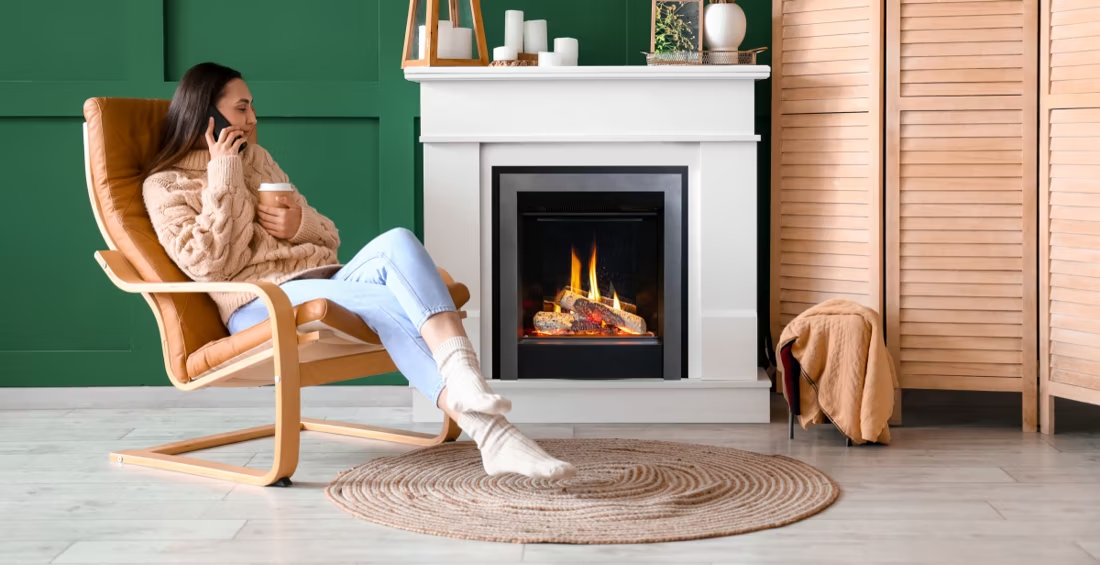
Power in Whitehouse comes primarily through Oncor Electric Delivery, with Wood County Electric Cooperative and Cherokee County Electric Cooperative serving pockets of the surrounding county—residential rates run around $0.1283 per kWh. That makes an electric fireplace inexpensive to operate for the handful of genuinely cold nights East Texas sees each winter, whether it's a built-in unit framed into a wall, an insert dropped into an existing masonry opening, or a freestanding mantel package. None of it requires venting, so installation is faster and cheaper than a wood or gas project—the tradeoff is that it's built for ambiance and supplemental warmth, not for carrying a home through a hard freeze on its own.
Three steps. No salesperson until you're ready.
Tell us about your project
Your zip code, your situation, and the fuel you're leaning toward—or let the answers point you to one.
See what's actually available
The brands dealers within 100 miles genuinely carry—real options, never a catalog mirage.
Get your dealer & Project Guide
A trusted local dealer, plus the free Project Guide & Parts List that names every component of the job.
Frequently Asked Questions
How much does an electric fireplace installation cost in Whitehouse?
Most electric fireplace projects in Whitehouse run $400 to $2,500. A plug-in insert or mantel package that uses an existing outlet sits at the low end. A built-in unit that requires a dedicated 120V or 240V circuit—common for larger models installed during a remodel—runs higher once an electrician is involved. Because there's no chimney, no venting, and no gas line to run, electric installs are consistently the fastest and least expensive fireplace projects a local dealer handles.
Will an electric fireplace actually keep a Whitehouse home warm?
For supplemental warmth in a single room, yes—most residential units put out around 5,000 to 9,000 BTUs from a standard 1,500-watt heater, enough to take the edge off a living room or bedroom on one of Smith County's occasional nights in the 20s or 30s. With an average winter low around 38°F and only about 2,017 heating degree days a year, Whitehouse homes generally don't need—or want—a primary wood-fired or gas furnace-level heat source. An electric fireplace is well matched to that reality: real warmth when you want it, without over-building for a winter that mostly doesn't show up.
Should I get an electric fireplace or a gas fireplace instead?
Both are common choices in Whitehouse, and the right one depends on what you're solving for. Gas fireplaces (also standard here) deliver more heat output and a more authentic flame, and can run during a power outage if properly equipped—worth considering given Texas's grid reliability concerns in recent winters. Electric fireplaces install faster, cost less upfront, and let you run the flame effect with the heater off, which matters in a climate where you'll want the look far more often than the actual heat. Homeowners doing a full remodel with gas already at the house often lean gas; homeowners retrofitting an existing room or renting often lean electric.
Do I need a permit to install an electric fireplace in Whitehouse?
A plug-in electric fireplace that uses an existing standard outlet typically doesn't require a permit. A built-in unit that needs a new dedicated circuit does require an electrical permit, and that work should go through a licensed electrician pulling permits with the City of Whitehouse or Smith County as applicable, depending on whether the property is inside city limits. Oncor Electric Delivery, Wood County Electric Cooperative, and Cherokee County Electric Cooperative all serve parts of the area, so confirm which utility serves your address before any new circuit work begins.
What size electric fireplace do I need for my Whitehouse home?
Sizing an electric fireplace is mostly about the room and the look you want, since heat output across most residential models is fairly similar. A 30- to 40-inch unit suits a bedroom or den; a 50- to 60-inch linear unit works well as a focal point in a larger living area or open-concept space. Because Whitehouse's mild winters mean the heater is a bonus rather than the main event, most local dealers will size for visual fit first and confirm the wattage covers the room as a secondary check.
Will my electric fireplace work if the power goes out?
No—electric fireplaces are entirely dependent on grid power, which is worth thinking through given the winter grid strain Texas has experienced in recent years. If backup heat during an outage matters to you, a gas fireplace with a battery-backed ignition system, or a small backup generator sized to run the electric unit, are the two practical options. Homeowners in Whitehouse who want both the convenience of electric day-to-day and a real fallback for grid emergencies sometimes install a gas unit in the main living space and treat electric fireplaces as ambiance additions elsewhere in the house.
What's the difference between an electric fireplace, insert, and mantel package?
A built-in electric fireplace is installed into a framed wall opening, typically during new construction or a remodel, and looks the most like a traditional fireplace. An electric insert is sized to drop into an existing masonry or wood fireplace opening, which is common in older Whitehouse homes that want to retire a rarely used wood-burning fireplace without doing demolition. A mantel package pairs a freestanding or wall-mounted electric unit with a surrounding mantel and can go almost anywhere with an outlet nearby. Local dealers can walk through which fits your existing opening, if you have one.
How much does it cost to run an electric fireplace in Whitehouse?
At the local Oncor-area residential rate of roughly $0.1283 per kWh, a typical 1,500-watt electric fireplace running on its heater setting costs about 19 cents per hour to operate. Running it several hours a night through the handful of cold weeks Whitehouse sees each winter adds up to a modest amount on the electric bill—far less than heating an entire home with a central system, since the fireplace is only warming the room you're in.
Why don't more homes in Whitehouse use wood-burning fireplaces?
Wood heat just isn't a good match for Smith County's climate—with winter lows averaging 38°F and only about 2,017 heating degree days a year, there's rarely enough sustained cold to justify the upkeep of a wood stove or insert. Oak, pecan, and mesquite are all abundant locally, but you're far more likely to see them in a backyard smoker than in a firebox. A small number of Whitehouse homeowners do keep a wood-burning fireplace for occasional ambiance or a cool front, but electric and gas units make up the large majority of new installs in the area.
Can I put a TV above my fireplace?
Yes—with an asterisk. Fireplaces are hot and TVs don't like heat. Either put a mantel between them to deflect rising warmth, or choose a fireplace with heat-management technology that creates a cool zone on the wall above—the wall stays around 125 degrees, barely warm, while the room still gets full heat. If you like clean lines and don't want a mantel, heat management is the answer.
Do electric fireplaces actually produce heat?
Yes—most put out around 4,800–5,000 BTUs from a standard outlet, which comfortably warms a bedroom, office, or den as a comfort-zone heater. What they won't do is carry a whole house the way wood, gas, or pellet can. Think of electric as ambiance-first with honest supplemental heat: flames on with no heat in July, flames plus warmth in January.
Can a fireplace actually lower my heating bill?
Yes—by creating a comfort zone. A furnace heats every square foot of the house just to warm the one room you're in; a gas fireplace on low burns roughly a sixth of the gas a typical furnace does. Set the furnace around 55–60 degrees as a baseline, then heat the rooms your family actually uses. Families who heat this way commonly save $20–$60 a month.
What is an in-home preview and do I need one?
It's a visit where a hearth professional measures your space, confirms the model you picked actually works in your home, and walks the specs—framing, gas line, venting, finish work—before anything is ordered. Some details you just can't know until you see the house. Never make a down payment without one; it's the single most-skipped step that burns buyers.
Nearby Dealers
Hearth shops serving Whitehouse and the surrounding area. Every listing shows whether it is a WhyFire partner, a dealer we have verified as authorized for the brands we recommend, or a local business carrying hearth products. No manufacturer pays for placement. How we verify dealers →
Tdi Air Conditioning
East Texas Brick Co.
Electric Service in Whitehouse
An electric fireplace's heater draws about 1,500 watts—pennies per hour at local rates.
Oncor Electric Delivery Company LLC
Wood County Electric Coop, Inc
Cherokee County Elec Coop Assn
Find your electric fireplace in Whitehouse.
Tell us a bit about your home and we'll match you with a trusted local dealer and send over a free Project Guide & Parts List—the exact unit, mounting or insert kit, and electrical requirements for your Whitehouse project.
Find Your Fireplace →