
Instant heat for Wheeler County homes—no wood, no vent, no hassle.
Simple, low-maintenance heat for Wheeler, Shamrock, Mobeetie, and the ranch country between them. Find the right electric fireplace or insert and connect with a trusted local dealer.
Every Project Starts From One of These Five Situations
Clean, simple heat for Panhandle winters.
Wheeler County sits at the far edge of the Texas Panhandle along the Oklahoma line, home to about 3,643 people spread across the county seat of Wheeler, the Route 66 town of Shamrock, and Mobeetie, one of the oldest settlements in the Panhandle. Winters here average lows around 24°F with roughly 3,972 heating degree days a year—a real but moderate cold, nowhere near the totals a place like Duluth, MN racks up, though the Panhandle's flat terrain and near-constant wind make it feel colder than the thermometer suggests. For a lot of households, that adds up to needing supplemental heat in specific rooms rather than a full furnace replacement.
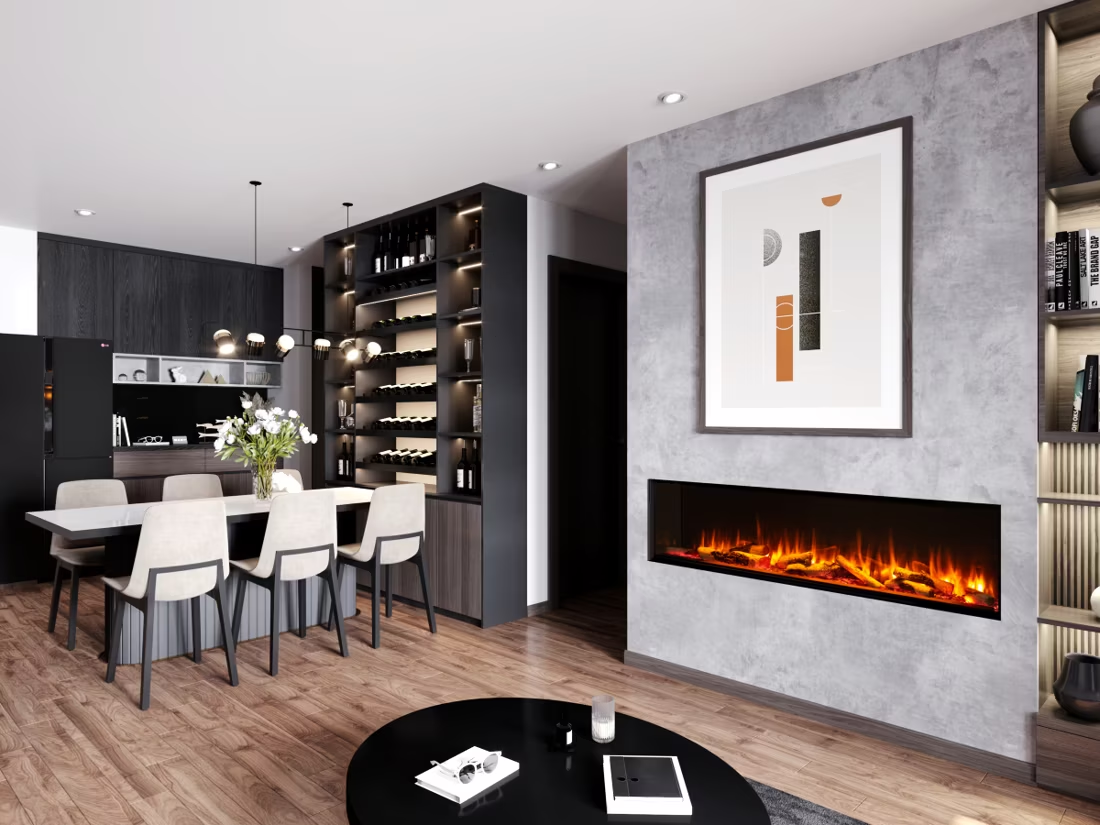
That's where electric fireplaces earn their place. There's no chimney to build, no gas line to run, and—since Wheeler County has no air quality concerns to work around—no emissions to worry about either. Many homes here are manufactured or mobile, where a wall-mounted or recessed electric unit sidesteps the clearance and venting rules that come with wood or gas. Others are older farmhouses in Shamrock or Wheeler with a decorative but unused fireplace opening that an electric insert can bring back to life. It's not a substitute for a wood stove burning local oak, pecan, or mesquite when the power's out, but for everyday zone heat, it's hard to beat the simplicity.
Three steps. No salesperson until you're ready.
Tell us about your project
Your zip code, your situation, and the fuel you're leaning toward—or let the answers point you to one.
See what's actually available
The brands dealers within 100 miles genuinely carry—real options, never a catalog mirage.
Get your dealer & Project Guide
A trusted local dealer, plus the free Project Guide & Parts List that names every component of the job.
Frequently Asked Questions
How much does an electric fireplace installation cost in Wheeler County?
Electric fireplaces are the most affordable hearth option available in Wheeler County. A plug-in freestanding or wall-mounted unit on a standard 120V outlet can run as little as $200 to $800 installed, since there's no venting, gas line, or usually a permit involved. Built-in electric fireplaces or larger inserts that need a dedicated 240V circuit and some carpentry to frame into a wall or an existing fireplace opening typically run $1,500 to $3,500, including electrician time. Because the county's population is spread thin across Wheeler, Shamrock, and Mobeetie, expect a modest travel charge if your installer is coming out from Pampa or Amarillo.
How much heat does an electric fireplace actually provide?
Most electric fireplaces top out around 5,000 to 5,200 BTU, which makes them a solid supplemental heat source for a single room—roughly 400 to 1,000 square feet depending on insulation. In Wheeler County, where winter lows average around 24°F and the county logs about 3,972 heating degree days a year, that's cold enough to matter but far short of what a place like Bismarck, ND deals with. An electric fireplace works best as a zone heater in a living room, bedroom, or sunroom rather than as the whole house's only heat source—pair it with your existing central or propane system for the coldest stretches.
Will my electric fireplace work during a power outage?
No, and that's the real trade-off against wood heat. Ice storms and high wind events are a regular part of Panhandle winters, and when the power goes out in rural Wheeler County, an electric fireplace goes dark along with everything else. Plenty of households here keep a wood stove or fireplace as a second appliance for exactly this reason, burning locally available oak, pecan, or mesquite when the grid is down. Think of electric as convenient daily heat, not storm backup.
Do I need a permit to install an electric fireplace in Wheeler County?
In most cases, no. A plug-in electric fireplace on a standard outlet requires no permit at all. If you're wiring a built-in unit to a dedicated 240V circuit, that electrical work should go through a licensed electrician, and whether a permit is pulled depends on whether you're inside Wheeler, Shamrock, or Mobeetie city limits versus out in the unincorporated county, where oversight is lighter. Any local electrician or hearth dealer working in the area can tell you exactly what's required for your address.
Are electric fireplaces a good fit for manufactured and mobile homes?
Yes, and it's one of the more common uses for electric fireplaces in rural Wheeler County, where manufactured and mobile homes make up a meaningful share of the housing stock. Electric units skip the clearance-to-combustibles rules and through-roof venting that wood or gas appliances require, so there's no need to tie into a manufactured home's roof structure. A wall-mounted or recessed electric fireplace can go in with just an outlet or a simple circuit run, which is a far simpler project than any combustion appliance.
What's the difference between an electric insert, an electric stove, and a mantel package?
An electric insert slides into an existing fireplace opening—useful if you have an old wood-burning fireplace in a Wheeler County farmhouse you'd rather convert to something lower-maintenance. An electric stove is a freestanding unit styled after a traditional wood stove, sitting on the floor with no venting required since there's no combustion. A mantel package pairs an electric firebox with a surrounding mantel, which is typically the choice for new construction or a room that never had a fireplace at all. All three run on the same basic electric technology—the difference is really about how they fit your existing wall or opening.
What does it cost to run an electric fireplace?
Running costs are modest. At typical Texas Panhandle electric rates through Southwestern Public Service, a 1,500-watt electric fireplace run for several hours a day adds somewhere in the range of $10 to $25 a month to a winter bill, depending on use. That's cheaper to operate than most people expect and far less involved than tracking firewood or propane deliveries—though it won't beat self-cut oak or mesquite on raw fuel cost if you already have access to free wood.
Electric vs. wood—which is right for my Wheeler County home?
Wood heat has deep roots in this part of the Panhandle, where oak, pecan, and mesquite are commonly available and plenty of rural households cut their own. Wood keeps working when the power doesn't, and it delivers more total heat output for larger or older farmhouses with drafty construction. Electric wins on convenience—no ash, no chimney sweep, no hauling firewood—and on upfront cost, since a basic electric fireplace can be installed for a few hundred dollars versus several thousand for a wood stove and venting. A lot of Wheeler County homes end up with both: wood for backup and ambiance, electric for low-maintenance daily heat in a bedroom or den.
Where do electric fireplaces make the most sense in a Wheeler County home?
The best applications are rooms where running a gas line or building a chimney isn't practical or worth the cost—a converted sunroom, a bedroom addition, a home office, or a rental property in Shamrock or Wheeler where low maintenance matters more than raw heat output. They're also popular in older homes along Route 66 in Shamrock that have decorative but unused fireplace openings, since an electric insert restores the look and usefulness of the fireplace without the cost of chimney repair or relining.
Can I put a TV above my fireplace?
Yes—with an asterisk. Fireplaces are hot and TVs don't like heat. Either put a mantel between them to deflect rising warmth, or choose a fireplace with heat-management technology that creates a cool zone on the wall above—the wall stays around 125 degrees, barely warm, while the room still gets full heat. If you like clean lines and don't want a mantel, heat management is the answer.
Does an electric fireplace need a vent or chimney?
No—that's its superpower. An electric fireplace needs a wall and an outlet, period. No vent pipe, no gas line, no clearances to design around, which is why it works in bedrooms, offices, apartments, and walls where venting a gas or wood unit would be impractical or impossible. Installation is typically the simplest and least expensive of any fireplace type.
Can a fireplace actually lower my heating bill?
Yes—by creating a comfort zone. A furnace heats every square foot of the house just to warm the one room you're in; a gas fireplace on low burns roughly a sixth of the gas a typical furnace does. Set the furnace around 55–60 degrees as a baseline, then heat the rooms your family actually uses. Families who heat this way commonly save $20–$60 a month.
Can I install a fireplace myself?
If you're putting a fire in your house on purpose, it's best to work with an expert. Unless you're genuinely experienced in framing, gas line, vent pipe, and the national code on clearances to combustibles, have a professional do it—and ideally the same company that sells you the fireplace, so warranty, service, and liability all live under one roof.
Stove and Fireplace Dealers in Wheeler County
Listings include WhyFire partner dealers, dealers we have verified as authorized for the brands we recommend, and established local businesses that carry hearth products. Every listing shows which one it is. The ones marked Preferred run on WhyFire's software, so they can show you real pricing and book your appointment right here. No manufacturer pays for placement. How we verify dealers →
Giblet Stove Sales
Find your electric fireplace in Wheeler County.
Tell us a bit about your home and we'll put together your free Project Guide & Parts List—a plan for your electric fireplace project with the exact parts you need and a recommended local dealer in Wheeler County.
Find Your Fireplace →