
Effortless heat for Washington County's mild, short winters.
From Brenham to Chappell Hill and Burton, Washington County's short heating season makes electric fireplaces an easy, low-commitment way to add warmth and ambiance to any room. Find the right unit and connect with a trusted local dealer.
Every Project Starts From One of These Five Situations
A climate built for supplemental heat, not furnaces.
Washington County sits in USDA climate zone 2A, where winter lows average around 40°F and the county logs roughly 1,738 heating degree days a year—a fraction of what a place like Duluth, Minnesota sees in a single hard winter. Homes here, whether a century-old farmhouse in Chappell Hill or a newer build outside Brenham, rarely need a full-time heating appliance. What they do need is a way to take the chill off a January morning or add a focal point to a living room without committing to a chimney, gas line, or cord of oak.
That's exactly where electric fireplaces do their best work. Plug-in units and built-in electric inserts install without venting or gas lines, which matters in a county where many homes—especially the historic properties around Brenham's town square and out toward Washington-on-the-Brazos—have wiring that predates central HVAC. Electricity here comes through Bluebonnet Electric Cooperative in the rural parts of the county and the City of Brenham's own municipal utility inside city limits, so most homeowners already have the panel capacity for a 120V unit; larger 240V built-ins are a straightforward addition for a licensed electrician.
Three steps. No salesperson until you're ready.
Tell us about your project
Your zip code, your situation, and the fuel you're leaning toward—or let the answers point you to one.
See what's actually available
The brands dealers within 100 miles genuinely carry—real options, never a catalog mirage.
Get your dealer & Project Guide
A trusted local dealer, plus the free Project Guide & Parts List that names every component of the job.
Frequently Asked Questions
How much does an electric fireplace installation cost in Washington County?
Costs in Washington County typically range from $300 to $2,500. A freestanding or wall-mounted plug-in unit on the low end needs no electrician and no permit—it's essentially furniture that plugs into a standard outlet. A built-in electric insert or a linear wall unit that requires a dedicated 240V circuit runs higher, especially in older Brenham and Chappell Hill homes where an electrician may need to upgrade wiring or add a circuit at the panel. Local dealers can quote a firm number once they know whether you're adding a unit to an existing fireplace opening or building one into new construction or a remodel.
Do I need a permit to install an electric fireplace in Washington County?
Plug-in electric fireplaces don't require a permit—there's no venting, gas line, or structural change involved. Built-in units that require new electrical circuit work do need an electrical permit, typically pulled through the Washington County Building Department for homes outside Brenham city limits, or through the City of Brenham's permitting office for in-town addresses. Most licensed electricians and hearth dealers handle this paperwork as part of the installation, so it's rarely something homeowners have to manage themselves.
What size electric fireplace do I need for my home?
Because Washington County's winters are mild—average lows around 40°F and just over 1,700 heating degree days a year—sizing here is more about the room than the whole house. A compact wall-mounted or freestanding unit (750-1,500 watts) comfortably takes the chill off a bedroom or home office, while a larger linear insert (1,500 watts and up, often with a heat-boost setting) can supplement a living room or open-concept space during the county's coldest snaps in January and February. Very few homes in Brenham, Burton, or Independence need electric heat sized to replace a central system—it's almost always supplemental.
How much does it cost to run an electric fireplace here?
At typical Texas electricity rates, most 1,500-watt electric fireplaces cost somewhere around 15 to 20 cents per hour to run on the heat setting, and just a fraction of that with the heater off and only the flame effect on. Exact costs depend on whether you're served by Bluebonnet Electric Cooperative in the unincorporated parts of the county or the City of Brenham's municipal electric utility, but either way, running costs stay modest given how few hours per year Washington County homes actually need supplemental heat.
Is an electric fireplace a good fit for a Washington County home?
For most homes in the county, yes—precisely because winters here are short and mild. Rather than sizing a wood stove or gas insert for occasional cold snaps, many Brenham and Chappell Hill homeowners install an electric fireplace as a year-round focal point that also happens to provide real supplemental warmth on the handful of nights each winter when temperatures drop into the 30s. It's a lower-commitment option than venting a wood or gas appliance through a historic home's roofline, and it can be installed almost anywhere in the house.
How much maintenance does an electric fireplace need?
Very little. There's no chimney to sweep, no gas line to inspect, and no ash to clean up. Maintenance is mostly dusting the unit, occasionally cleaning the glass front, and replacing the LED light strip or heating element after years of use—most manufacturers rate those parts for 20,000-plus hours. This low-maintenance profile is one reason electric units are popular in Washington County's older homes, where owners are often already managing upkeep on original woodwork, wiring, or plumbing.
What electric fireplace brands are available through local dealers?
Local hearth dealers serving Washington County typically carry national electric fireplace brands like Napoleon, Dimplex, and Amantii, alongside built-in insert lines sized to fit standard masonry fireplace openings common in older Brenham and Burton homes. A local dealer can also tell you which models are stocked versus special-order, which matters if you're trying to get a unit installed before a specific date, like before hosting family for the holidays.
Are there rebates for installing an electric fireplace in Washington County?
Electric fireplaces themselves generally don't qualify for the federal or utility efficiency rebates that apply to heat pumps or high-efficiency furnaces, since they're classified as supplemental or decorative heat rather than a primary heating system. That said, if a built-in installation is paired with electrical panel upgrades, it's worth asking Bluebonnet Electric Cooperative or the City of Brenham's utility office whether any current efficiency programs apply to the broader electrical work.
Electric vs. wood or gas fireplace—which makes more sense in Washington County?
Washington County's oak, pecan, and mesquite make for good, readily available firewood, and plenty of rural properties still burn wood by choice or tradition. But with only about 1,738 heating degree days a year and winter lows that average 40°F, few homes here actually need a wood stove or gas insert's full heat output. Electric fireplaces make sense as a low-maintenance, no-venting option for homeowners who want the look and occasional warmth of a fire without cutting, stacking, or running a gas line—while wood and gas remain the better fit for the smaller number of rural properties that want a true backup heat source during a winter storm or grid outage.
Can I put a TV above my fireplace?
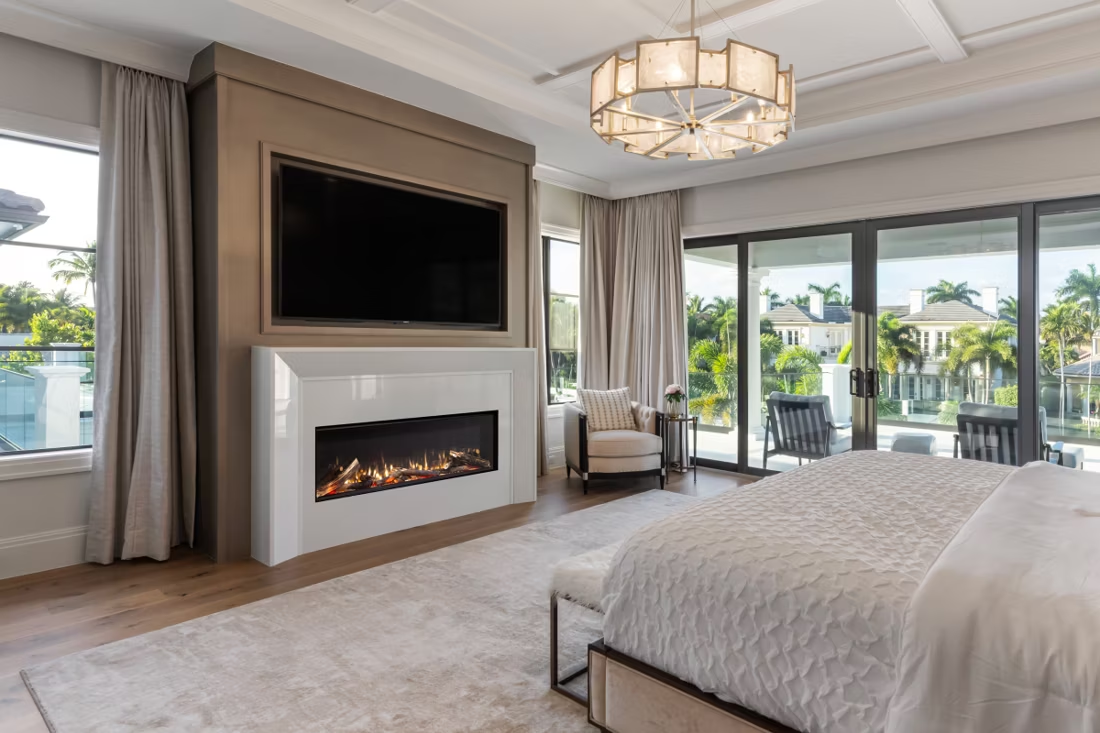
Yes—with an asterisk. Fireplaces are hot and TVs don't like heat. Either put a mantel between them to deflect rising warmth, or choose a fireplace with heat-management technology that creates a cool zone on the wall above—the wall stays around 125 degrees, barely warm, while the room still gets full heat. If you like clean lines and don't want a mantel, heat management is the answer.
Does an electric fireplace need a vent or chimney?
No—that's its superpower. An electric fireplace needs a wall and an outlet, period. No vent pipe, no gas line, no clearances to design around, which is why it works in bedrooms, offices, apartments, and walls where venting a gas or wood unit would be impractical or impossible. Installation is typically the simplest and least expensive of any fireplace type.
How much should I budget for a fireplace?
For an average home—covering the fireplace, the vent pipe, and basic installation—a budget between $3,900 and $5,500 gives you a lot of options across wood, gas, and pellet. By the time you add finish work, gas line, and electrical, the average complete installation lands between $5,000 and $12,000 all-in. In a remodel or new build, a good rule is to put about 2.5% of the total project cost toward the fireplace.
Does a fireplace add value to my home?
On average, a fireplace adds back to the home about the same amount you spent installing it. Add the monthly savings from heating the rooms you actually use instead of the whole house—often hundreds of dollars a year—and the value case is strong before you even count what a fire does for how your family uses the room.
Stove and Fireplace Dealers in Washington County
Listings include WhyFire partner dealers, dealers we have verified as authorized for the brands we recommend, and established local businesses that carry hearth products. Every listing shows which one it is. The ones marked Preferred run on WhyFire's software, so they can show you real pricing and book your appointment right here. No manufacturer pays for placement. How we verify dealers →
Lyne Home Products
Aaa Overhead Door Company
Find your electric fireplace in Washington County.
Tell us a bit about your home and we'll match you with the right electric fireplace or insert—and connect you with a trusted local dealer who can install it correctly the first time.
Find Your Fireplace →