
Find a gas fireplace as reliable as the gas beneath your feet.
From Monahans to Barstow, Grandfalls, Pyote, and Wickett, natural gas has powered Ward County's economy for generations—and it can heat your living room too. We'll match you with a trusted local dealer who knows west Texas gas lines, propane tanks, and everything in between.
Every Project Starts From One of These Five Situations
Instant heat in the middle of gas country.
Ward County sits in the heart of the Permian Basin, in Texas climate zone 3B—hot, dry summers and short, mild winters. Winter lows average around 28°F across Monahans, Barstow, and Grandfalls, and the winter heating season is short and light overall, a fraction of what a place like Bismarck, ND logs in a single winter. Oak, pecan, and mesquite grow along the Pecos River bottomlands, but this isn't wood-stove country—the arid climate, sparse tree cover away from the river, and short cold season mean wood heat never took hold the way it has in the forested parts of the state.
What Ward County has instead is gas—literally. The Permian Basin produces a meaningful share of the nation's natural gas, and West Texas Gas, Inc. runs distribution lines through Monahans and the surrounding towns, with propane filling in for homes outside city mains in Barstow, Grandfalls, Pyote, and Wickett. A gas fireplace or insert gives you instant, thermostat-controlled heat for the occasional hard freeze, ambiance year-round, and—with the right ignition system—a fireplace that still works when the grid doesn't cooperate, which West Texas households remember well from February 2021.
Three steps. No salesperson until you're ready.
Tell us about your project
Your zip code, your situation, and the fuel you're leaning toward—or let the answers point you to one.
See what's actually available
The brands dealers within 100 miles genuinely carry—real options, never a catalog mirage.
Get your dealer & Project Guide
A trusted local dealer, plus the free Project Guide & Parts List that names every component of the job.
Frequently Asked Questions
How much does a gas fireplace installation cost in Ward County?
A gas fireplace installation in Ward County typically runs $3,000 to $8,500, depending on whether you're installing a direct-vent unit onto an existing gas line, converting an older fireplace to a gas insert, or starting from scratch with new gas line and venting work. Homes in Barstow, Grandfalls, Pyote, or Wickett that run on propane rather than a West Texas Gas, Inc. connection sometimes see costs shift slightly if a new propane tank needs to be set. A trusted local dealer will give you a firm number after an in-home look.
Can I convert my existing wood fireplace to gas?
Existing wood-burning masonry fireplaces are uncommon in Ward County to begin with—most homes here were built with gas heat in mind from the start, given how central natural gas has always been to the local economy. For the smaller number of homes with an older masonry fireplace, converting to a direct-vent gas insert is straightforward: the existing chimney becomes the vent path with a stainless liner, and the project usually falls in the same $3,000 to $8,500 range as a standard install, depending on your gas line situation.
Do I need natural gas, or can I use propane?
Within Monahans city limits, most homes are connected to natural gas service through West Texas Gas, Inc., which makes adding a fireplace as simple as tapping into an existing line. Outside city limits—in Barstow, Grandfalls, Pyote, Wickett, and other unincorporated parts of Ward County—propane is the standard fuel, delivered and stored in a home tank. Nearly every gas fireplace model on the market can be configured for either fuel; your installer sets the correct orifice and regulator for whichever you have.
Will my gas fireplace work during a power outage?
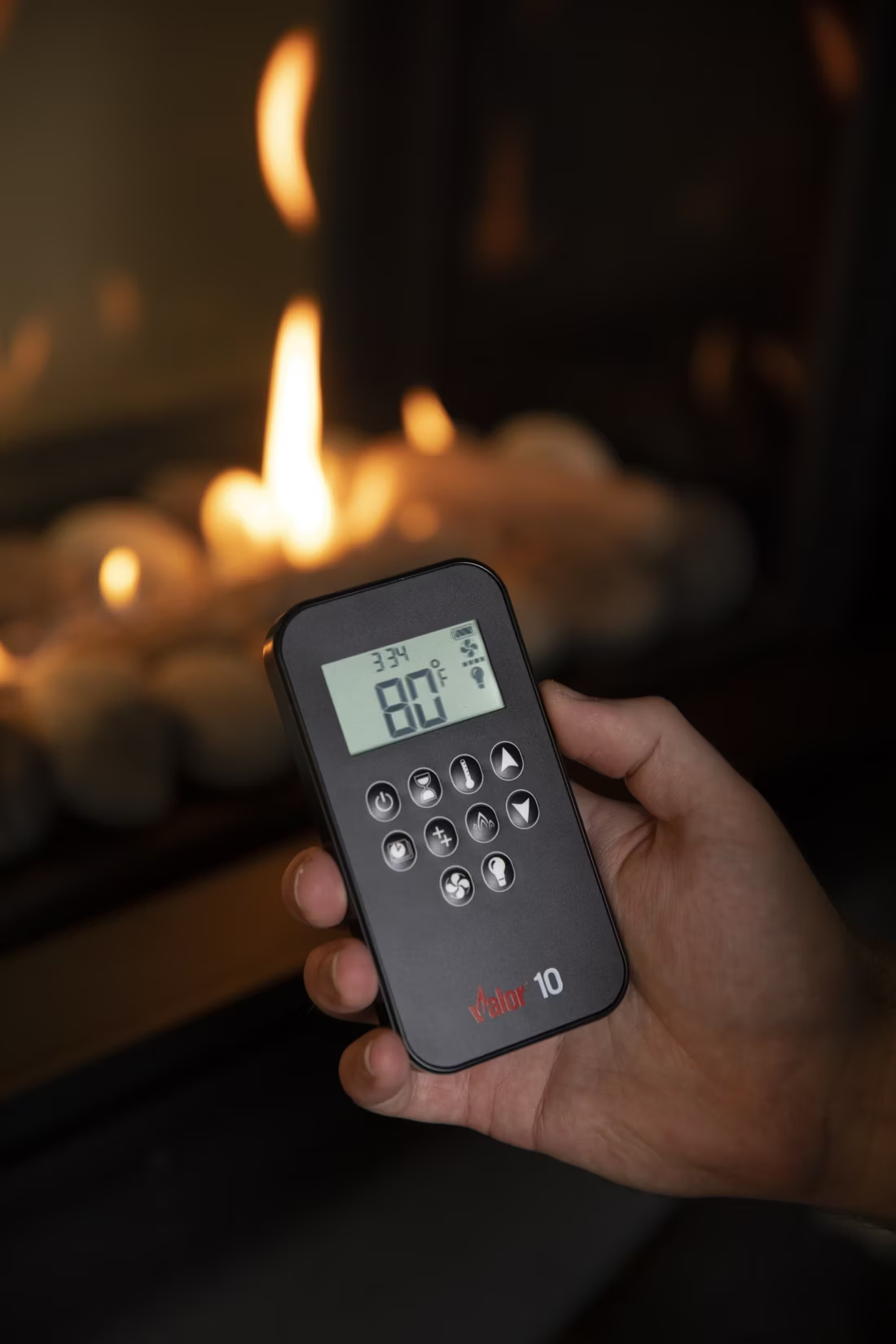
Yes, if you choose the right ignition system. Gas fireplaces with IPI (intermittent pilot ignition) include a battery backup that keeps the unit running when the power goes out—which matters in Ward County, where residents got a hard reminder during the February 2021 grid failure that heat can't always be assumed. Valor fireplaces take it a step further, generating their own electricity from the pilot's thermocouple with no batteries required at all. Ask your local dealer about ignition type on any unit you're considering.
What's the difference between a gas fireplace, gas insert, and gas stove?
A gas fireplace is a built-in unit installed during new construction or a remodel—common in the newer homes going up around Monahans as the Permian Basin workforce grows. A gas insert fits into an existing masonry fireplace opening, which suits the smaller number of older homes in the county with a wood-burning fireplace already in place. A gas stove is a freestanding unit set on the floor, popular for garages, workshops, or outbuildings on larger rural properties outside town. Your local dealer can walk you through which fits your space.
Do I need a permit to install a gas fireplace in Ward County?
Within Monahans, a building permit and gas line permit are required for new gas fireplace installations, issued through the City of Monahans Building Department. Ward County's unincorporated areas—including Barstow, Grandfalls, Pyote, and Wickett—generally don't enforce a residential building code, which is typical for rural West Texas counties, but the gas line work itself still needs a licensed gas-fitter regardless of where you live. Most hearth dealers handle whatever permitting applies as part of the installation.
What's the difference between vented and vent-free gas fireplaces?
Vented gas fireplaces (direct-vent or B-vent) pull combustion air from outside and exhaust it back outside through a sealed system—the cleanest, safest, and most universally code-compliant option. Vent-free (ventless) units burn directly into the room and are legal in Texas, but they require careful room-size matching and an oxygen depletion sensor since combustion byproducts stay indoors. For Ward County's newer, well-sealed construction, direct-vent units are generally the better call and the more common choice among local dealers.
How often should my gas fireplace be serviced?
An annual inspection is recommended for any gas fireplace or insert, checking the burner, pilot, gas connections, and venting, along with a glass cleaning. In Ward County's high-desert, dust-prone environment—Permian Basin wind can kick up plenty of fine sand—vent screens and exterior terminations are worth a look more often than the once-a-year service alone, since dust buildup can affect airflow over time. Local gas appliance technicians typically charge $150 to $250 for a standard inspection.
Gas vs. wood—which is right for my home?
Wood heat never really established itself in Ward County—the area sits in a stretch of West Texas with limited tree cover outside the Pecos River bottomlands, where oak, pecan, and mesquite grow but mostly get used for smoking brisket rather than heating a home. Gas, on the other hand, is essentially the default here: cheap, abundant, and tied directly to the Permian Basin's own natural gas production. For the rare homeowner who wants a wood-burning stove for ambiance in a converted barn or hunting cabin, it's possible, but almost every Ward County fireplace project—from Monahans to Wickett—ends up gas.
Is my gas fireplace wasting gas?
If it was installed more than 15 years ago, probably. Older gas fireplaces keep a standing pilot light burning all the time, and that little flame can cost a couple hundred dollars a year. Newer models use pilot-on-demand ignition—the pilot lights only when you use the fireplace and goes out when you turn it off.
Can I put a TV above my fireplace?
Yes—with an asterisk. Fireplaces are hot and TVs don't like heat. Either put a mantel between them to deflect rising warmth, or choose a fireplace with heat-management technology that creates a cool zone on the wall above—the wall stays around 125 degrees, barely warm, while the room still gets full heat. If you like clean lines and don't want a mantel, heat management is the answer.
Can a fireplace actually lower my heating bill?
Yes—by creating a comfort zone. A furnace heats every square foot of the house just to warm the one room you're in; a gas fireplace on low burns roughly a sixth of the gas a typical furnace does. Set the furnace around 55–60 degrees as a baseline, then heat the rooms your family actually uses. Families who heat this way commonly save $20–$60 a month.
How much should I budget for a fireplace?
For an average home—covering the fireplace, the vent pipe, and basic installation—a budget between $3,900 and $5,500 gives you a lot of options across wood, gas, and pellet. By the time you add finish work, gas line, and electrical, the average complete installation lands between $5,000 and $12,000 all-in. In a remodel or new build, a good rule is to put about 2.5% of the total project cost toward the fireplace.
Stove and Fireplace Dealers in Ward County
Listings include WhyFire partner dealers, dealers we have verified as authorized for the brands we recommend, and established local businesses that carry hearth products. Every listing shows which one it is. The ones marked Preferred run on WhyFire's software, so they can show you real pricing and book your appointment right here. No manufacturer pays for placement. How we verify dealers →
Seal’s Energy Depot
Bill Placer's Chimney Sweep
Find your gas fireplace in Ward County.
Tell us about your home and we'll match you with a trusted local dealer and send over a free Project Guide & Parts List—the exact parts, vent kit, and installer recommendation for your Ward County gas fireplace project.
Find Your Fireplace →