
Electric warmth built for Waller County's mild Gulf Coast winters.
With just a light winter heating load and winter lows averaging 41°F, Waller County doesn't need a furnace-grade hearth—it needs clean, no-vent ambiance that can still carry a room on the rare hard freeze. Find the right electric unit and connect with a trusted local dealer.
Every Project Starts From One of These Five Situations
No chimney, no gas line, no combustion—just install and switch it on.
Waller County sits along the US-290 corridor between Houston and the Brazos Valley, anchored by Hempstead (the county seat), the city of Waller, Brookshire, and Prairie View A&M University. Climate zone 2A means hot, humid summers and short, mild winters—the county's winter heating load is a fraction of what a cold-climate market like Fargo, ND racks up in a single season. Local oak, pecan, and mesquite are abundant, but they're cut for the smoker, not the hearth—wood-burning stoves and pellet appliances see essentially no residential demand here, and the regional pellet brands you'll find on shelves (Forest Energy, Lignetics) are stocked for barbecue, not home heating.
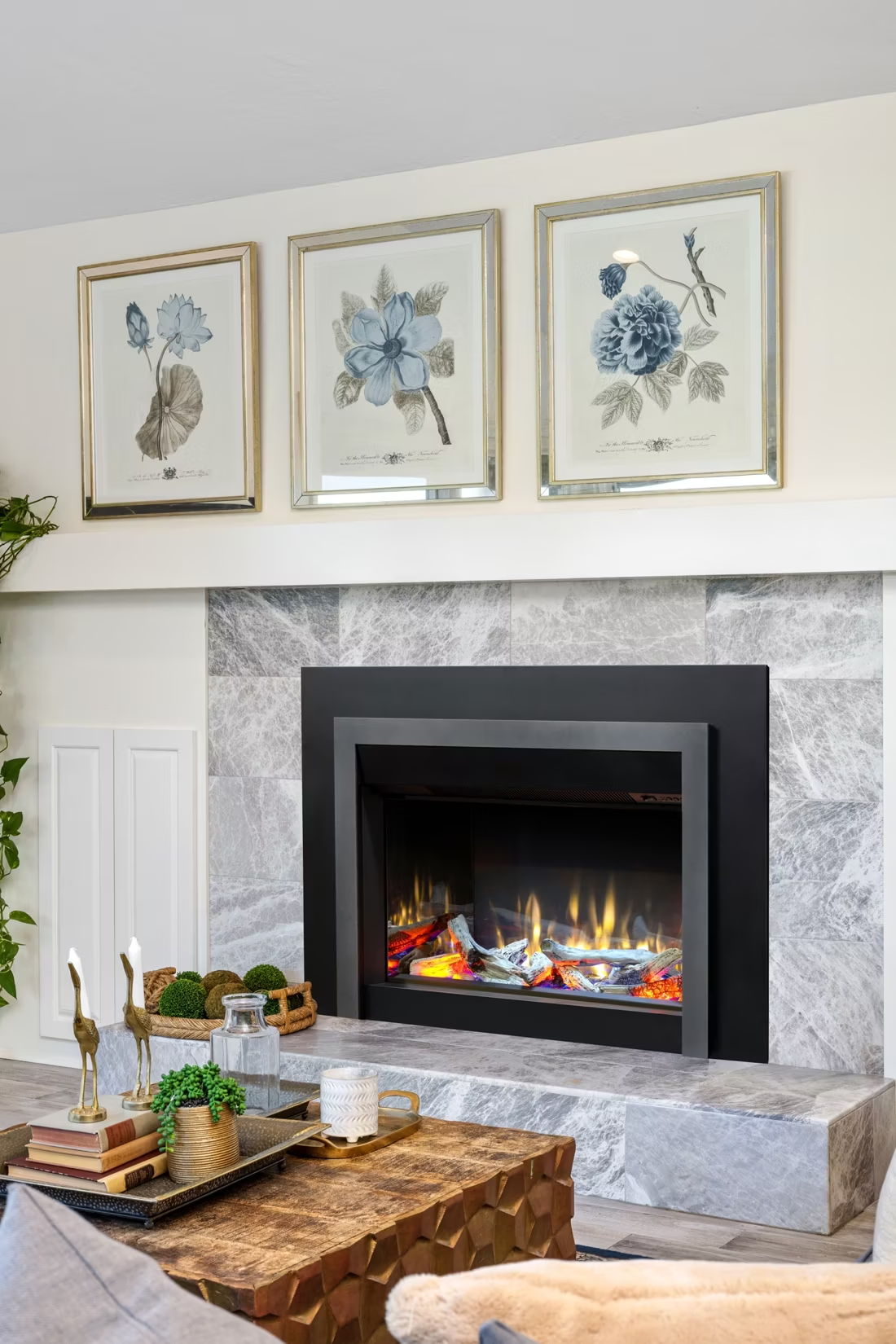
That's exactly the gap electric fireplaces fill. With average winter lows around 41°F and occasional hard freezes—the February 2021 ERCOT event being the extreme case—homeowners in Waller, Hempstead, and the newer subdivisions off 290 want a fireplace for the look and the occasional supplemental warmth, not a full heating system. An electric insert or linear wall unit needs no chimney, no gas line, and no combustion air, which makes it a fast, low-disruption project whether you're dropping one into an existing masonry opening in an older Hempstead home or framing a new focal wall in a Brookshire build.
Three steps. No salesperson until you're ready.
Tell us about your project
Your zip code, your situation, and the fuel you're leaning toward—or let the answers point you to one.
See what's actually available
The brands dealers within 100 miles genuinely carry—real options, never a catalog mirage.
Get your dealer & Project Guide
A trusted local dealer, plus the free Project Guide & Parts List that names every component of the job.
Frequently Asked Questions
How much does an electric fireplace installation cost in Waller County?
Plug-in electric inserts and freestanding units run the low end, typically $300 to $900 installed, since there's no venting or gas line to run—often just dropping the unit into an existing fireplace opening or mantel surround. Hardwired built-in or linear wall units cost more, usually $1,200 to $2,500, once you factor in a dedicated electrical circuit, wall framing or recessing, and finish work around the unit. Homes in older parts of Hempstead with an existing masonry fireplace opening tend to land on the lower end since the insert slides into a space that already exists; new-construction focal walls in Waller or Brookshire subdivisions run higher because the electrician and framer are both on the job.
Do I need a permit to install an electric fireplace in Waller County?
A simple plug-in electric fireplace or insert generally doesn't require a permit since it's no different than plugging in an appliance. A hardwired built-in unit—one that needs a new dedicated circuit or outlet added—typically does require an electrical permit, either through your city's building department (Hempstead, Waller, or Brookshire) or through the Waller County permits office if you're in an unincorporated area. Most local dealers or electricians handle the permit paperwork as part of the installation, so it's rarely something a homeowner has to chase down themselves.
Electric vs. gas—which makes more sense for a Waller County home?
Gas remains a standard option here, mostly through propane given how much of the county is unincorporated and outside natural gas service; it delivers real BTU output and can double as backup heat with the right ignition system. Electric skips the gas line, tank, and venting entirely, which keeps installation simple and cost down—a real advantage for a climate that only has a light winter heating load and doesn't need a high-BTU appliance running most winters. For a primary focal-point fireplace in a main living area where you mostly want ambiance with occasional real warmth, electric is usually the simpler, cheaper path in this county. For a home that leans on supplemental heat more seriously during cold snaps, gas holds an edge.
Will an electric fireplace actually heat a room, or is it just for looks?
Most residential electric fireplaces put out around 4,000 to 5,000 BTU (roughly 1,500 watts), which is enough to noticeably warm a single room—a bedroom, living room, or den—but not enough to replace central heat in a larger home. For Waller County's climate, where the average winter low sits around 41°F and hard freezes are the exception rather than the rule, that output is usually plenty for the handful of nights a year you'd actually want the extra warmth. Think of it as zone heat for a favorite room, not a whole-house solution.
What happens to my electric fireplace during a power outage?
It won't run—electric fireplaces need grid power for both the heater and any flame-effect lighting, so during an outage or an ERCOT-strained event like the February 2021 freeze, the unit goes dark along with everything else on the circuit. That's the honest tradeoff against gas or wood: electric is the cleanest, easiest install day-to-day, but it isn't backup heat. If storm-driven outages are a real concern for your household, some homeowners in the county pair an electric fireplace for daily ambiance with a portable generator or a separate gas appliance for outage coverage.
What type of electric fireplace fits best in a Waller County home?
For older homes in Hempstead or along the historic downtown streets that already have a masonry fireplace opening, an electric insert is usually the cleanest fit—it drops into the existing opening, needs no chimney work, and instantly modernizes a fireplace that may not have been used in years. For newer construction in Waller or Brookshire subdivisions, a linear wall-mount unit built into a media wall or accent wall is popular, since it doubles as the visual centerpiece of the room without eating into floor space. Freestanding electric stoves are a lower-cost option for a bedroom, sunroom, or manufactured home common in the county's rural areas, since they plug in and require no modification to the structure.
Does an electric fireplace need venting or special clearances?
No venting at all—electric fireplaces produce no combustion byproducts, so there's no chimney, flue, or exterior vent to plan for, and no makeup-air requirement. Clearance requirements are minimal compared to wood or gas units, which is part of why electric works well in manufactured and mobile homes, common in the more rural stretches of Waller County, where structural modifications for a vented appliance would be far more involved. Always check the specific unit's manual for clearance-to-combustibles around the trim kit, but in general electric is the least construction-intensive hearth option available.
Why don't more Waller County homes use wood stoves given the abundance of local oak and pecan?
The wood is there, but the heating demand isn't—Waller County has only a light winter heating load, a small fraction of what a cold-climate market needs to justify a wood-burning appliance. Local oak, pecan, and mesquite are prized almost exclusively for smoking brisket and barbecue rather than for firewood, and there's essentially no local dealer network stocking wood stoves or inserts for home heating installation. A handful of rural property owners still keep an outdoor fire pit or occasional-use unit, but as a primary or supplemental heat source, wood has been effectively replaced here by gas and electric options suited to a mild, humid climate.
How much does it cost to run an electric fireplace in Waller County?
A typical electric fireplace draws around 1,500 watts on the heater setting, which costs roughly 15 to 25 cents an hour to run depending on your electric rate—a few dollars for an evening of use. Given the county's mild winters, most households only run the heat function on genuinely cold nights and use the flame-effect lighting on low-power or heat-off mode the rest of the year, which keeps the overall seasonal cost modest compared to running central heat or a gas appliance for the same ambiance.
Can I put a TV above my fireplace?
Yes—with an asterisk. Fireplaces are hot and TVs don't like heat. Either put a mantel between them to deflect rising warmth, or choose a fireplace with heat-management technology that creates a cool zone on the wall above—the wall stays around 125 degrees, barely warm, while the room still gets full heat. If you like clean lines and don't want a mantel, heat management is the answer.
Do electric fireplaces actually produce heat?
Yes—most put out around 4,800–5,000 BTUs from a standard outlet, which comfortably warms a bedroom, office, or den as a comfort-zone heater. What they won't do is carry a whole house the way wood, gas, or pellet can. Think of electric as ambiance-first with honest supplemental heat: flames on with no heat in July, flames plus warmth in January.
Can I install a fireplace myself?
If you're putting a fire in your house on purpose, it's best to work with an expert. Unless you're genuinely experienced in framing, gas line, vent pipe, and the national code on clearances to combustibles, have a professional do it—and ideally the same company that sells you the fireplace, so warranty, service, and liability all live under one roof.
How much should I budget for a fireplace?
For an average home—covering the fireplace, the vent pipe, and basic installation—a budget between $3,900 and $5,500 gives you a lot of options across wood, gas, and pellet. By the time you add finish work, gas line, and electrical, the average complete installation lands between $5,000 and $12,000 all-in. In a remodel or new build, a good rule is to put about 2.5% of the total project cost toward the fireplace.
Stove and Fireplace Dealers in Waller County
Listings include WhyFire partner dealers, dealers we have verified as authorized for the brands we recommend, and established local businesses that carry hearth products. Every listing shows which one it is. The ones marked Preferred run on WhyFire's software, so they can show you real pricing and book your appointment right here. No manufacturer pays for placement. How we verify dealers →
Patio 1
All Thingz U Need Inc
Cunningham Gas Products
All Fired Up Fireplace & Outdoor
EarthCore Industries
Creekstone Custom
Patio 1
Tri-Supply - Conroe
Tru Lite Gas Products
Creekstone Outdoors
Fireplace & Patio Shop
USA Supreme Services, LLC
South Texas Brick
Find your electric fireplace in Waller County.
Tell us about your home and we'll put together a free Project Guide & Parts List—the right electric unit, the exact parts list, and a trusted local dealer near Hempstead, Waller, or Brookshire who can install it correctly.
Find Your Fireplace →