
Warmth for Venus winters, without the chimney.
Venus winters are short and mild, so most homes need a fireplace for ambiance and supplemental warmth, not survival heat. Find the right electric unit and connect with a trusted local dealer who serves Johnson County.
Every Project Starts From One of These Five Situations
Mild winters, straightforward electric heat.
Venus sits in Johnson County on the southern edge of the Dallas-Fort Worth metroplex, in climate zone 3A, where the average winter low hovers around 34°F and the area logs roughly 2,482 heating degree days a year—a fraction of what a place like Fargo, ND racks up in a single season. That climate profile is exactly why electric fireplaces make sense here: most Venus homes don't need a serious standalone heat source, because central HVAC already carries the load on the handful of genuinely cold nights each winter.
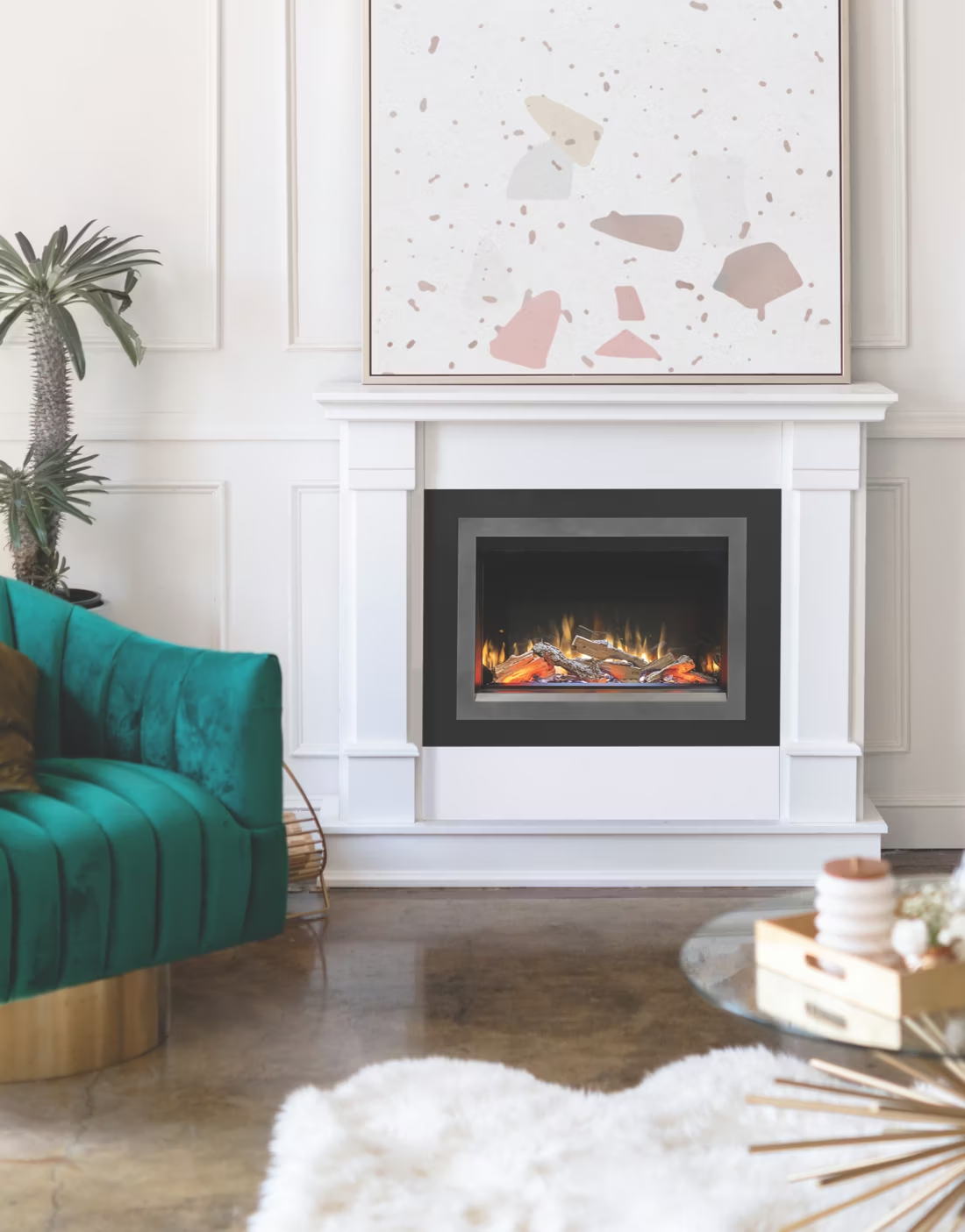
Wood heat, by contrast, rarely makes sense in Venus. Oak, pecan, and mesquite grow all over Johnson County, but locally they're firewood for the smoker, not the hearth—very few homes here are built around a wood stove for primary or backup heat. Electric fireplaces fill the gap instead: no chimney, no gas line, no venting, and they run on the same grid that already serves the area through ONCOR, TNMP, or United Electric Cooperative depending on which side of town you're on. With a residential rate around $0.13 per kWh, an electric insert or built-in unit adds real ambiance and zone warmth to a living room, bedroom, or newer exurb build going up along the I-35W corridor—without adding a second heating system to maintain.
Three steps. No salesperson until you're ready.
Tell us about your project
Your zip code, your situation, and the fuel you're leaning toward—or let the answers point you to one.
See what's actually available
The brands dealers within 100 miles genuinely carry—real options, never a catalog mirage.
Get your dealer & Project Guide
A trusted local dealer, plus the free Project Guide & Parts List that names every component of the job.
Frequently Asked Questions
How much does an electric fireplace cost to install in Venus?
Plug-in electric inserts that drop into an existing mantel or opening typically run $200 to $1,000 installed, since there's no venting or gas line to run. Built-in linear electric fireplaces—the kind recessed into a wall for a modern living room look—usually land between $1,500 and $4,000 once framing, trim, and a dedicated electrical circuit are factored in. Custom installations with stone or shiplap surrounds can push toward $5,000 to $6,000. Because there's no chimney or gas work involved, electric projects in Venus are almost always faster and less expensive than wood or gas alternatives.
Will an electric fireplace actually heat my home in Venus's climate?
Not as a whole-house solution, and that's normal here. With winter lows averaging around 34°F and only about 2,482 heating degree days a year, most Venus homes rely on central HVAC for primary heat and use an electric fireplace to warm a specific room and add visual warmth. A typical 1,500-watt insert can comfortably supplement a room of roughly 200 to 400 square feet—enough to take the edge off a cold front without running the furnace, but not enough to replace it on the rare night lows dip into the 20s.
What will it cost me to run, and who delivers my power?
Depending on which side of Venus you're on, your electricity is delivered by ONCOR Electric Delivery, Texas-New Mexico Power, or United Electric Cooperative Service. At the local residential rate of roughly $0.13 per kWh, a 1,500-watt electric fireplace running on high costs about $0.20 an hour to operate—cheap enough to run most evenings without meaningfully moving your bill, especially since most units include a thermostat that cycles the heater off once the room reaches your set temperature.
Do I need a permit for an electric fireplace in Venus?
A plug-in insert that uses an existing outlet doesn't require a permit. If you're installing a built-in unit that needs a new dedicated circuit, your electrician will typically pull a standard electrical permit through the City of Venus (or Johnson County if you're outside city limits)—a quick process compared to the gas line or chimney permitting required for other fuel types. Most local dealers coordinate this as part of the install.
Why isn't wood heating common in Venus?
Venus's climate simply doesn't demand it. With an average winter low near 34°F and low heating degree days for the region, few homes are built around wood as a heat source, and there's no meaningful wood-stove culture like you'd find in a colder climate. Oak, pecan, and mesquite are all over Johnson County, but they're prized locally for smoking brisket and ribs, not for keeping a house warm overnight. A small number of homeowners still install wood-burning fireplaces for atmosphere, but it's the exception rather than the norm—which is part of why electric and gas dominate here instead.
What's the difference between an electric insert and a built-in electric fireplace?
An electric insert is designed to slide into an existing fireplace opening or mantel cutout—a common choice for Venus homes with a masonry or wood-burning fireplace that's rarely used. A built-in electric fireplace is a standalone unit framed into a wall, often used in new construction or remodels where there's no existing opening to work with. Both plug into standard household voltage in most sizes, though larger built-ins may call for a dedicated 20-amp circuit. A local dealer can tell you within minutes which fits your space.
Can I put an electric fireplace into my existing fireplace opening?
Yes, and it's one of the simplest upgrades available. An electric insert sized to your existing opening drops in without any venting, gas line, or chimney work—the chimney itself can even stay capped and unused. This is a common project in older Venus homes with a masonry fireplace that homeowners want to keep visually but no longer want to load with firewood or maintain for gas. Installation is typically a same-day job.
Are there rebates through ONCOR or TNMP for electric fireplaces?
Not specifically. ONCOR and Texas-New Mexico Power both run efficiency and demand-response programs, but those are generally aimed at HVAC equipment, insulation, and smart thermostats rather than electric fireplaces, which draw modest wattage and aren't classified as primary heating appliances. Worth asking your utility about current programs when you upgrade, but budget for the fireplace itself without counting on a rebate.
Electric vs. gas—which is right for my Venus home?
Gas fireplaces produce more heat output and a more traditional flame, but they require either a natural gas line or a propane tank, plus venting and gas-line permitting—real added cost if your home isn't already plumbed for it. Electric fireplaces skip all of that: no venting, no gas work, just an outlet or a dedicated circuit, and a flame effect that looks convincing at a fraction of the installation cost and complexity. For Venus's mild winters, where a fireplace is mostly about ambiance and light supplemental heat rather than serious BTU output, electric is often the simpler, faster path—especially in homes without existing gas service.
Can I put a TV above my fireplace?
Yes—with an asterisk. Fireplaces are hot and TVs don't like heat. Either put a mantel between them to deflect rising warmth, or choose a fireplace with heat-management technology that creates a cool zone on the wall above—the wall stays around 125 degrees, barely warm, while the room still gets full heat. If you like clean lines and don't want a mantel, heat management is the answer.
Does an electric fireplace need a vent or chimney?
No—that's its superpower. An electric fireplace needs a wall and an outlet, period. No vent pipe, no gas line, no clearances to design around, which is why it works in bedrooms, offices, apartments, and walls where venting a gas or wood unit would be impractical or impossible. Installation is typically the simplest and least expensive of any fireplace type.
Can a fireplace actually lower my heating bill?
Yes—by creating a comfort zone. A furnace heats every square foot of the house just to warm the one room you're in; a gas fireplace on low burns roughly a sixth of the gas a typical furnace does. Set the furnace around 55–60 degrees as a baseline, then heat the rooms your family actually uses. Families who heat this way commonly save $20–$60 a month.
What is an in-home preview and do I need one?
It's a visit where a hearth professional measures your space, confirms the model you picked actually works in your home, and walks the specs—framing, gas line, venting, finish work—before anything is ordered. Some details you just can't know until you see the house. Never make a down payment without one; it's the single most-skipped step that burns buyers.
Nearby Dealers
Hearth shops serving Venus and the surrounding area. Every listing shows whether it is a WhyFire partner, a dealer we have verified as authorized for the brands we recommend, or a local business carrying hearth products. No manufacturer pays for placement. How we verify dealers →
Fuego Fireplaces
Texas Building Supply
Fireside Innovations
Rodak's Coffee And Bbq Grills
Electric Service in Venus
An electric fireplace's heater draws about 1,500 watts—pennies per hour at local rates.
Oncor Electric Delivery Company LLC
Texas-New Mexico Power Co
United Electric Coop Service Inc - (Tx)
Find your electric fireplace in Venus.
Tell us a bit about your home and we'll match you with a trusted local dealer and send over your free Project Guide & Parts List—a clear plan for your electric fireplace project in Venus, right down to the parts.
Find Your Fireplace →